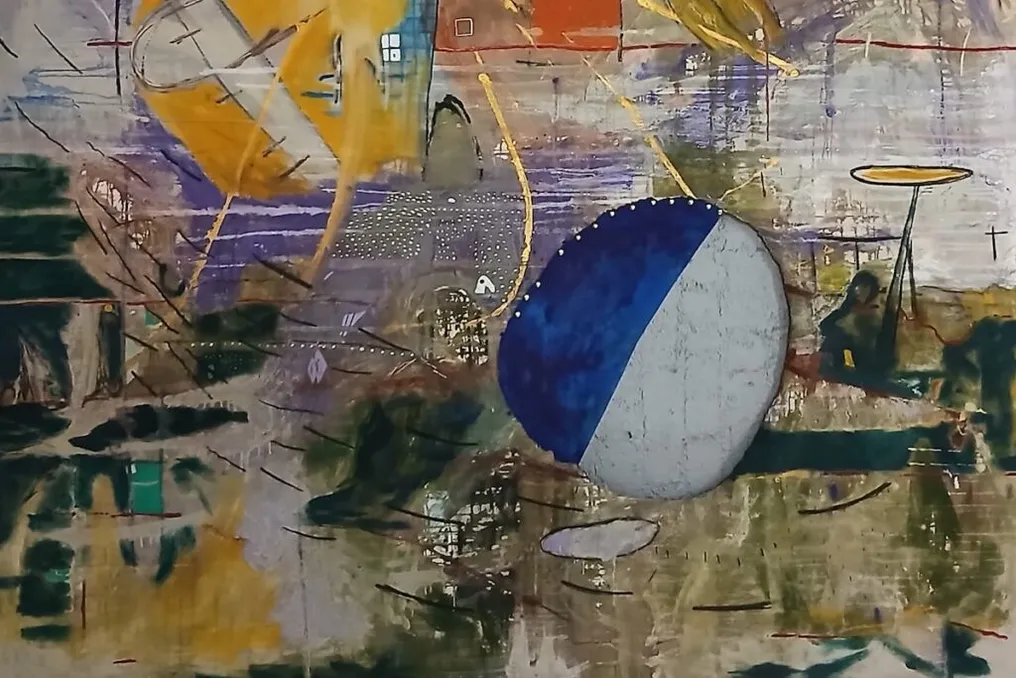
Four emerging South African artists whose works will be featured in a Cape Town exhibition
Read more
10and5
10and5.com

Four emerging South African artists whose works will be featured in a Cape Town exhibition

Four young artists from South Africa, creating works that explore themes of identity, history, and place, will present their pieces at the Tiriparwendo exhibition. These artists utilize diverse techniques—from layered prints dedicated to migration and the sense of belonging, to ceramic sculptures shaped by memory.

The exhibition will take place at Hub Gallery in Cape Town on November 12, 2026. Among the participants are Bekezela Mabena, Luksolo Theophilus Witboot, Mpumelelo Samantha Maseko, and Viola Greiling. Their work offers an opportunity to examine more deeply how a generation of artists is contemplating the concepts of identity, memory, and belonging in contemporary South Africa.

All four artists participate in the Creative Block program, curated by Spier Arts Trust. Their artistic practices span printmaking, painting, collage, and ceramics, with each contributing a unique perspective to the common themes of their work.

Bekezela Mabena
A Johannesburg-based artist specializing in printmaking, he uses vibrant colors and layered brushstrokes to investigate issues of identity, migration, and finding one's place. Born in Thembi in 1996, Mabena's experience moving between South Africa and Zimbabwe strongly influences his creative output. His mixed media prints and paintings address themes of home, displacement, and cultural identity.

Mabena views the sense of belonging not as something static, but as something formed by movement, personal history, and the places we carry with us. Through the use of complex imagery and color, he creates visual narratives reflecting the complexity of navigating multiple cultural identities. His work is particularly interesting for how it integrates personal migratory experience into a broader dialogue about home and identity.

Luksolo Theophilus Witboot
A multidisciplinary artist who is self-taught, Luksolo Theophilus Witboot combines digital imagery and traditional painting to create layered canvases that reinterpret everyday life and the visual history of South Africa. Born in Kwonsa (Township Williamstown) in 1994 and raised in Cape Town, Witboot draws inspiration from township life and the people who shaped his environment. His subjects include passengers, musicians, family members, and ordinary people, as well as references to South Africa's visual archive.

His working process is as original as his subject matter. Using acrylic, tobacco ash, flash powder, gold leaf, and cut canvas, Witboot transforms digital figures into tactile, textured compositions. By merging digital and traditional approaches, he forms a modern visual language analyzing the representation of people, places, and stories. His work offers a fresh perspective on familiar motifs, questioning how collective memory and personal experience influence the images we preserve.

Mpumelelo Samantha Maseko
For the Johannesburg-based artist, Mpumelelo Samantha Maseko, narrative is a central element in her exploration of Black womanhood, identity, and the process of becoming. Born in Bosfontein, Mpumalanga, in 1997, Maseko works in oil painting, collage, assemblage, mixed media, and printmaking. Her interdisciplinary approach allows her to move freely between various materials and forms, creating works that reflect the diversity of ways personal histories are experienced and expressed.

Her practice is rooted in self-reflection, focusing particularly on how Black women see themselves and define their identity. Rather than relying on established narratives, Maseko presents Black women as authors of their own stories and myths. They are depicted as complex, strong, and constantly evolving individuals. Her work merits attention for its exploration of representation and self-determination, as well as its use of various materials to convey deeply personal yet universal experiences.

Viola Greiling
A ceramic artist and lecturer from Pretoria, Viola Greiling explores identity, memory, and belonging through sculptural forms inspired by natural structures and traces of movement. Born in 1996, her work is shaped by the experience of migration and displacement. She investigates the physical and emotional space people occupy when transitioning between different places, generations, and versions of themselves.

Her ceramic pieces draw inspiration from natural forms such as stalagmites and seeds, as well as imprinted textures that become part of the finished surface. She also incorporates packaging materials pressed into the clay, using their marks as markers of place and references to human habitats. The result is a body of work that examines identity as something multilayered and constantly changing. By combining organic structures, textures, and found materials, Greiling gives physical form to the often intangible experience of belonging. Her approach to ceramics goes beyond mere decoration, using the material to study personal history and the relationship between humanity and place.
Similar stories

Mari Sibandi discusses art, mentorship, and creating opportunities for the next generation of artists
Read more
10and5.com

Mari Sibandi discusses art, mentorship, and creating opportunities for the next generation of artists

South African artist Mari Sibandi shares her thoughts on her evolving creative practice, the role of a mentor, and creating platforms for young creators through the initiative Occupying the Gallery.

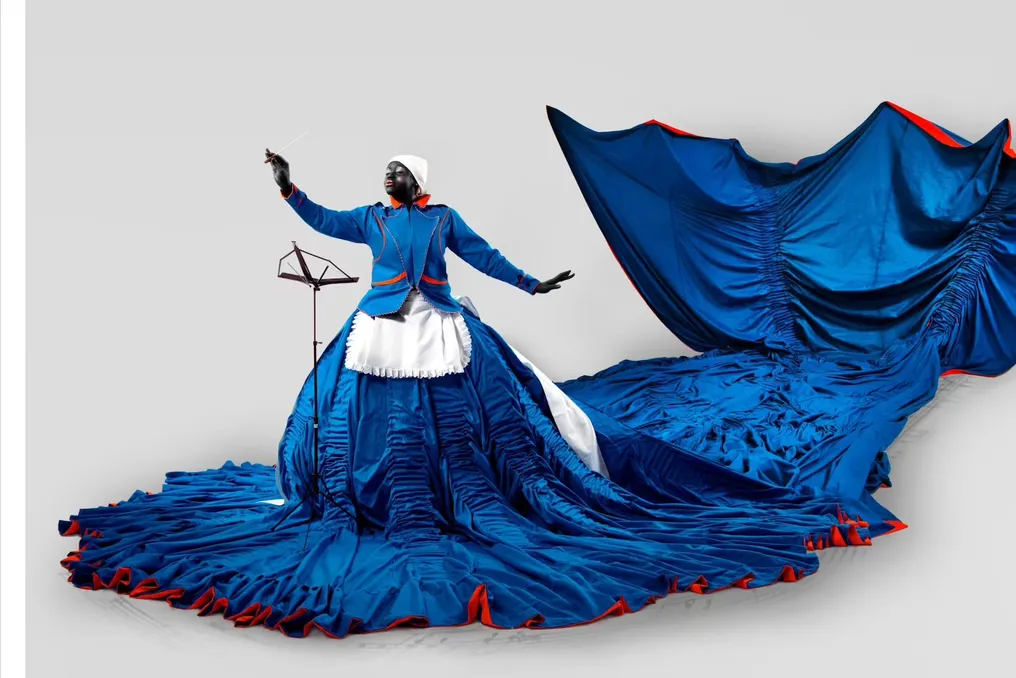
For much of her career, Mari Sibandi has dedicated herself to exploring themes of identity, history, and the experiences of Black women in her work. She is best known for her alter ego, Sophie, who is depicted as a domestic worker. Sibandi uses sculpture, photography, and performance to challenge conventional notions of race, gender, and labor.

However, her artistic approach continues to transform. Recently, she has focused more on the concepts of rest, leisure, and pleasure. Questions arise about what happens when Sophie stops working, and what freedom looks like if it is not defined by struggle or obligation.

In addition to her own artistic endeavors, Sibandi is interested in supporting other artists. Together with her colleague, South African artist Lawrence Lemaoana, she founded Occupying the Gallery (OTG)—a platform based in Johannesburg. This organization aims to develop artists, provide mentorship, and facilitate creative exchange.

OTG is not focused on exhibitions or commercial outcomes; instead, it involves emerging artists in working relationships with established practitioners, designers, and masters. It is a space where knowledge is transferred through collaboration and experimentation.

One recent project was a residency with Malian artist Abubakar Fofana, whose work focuses on traditional indigo dyeing and the preservation of indigenous African knowledge. As part of this program, Fofana conducted a masterclass at Victoria Yards in Johannesburg on October 24, gathering local creators, denim producers, and fashion specialists.

We spoke with Sibandi to discuss the ideas behind Occupying the Gallery, what support established artists can offer the next generation, and how her own relationship with art has changed over the years.

Lawrence and I have been in the art world long enough to understand how complex navigation can be, especially at the beginning. We aimed to create the space we lacked when we were young. A place where artists can experiment, make mistakes, exchange ideas, and simply engage in art without constantly worrying about creating something to sell.

Sibandi emphasizes the importance of this aspect, stating that not everything an artist creates needs to hang on someone's wall. Occupying the Gallery does not sell artwork; its mission is to build community, support artists, and open doors. Furthermore, they wanted to question who even has the right to occupy these art spaces.

In her view, if a person has the opportunity to gain knowledge, experience, and access, what do they do with it? Do they just keep it to themselves? Sometimes, simply introducing someone to the right person or inviting them to a place they otherwise couldn't access is enough. However, Sibandi believes that mentorship should not be about telling young artists what to do. They must find their own voices, make their own mistakes, and even challenge the opinions of mentors. They should not become small copies.

Lawrence and Abubakar met in New York several years ago and immediately clicked. They met again last year in Berlin during a group exhibition, which is when a deep conversation began. They were interested in Abubakar's commitment to preserving and transmitting ancestral knowledge through natural indigo dyeing. In an era when much indigenous knowledge is lost or ignored, people like Abubakar have dedicated their lives to its maintenance.

For them, it wasn't just an invitation for someone to teach people how to dye fabric. It was connected to the transmission of skills, understanding the origin of materials, and the knowledge they carry. They also invited local denim producers and fashion designers because Sibandi is interested in what happens when these traditional methods meet modern design. That is the most exciting part.

Sibandi believes that the first thing one must do is learn to listen. One cannot simply arrive, take a technique because it seems beautiful, and ignore everything associated with it. Behind these practices lie history, culture, and knowledge. This is why Abubakar's presence is so important: they are not just observing the fabric dyeing process; they are learning from a person who carries this knowledge and understands its origins. For her, cultural exchange must be a dialogue, not an act of extraction. It is necessary to respect the people and history behind what is being studied.

Currently, she is thinking a lot about rest, leisure, and pleasure. For many years, Sophie was associated with domestic labor and the expectations placed on the bodies of Black women. Sophie is her alter ego, the figure of the domestic worker she uses to explore the history and possibilities of Black women. But now she is exploring what happens if she decides she has had enough of all that. What if she just wants to have fun? What if she wants to do nothing? Why must her existence always be tied to labor, struggle, or some responsibility?

She explores these questions through sculpture, photography, printmaking, and humor. She notes that it is quite radical when a body historically expected to serve others decides simply to enjoy itself. Sophie claims her right to leisure, and in her opinion, she has every right to it.

Of course, as one grows older, different questions arise. When she started, her main concern was the histories of domestic labor, identity, and representation, especially through the experiences of women in her family. These stories have not disappeared from her work, but now she is interested not only in their interpretation but also in what comes after. What does true freedom look like? She has also become more playful, enjoying humor, exaggeration, and sometimes creating something absurd. She believes that not everything has to be so serious, even when dealing with serious topics.

Her work remains driven by imagination and curiosity. Sometimes an image comes to mind, and she begins to think about how to realize it in the real world, which naturally involves the complex task of defining the method of realization. She works with various materials and people possessing specialized skills, which implies numerous experiments and problem-solving. She likes that the creative process itself sometimes steers the idea in an unexpected direction. She has learned that one should not control everything too tightly; sometimes the material has its own plans.

She usually starts from an image, as she is a very visual person. She might imagine Sophie in a completely unexpected situation and then ask herself why this image interests her. What does it mean? What is she trying to say? Or perhaps she is trying to say nothing? Sometimes answers don't come immediately, and that is fine. She likes allowing meaning to unfold as the work progresses, as she doesn't feel that one always needs to know where the idea will go before starting the process.

She truly values this. Once a work leaves her studio, it ceases to belong entirely to her in terms of public understanding. People bring their own stories and experiences into it, and sometimes see things she hadn't even considered. And who is she to tell them they are wrong? Although she knows what shaped the work, she does not believe that art should come with instructions dictating what people should think. She likes that the work can have different meanings for different people, as this supports dialogue.

She would probably advise herself to relax a bit. To trust instincts, to make mistakes, to experiment, and not rush to figure everything out. She would also tell herself that being an artist is not just about creating pieces and participating in exhibitions. It is about the people you meet, the relationships you build, and how you utilize the opportunities that arise. Looking at the activities of Occupying the Gallery, she realizes how important this is, and she would advise herself to enjoy it, as it is a long journey.

Clout/SA Wins Three Awards at African Interior Design Competitions for South African Design
Read more
10and5.com

Clout/SA Wins Three Awards at African Interior Design Competitions for South African Design

Clout/SA presents South African craftsmanship and contemporary design to a global audience, showcasing works ranging from hand-embroidered tapestries to sculptural lighting and geometric rugs.

South African design is unique in that it conveys stories through materials. Threads, beads, cork, clay, and wool cease to be mere decorations; they carry memories, reflect identity, and connect generations of artisans with a new audience. Clout/SA continues this tradition by integrating local designers and craftspeople into spaces where their creativity is the central element of the experience.

A striking example of this approach is Isaac Songwe's room in Johannesburg. It embodies the potential of South African creativity, which has been given a platform to be heard.

Clout/SA's Vision

Tracy Lynch, Executive Creative Director of Clout/SA, stated that the goal was to impress every visitor with powerful and vibrant expressions of South African design and craftsmanship. She emphasized the need for people to recognize the uniqueness of South African creativity and understand that the unity of South Africans creates a magnificent force capable of changing perceptions of the nation.

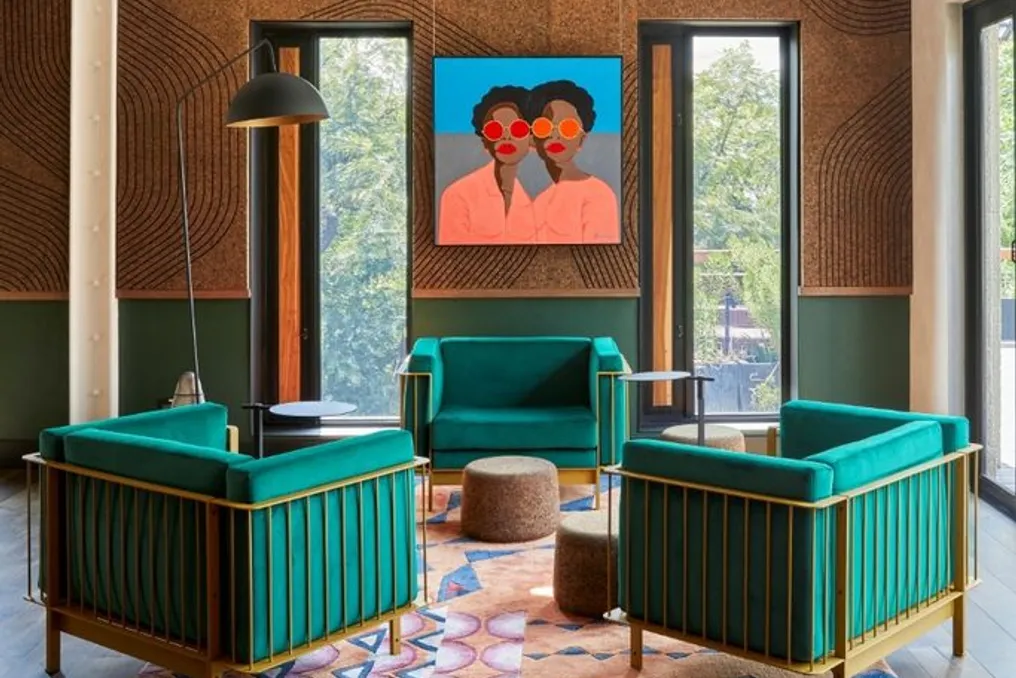
At the center of this room is 'The Resilience Piece'—a monumental embroidered tapestry from Keiskamma Art Project. This tapestry, created by approximately 12 artists over almost a year, documents the community's experience in rural Eastern Cape during the Covid-19 pandemic through complex textile narrative. Nearby are geometric rugs by Siyanda Mbele, cork sculptures by Wiid Design, beaded screens by Kalki Design Studio, and a handcrafted pendant light by Mash.T Design Studio, all adding their material languages to the space.

Sebo Mvubu, Director of Keiskamma Art Project, noted that the collaboration process helps them and connects them with the outside world. He added that they are quite isolated in Gamburg, Eastern Cape, and do not have much access to media or social networks. Winning the AIDA award recognizes their work and collaboration with Clout/SA, which helps promote their projects, community, and activities, opening new opportunities for partnerships and development.

Together, these works demonstrate how local design can transform interiors, making them more meaningful—a meeting place for craftsmanship, community, and modern South African identity. The project recently received recognition from Clout/SA at the inaugural African Interior Design Awards (AIDA) 2026 in Cotonou, Benin. Isaac Songwe's room was among three recognized projects, alongside the redesign of the Union House office and the textile collection Stitched: A Story of Our Home, developed in collaboration with Keiskamma Art Project and awarded 'Product of the Year' in the Home Goods and Decor category.

Beyond the Awards

Beyond the awards themselves, this recognition points to a broader movement in South African design that connects heritage and innovation while creating opportunities for local producers to reach new markets. Since 2021, Clout/SA has facilitated the export of South African design worth over 225 million rand, placing over 70,000 pieces in more than 25 countries.

Through its platform, collaborations, and continuous support for emerging designers, Clout/SA continues to bridge creative practice and commercial opportunities. Isaac Songwe's room embodies this vision, showing how design can preserve stories, elevate local talent, and change perceptions of South African creativity. In this context, design is more than just filling a room; it is a way of telling our stories on our own terms.

Absa L'Atelier Contest Winners Aim to Present African Stories Beyond the Continent
Read more
iol.co.za

Absa L'Atelier Contest Winners Aim to Present African Stories Beyond the Continent

The Absa L’Atelier fine art competition has served as a platform for young visual artists across Africa for 40 years. It was established in 1986 in collaboration with the South African National Association of Visual Artists (SANAVA).

This competition helps recognize artistic talents by providing opportunities for artists to develop their work through exhibitions, mentorship, and international recognition.

The winners for 2026 were announced at the Absa L’Atelier Art & Lifestyle Fair in Waterfall City Park on Saturday, October 10th. Reports indicate that this year the competition attracted a record number of entries and hundreds of suitable works from artists across 12 Absa markets in Africa.

Three artists received the Absa L’Atelier Art Ambassador awards: Reginald Boateng from Ghana, Emmanuel Chisenga from Zambia, and Segun Owolabi from Nigeria. The South African artist Thuzuru Mlima from Durban won the Gerhard Sekoto Absa L’Atelier Art Prize. For each winner, this recognition holds personal significance. Some see it as a chance to bring stories rooted in their communities to a wider audience, while others hope to use the support to experiment with new techniques and challenge existing artistic approaches.

Discussing their work and the meaning of the awards for future steps, four artists shared their thoughts with The National publication.

Boateng, whose works explore themes of labor, mental health, environmental degradation, and African identity, believes the award provides an opportunity to present these stories to the public. He stated that his creativity is shaped by his Ghanaian culture, the people around him, and the stories they share as Africans. He is convinced that every person has a unique story and way of understanding the world, but color is a universal language that connects people and conveys emotions, ideas, and meaning beyond words.

His works include 'Gold Fishing,' dedicated to the value of labor; 'Color of Emotions,' reflecting the human psychological state; 'Our Waters are Red,' addressing the ecological problem; and 'Son of Africa,' celebrating African identity. Despite the diversity of themes, Boateng sees color as the connecting thread that allows his messages to transcend cultural and geographical boundaries.

He also expressed hope that the recognition will help change the perception of photography in contemporary art. Receiving the Absa L’Atelier Art Ambassador award provided him with a platform for the world to see his stories through a lens, and it contributes to the broader recognition of photography as a legitimate form of contemporary art, deserving of the same respect and place as other art forms. This strengthens his belief that photography can convey powerful ideas, challenges, and perspectives. Inspired by the bank's message 'Your story matters,' he aims to create a space where the stories, identities, and experiences of Ghana and Africa are noticed, valued, and understood beyond borders. Using color as a universal language, he hopes to unite diverse stories across Africa and the world, reminding us that while individual experiences may differ, there is always something that brings people together.

For Chisenga, the award means more than just his career. He is the first artist from Zambia to receive the Absa L’Atelier Art Ambassador award since the group structure of the competition was introduced in 2019. This artist, who has spent many years creating pieces about children and their imagination, noted that the recognition confirms that Zambian stories can find an audience outside the country. He emphasized that this stage means a lot to him: personally, it is confirmation that his narratives about children and unexplored imagination are finally being heard. This award tells him that Zambian stories have a place on the continental stage, and he doesn't need to paint like someone else to be noticed. Chisenga hopes this achievement will inspire young artists in Zambia to pursue their craft without feeling the need to leave the country for recognition. He wants it to be a signal to every young artist in Zambia that one does not have to leave to become world-class; it is enough to honestly tell their Zambian story. Furthermore, he wishes the award would change the perception of Zambian visual arts, drawing attention to painters, sculptors, and storytellers whose work deserves more attention. He added that while he is the first, his hope is not the last.

For Owolabi, the award opens up opportunities to develop both the technical and conceptual aspects of his practice. The Nigerian artist works with threads, using this material to explore memory, identity, and human connections. He intends to investigate how thread can convey these ideas, moving beyond its role as a medium, and also to examine Nigerian cultural identity and heritage, particularly how people continue to interpret and live history. The Ambassador award includes the opportunity to hold a solo exhibition, with the bank contributing R100,000 towards material costs. Winners also receive art masterclasses, a laptop or equivalent device, and four months of mentorship with a leading authority in visual arts in their respective countries. Owolabi noted that through the exhibition and mentorship, he hopes to challenge his current approach, learn from experienced professionals, and better understand how to convey his ideas to different audiences. For him, growth means not only improving technique but also gaining greater precision and confidence in the stories he chooses.

As for Mlima, the Gerhard Sekoto Prize will provide him with the opportunity to experiment with his relief and wood carving practice during a three-month stay at the Cité Internationale des Arts in Paris, France, from April to June 2027. The Durban artist wants to find out if he can transform his reliefs and wooden sculptures into three-dimensional works, and also consider how exposure to a different cultural environment might influence his exploration of universality. He stated that with the vast resources and information available to him, he would like to explore the possibility of transforming his wooden sculptures into three-dimensional pieces. Moreover, exposure to another part of the world will certainly strengthen his current investigation into the concept of universality.

The Gerhard Sekoto Prize, established 18 years ago, is awarded to a South African artist for the integrity and quality of their work. In addition to the stay in Paris, Mlima will have the opportunity to hold a solo exhibition, with Absa contributing R100,000 towards material costs. This award was made possible by a partnership between the French Embassy in South Africa and the Institut français d’Afrique du Sud (IFAS). Jean Spiry, Head of Cooperation at the French Embassy in South Africa, Lesotho, and Malawi and Director of IFAS, noted that the legacy of Gerhard Sekoto reminds us of the importance of artistic freedom and exchange across borders. Through this prize, young South African artists can develop their practice and build international connections. He congratulated the 2026 recipient and reaffirmed commitment to supporting artistic exchange between France and South Africa.

The 2026 winners now have the chance to advance their careers through exhibitions, mentorship, and international experience. Applications for the next Absa L’Atelier Art Competition are scheduled to open in March 2027 and close at the end of April.

Popular