IOM warns about the spread of disinformation about migrants driven by Artificial Intelligence
Read more
Noticias ao Minuto
noticiasaominuto.com

IOM warns about the spread of disinformation about migrants driven by Artificial Intelligence

The International Organization for Migration (IOM) warned that disinformation regarding migrants is spreading rapidly, with artificial intelligence (AI) being the main driver of this dissemination, which generates a feeling of distrust.

During the opening of the International Dialogue on Migration forum, held in Geneva, Switzerland, the director-general of the UN migration agency, Amy Pope, emphasized that this situation can convert anxiety into distrust and turn individuals into targets.

Amy Pope explained that false or misleading narratives about migrants, distributed through social media and generative AI, have the effect of deepening polarization and distrust within communities, intensifying public doubts about how governments manage migration.

However, the IOM stresses that the 304 million migrants globally, including 168 million workers, contribute significantly to the economy, supporting about one million people through their remittances, which represents approximately one eighth of the world's population.

The UN agency also points out that almost half of migrants are women and young people, a group frequently exposed to risks of exploitation, abuse, and discrimination.

In her intervention, Amy Pope mentioned that factors such as climate pressures, conflicts, and economic instabilities put governments and communities under pressure. She argued that data and statistics alone are not enough to restore public trust.

For this reason, the official called for the need for 'active listening' and requested that international institutions demonstrate transparency about the shortcomings of the current system, emphasizing that it is crucial to listen and act, even when the content heard is unpleasant.

The International Dialogue on Migration, established in 2001, serves as a meeting point for member states, UN agencies, the private sector, academics, civil society, and migrants themselves, aiming to analyze the challenges and opportunities inherent in global human mobility.

Similar stories

Vivo sends out communication about changes, causing confusion among subscribers
Read more
tecnoblog.net

Vivo sends out communication about changes, causing confusion among subscribers

Some Vivo customers recently received an email notification regarding scheduled modifications set to begin on November 22nd. However, these same subscribers expressed confusion after reading the message, as it does not precisely detail what the changes are.

The communication, despite promising transparency, states that there will be no change in the contracted values, benefits, allowances, or services. This raises questions about what alteration prompted the sending of the notification.

When we contacted Vivo for clarification, we did not receive a response as of the last update of this text, keeping the communication channel open.

A well-informed source in the telecommunications sector analyzed the message and suggested that Vivo's action may be related to a clause in the RGC (General Regulation of Consumer Rights for Telecommunications Services). This regulation requires the sending of 'readjustment' notices to the entire consumer base, even for those with offers without an expiration date, forcing Vivo to draft such warnings even if the plans remain unchanged.

This same source assesses that the content of the communication is technically correct but considers that the way it was presented was not the most appropriate for the current situation, indicating that the email alert aims only to comply with bureaucratic and regulatory requirements, without impacting what the consumer receives monthly.

The future of AI will be determined by a combination of various models, not one dominant technology
Read more
olhardigital.com.br

The future of AI will be determined by a combination of various models, not one dominant technology

In recent years, the development of artificial intelligence has been perceived as a technological race, where after each launch, new comparisons, benchmark tables, and predictions emerged about which company was approaching leadership in the next major digital transformation. It often seemed that the entire debate boiled down to one question: which model is the best at the moment?

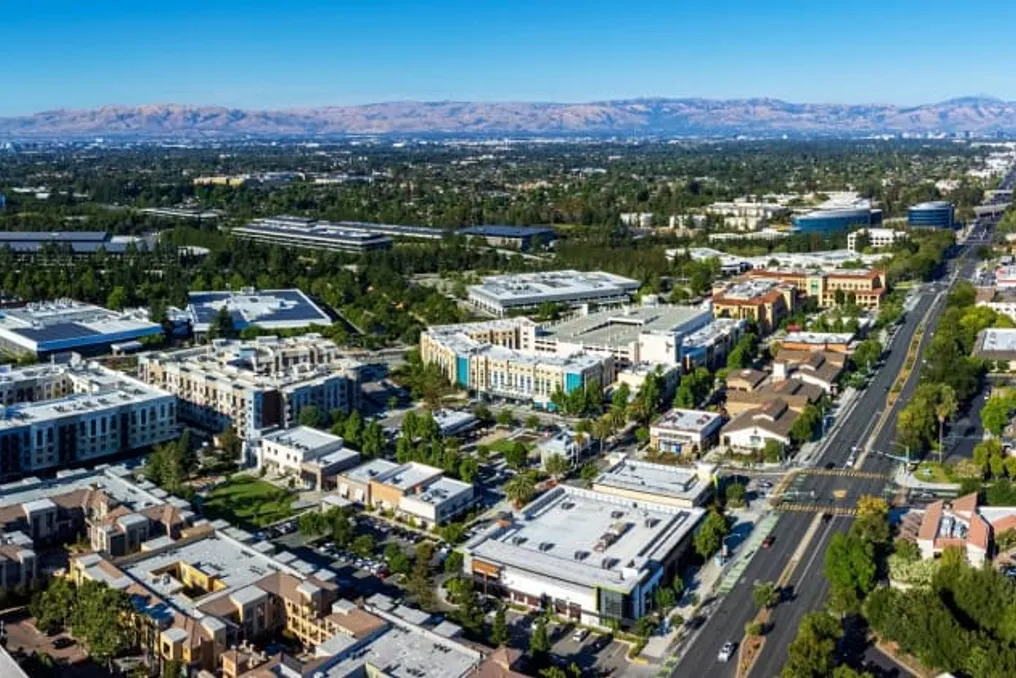
However, after a recent immersion in Silicon Valley, the author got the feeling that this question, while still relevant, is no longer central. Part of this understanding stems from the fact that he visited Silicon Valley almost ten years after his first visit.

There is something interesting about immersing oneself in an ecosystem that unites some of the world's most influential companies, investors, and universities. Just as when traveling to any culture, we begin to absorb local peculiarities, in the US, especially in California, you inevitably become influenced by the speed of releases, technology consumption, and the constant feeling that the future is being built there.

Something similar is happening in Silicon Valley: there is a natural tendency to focus on themes dominating regional conversations and consider them an accurate reflection of the coming years. This often has a basis, as many significant technological changes of the last few decades took place there before reaching the rest of the world.

But any highly connected environment carries a risk: the risk of confusing consensus with absolute certainty. This is what attracted the most attention during the trip.

Unlike most public discussions about AI, few conversations revolved around competition between models or the search for the next technological leap capable of changing the market. A more frequent topic was how artificial intelligence is integrating into the products, processes, and operations of organizations, rather than which laboratory owns the most advanced system at the moment.

This shift in focus manifested differently throughout the week. Discussions with executives from Snowflake and Elementum, for example, were not about which model ranks highest or which company would release the next big thing. The discussion was focused on the transformation of enterprise software. The general consensus was that a phase is beginning where intelligent agents start interacting directly with large volumes of data, performing tasks that previously required manual navigation through systems, report analysis, and making several operational decisions by a human.

For decades, most enterprise software was created to organize information and facilitate human labor. Now, there is an expectation that these systems will not just present information but also act upon it. This may be one of the most important changes brought about by AI. The impact is not only in the technology itself but also in how companies begin to function. For the first time in many years, the discussion seems less related to the tool being used and more to the ability to quickly, integratively, and efficiently turn data into action.

At the same time, some visits showed that not everyone follows the exact same path. For instance, at Liquid AI, there was a viewpoint contrasting with most popular narratives in the sector. While a large part of the industry continues to bet on ever-larger models and ever-more powerful infrastructure, this company is developing more compact systems designed for local operation on devices such as mobile phones, vehicles, and onboard equipment.

The interest in this concept is not just in the technology itself. It reminds us that innovation does not happen in one direction. There is a natural inclination to link technological progress with increased computational power, investment, and model size. However, in many cases, the task is precisely the opposite: creating more efficient, accessible, and easily integrated solutions into people's daily lives and businesses.

Perhaps this was one of the main lessons of the trip. When we look at the AI market from afar, it seems like there is one race going on. But when we look closely, we realize that many different races are happening simultaneously. There are large generative models; there are specialized systems; there are multimodal applications combining text, image, audio, and video; there are enterprise solutions designed to solve very specific problems; and there are companies betting on making all of this easier and more distributed.

Therefore, the idea that the market will move towards one dominant technology is becoming less likely. A scenario of coexistence of different approaches is emerging, each suited for specific contexts, constraints, and needs.

This shift is also changing how organizations approach technology strategy. For a long time, the logic was relatively simple: find the best available tool and implement it. With the advent of AI, the equation includes a number of other variables. Issues of integration, governance, privacy, speed of adoption, operational costs, and business compliance are becoming as important as the complexity of the chosen technology.

In practice, a company may gain much greater value from a simple, well-integrated solution in its processes than from using extremely advanced technology in isolation. Perhaps this is why the discussion of implementation is taking up more space than the discussion of capabilities.

Another aspect that caught attention was the frequent turning of technological conversations into conversations about people. This became particularly evident during the visit to Stanford. Despite the university being in one of the most advanced ecosystems in the world for AI, a significant part of the discussions remained focused on topics such as education, talent development, shaping organizational culture, and leadership development.

This does not seem coincidental. The history of Silicon Valley has never been exclusively a story about technology. It has always been deeply connected to the ability to transform knowledge into innovation. Tools change. Platforms change. Companies appear and disappear. But preparing people who can learn, adapt, and create remains a constant element.

This point becomes even more relevant as AI becomes accessible to more and more organizations. Access to the technology, naturally, tends toward democratization. Knowledge of how to use it strategically, however, remains a difficult-to-replicate advantage.

The systematic implementation of AI requires much more than just hiring a platform or providing new resources to teams. It requires rethinking processes, developing competencies, revising workflows, creating oversight mechanisms, and preparing people to work in an environment where part of the analysis, decision-making, and execution is supported by intelligent systems.

Therefore, the main takeaway the author had after this experience is not about which company will lead the AI race or which model will become the standard in the coming years. The feeling is that we are leaving the phase where the center of discussion was isolated technology and entering a stage much more focused on practical application. The next phase of AI will not be defined by one revolutionary model replacing all others. It will be built on a combination of various technologies, the ability to integrate them into existing processes, and most importantly, the ability of organizations to turn these capabilities into tangible results.

Ultimately, artificial intelligence remains a technological topic. But after so many conversations during the trip, it is hard not to conclude that it is increasingly turning into a discussion of strategy, execution, and organizational adaptation. Perhaps this is why the most important question is no longer who possesses the most advanced AI. The question that seems to be gaining more importance is another: who will be able to use it better.

Using AI in Resumes and Candidate Screening: The Problem of Human Factor in the Hiring Process
Read more
www.aajtak.in

Using AI in Resumes and Candidate Screening: The Problem of Human Factor in the Hiring Process

Job applicants spend time improving their resumes, tailoring cover letters to job requirements, and matching their skills with company needs. After submitting documents, there is often a period of silence, after which they may try again or use artificial intelligence to enhance their application.

On the other hand, recruiters can use AI to analyze hundreds of resumes. Since candidates strive to stand out, and companies want to quickly find a suitable person, the use of the same technology is growing both in the application process and in hiring, turning this procedure into a machine versus machine competition.

AI is capable of simplifying the job search for applicants by helping write resumes, prepare applications, and practice for interviews. However, a rapid increase in the number of prepared applications does not guarantee an increase in their quality.

According to a September 2025 report, one applicant sent 87 applications in a month using AI. Errors were found in these documents, such as incorrect company and job titles. The report warns that AI-generated materials without verification can harm candidates.

When applicants apply for numerous vacancies, the volume of incoming applications for companies increases. Although automated screening seems useful for companies, the question arises as to which candidate will be paid attention to in this process.

Monitoring systems allow companies to organize resumes and find candidates whose experience matches the job requirements. Nevertheless, if the candidate's necessary competencies are described in words that the system does not recognize, they may be ignored.

A October 2025 report details how monitoring system tools match resumes with job requirements. The risk is not limited to missing keywords.

In May 2024, concern was raised that qualified candidates might be rejected by automated hiring systems, with the report emphasizing the need for human oversight.

If the rejection decision is made solely by software, a suitable candidate will never reach the recruiter, and the applicant will not know the reason for rejection.

This pressure is not limited to India. A BBC report mentioned a 22-year-old geography graduate from Medstone, UK. Before getting a restaurant manager position, he submitted over 200 applications. He noted that AI helped in processing applications, but the entire process was exhausting.

Business Insider reported that Google integrated AI tools, including Gemini, into some software development interviews. During these interviews, candidates' ability to understand code and work with AI was tested.

These examples show that applicants are using AI for job searching, while companies expect them to demonstrate AI-related skills. This raises the question: will the technology make the hiring process more efficient or add another level of competition?

Even after submitting an application, applicants may wait without knowing whether their application is being considered. According to a September 2026 report based on the Indeed hiring confidence index, 29% of Indian applicants reported that lack of response after applying is their biggest problem.

The study involved 1073 applicants and 735 employers from India. Simply speeding up screening will not solve this problem; candidates also need clear information and the ability to track the status of their application during the hiring process.

The task for applicants is not to send template applications when using AI and not to claim non-existent skills. The task for companies is not to consider recommendations from fully automated technologies as the final solution.

AI can help candidates better present their experience, and recruiters can manage workload. However, an attractive resume and quick screening do not guarantee that a suitable candidate matches the right job.

For a person waiting for a response after applying, the most useful change will not be a new tool to speed up applications, but a more transparent and impartial hiring process that can identify the person behind the resume.

Popular