
NCP Chairman Sharad Pawar hospitalized in Pune with infection symptoms after cough
Read more
Aaj Tak
www.aajtak.in

NCP Chairman Sharad Pawar hospitalized in Pune with infection symptoms after cough

Senior political figure and NCP (SP) chief Sharad Pawar was hospitalized in a private hospital in Pune on Monday. He complained of 'pleuritic pain' (pain associated with the lung pleura).

His daughter, Baramati MLA and Executive President of NCP (SP) Supriya Sule, wrote on social media platform X that the 85-year-old Pawar was taken to Ruby Hall Clinic after developing a cough. Sule reported that medical examinations are underway and all his health indicators are stable.

Sule also wrote on X: 'Due to a cough issue, Baba was admitted to Ruby Hall Clinic in Pune. His medical tests are being conducted, and all his health parameters are stable. Thank you for your concern and wishes.' The chief cardiologist, chairman, and managing trustee of Ruby Hall Clinic, Dr. Parvez K. Grant, stated that Pawar's condition is expected to improve, and he will remain under medical observation as a precaution.

'Pleuritic pain' refers to chest pain that usually worsens when breathing, coughing, or sneezing.

Sharad Pawar's family friend, Vitthal Maniyar, provided information about his health, noting that he developed a cough which caused mild inflammation (infection) in his chest. He was taken to the hospital for examination, where all necessary medical tests were conducted. The test results did not reveal any serious or alarming problems. Doctors advised him to take medication and rest for the mild infection to pass. He is currently resting, feels completely normal, and interacts with everyone without any concerns.

Despite a decrease in Sharad Pawar's political activity compared to the past, considering his age, at 85 he remains a significant and influential figure in Maharashtra politics. On November 1, 2026, Pawar began a visit to the arid regions of Maharashtra. He met with farmers and spoke about the need to discuss the drought issue with Chief Minister Devendra Fadnavis and central ministers.
Similar stories

AIIMS Gorakhpur Director Hospitalized in Private Clinic for Heart Examination
Read more
www.aajtak.in

AIIMS Gorakhpur Director Hospitalized in Private Clinic for Heart Examination

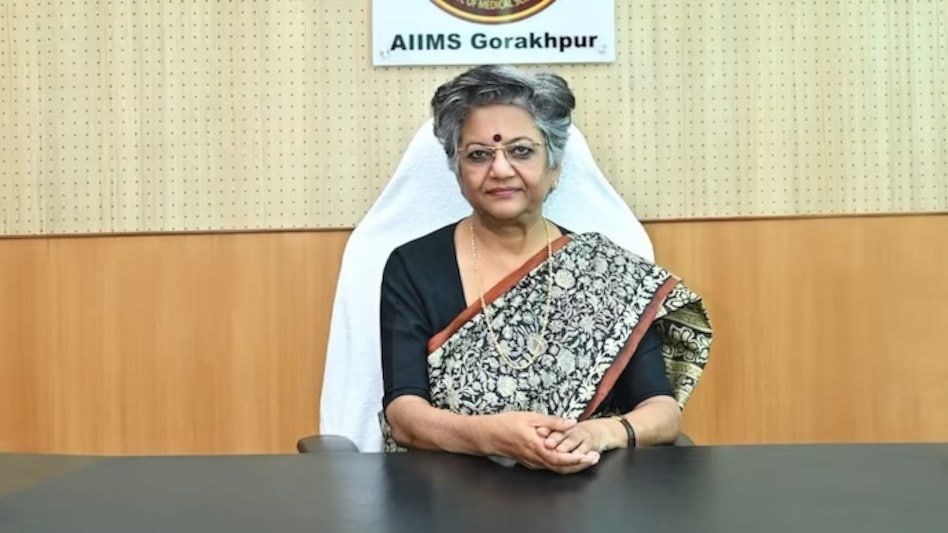
The working director of AIIMS Gorakhpur, Major General (Retd) Vibha Datta, felt unwell on Wednesday. She was taken to a private hospital for heart examinations because the catheterization laboratory (Cath Lab) at AIIMS Gorakhpur has not yet been launched. Previously, doctors at AIIMS provided her with assistance in the emergency department, after which her condition stabilized.

Later, as a precaution, she was transferred to a private clinic where catheterization is possible. Vibha Datta was admitted to the private hospital around 5:00 PM. Doctors conducted an examination to determine if she required a pacemaker. It was determined after the check that a pacemaker was not necessary. She returned home around 8:00 PM.

According to a senior doctor at AIIMS Gorakhpur, Vibha Datta's condition stabilized after initial treatment. The doctor noted that her health is currently fine, and her visit to the private hospital was merely a preventive measure for further examinations.

This incident raised questions about why the catheterization service is not operational at AIIMS Gorakhpur. This is particularly relevant given that the institution's executive director had to seek heart examination at a private hospital. AIIMS Gorakhpur later reported that about 70 percent of the work related to launching the catheterization laboratory is complete. According to the institution, the necessary medical instruments and equipment are expected to arrive, and completion work will continue for the prompt launch of the laboratory.

In the opinion of the senior doctor at AIIMS, the catheterization laboratory is expected to start operations by December. After its launch, patients from Gorakhpur, as well as from other districts of Uttar Pradesh and neighboring states, will be able to receive necessary heart-related services and treatment within their region. These procedures include angiography and angioplasty.

The foundation stone of AIIMS Gorakhpur was laid by Prime Minister Narendra Modi on July 22, 2016, as part of the Public Health Plan. After Yogi Adityanath became the Chief Minister of Uttar Pradesh in 2017, the pace of the project accelerated, and numerous construction obstacles were removed. Prime Minister Narendra Modi inaugurated the outpatient department of AIIMS Gorakhpur on February 24, 2019, and the entire complex was grandly opened on December 7, 2021.

Currently, AIIMS Gorakhpur is focused on completing the remaining work related to the catheterization laboratory. Upon its launch, the institution's capabilities in cardiology will be strengthened, and patients will not have to travel far to receive quality treatment.

Patient in Kanapura Found 70 Stones in Bile Ducts After Gallbladder Removal 29 Years Ago
Read more
www.aajtak.in

Patient in Kanapura Found 70 Stones in Bile Ducts After Gallbladder Removal 29 Years Ago

Many patients assume that the problem of gallstones completely disappears after surgical removal of the gallbladder. However, a case that occurred at the GSVM medical college in Kanapura requires rethinking this notion. One patient had his gallbladder removed 29 years ago, but abdominal pain persisted. Examination revealed stones in the bile duct. Despite six previous surgeries, the problem was not resolved. Eventually, the team led by the GSVM medical college chief physician, Dr. Sanjay Kaly, performed a seventh operation, during which 70 stones were removed from the bile duct. According to the doctors, the patient is currently experiencing pain relief.

The patient from Bilhaura first sought help for abdominal pain about 29 years ago. Diagnostics revealed gallstones, leading to gallbladder removal surgery in 1997. The patient expected the stone problem to be solved permanently, as it is commonly believed that new stones do not form after gallbladder removal. Nevertheless, after some time, he experienced abdominal pain again. Subsequent examination showed that the stones were located in the bile duct. He underwent repeat treatment in 2019, but the problem was not fully eliminated, and the pain recurred.

The patient's problems did not cease. In 2026, during June, July, August, and September, he required four ERCP procedures. The goal of this procedure was to extract stones from the bile duct. However, this did not bring permanent pain relief. Due to the constant recurrence of stones in the bile duct, the patient became extremely worried. Ultimately, he came to the GSVM medical college in Kanapura and discussed his issue with the chief physician, Dr. Sanjay Kaly, in outpatient practice. The patient provided the doctor with complete information regarding his past surgeries, examinations, and treatments. Considering his extensive medical history, the case was re-examined.

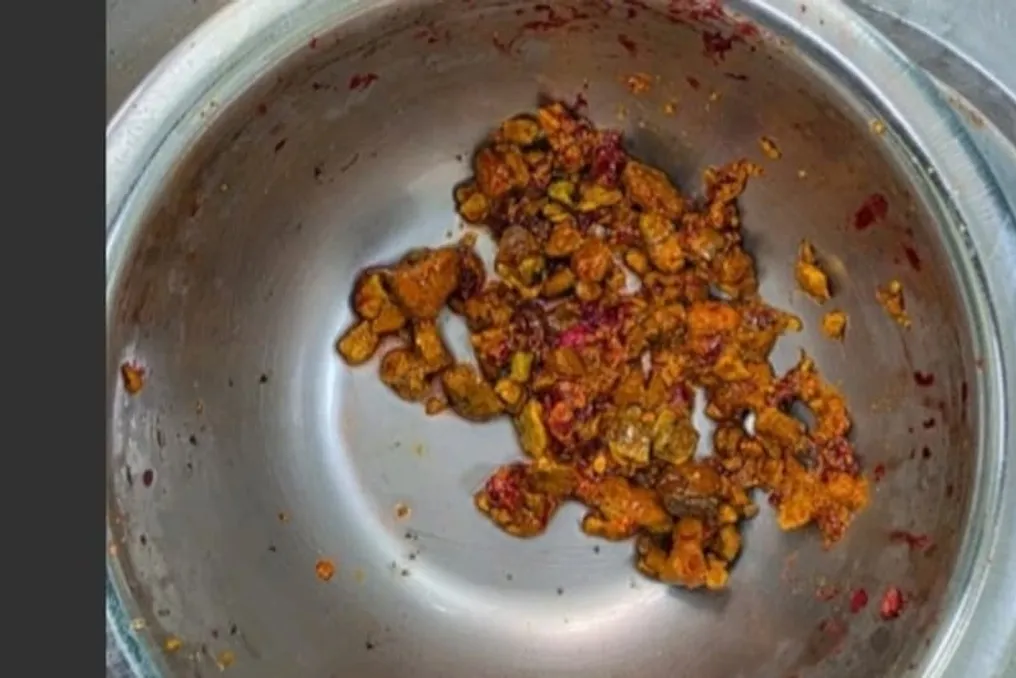
After reviewing the patient's medical history, the chief physician of GSVM medical college, Dr. Sanjay Kala, developed a treatment plan with his team, which also included Dr. Anurag Singh. The doctors thoroughly examined the state of the patient's bile duct using intraoperative colonoscopy. This technique allows for direct visualization of stones inside the bile duct and assessment of their position. During the examination, a large number of stones were discovered in the bile duct. The doctors then began removing them sequentially. After completing the procedure, the bile duct was rechecked to ensure no stones remained. Upon counting the removed stones, there were 70. For a patient who had suffered from pain and repeated treatments for a long time, this was a significant relief.

According to Dr. Sanjay Kaly, this patient had a predisposition to stone formation specifically in the bile duct. This is why his problem persisted despite the gallbladder removal and multiple treatments. In fact, the gallbladder and the bile duct are different structures. Even after gallbladder removal, some patients may have stones remaining in the bile duct or they may appear in the future. Therefore, if pain persists after surgery, its cause must be determined. The doctor noted that the patient's bile duct stones were removed, and a follow-up check revealed no other stones. The patient now feels pain relief.

The patient shared his opinion, stating that 29 years ago he had his gallbladder removed, believing the stone problem would not recur because it is a common belief. However, this did not happen to him. He constantly suffered from pain and had to undergo numerous surgeries and procedures. The patient expressed gratitude to Dr. Sanjay Kale and his team for removing all the stones from his bile duct, which brought him relief.

Popular