The government of Uzbekistan intends to send 287,000 citizens to work in 34 states this year. The goal of these plans is to improve employment opportunities abroad, strengthen professional training, and protect the rights of migrant workers.
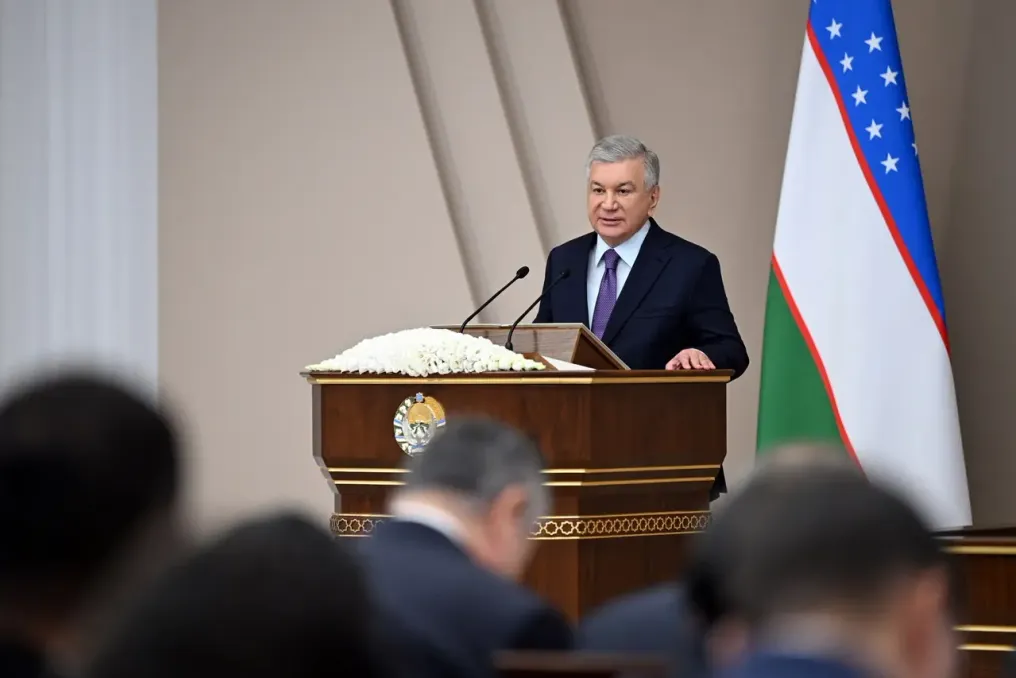
President Shavkat Mirziyoyev presented these plans at a meeting on labor migration, noting changes in the global labor market. He emphasized that there are about 168 million international migrants worldwide, and Uzbekistan's priority is connecting citizens seeking work abroad with countries experiencing labor shortages.
The President stated that people must deeply master their profession, know their value, and be able to count on their country's support.
In recent years, Uzbekistan has expanded organized labor migration. The number of countries cooperating in this area has increased from three to 27, and the number of major foreign employers has grown by almost 400. Although the number of Uzbek citizens working abroad has decreased over the last decade, the amounts they send to their families have quadrupled. Mirziyoyev explained this change by the international perception of Uzbek specialists: more citizens are now leaving as qualified professionals rather than unskilled workers.
Nevertheless, the amount of remittances to families varies greatly depending on the region. The average monthly remittance per person working abroad is 1,850 US dollars in the Fergana region. In Karakalpakstan and Tashkent region, this amount is 400 US dollars, in Syrdarya—500 US dollars, in Jizzakh and Navoi regions—600 US dollars, and in Sunqandarya and Khorezm—less than 700 US dollars.
The President called on regional governors, ambassadors, and technical college heads to intensify efforts to prepare citizens for higher-paying jobs abroad. He stressed that citizens must know exactly where they will work, how much they will earn, and who will protect their rights.
Mirziyoyev instructed ambassadors, regional administrations, and technical colleges to work together to secure jobs. As examples of successful partnerships, he cited cooperation with employers in Germany, Turkey, Slovakia, and Qatar. He also criticized the limited activities of diplomatic missions in other countries, noting that the European Union has included Central Asian specialists in its migration strategy for the first time.
The President pointed to opportunities in the UK, which needs 33,000 workers. However, Uzbek citizens are primarily sent there for seasonal agricultural work, while clear agreements with employers in healthcare, logistics, and industry have not yet been reached. The issue of Uzbekistan's participation in the Youth Mobility Program also remains unresolved. Furthermore, the full implementation of the agreement with Italy to expand labor migration opportunities has not been completed.
Mirziyoyev emphasized that knowledge of foreign languages is another key requirement for obtaining well-paid work abroad. About 200,000 young people in Uzbekistan have mastered English at a high level and received certificates, but efforts to connect them with employers in the USA, Canada, Australia, New Zealand, Sweden, and Denmark remain insufficient.
Although Germany requested 45,000 specialists from Uzbekistan this year, only 2,000 people were employed. The main obstacle is the lack of candidates who speak German, indicating the need to combine professional and language training. As part of cooperation with the German company Globogate, 20 medical technical colleges train 1,500 nurses annually. At the Technical College of Higher Professional Skills in Karshi, German instructors teach both language and profession to young people.
In Andijan, an entrepreneur renovated an unused technical college and, with the help of German teachers, trains 1,500 specialists per year. Mirziyoyev called for this model to be extended to other regions so that two or three technical colleges in each region offer training in German language and professional skills.
The German company TELC began training 100 German language teachers at the Intil International Training Center. They are expected to start working in technical colleges across all regions early next year. Deputy regional governors were instructed to study the experience of this center and establish a unified migration center in each region next year. Each region has been allocated 8 billion soms for this purpose. It is planned to train 10,000 people in professional skills and German language, and then help them find jobs in Germany.
The President noted that teaching German should receive as much attention as English. Next year, 500 native German speakers will be recruited to teach in schools and technical colleges. Starting next academic year, the state quota for training German language teachers in universities will be doubled.
Major companies from Germany, Japan, and South Korea have expressed interest in training specialists in Uzbek technical colleges and are ready to invest in curricula and equipment. The government plans to select 20 colleges within a month and restructure them starting next year to meet the requirements of foreign employers.
The demand for skilled workers in construction, industry, and logistics is growing both in Uzbekistan and abroad. The Tashkent Pipe Plant in Sergelysk district offered to train 2,500 welders, electricians, and fitters annually, using its specialists as instructors. The government also plans to transfer the management of two or three technical colleges in each region to large entrepreneurs for 15 years. It is expected that they will train at least 30,000 job-ready specialists annually. Graduates will receive state qualification certificates.
A system will be introduced allowing enterprises to deduct personnel training and equipment purchase costs from taxes. They can also claim grants for every graduate successfully employed abroad. Colleges will establish direct links with foreign employers.
Mirziyoyev expressed confidence that leading entrepreneurs will help the state form a 'brand of Uzbek specialists' abroad.
The President also addressed the issue of private employment agencies. After simplifying licensing procedures, their number has tripled in two years, and the number of citizens employed through them abroad has increased fivefold. He acknowledged instances of errors, corruption, and fraud related to applicants. A separate law has been adopted to regulate the sector. Starting next year, responsibility for sending citizens to work abroad will be transferred to the most reliable private agencies. For every person employed in a high-paying position, they will receive an incentive payment of 1.5 million soms.
Some technical college buildings will be provided free of charge to private organizations for professional and language training. A social tax of 1% will apply to foreign teachers and experts involved in these programs, and equipment and consumables necessary for training will be exempt from customs duties. Private employment agencies will also operate in a transparent system and be evaluated by a rating mechanism. The main criteria will be actual employment, protection of workers' rights, salary level, and social guarantees.
Mirziyoyev instructed relevant bodies to submit a draft resolution within a month for further reform of the sector, classifying agency activities as social services and simplifying their taxation accordingly.
The President also called for the presence of two large international recruiting companies in Uzbekistan next year. These companies should be able to train specialists locally and send them directly to employers abroad.
Despite the potential to place 287,000 people in 34 countries this year, many citizens remain unaware of these opportunities. It is necessary to improve interaction between the Migration Service and the mahalla system. Mirziyoyev emphasized: 'We need quality in migration, not just numbers.'
Information about vacancies abroad must be available in every mahalla. Each posting must specify the country, required profession, location for training, and necessary language. The seven-member mahalla structure should inform interested citizens about opportunities and register candidates on the mahalla Online Platform. Regional governors and responsible organizations will monitor their professional and linguistic preparation, as well as subsequent employment. Regional governors will conduct reviews monthly, and district governors—twice a month, with the participation of migration officials and mahalla representatives. The government will introduce stricter monitoring of the preparation and employment of each candidate.
Mirziyoyev noted that merely signing agreements with employers is not enough to create high-paying jobs abroad. Uzbekistan must engage in active economic diplomacy with developed countries and systematically work on quotas, work visas, and qualification recognition.
The President described the protection of citizens working abroad as a constant duty of the state. He addressed citizens working abroad, calling them 'truly brave people who work tirelessly to provide for their families and the future of their children. They are our citizens and our children.'
Uzbek citizens facing difficulties abroad can request assistance through the mahalla Online Platform. If necessary, the ambassador will personally visit the citizen, protect their rights, and help solve the problem. Mirziyoyev also instructed regional governors to ensure decent living conditions for the families and parents of migrants, as well as quality education for their children.
The forum 'New Uzbekistan: Crossroads of Global Opportunities' will take place in Tashkent from November 30 to December 5. It is expected to bring together representatives from 52 countries and help businesses identify new export destinations while connecting job seekers with employers from Europe and the Persian Gulf. Each Uzbek ambassador is tasked with inviting 50–100 representatives of major importers and recruiting companies from their host country. The government aims to conclude specific agreements with foreign partners on exports, tourism, and labor migration by 2027.
The President stated that the work of ambassadors and governors must go beyond finding vacancies and cover the entire process, including employment and the adaptation of migrants to a new environment.
Employment of citizens returning from abroad was also discussed at the meeting. Since the beginning of the year, 1.116 million people have returned from labor migration. Many have gained experience in industry, construction, logistics, services, and agriculture in Germany, the UK, South Korea, Japan, and Russia. Mirziyoyev noted that their experience working in large industrial enterprises and using modern technologies and methods of work represents an important resource for Uzbek business. Regional governors and industry leaders were instructed to offer them suitable jobs and utilize their skills.
A platform will be created to record the place of work, profession, and experience of citizens returning from abroad. It will be integrated with the system used by regional governors and industrial officials. The government aims to find suitable jobs for 250,000 returnees by the end of the year. Those wishing to start a business will be offered guidance and support.
The President also raised the issue of recognizing periods of employment and pension rights accumulated abroad. Uzbek citizens legally work in more than 40 countries and pay pension contributions along with taxes. Mirziyoyev emphasized: 'Their work record abroad must be recognized upon returning home, and this must be taken into account when calculating pensions.' This year, Uzbekistan signed bilateral agreements with Kyrgyzstan and Azerbaijan.