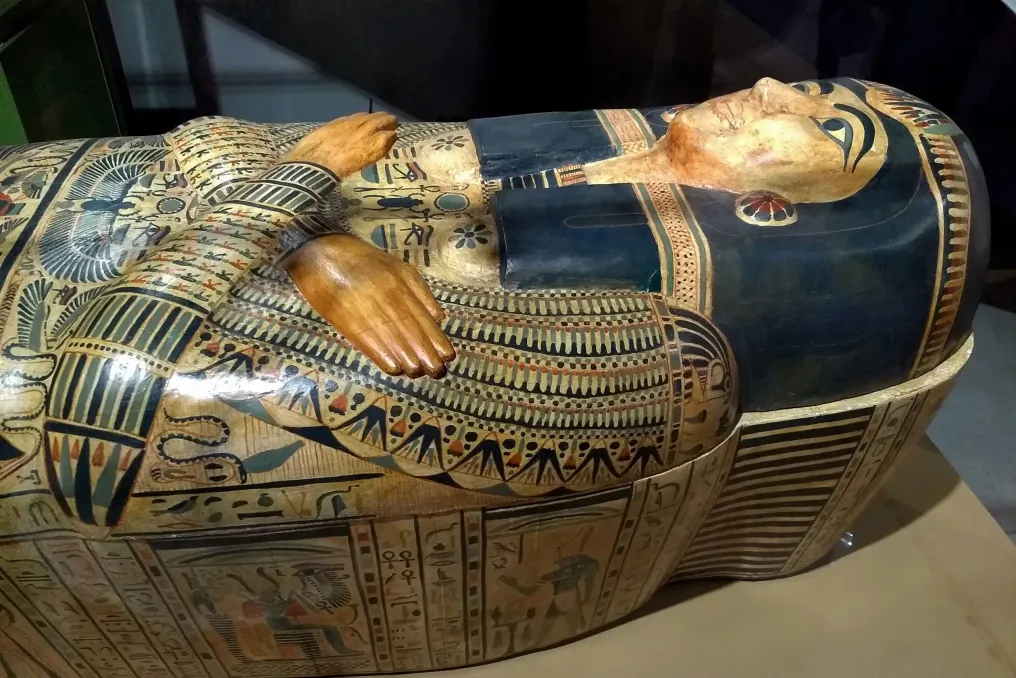
The remains of a mummified ancient Egyptian priest, which have been in a Scottish museum for over a century, may soon be returned to Egypt following a repatriation request.
Recently, the remains of Necht were removed from public display at the Kelvingrove Art Gallery and Museum in Glasgow amid growing ethical concerns regarding the exhibition of human remains without the consent of the deceased or their descendants.
Glasgow Life, the organization managing the museum, confirmed receipt of the request to return Necht to Egypt. Although reports indicate the request came from Egyptian authorities, the organization itself has not confirmed the source of this appeal.
Necht is believed to have lived between 1797 and 1985 BCE. His remains were discovered in Beni Hasan in Upper Egypt in the early 20th century and subsequently transferred to Glasgow in 1923. His painted sarcophagus was also taken off display.
This decision is part of a broader reassessment of how museums handle the storage and exhibition of human remains. The revised code of ethics by the International Council of Museums, published in June 2026, calls on institutions to treat human remains with due respect and dignity.
Other Egyptian remains at Kelvingrove, including a mummified male head, arm, and leg found in the Valley of the Kings in Luxor, have also been withdrawn from public view.
Changes are also affecting the Hunterian University Museum in Glasgow, where the mummified remains of Lady Shep-En-Gor have been covered with special textile, while her richly decorated sarcophagus remains on public display.
Glasgow Life confirmed that additional archaeological human remains will be removed from public access and placed in secure, restricted storage.
This decision reflects a wider shift in museums' approach to cultural heritage, particularly human remains and artifacts removed from their countries of origin during the early archaeological research and colonial rule periods.
Egypt's efforts to preserve and celebrate its ancient heritage have also attracted increased attention with the opening of the Grand Egyptian Museum near the Pyramids of Giza in 2025.
However, for Necht, this issue goes beyond where an archaeological collection should belong; his remains belonged to a person with their own life, beliefs, and burial traditions.
It remains unknown whether the repatriation request will be approved. Its removal from public display has already become part of a wider discussion about ownership rights, dignity, and museums' responsibilities toward the people whose history they hold.