There are people whom journalists interview whose names eventually disappear among hundreds of written stories. But there are also people like Desmond D'Sa, whose names remain familiar because the battles they fight never seem to end.
For over two decades, Desmond featured in my reports on the most pressing environmental and social issues in Durban. He was a voice that repeatedly demanded answers on behalf of ordinary citizens, fighting against chemical pollution, sewage spills, industrial fires, gang violence, and devastating floods.
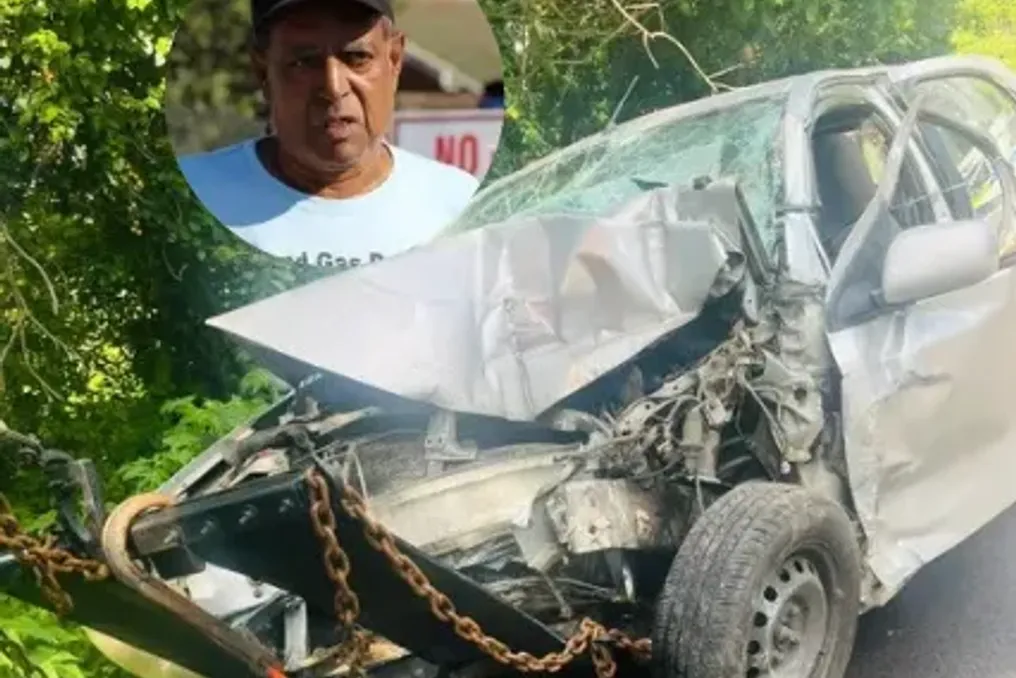
Today, reflecting on his tragic death at the age of 70, I realize how much of recent Durban history can be traced through the struggle he waged. Desmond died in a road traffic accident near Umzinto on Thursday, October 29, along with his son and daughter-in-law.
For South Africa, we have lost an internationally recognized environmental activist. For Durban, we have lost one of the most persistent defenders of the poor. And for journalists covering the hardships of the city's southern communities, we have lost a voice that refused to be silenced.
However, to me, Desmond was more than just an activist or a reliable news source. He was one of the kindest people I met; someone who genuinely cared about the communities he fought for, generously giving his time and never hesitating to help when needed.
One of my encounters with Desmond's activism took place in July 2012, when residents of the Clairwood, Osterwell, and Bluff areas complained about a chemical smell invading their neighborhoods. People described the odor as resembling cat urine, which caused them discomfort.
Desmond challenged industrial operators and demanded accountability. Today, it is striking how familiar the circumstances became: a community complaint, an explanation from the company, an investigation by the municipality, and Desmond's demand that someone take responsibility.
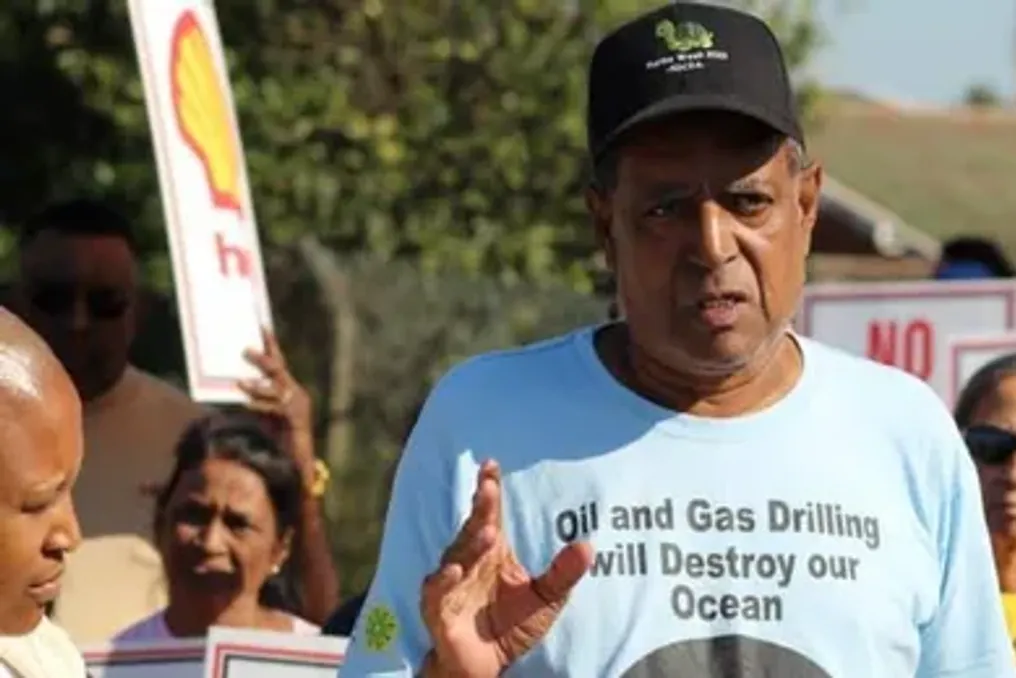
For him, pollution was never just an environmental issue. It concerned mothers worried about their children's breathing, elderly residents afraid to open windows, and families living near industrial sites with no option to move to a safer place. He understood that environmental injustice has a deeply personal character.
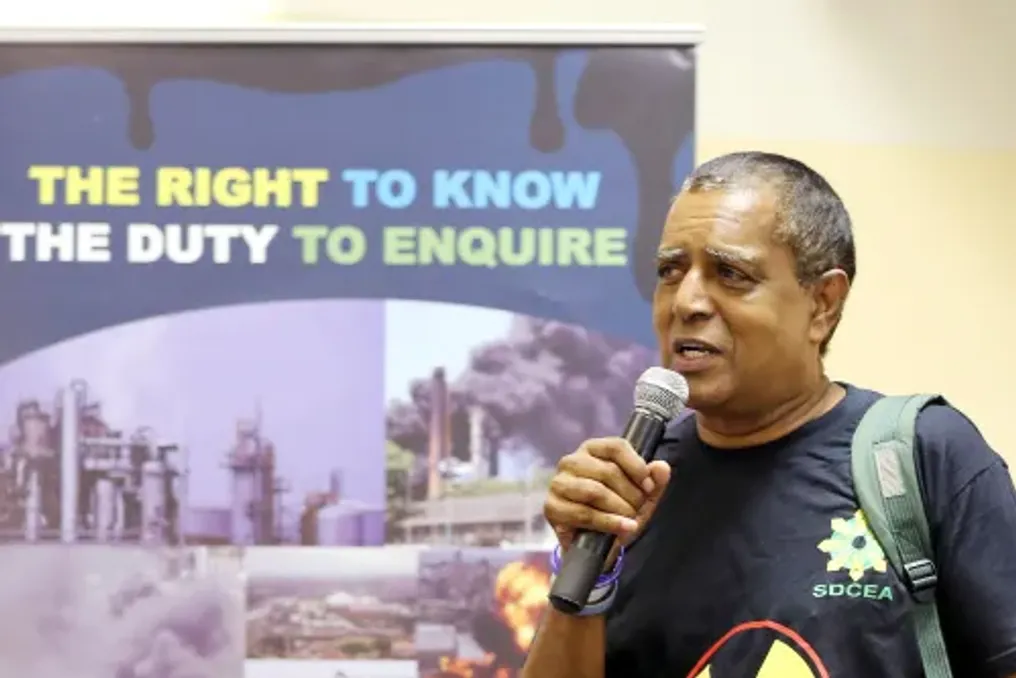
One of my warmest memories dates back to November 22, 2011, during a nationwide campaign against the Promotion of Access to Information Act, better known as the Secrecy Act. In Durban, a group of journalists gathered near the City Hall to defend press freedom and the public's right to know the truth.
Journalists are accustomed to covering protests. We know how to interview organizers and capture the anger of the crowd. However, participating in such an event is a completely different experience. Our picket was quite quiet. We had placards and convictions, but little experience in rallying a crowd until Desmond appeared.
Together with activists from the Right2Know campaign, he arrived with a loudspeaker and immediately got to work. He mobilized us, led chants, and made the group of journalists do something we were much more accustomed to only observing: toying. Here we are, journalists protesting for the right to report freely, and this was done by an environmental activist from Wentworth.
What struck me most was not the political significance of that day. What moved me was that we called him, and he came. He didn't owe us help, but someone needed him, and Desmond showed up.
He understood that freedom of expression is vital for the communities he represented, because without access to information, ordinary people cannot hold those in power accountable.
In December 2013, I covered the Ekhindini municipality's plans to discharge an estimated 15 million liters of untreated sewage into the Umlazi River during repair works. The proposed discharge threatened communities along more than 20 kilometers of the river, ultimately reaching the Port of Durban.
Desmond and other activists monitored the river and challenged the municipality's approach. Following public opposition, the city postponed the planned discharge to conduct further consultations.
Eight years later, in May 2021, I covered another dispute over sewage, this time at Cutting Beach near Merebank. Fishermen swimming and people using the beach for religious rituals were affected by the sewage entering the sea. Desmond once again challenged the municipality's explanations. He spoke of the fishermen's livelihoods, of those who came to pray, and of the importance of protecting the ocean. He and fellow activists collected samples for laboratory testing.
The years between these two stories have changed little regarding fundamental questions: who protects ordinary people when public infrastructure fails, and why are communities forced to constantly fight for something as basic as a clean environment? Desmond asked these questions for most of his life.
To describe Desmond simply as an environmental activist would be to miss a crucial part of his personality. In July 2014, I wrote about a healing walk in Wentworth—a community battling gang violence, drugs, and deadly shootings. Desmond helped mobilize residents, churches, and religious communities to reclaim their streets.
I remember covering the gang violence in Wentworth, and I needed to penetrate some of the most dangerous parts of the community to speak with residents. Desmond accompanied me. He knew the streets and the people, and they knew and trusted him. He ensured my safety while working.
He also knew the fishermen, hostel dwellers, and shack inhabitants whose stories rarely attracted attention. Whenever I needed to understand the daily struggles of families or find people willing to share their experiences, he knew exactly who to ask. Even recently, when I researched the roots of Nobel Peace Prize laureate Navi Pillay and wanted to find out where she lived in Clairwood, Desmond pointed me in the right direction.
He knew Durban, especially those parts of the city that authorities often seemed to forget. He warned us before disaster struck.
In August 2021, following another fire at a chemical plant in Jacobs, Desmond warned about inadequate safety oversight and the potential for further environmental disasters. He referenced an earlier fire at the UPL chemical warehouse in Cornwood and questioned whether the authorities possessed sufficient capacity to monitor hazardous industrial operations.
After the devastating floods in KwaZulu-Natal in 2022, I spoke with him about Durban's preparedness for natural disasters. He spoke of families who lost homes, property, and loved ones, questioning why large industrial enterprises have emergency plans while vulnerable communities remain unprotected.
His words in that interview reflected the inequality that fueled his activism. 'But for ordinary people, there is nothing.' These words explain a great deal about Desmond. He believed that ordinary people matter. Their lives, homes, and children matter. When institutions failed them, someone had to step up and demand better.
Desmond's courage came at a personal cost. His activism cost him his job. He faced intimidation and threats, and his home was set on fire with petrol. Nevertheless, he continued his work.
In 2014, he received the 'African Golden Environmental Award' for his work mobilizing communities against industrial pollution and helping secure the closure of the Bulbul Drive hazardous waste dump. Later, he received an honorary doctorate from the University of Technology Durban, and this July, an award for lifetime achievement from the Premier of KwaZulu-Natal, Thembi Ntuli.
But his contribution cannot be measured only by awards. It can be seen in the residents he helped organize, in the environmental solutions he opposed, and in the attention he drew to forgotten communities. For me, it is also reflected in many small acts of kindness that never made headlines: in moments when he helped a journalist in need, in the people he introduced me to, and on the dangerous streets he walked with me.
As journalists, we are trained to maintain professional distance from the people we interview. We ask them questions, verify their claims, and seek opposing viewpoints. But when someone features in your reports for so many years, their death inevitably prompts reflection.
Looking back, I see a person who was remarkably consistent. He demonstrated that an ordinary citizen, armed with conviction, knowledge, and community support, can challenge institutions far more powerful than himself. He showed that environmental justice is linked to human dignity and reminded us journalists why it is important to listen to people whose concerns are too easily ignored.
Desmond gave his voice to those fighting to be heard. He kept that promise. And now that voice is silent.
Rest in peace, Des. Durban has lost a fearless fighter, and journalism has lost a voice that helped us tell some of our country's most important stories.