Amid Global Crisis, India Unveils Major Energy Plan Opening Up ₹20 Trillion Opportunities
Read more
Aaj Tak
www.aajtak.in

Amid Global Crisis, India Unveils Major Energy Plan Opening Up ₹20 Trillion Opportunities

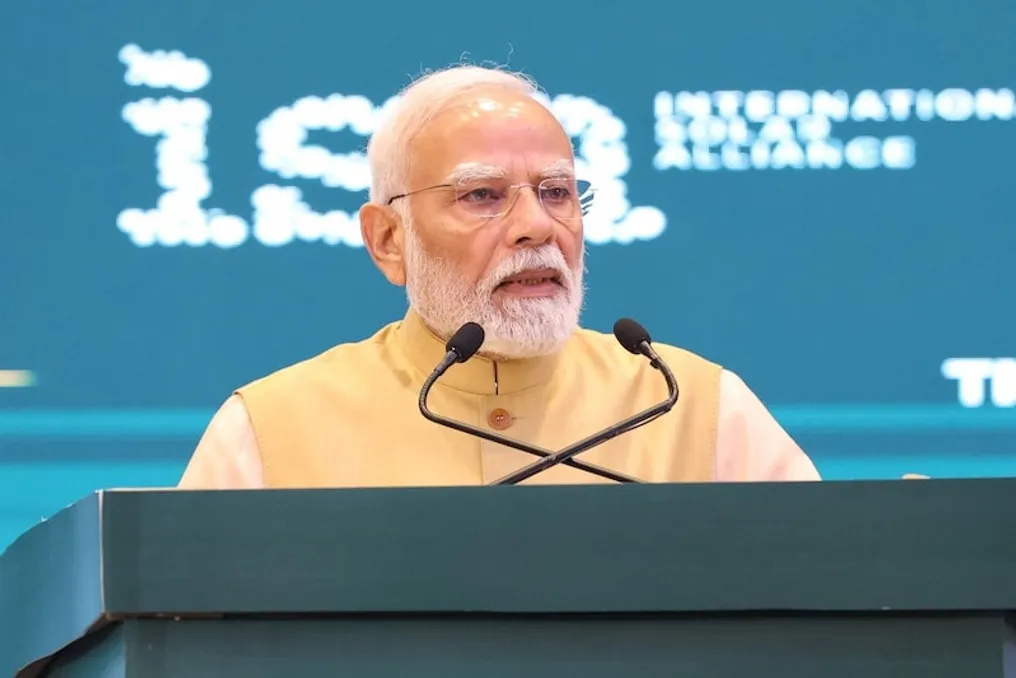
Despite tensions in the Middle East and the global energy crisis, India's economic growth demonstrates resilience. Prime Minister Narendra Modi announced that India is prepared to add approximately 500 gigawatts (GW) of additional renewable energy over the next 10–11 years, irrespective of global turmoil.

At the opening ceremony of the 'India Renewable Energy Summit and Expo 2026' in New Delhi on Monday, the Prime Minister highlighted the country's plans for its energy future. He noted that the world has faced severe economic shocks, starting from the coronavirus pandemic and the Middle East crisis.

Modi emphasized that despite the ongoing Middle East crisis, 140 million Indians can be proud that the country has managed this situation more effectively, and India's growth remains high. In his view, energy security is the foundation of economic stability. He also warned that without investments in clean energy and the creation of new systems over the last decade, the energy crisis in India could have been more severe than in other parts of the world.

Achieving Paris Agreement Goals Ahead of Schedule

In his speech, the Prime Minister presented India's achievements. He stated that more than half of the installed power generation capacity in the country is now based on non-fossil fuel sources. Although India committed to achieving this goal by 2030 under the Paris Agreement, the country achieved it five years earlier, in 2025. Currently, the share of non-fossil fuels in India exceeds 300 GW. The Prime Minister expressed confidence that the goal of 500 GW of non-fossil energy will be met by 2030.

₹20 Trillion Investment Opportunities

Modi stated that India's political and legislative stability creates an ideal environment for investment in the renewable energy sector. He forecasts that opportunities for investment in India's renewable energy sector worth over ₹20 trillion will emerge by the end of this decade. Furthermore, mentioning the National Green Hydrogen Mission, he noted that India is rapidly moving towards the target of 50 million tons of annual production capacity. The government has allocated ₹200 billion for the second phase of the Green Energy Corridor.

The Prime Minister shared his vision for farmers and startups. He said: 'My vision is for our food producer to become an energy producer. Farmers should install solar panels on their unused land, and we must ensure this in as many villages as possible.' He urged IIT institutions, startups, and entrepreneurs to develop innovations and models that allow ordinary families to meet their daily needs through solar energy. Modi also reported that over 44,000 government buildings in the country are already connected to solar energy, leading to annual savings of about ₹700 million.
Similar stories

External Minister S. Jaishankar stated a targeted strategy of attacks on energy infrastructure
Read more
www.aajtak.in

External Minister S. Jaishankar stated a targeted strategy of attacks on energy infrastructure

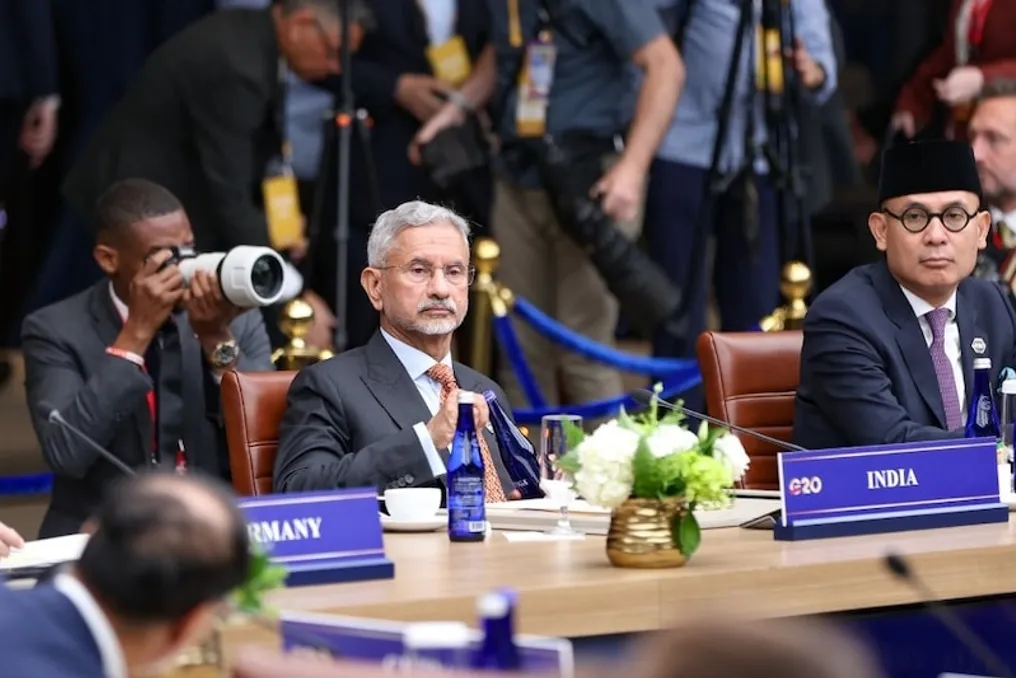
On Friday, India took a firm stance at the G20 on the global energy crisis and oil supply disruptions. Foreign Minister Dr. S. Jaishankar criticized restrictions and obstacles to oil supplies through key sea routes during the meeting of G20 foreign ministers.

He emphasized that attacks on energy trade and infrastructure are deliberate, not accidental, and constitute a calculated strategy to control prices. During the G20 foreign ministers' meeting in Atlanta on Friday, Jaishankar noted that the world is facing an energy crisis caused not by a lack of production.

According to him, the crisis stems from uncertainty, supply interruptions, rising prices, and energy access issues. At the meeting, organized by US Secretary of State Marco Rubio, he stated that the G20 must demonstrate sensible leadership to maintain open and stable energy markets.

The Foreign Minister noted that the energy market is suffering due to sanctions, disruptions, and barriers on important sea routes, and that the cost of this impact falls on the entire world, not just individual countries. S. Jaishankar also raised the issue of arbitrary differentiation between oil and gas, stating that 'the chosen concessions of some countries explain everything themselves.'

Furthermore, he discussed the interdependence of countries in the global market alongside energy security, stressing that this dependency cannot be underestimated. He reported that India proposed the 'G20 Critical Minerals Circularity' initiative. Jaishankar called on G20 countries to increase financial assistance and support technologies such as energy storage, small modular nuclear reactors, green hydrogen, and biofuels.

Ministry of Energy plans construction of new renewable power plants with a capacity of 6000 MW
Read more
www.tehrantimes.com

Ministry of Energy plans construction of new renewable power plants with a capacity of 6000 MW

The Deputy Minister of Energy and head of the Organization for Renewable Energy and Energy Efficiency (SATBA) announced new plans by the Ministry of Energy to build 6000 megawatts of new renewable energy facilities in the country. Furthermore, he emphasized that work will be simultaneously intensified to create a value chain and localize necessary equipment.

According to an IRNA report citing SATBA, Mohsen Tar khatalab, explaining the organization's latest steps in developing new energy, named attracting non-state investment and strengthening domestic supply as two main directions to achieve sector goals. He detailed SATBA's new plans in three areas.

In the context of planning 10,000 megawatts of residential solar power plants, he announced the publication of a call for investors from the non-state sector to participate in the construction of small-scale distributed solar power plants.

Tar khatalab specified that the financial model for these projects is developed based on a combination of funding sources: no less than 40 percent must be the investor's equity capital, a maximum of 50 percent can be funds from the National Development Fund, and consumers of electricity must contribute at least 10 percent.

The head of SATBA stated that investors who contribute a higher percentage to the project financing will be given priority in consideration. The investor will be responsible for equipment supply, installation, operation, and sale of generated electricity (with guaranteed repayment of principal and interest through the Green Energy Exchange).

Addressing the implementation of the national program for the development of solar energy systems and the production chain, Tar khatalab noted that SATBA has long put the localization of equipment and the creation of production lines for the needs of solar power plants on the agenda to enhance technological capabilities and reduce dependence on foreign supplies. Now, considering the attractiveness of the Iranian market for investors, this issue is being addressed more seriously.

In this regard, he announced a call to identify and support qualified applicants for the construction, development, and modernization of solar panel production lines, reminding that entities meeting technical and financial requirements will receive support and legal assistance from SATBA.

The Deputy Minister of Energy also reported the start of the repayment period and payments on loans from the National Development Fund by investors. He stressed that as projects advance, investors are obliged to repay the principal and interest on allocated resources according to established mechanisms.

He added that after the repayment period ends, ownership of the solar and other renewable power plants will transfer to the investors. Tar khatalab continued that the participation of the National Development Fund in the construction of renewable power plants has become the first successful example of national investment, which, in addition to building power plants and solar energy generation facilities, has contributed to the expansion of the private sector and the return of used resources to the National Development Fund. The Deputy Minister of Energy concluded that this successful experience can be scaled up to other national needs while preserving the resources of the National Development Fund.

European Commission proposes preparing the EU for global warming of up to 3°C by 2100
Read more
noticiasaominuto.com

European Commission proposes preparing the EU for global warming of up to 3°C by 2100

The European Commission has presented a proposal that political decisions in the European Union must take into account the possibility of reaching a global warming level of 3°C by 2100, following a summer marked by extreme temperatures across the continent.

During a press conference dedicated to this plan, European Commission Vice-President Teresa Ribera emphasized that 'the climate crisis is not a fiction.' She warned that climate change is not only real but is also a direct cause of mortality, citing 30,000 to 50,000 premature deaths that occurred this summer in Europe. Furthermore, she noted that climate change is destroying wealth and infrastructure.

After an extreme summer characterized by temperature records in many European countries, historically low water levels in rivers such as the Rhine or Danube (which led to the closure of nuclear power plants), and fires in member states with typically milder climates, such as Germany, Belgium, or the Netherlands, Teresa Ribera also highlighted the economic costs of climate change.

She pointed out that if the conditions recorded in the five hottest years of each country (from 2014 to 2024) repeat during 2030, the cumulative GDP losses could range from 5% to 7% in the most vulnerable economies. Examples include France, Italy, Germany, or Spain, which could lose between $120 billion and $240 billion.

Therefore, the European Commission Vice-President insists that ensuring the resilience of the European Union to climate change is not just an 'environmental goal' but also a 'necessary condition for ensuring long-term competitiveness.' In this regard, the European Commission today presented the so-called 'European Climate Resilience Framework,' whose goal is to 'protect, plan, and prepare Europe for a warmer climate.'

The European Commission also asserts that the trajectory of global warming must be taken into account 'when making decisions on policy, assets, or investments,' stressed European Commissioner for Climate, Wopke Hoekstra. This implies preparing the EU—whether at the level of urban planning, infrastructure construction, or water resource management—for global warming of 3°C by 2100 compared to pre-industrial levels. However, the Commissioner noted that the bloc will continue to 'do everything' not to exceed the 1.5°C threshold agreed upon in the Paris Agreement.

As part of the presented initiative, the European Commission also proposes a number of measures aimed at assisting local and regional authorities in combating extreme weather events, including what is called the 'Climate Insurance Alliance.' Hoekstra noted that currently only a quarter of disaster losses are covered by private insurance, often forcing national budgets to act as the last insurer, and emphasized that the goal is to 'increase the level of insurance coverage.'

The executive branch will also develop new digital tools, such as the 'Climate Visualizer,' which uses the Copernicus satellite imagery system to allow public authorities to understand 'what might happen' and prepare for expected extreme climatic episodes.

The presented package also provides for the creation of a single 'national strategic plan' instead of several, requiring member states to establish a 'clear definition of who is responsible for managing climate risks' at the national level. At the press conference, the European Commissioner for Climate stated that the presented package is a 'pioneering initiative globally,' but stressed that Europe cannot consider the work finished, adding: 'The EU still has a lot of work ahead.'

Popular