New Energy Vehicle Sales Are Growing in South Africa
Read more
TechCentral
techcentral.co.za

New Energy Vehicle Sales Are Growing in South Africa

In the first nine months of 2026, South Africans purchased more new energy vehicles than in the entire previous year, with most of them being plug-in hybrids. Plug-in hybrids are selling more than two and a half times as often as fully electric vehicles.

According to industry body Naamsa, published in its October sales report on Monday, the total number of new energy vehicle sales—including hybrids, plug-in hybrids, and battery electric vehicles—reached 22,389 by the end of September. This figure is 34% higher than the 16,703 units sold throughout all of 2025, and there is still a quarter of the year left.

Rechargeable vehicles accounted for 50.5% of new energy sales this year, surpassing half of the cumulative volume in July. Of these, 8,082 were plug-in hybrids, and 3,217 were battery electric vehicles, compared to 11,090 traditional hybrids that cannot be charged from the electrical grid.

Battery electric vehicles (BEVs) made up about 14% of new energy sales and less than 1% of approximately 490,000 new cars sold in the first nine months. The publication TechCentral reported in August that the hybrid boom was masking the stagnation of the fully electric car market.

Fuel costs rose sharply in October: petrol with an octane rating of 95 in the Inland region exceeded the 30 rand per liter mark for the first time, reaching 30.25 rand on October 7, which is 12.4% higher than in September. According to Naamsa, even after the reduction in fuel levy announced in the medium-term budget—a decrease of 1.50 rand per liter for petrol and 3 rand per liter for diesel from November 4—the price of petrol will remain approximately 39% higher than the January level based on October prices.

Similar stories

Offer of vehicles with manual transmission increased in the Brazilian market in 2026
Read more
autopapo.com.br

Offer of vehicles with manual transmission increased in the Brazilian market in 2026

Although more than half of new cars sold in Brazil currently come equipped with automatic transmission or alternative solutions, such as electric propulsion, models with manual gearboxes remain present, especially in entry-level and sports categories.

In 2026, an increase was observed in the availability of cars with manual transmissions in Brazil, driven mainly by the sports vehicle segment. Toyota, for example, introduced a new batch of the GR Corolla and continues to sell the GR Yaris. Simultaneously, Porsche expanded its three-pedal options for the 911 model.

Other available brands and models

In the national scenario, the new Hyundai i20 arrived, which has two configurations with a 1.0 naturally aspirated engine and a five-speed gearbox. In November, Renault plans to launch the Niagara pickup truck, confirming that the entry-level version will have a manual transmission.

Chevrolet stands out as the only manufacturer offering 1.0 cars with six gears in the country, while the Onix and Onix Plus models also feature a manual transmission with a 1.0 turbo engine. Furthermore, the brand offers the manual option in other vehicles such as Spin, Montana, and S10; although the Tracker previously had this option, it is currently sold only in the automatic version.

The current Citroën lineup focuses on simpler models with 1.0 engines, whether naturally aspirated or turbo. However, in the turbo models, the gearbox is always CVT, reserving the manual gearbox for the naturally aspirated Basalt and C3 versions.

Fiat offers manual transmission in its cars equipped with 1.0 and 1.3 naturally aspirated engines. An exception to this rule is the medium pickup Titano, in the entry-level Endurance version, which uses the 2.2 turbodiesel engine with 200 hp.

Ford launched the manual Mustang GT in 2025 in a limited edition of 200 units, which sold out quickly. Currently, the only vehicle from the brand with three pedals is the Ranger pickup, in the XL work version.

Honda maintains a well-operating manual transmission, even in its compact cars, but today it is offered exclusively in the sporty Civic Type R model.

Hyundai made the HB20 1.0 turbo with a manual transmission available up to the 2024 line, with six gears. Currently, the offer is restricted to the 1.0 naturally aspirated models, which have a five-speed manual gearbox.

The new generation of the Mitsubishi Triton was launched with a complete variety, including the GL work model. This medium pickup is notable for being the only one that does not suffer power or torque loss in its manual version.

Peugeot simplified its 208 model range in Brazil, offering the 1.0 naturally aspirated engine only in the Style model, which includes a sunroof and sporty trim. The French brand also sells the Partner Rapid van, which shares a platform with the Fiat Fiorino.

Porsche has never discontinued the manual gearbox, but it was absent in Brazil for several years. Currently, the manual option is available in the Carrera T and in three variants of the GT3.

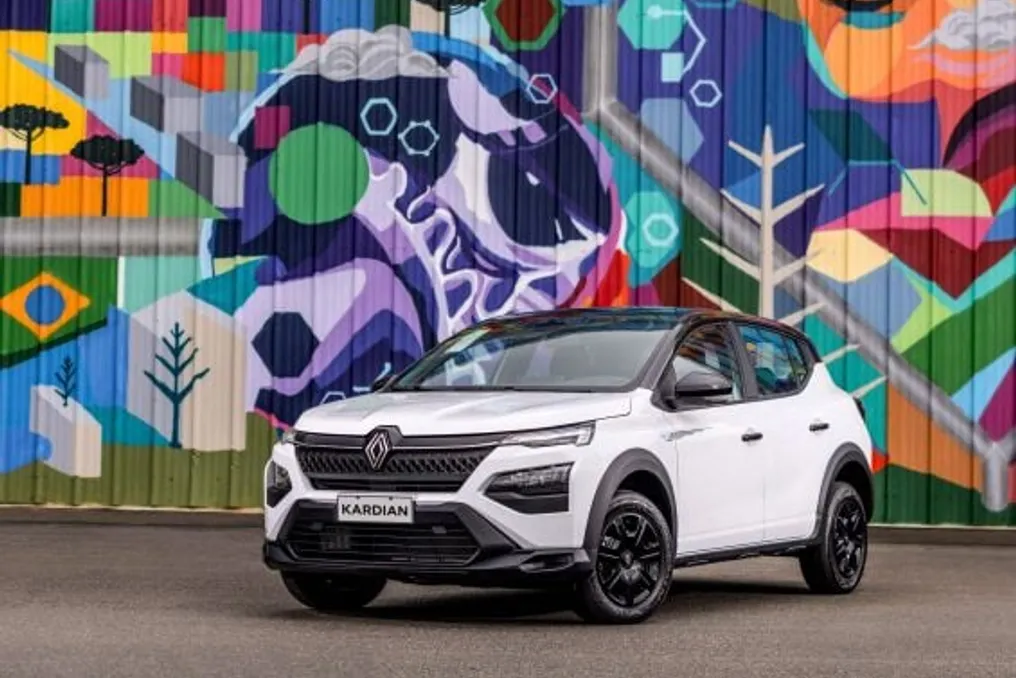
Renault initially launched the Kardian only with a dual-clutch transmission, but soon added a manual version. In 2026, the entry-level Vibe model was introduced, priced below R$ 100 thousand and featuring efficiency improvements. The French brand also maintains simple models in its portfolio, such as the Duster, aimed at fleets, the subcompact Kwid, and the Oroch pickup.

Toyota sells its special models in limited batches of 99 units. In 2026, the GR Yaris compact and the medium GR Corolla were launched with updates. The Japanese brand also offers the entry-level Hilux with a manual transmission.

In the Volkswagen line, there are the Tera TSI and Virtus Sense, which combine a manual gearbox with a 1.0 turbo engine. The Polo Track, Tera MPI, and Saveiro use naturally aspirated engines.

Report shows growing demand for electric mopeds: one in two buyers considering electric two-wheeled transport
Read more
www.aajtak.in

Report shows growing demand for electric mopeds: one in two buyers considering electric two-wheeled transport

Although the habit of using gasoline remains strong, interest in electric models is gaining momentum, transforming the country's two-wheeled transport market. Electric scooter models, which previously caused doubt, are now becoming objects of desire. According to the latest BCG report, in 2024, 3 out of 10 consumers considered purchasing electric two-wheeled transport, and by 2026, this figure increased to more than 4 out of 10.

A recent report by Boston Consulting Group (BCG) clearly indicates that electric mopeds are no longer just an option but are challenging the dominance of gasoline engines. According to the BCG report, the share of buyers of electric two-wheeled vehicles was 30% in 2024, while by 2026, it grew to 43%. This demonstrates a significant shift in consumer mindset regarding electric two-wheeled vehicles over two years. Currently, about one in two two-wheeled vehicle buyers in India is considering the electric option.

The BCG report titled 'Electric In Charge' also shows a decrease in the number of customers who categorically refuse to buy electric two-wheeled vehicles. In 2024, 38% of customers were unwilling to purchase electric two-wheeled transport, but by 2026, this percentage dropped to 29%, indicating a reduction in people's hesitation towards electric vehicles. Customers are now not just requesting information about electric machines but are considering them as their next mode of transport.

The change in consumer views is also reflected in sales data. From April to August 2026, the share of electric models among all two-wheeled vehicles sold in India was 9.9%, compared to 5.5% in the 2024 fiscal year. The position of electric vehicles in the scooter segment has improved even further: in the 2024 fiscal year, the share of electric scooters in total scooter sales was 16.8%, and by the 2027 fiscal year, it grew to 24.1%.

According to BCG, between the fiscal years 2022 and 2026, the overall two-wheeled transport market in India grew at an average annual rate of 12%, while the average annual growth rate of the scooter market was around 19%. Notably, electric scooter sales grew more than three times faster than gasoline scooter sales, indicating the strengthening position of electric scooters in the market.

The market for electric two-wheeled vehicles is moving beyond early EV adopters. The report states that by August 2026, approximately 1.8 lakh new customers were purchasing electric mopeds monthly. This figure suggests that the demand for electric transport is rapidly reaching a wide range of consumers. If the circle of electric scooter buyers was once limited, daily users are now also considering them as the best option.

Significant changes have occurred in consumer perception of electric two-wheeled vehicles. Previously, many considered electric scooters weaker than gasoline scooters in terms of design, speed, and performance. However, this opinion is changing. The BCG report shows that the share of customers who consider the design of electric mopeds better for short-distance daily commuting has increased from 30% in 2024 to 59% in 2026.

Similarly, the number of customers rating the dynamics of electric two-wheeled vehicles as good has increased. In 2024, only 27% of customers considered the dynamics of mopeds to be good, whereas in 2026, this figure reached 48%. Trust in speed, dynamics, design, and brand has attracted customers to electric transport who previously doubted its purchase.

Despite the growing trust in mopeds, some concerns remain among consumers. Customers are still uncertain about battery range, safety, maintenance convenience, performance, and the long-term cost of owning the vehicle. Many also want to know if electric two-wheeled vehicles will be as reliable in the long run as gasoline ones.

BCG divided customers into three groups: those interested in buying electric vehicles; those who are undecided about purchasing; and those who dislike electric vehicles. According to the report, the group of interested customers has grown 1.5 times in the last two years, while the share of customers who do not prefer electric transport remains around 20% in the market. The report also found that the actual experience of using electric mopeds by customers in many aspects meets or exceeds their expectations, including vehicle operating costs, maintenance expenses, luggage carrying convenience, and comfort in traffic jams.

Automobile sales growth driven by GST in 2025 may negatively affect sales during Navratri this year
Read more
business-standard.com

Automobile sales growth driven by GST in 2025 may negatively affect sales during Navratri this year

According to data provided by the Federation of Automobile Dealers Associations (FADA), retail car sales during the period from Navratri to Dussehra may slightly decrease this year. The most noticeable decline was recorded in the passenger car segment.

In the first nine days of the festive season, sales of passenger cars fell by 14% compared to last year. This drop is attributed to the high demand caused by changes in GST last year, which created a high baseline for comparison.

Nevertheless, overall vehicle sales showed a growth of 2% during the first nine days of Navratri, according to FADA data.

Popular