Valor Clássico Platform functions as a price table for classic cars
Read more
Olhar Digital
olhardigital.com.br

Valor Clássico Platform functions as a price table for classic cars

There are several variables that influence the price of a classic vehicle. To compile and translate some of this data, the beta version of the Valor Clássico platform was launched last Sunday (the 1st).

The development of this platform was carried out by journalist and designer Vinícius Ribeiro, resulting from academic research that began about five years ago during his second undergraduate degree at Fatec, located in São Paulo (SP).

In practice, Valor Clássico has the ability to function as a kind of 'Fipe Table' dedicated to classic cars. Currently, the platform aggregates information from more than 30 different sources, including specialized stores, marketplaces, and various portals.

Data processing follows a structured process in four phases: collection, classification, debugging, and calculation. Initially, all available advertisements on the internet are gathered. Subsequently, the automobiles are categorized according to their model, year, and version.

Next, the system eliminates duplicate records, as well as ads that do not have a price or present contradictory information. Before the statistical formulas developed to manage the typical dispersion of this market segment are applied, extreme values are removed.

When consulting the platform, the user can obtain three levels of detail: only the model, the model together with the year, or even the model, year, and version. It is necessary to have a minimum of four valid ads for a result to be displayed in a specific cut; if this minimum is not reached, the platform does not provide a value estimate.

It is important to note that Valor Clássico does not take into account attributes such as originality, provenance, mileage, condition of conservation, or the quality of the vehicle's restoration.

The next planned steps for Valor Clássico include expanding the use of data beyond serving collectors and sellers. The ambition is that, in the future, the platform can serve as a basis to assist in the development of financial products aimed at the classic car market, such as insurance, consortiums, and financing options.

Similar stories

Nissan Sentra SE-R Spec V: A sporty competitor missing from the Brazilian market
Read more
flatout.com.br

Nissan Sentra SE-R Spec V: A sporty competitor missing from the Brazilian market

It is currently difficult to name a sporty sedan available for purchase, as examples like the BMW M3 or Dodge Charger Scat Pack are considered ultra-specialized. This difficulty causes common-use sports cars to lose the relevance they once had, which is regrettable.

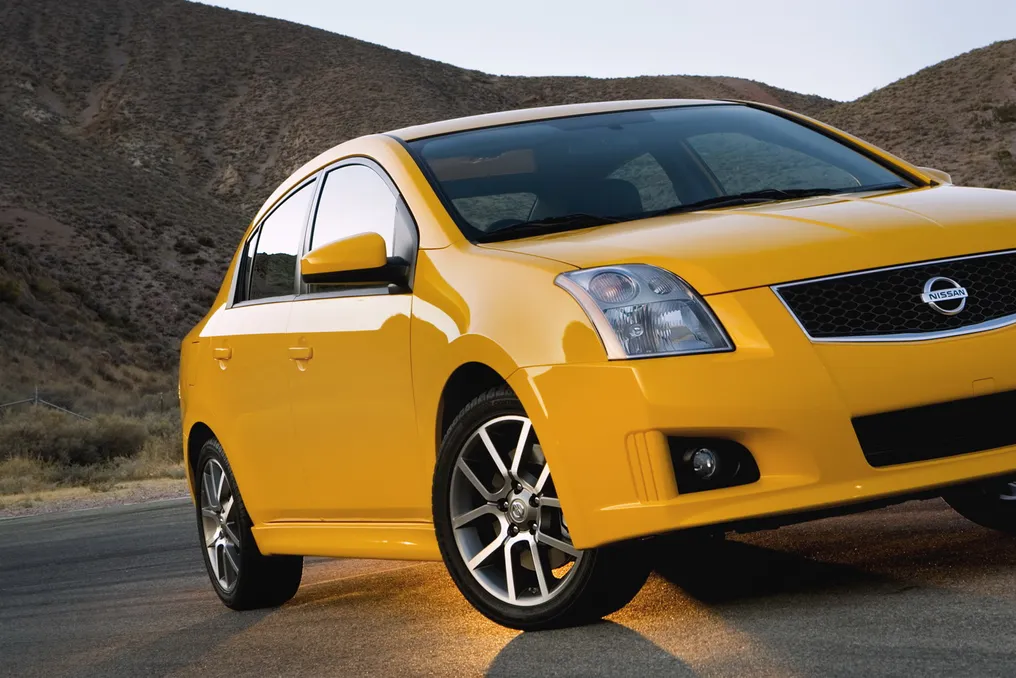
This week, Nissan presented a modified Sentra as part of its projects for the SEMA Show 2026. This vehicle is based on the ninth generation, launched late last year, a version that is unlikely to be commercialized in Brazil.

The previous generation was discontinued last August after unsatisfactory sales performance, registering only 341 units from January to June, while the Toyota Corolla sold 13,021 units in the same period. Because of this, there is no prospect of seeing the new Sentra in the country, which currently offers the lineup composed of the Kait and Kicks SUVs, in addition to the Versa. There are rumors that Nissan plans to introduce an electric successor of Chinese origin, but this still lacks official confirmation.

It is notable to see a Versa prepared for SEMA, especially considering that it uses a 304 hp 2.0 turbo engine, equipped with a Garrett turbocharger, intercooler, and forged internal components, coupled with a six-speed manual gearbox. Its look resembles special Nismo models, with white paint and red details on the body kit, in addition to a prominent rear spoiler. The brakes and seats are sourced from the Nissan GT-R Nismo, and the 19-inch wheels use high-grip tires. With a limited-slip differential, this Sentra promises to be a pleasure to drive, and the most optimistic expect it to inspire a sporty version of the sedan in the United States.

What is most regrettable is knowing that the Sentra once had a genuine sporty version, which was a worthy rival to the legendary Honda Civic Si in the early 2000s.

The mid-size sedan segment has never been the most attractive in the industry. Generally, enthusiasts viewed the mid-size sedan as a sensible option: a practical, functional, and sensible car, ideal for those who need to balance family life with daily commuting, offering a large trunk, rear space, and smooth driving for long trips. Although design was important, it rarely was the decisive factor, and sportiness usually was limited to more aggressive aesthetic packages.

In Brazil, the most notable exception in this segment is the eighth-generation Honda Civic Si, launched in 2007. Manufactured in Sumaré (SP), it is revered as one of the best national sports cars. The Si featured the K20Z3 engine, a two-liter four-cylinder with i-VTEC camshaft, capable of reaching 192 hp at 8,000 rpm. Combined with a precise six-speed manual transmission, a limited-slip helical differential, it could accelerate from 0 to 100 km/h in about 7.9 seconds. Furthermore, it was an excellent base for modifications, consolidating it as an expensive cult classic in the used market.

While Honda prospered with the Civic Si, other mid-size sedans in the country seemed content with a more conservative profile. The Nissan Sentra, officially imported starting from the fifth generation in 2004 and receiving the sixth in 2007, offered a solid and rational proposal, with good build quality, efficient sound insulation, and abundant equipment. However, it never managed to challenge the market leadership of the Corolla and the Civic, partly due to the popularity of these rivals and the stigma of being a 'dad's car'. Nissan itself used advertising campaigns to joke about this reputation, trying to change the perception, but this did not arouse the enthusiasm of enthusiasts.

The history of the Sentra in Brazil could have been different, because the necessary element to change this view already existed and was popular in the United States since 2001: the Nissan Sentra SE-R.

In 2000, Nissan launched the fifth generation of the Sentra. In the US, European, and Japanese markets, it began to be classified as a compact sedan, equivalent to a mid-size sedan in the Brazilian market. The versions imported to Brazil used the QG18DE engine, a 1.8-liter four-cylinder with 115 hp, focused on comfort and economy, usually with a four-speed automatic transmission.

In the United States, the Nissan division maintained a strong legacy with the acronym 'SE-R'. In the B13 generation (early 90s), the SE-R with the 2.0-liter SR20DE engine was an icon, compared to the '90s BMW 2002' due to its light chassis and rotary engine. After a pause in the acronym in the B14 generation, Nissan sought to revive the sporty spirit on the B15 platform, launching the Sentra SE-R Spec V at the end of 2001.

The difference lay in the engine: instead of the 1.8L, engineers installed the QR25DE, the largest available four-cylinder. The 'QR' engine family was developed in the early 2000s to replace the SR family. The QR25DE, a 2,488 cm³ four-cylinder, had an architecture focused on low and mid-range torque and efficiency. In its normal applications (such as in the Frontier pickup and Altima), it delivered about 154 hp and 24.1 kgfm of torque.

For the Sentra SE-R Spec V, Nissan tuned the engine: the compression ratio increased from 9.5:1 to 10.5:1, the cam profile was modified to lengthen the breaths, and the exhaust system received an optimized manifold. This resulted in an increase to 177 hp at 6,000 rpm and 24.9 kgfm of torque at 4,000 rpm. The Spec V received a short-ratio six-speed manual transmission and a locking differential to direct power to the front wheels.

The name 'Spec V' was a subtle reference to the V-Spec versions of the Skyline GT-R, which also inspired the design of the front bumper air intakes. Externally, the car featured prominent side skirts, blacked-out headlights, exclusive 17-inch alloy wheels, and a functional rear spoiler. The suspension was stiffer, with firmer dampers, PU bushings at the rear, and a front sway bar. The brakes included ABS on all four wheels, with an option for a four-piston Brembo setup up front.

Internally, the seats had greater side support inspired by the Skyline, the gear lever was leather-wrapped with an aluminum top, and the three-spoke steering wheel was thicker. The B15 generation Sentra SE-R Spec V was a legitimate sports sedan, capable of reaching 100 km/h in about 7.1 seconds and completing a quarter mile in approximately 15.2 seconds, although it is little known outside the US.

When Nissan launched the sixth generation of the Sentra (B16) in 2006, there was a notable evolution, utilizing the global C platform of the Renault-Nissan alliance. The sedan became larger, wider, stiffer, and more sophisticated. Nissan also prepared a Spec V variant for this new generation, paying special attention to the engine, which was completely redesigned.

The intake received a redesigned polymer manifold with direct flow ducts and a larger throttle body. The camshafts had a more aggressive profile and reinforced springs. To support the high rev limit of 7,000 rpm, the pistons received reduced skirts and a special molybdenum resin coating to reduce friction, along with lightweight and balanced forged steel connecting rods. With reworked combustion chambers and new electronic programming, the engine reached 203 hp at 6,600 rpm and 24.9 kgfm of torque at 5,200 rpm, allowing it to accelerate from 0 to 100 km/h in 6.7 seconds with the six-speed manual transmission and helical locking differential.

Improvements to the suspension and brakes were similar to the previous generation, but added a 'V' brace in the trunk. The 17-inch alloy wheels had ten spokes and housed 12.6-inch (320 mm) front discs, larger than those on the contemporary Nissan 350Z. Visually, the B16 Spec V featured exclusive bumpers, integrated side skirts, a dark front grille, a trunk spoiler, and a large-diameter chrome exhaust tip. The interior included red seatbelts, sporty seats with pronounced side supports, 'SE-R' embroidery, aluminum pedal covers, and additional gauges on the center panel to measure G-force and oil pressure.

At that time, Nissan Brazil had already recognized the success of the Honda Civic Si and planned its launch in the country between 2008 and 2009. The Brazilian market was rapidly expanding, and the brand needed to dissociate the Sentra from the image of a 'dad's car'. The strategy seemed ideal: importing the car directly from the Aguascalientes factory in Mexico, where the versions already came from.

Recalling 5 vehicles that shared mechanics or origin with competing brands
Read more
autopapo.com.br

Recalling 5 vehicles that shared mechanics or origin with competing brands

Large automotive conglomerates that group various brands under one umbrella create cars with unexpected characteristics. For example, the new Jeep Avenger combines the off-road style of the American manufacturer but uses the French Peugeot 208 platform, an Italian Fiat engine, and a Japanese Aisin CVT gearbox.

The exchange of vehicles between different manufacturers is not a new phenomenon; it has existed since the earliest stages of the automotive industry. This article recalls examples of cars that originally belonged to one brand but were sold under another.

It is sometimes amusing to observe how people on social media call French cars 'bombs' and criticize the Renault Kwid for wheels secured with three bolts, while praising the Ford Del Rey or the Pampa pickup. The brand with the blue oval receives credit for the Corcel and its derivatives, but the true credit here belongs to France.

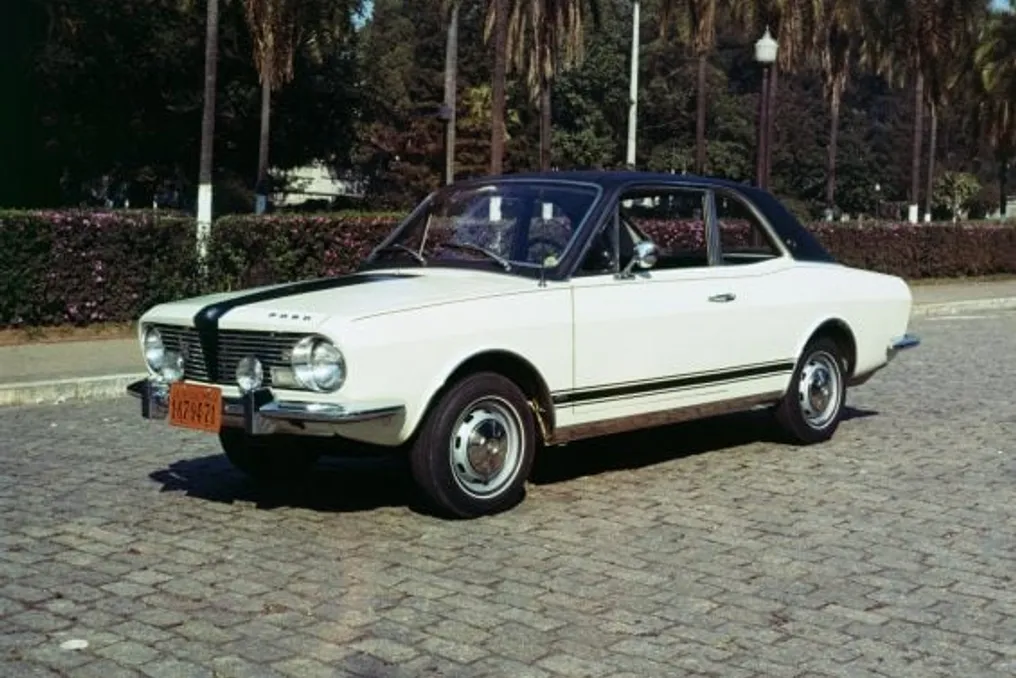
This story began with Willys-Overland in Brazil, which sold models from both the American parent company and Renault. The Dauphine, Gordini, and Interlagos models were French projects that did not find their place in the Brazilian market. The company worked on a new compact car based on the Renault 12, which was called Project M. Willys-Overland developed the design locally, as did the Aero sedan and Rural wagon.

Parallel to this project, Willys's Brazilian operation was acquired by Ford. Project M was launched in 1968 as the Ford Corcel; the first units came out with the Willys logo applied to the windows.

This merger proved to be very timely: it provided Ford with a modern, ready-to-produce compact car, as well as Jeep. Until then, the brand only produced pickups, trucks, and the luxurious Galaxie.

Renault also positively influenced the origin of the Corcel: the economical and reliable Cléon engine became the first front-wheel-drive car produced in Brazil and the first to pass inspection.

Fiat always sought to sell mid-sized pickups in Brazil. It created the compact car segment in the country and has dominated it for decades thanks to the Strada. Ten years ago, it created the intermediate model segment with the Toro, but it lacked something larger with a frame.

Fiat's acquisition of Chrysler in 2014 was late; at that time, American manufacturers only offered large models, and there was no interest in the mid-range there. The decision only came after Fiat merged with PSA to create Stellantis.

Peugeot designed a mid-sized pickup in partnership with Changan and was preparing to launch this model in Brazil as the Landtrek. After the formation of Stellantis, Fiat Brazil intervened because such a vehicle would have greater success in the Italian brand's network.

After replacing the grille and emblems, the Fiat Titano entered the market in early 2024. The pickup debuted with a 2.2 turbodiesel engine from Peugeot with 180 hp, in the version it was sold in Uruguay. This first version was temporary: Fiat engineers in Betim (Minas Gerais) were already working on replacing this engine with their 2.2 Multijet engine with 200 hp, implementing the 8-speed ZF gearbox from the Ram 1500, and improving suspension comfort. This second phase, starting in 2025, had more Fiat 'DNA', differing from the initial models.

The Brazilian Dodge Polara was one of many variations of the British Hillman Avenger. This compact car was created by European Chrysler and conquered the world, always undergoing small local changes.

In Argentina, it was sold as the Dodge 1500 and came in sedan and wagon body styles, always with four doors. Argentine Chrysler was bought by Volkswagen in 1980, as in Brazil. The Dodge 1500 continued to be sold in the market as the Volkswagen 1500, retaining the Chrysler emblem until 1987. Since then, the grille has featured the VW letters, making it the only passenger car in the brand's history with a front engine and rear drive.

The Argentine Volkswagen 1500 had some related components, such as wheels from Voyage and typography of the emblems. It was discontinued in 1990, giving way to Gacel—the name Voyage received there.

Subaru and Saab have a very similar origin. Both companies manufactured aircraft and transitioned to car production after World War II. They also pay great attention to quality engineering and the use of proprietary solutions.

Their paths intersected through General Motors, which owned Saab and held a 20% stake in Subaru. North American market research showed that the Swedish brand would benefit from having an entry-level model there.

The Saab 9-2X appeared based on the Subaru Impreza wagon, but with some technical modifications to look like a Swedish model. It received additional sound insulation and front seats with active headrests.

Saab also required the use of aluminum rear suspension arms and a reduction in unsprung mass. In the sporty 9-2X Aero version with a turbocharged engine, the STI model's steering linkage was used in a more direct manner.

The model was also better equipped, potentially offering a sunroof, leather heated seats, xenon headlights, and a CD player with a cassette. Despite being an upgraded WRX wagon, Saab fans were skeptical of the model, and it only lasted two years.

Seat became part of the Volkswagen Group in 1986, positioning itself as an affordable option with a sportier character. Their cars used the parent company's platforms with their own developments.

When they entered the executive sedan segment, the natural choice was to create a 'brother' to the Passat. But they chose a different path and used the Audi A4 to create the Exeo.

The third generation of the Audi A4 was discontinued in 2008, and its equipment was transferred from Germany to the Seat factory in Spain. Exeo breathed new life into this version of the German sedan. The Spanish version had a different front and rear design. The dashboard was taken from the convertible version with three round vents in the center to give it a sportier look. The wagon body was also returned to Seat.

The Exeo was released with 1.6 atmospheric, 1.8 20V turbocharged, and 2.0 turbo-diesel engines; starting in 2010, the turbocharged engine was replaced by the 1.8 TSI and 2.0 TSI. Unlike the Audi A4, the Seat sedan never had all-wheel drive and was sold only with front-wheel drive. In 2014, it was discontinued without a successor.

China and EU Reach Agreement on Hybrid Car Trade under WTO
Read more
cgtn.com

China and EU Reach Agreement on Hybrid Car Trade under WTO

China and the European Union have reached an agreement regarding the trade of hybrid vehicles, which is governed by World Trade Organization rules. The Chinese side asserts that this understanding protects the interests of Chinese automakers and promotes fair treatment.

An expert notes that this agreement could bring greater confidence to both businesses and consumers. A question arises as to how this understanding might change car trade between China and the European Union.

Popular