Industrial lending in Uzbekistan decreased by 8.8% year-on-year
Read more
UzDaily
uzdaily.uz

Industrial lending in Uzbekistan decreased by 8.8% year-on-year

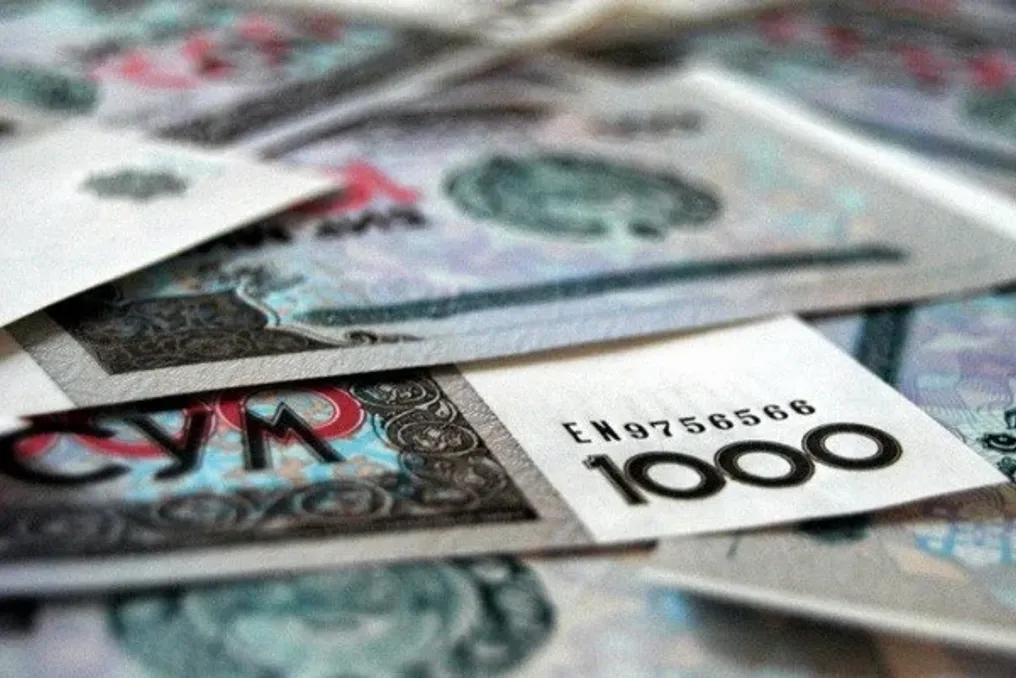
According to data from the Central Bank of Uzbekistan, the volume of bank lending to the industrial sector of Uzbekistan reached 133.4 trillion sums as of October 1, 2026, representing an 8.8% decrease compared to the same period last year. Previously, on October 1, 2025, outstanding loans for this sector amounted to 146.3 trillion sums.

This reduction occurred against the backdrop of an overall growth in the banks' loan portfolio, which increased by 13.2% to reach 659.1 trillion sums. As a result, the share of industry in the total lending volume decreased from 25.1% to 20.2%, and the industry's loan portfolio shrank by 12.9 trillion sums.

The construction sector demonstrated the fastest growth in lending, with loans increasing by 33.4% over the year to reach 22.9 trillion sums, raising its share in the total portfolio from 3% to 3.5%. Similar growth rates were observed in the trade and public services sectors, where loans grew by 31.7% to 53.9 trillion sums, and their share increased from 7% to 8.2%.

Loans for transport and communications grew by 16.4% to 37.9 trillion sums. Agriculture received 68 trillion sums in loans, which is 14.5% more than last year, while the sector's share in the total portfolio remained around 10%. Lending for material and technical supplies and sales grew slower, increasing by only 2.9% to 4.6 trillion sums. Loans for housing and communal services grew by 9.2% to 2 trillion sums.

Other sectors saw a 24% increase in loans, reaching 88 trillion sums, and their share in the portfolio rose from 12.2% to 13.4%.

Individuals remain the largest category of borrowers. Household loans increased by 19% year-on-year, reaching 248.4 trillion sums, accounting for 37.7% of the total portfolio, compared to 35.8% the previous year. The retail loan portfolio is now 1.9 times larger than industrial loans, whereas last year this ratio was 1.4.

The total volume of corporate lending grew by 9.9% over the year, amounting to 410.7 trillion sums, which is about twice as slow as the growth in retail lending. Industry accounts for approximately one-third of this corporate loan portfolio. Collectively, individuals, industry, and agriculture account for more than two-thirds of Uzbekistan's total bank lending portfolio.

policy

Similar stories

Non-performing loans accounted for 3.8% of Uzbekistan's banking lending
Read more
uzdaily.uz

Non-performing loans accounted for 3.8% of Uzbekistan's banking lending

According to the Central Bank of Uzbekistan, as of October 1, 2026, the volume of non-performing loans (NPL) in commercial banks in Uzbekistan reached 25.04 trillion soms. This amount constitutes 3.8% of the total loan portfolio of the banking sector, which is estimated at 659.1 trillion soms.

In state-owned banks, the share of NPL was 16.9 trillion soms, equivalent to 3.98% of their loan portfolios. In other banks, non-performing loans reached 8.1 trillion soms, or 3.47% of issued loans.

The largest volume of non-performing loans is concentrated in the country's largest state banks. For example, Agrobank reported 3.18 trillion soms in NPL, corresponding to 3.3% of its portfolio. UzNationalBank recorded 3.11 trillion soms, or 3%.

Microcreditbank ranked third in terms of NPL volume with a figure of 2.74 trillion soms, which accounts for 11.4% of its total lending volume. Among other banks with large volumes of NPL were Uzpromstroybank (1.79 trillion soms, 3%), Asaka Bank (1.61 trillion soms, 4.1%), Xalq Bank (1.59 trillion soms, 4.1%), and Business Development Bank (1.53 trillion soms, 5.8%).

Mortgage Bank reported 1.24 trillion soms in NPL, or 3.3% of its portfolio. The figures for Anor Bank and Kapitalbank were 1.18 trillion soms (9%) and 1.11 trillion soms (2.8%), respectively.

Madad Invest Bank demonstrated the highest NPL ratio: 254.8 billion soms out of a total portfolio of 586.8 billion soms, which equals 43.4%. Other banks with double-digit NPL ratios included Poitakht Bank (13.8%), TBC Bank (13.4%), and Microcreditbank (11.4%). The ratio was about 9% at Anor Bank, 6.9% at AVO Bank, and 6.1% at Garant Bank.

UzKDB Bank and Octobank did not report any non-performing loans. NPL ratios were below 1% at Uzum Bank, Apex Bank, Open Bank, and Tayanch Microfinance Bank.

Among medium and large banks, Hamkorbank had the lowest NPL ratio—1.5%, followed by Ipak Yuli Bank (1.7%) and Invest Finance Bank (2.3%).

According to the banking sector's income and expenditure report, the estimated potential losses on loans and leases as of October 1, 2026, reached 24.9 trillion soms. This figure increased by 34% compared to 18.6 trillion soms a year earlier.

Uzbekistan issued loans totaling 35.9 billion sums under the poverty reduction program
Read more
uzdaily.uz

Uzbekistan issued loans totaling 35.9 billion sums under the poverty reduction program

As of October 1, 2026, commercial banks in Uzbekistan have provided 2,362 loans totaling 35.9 billion sums under the 'From Poverty to Prosperity' program. These funds are intended to support the population in purchasing equipment and other fixed assets, which will allow for expanding income sources, developing self-employment, and creating small production enterprises.

The largest share of financing was directed towards the purchase of sewing equipment, with 13.2 billion sums allocated for 925 sewing machines. Additionally, 7.1 billion sums went to finance 419 units of food production equipment.

The loans also covered expenses for purchasing 496 laptops worth 5.6 billion sums and 272 passenger cars amounting to 5.4 billion sums. Another 4.5 billion sums was allocated for the acquisition of 250 various fixed assets.

The leaders in lending volume were Xalq bank, which issued 1,587 loans totaling 23.6 billion sums. Mikrokreditbank provided 569 loans for a total of 8.6 billion sums, and Agrobank allocated 206 loans for 3.6 billion sums.

By region, the highest number of loans was issued in Jizzakh Region—321 loans. This was followed by Tashkent Region with 307 loans, and Syrdarya Region registered 262 loans.

The goal of this program is to stimulate entrepreneurial activity, increase household incomes, and create additional sources of earnings by helping citizens obtain the necessary equipment and assets for economic activity.

Uzbekistan issued education loans totaling 7.7 trillion soums
Read more
uzdaily.uz

Uzbekistan issued education loans totaling 7.7 trillion soums

From 2021 to the end of the third quarter of 2026, Uzbekistan provided educational loans totaling nearly 7.7 trillion soums. The total number of such loans exceeded 663,000.

Over 5.8 trillion soums of the total amount was directed towards supporting the education of women and girls, with more than 515,000 loans issued to them.

This data was presented on October 23 at a consultative meeting dedicated to improving the educational loan system and reforms within the EduImkon program. The Ministry of Economy and Finance of Uzbekistan organized this meeting jointly with the World Bank.

Representatives from the ministry, the World Bank, relevant state agencies, commercial banks, universities, and public organizations participated in the event. The current state of the lending system, achieved results, and ways to improve financing mechanisms and the effective use of budget funds were discussed.

Special attention was paid to the EduImkon program, which is financed by the World Bank with $250 million USD. The goal of this program is to expand equal access to higher education, align education financing with labor market needs, and ensure the long-term financial sustainability of the student loan system.

The meeting also considered targeted support for women and girls, children from low-income families, and students studying priority fields. Participants discussed the digitalization of loan applications, as well as debt monitoring and repayment processes, examining international experience in linking repayment mechanisms to graduates' income.

Plans were presented to develop a financial and economic model for the system with the involvement of international experts, to evaluate the existing digital platform, and to analyze the link between educational loans and labor market requirements. Proposals were also discussed regarding providing loans for studying at top-300 global universities, as well as for short-term professional training and language courses abroad.

Discussions focused on funding conditions and limits, the quality of educational institutions, repayment procedures, and future employment of graduates; these mechanisms are currently at the proposal stage. Furthermore, participants exchanged views on including social and environmental factors, ensuring inclusivity, and improving application and complaint processing procedures. All proposals put forward at the meeting will be taken into account during further reforms, and the ministry will continue its cooperation with the World Bank and other partners to improve the education financing system.

Popular