Deactivated NASA space telescope is set to enter Earth's atmosphere this week
Read more
Olhar Digital
olhardigital.com.br

Deactivated NASA space telescope is set to enter Earth's atmosphere this week

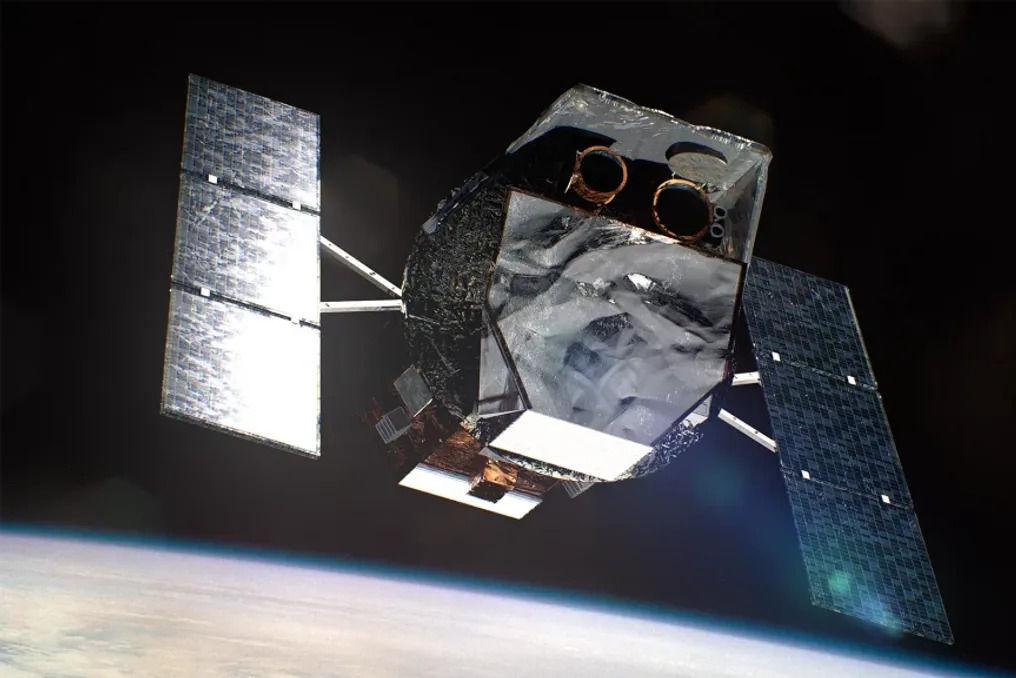
The rescue operation for NASA's Observatório Neil Gehrels Swift space telescope, which had been in Earth orbit for twenty years, has failed. According to estimates, the spacecraft will re-enter the planet completely uncontrolled between Tuesday (the 3rd) and Wednesday (the 4th).

During its time in space, the satellite used three specialized scientific instruments to observe intense light signals in the universe: the Burst Alert Telescope (BAT), the X-ray Telescope (XRT), and the Ultraviolet and Optical Telescope (UVOT).

However, the orbital altitude has significantly decreased in recent weeks due to constant friction with rarefied gases. This has brought the observatory dangerously close to the Earth's surface, making remote control absolutely impossible for operators on the ground.

Technicians attempted to save the structure using a robotic mission sent by a partner company, but the plan fell through. The rescue spacecraft encountered serious problems with its stabilization system, began spinning uncontrollably, and expended too much fuel, preventing docking.

This incident halted all planned scientific activities. The exact landing site of the Swift's metallic remains is currently unknown. Darren McNait, a senior technical officer at LeoLabs, a company specializing in space traffic monitoring, told Space.com that 'most of it will evaporate and melt.'

According to experts, the number of old satellites and debris falling to Earth has increased significantly in recent years. Fortunately, the risk of any fragment causing serious damage to populated areas is considered very low, as the trajectory passes predominantly over oceanic regions far from continents. Major international agencies monitor outer space daily to avoid surprises.

Most of the telescope's main body is made of aluminum and lightweight materials that quickly melt in the intense heat generated by high speed. Only more durable metal parts and heavy lenses can withstand the high temperatures and reach the ground without completely evaporating during rapid passage through the Earth's atmosphere, challenging the initial predictions of responsible engineers.

These official data points have been closely monitored by responsible bodies in the US government's technology and space sectors, which guarantee full transparency regarding the real risks associated with the disposal operation.

The continuous increase in uncontrolled re-entries reflects the accelerated growth of recent space launches conducted by various private companies worldwide. Because of this, aerospace engineers are advocating for new satellites to be built from more suitable materials.

These components should be designed to completely disappear after their service life in near-Earth space, preventing persistent orbital pollution. Private companies and governments are discussing new regulations to curb the growth of space debris.

Outer space sustainability has become an urgent issue for ensuring safety for all in the coming years, requiring significant investment in clean technologies and safe decommissioning plans for every piece of equipment launched into space by space agencies. Constant monitoring helps protect lives and valuable property from unforeseen accidents caused by old debris completing its lifecycle, unpredictably entering the Earth's atmosphere in recent years.

The international scientific community continues to track the development of this historic re-entry, planning new, more effective methods to combat the growing traffic of obsolete satellites currently orbiting our blue planet during this period of technological expansion. Incidents like this underscore the urgent need for stricter regulations for the global space sector, ensuring that scientific progress goes hand-in-hand with environmental safety and the preservation of human life on land.
Similar stories

NASA's Swift Telescope Rescue Mission Fails; Satellite Set to Re-enter Earth on November 6
Read more
www.aajtak.in

NASA's Swift Telescope Rescue Mission Fails; Satellite Set to Re-enter Earth on November 6

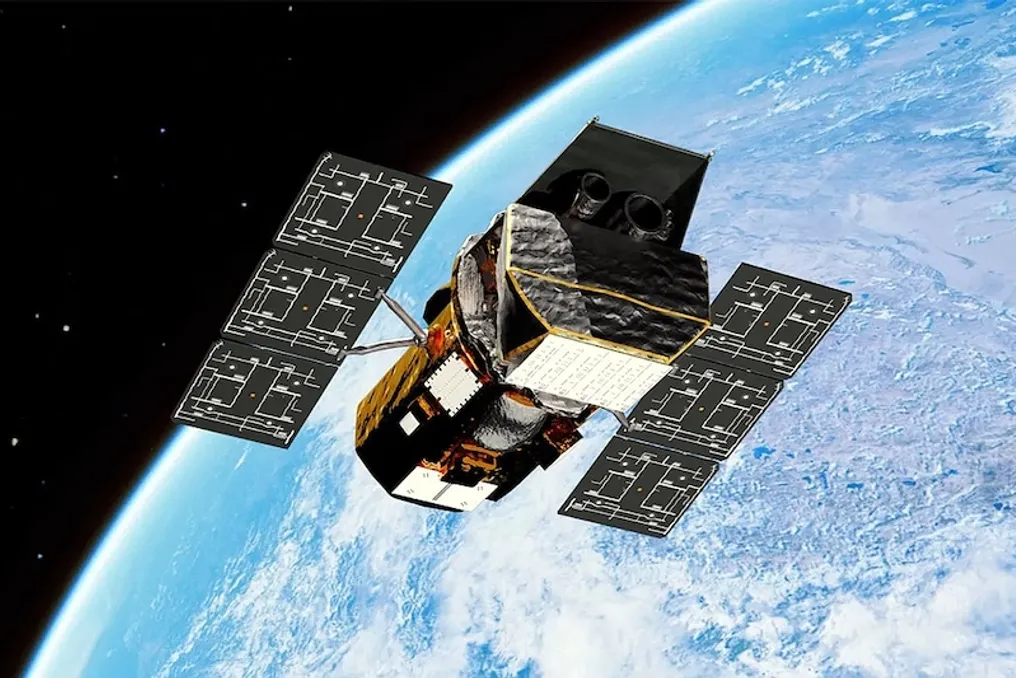
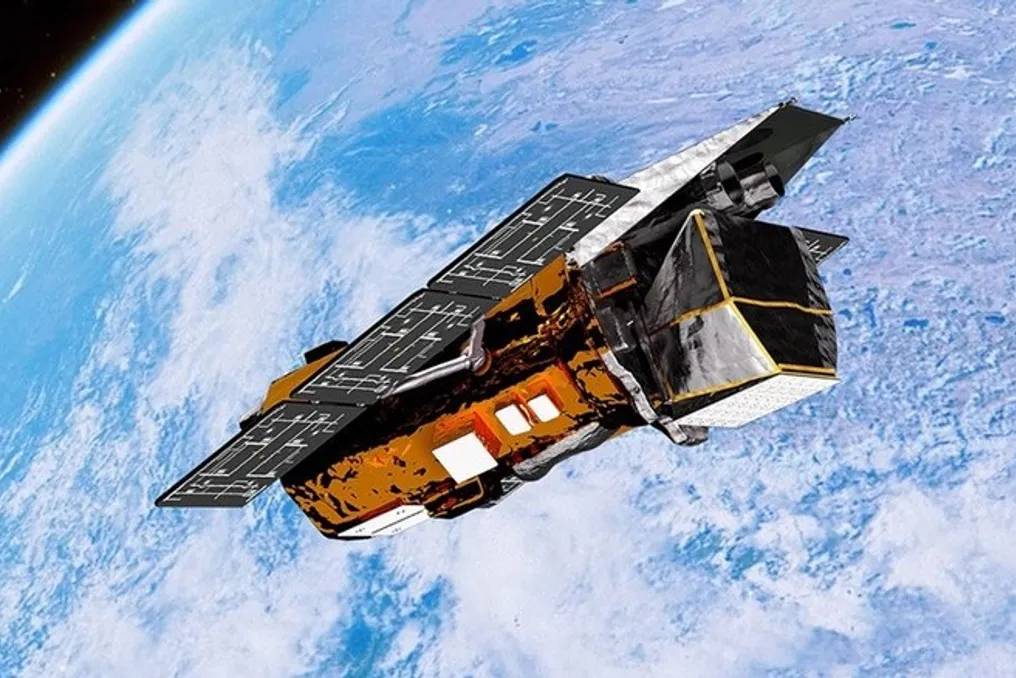
NASA's Swift space observatory is concluding its mission as its final journey will result in atmospheric entry into Earth. According to the US Military Space Forces, the observatory may enter the planet's atmosphere on November 6, marking the end of its 22-year service life. This scientific instrument, weighing 1.5 tons, was launched in 2004 and successfully recorded the most powerful events in the universe.

After the completion of scientific experiments, the satellite's orbit began to gradually decay. NASA attempted to save Swift, but this effort proved unsuccessful due to technical issues. Most of the spacecraft is expected to burn up in the atmosphere, with remaining fragments falling into the sea.

Swift was specifically designed to study gamma-ray bursts—the fastest and most powerful energy releases in the universe. In such bursts, energy equivalent to the entire energy output of the Sun over its lifespan is released in mere seconds. The observatory detected over two thousand gamma-ray bursts and approximately fourteen hundred supernovae.

These discoveries have helped scientists gain new insights into the origin of the universe, the death of stars, and black holes, as well as record numerous other astronomical phenomena. Such prolonged activity is considered a major success for any scientific project. Even after the observatory's return, the vast amount of data it collected will assist astronomers for many years.

The orbits of satellites in space for long periods gradually decrease due to weak atmospheric drag. Swift faced a similar situation. NASA initiated a unique commercial mission to raise its orbit by striking a deal with Catalyst Space Technologies worth thirty million dollars. It was planned that a spacecraft named Robotic Link would approach Swift, capture it, and lift it into a higher orbit. This was the first attempt at commercially rescuing a scientific observational instrument in this manner.

However, technical malfunctions occurred in August. The robotic spacecraft could not approach Swift closely enough, forcing NASA to cancel the operation. US Military Space Forces continue to monitor Swift. It is anticipated that it will enter the atmosphere around Friday, November 6. The exact time and location remain uncertain due to changing atmospheric conditions. Most of the spacecraft should burn up at altitude due to intense heating caused by high speed and friction.

Some sturdy parts might survive, but the probability is low, and they are expected to fall into the ocean. There is no expectation of major damage. Nevertheless, space agencies closely track such re-entries to rule out risk to Earth. This incident demonstrates how complex the task of rescuing old satellites is. The experience of commercial companies in conducting complex robotic operations in space is still limited. If the Swift rescue mission had succeeded, it would have allowed many other satellites to be used for extended periods, which would also help reduce the problem of space debris. Since this attempt failed, it has served as a lesson for the scientific community and space agencies about the need for better preparation for similar challenges in future missions, as well as the necessity of planning the end-of-life for new satellites in advance.

Even if Swift physically ceases to exist, its scientific contribution will not disappear. The data it collected remains accessible, and researchers will use it for new discoveries. The foundations laid in the study of gamma-ray bursts and supernovae will be useful for coming generations. NASA and other agencies are developing new missions in this direction that will help deepen the understanding of mysterious universal phenomena, similar to those studied by Swift. Overall, the return of Swift marks the end of an era. This observatory has become not only a symbol of scientific discovery but also demonstrated the limits of commercial space efforts. Now, it is necessary to allow its final journey to conclude peacefully so that its contribution can be preserved and the way paved for future missions.

Swift Space Observatory Completes Scientific Program
Read more
nplus1.ru

Swift Space Observatory Completes Scientific Program

The scientific program of the Swift space observatory was officially concluded by NASA on October 23, 2026. The spacecraft conducted its last observations on October 20.

Currently, the observatory's orbital altitude has decreased to less than 275 kilometers. This reduction is due to atmospheric drag no longer allowing the spacecraft to stably maintain observation targets within its field of view.

In the coming weeks, the observatory will begin descending into denser layers of the atmosphere, after which it will burn up.

Previously, there was a plan to extend Swift's operational life using a rescue satellite named LINK; however, this plan was not implemented due to issues that arose with the orientation system of this satellite.

NASA's Swift Telescope to be Deactivated After Rescue Attempt Failure
Read more
olhardigital.com.br

NASA's Swift Telescope to be Deactivated After Rescue Attempt Failure

NASA has formally ended the mission of the Swift space telescope after a rescue attempt was unsuccessful. This observatory, which dedicated more than two decades to studying the Universe, is in the process of losing altitude and is expected to re-enter Earth's atmosphere in the coming weeks.

The rescue operation was conducted by Katalyst Space Technologies, a company based in Arizona, United States. This company developed the spacecraft named LINK with the purpose of reaching the telescope and elevating it to a higher orbit, enabling the continuation of its scientific investigations.

However, the initiative was not successful. Approximately three weeks after its launch, on July 3rd, the LINK spacecraft encountered problems with its propulsion system and the reaction wheels responsible for maintaining its orientation. These failures caused the spacecraft to spin at an unexpected speed, which made capturing and elevating Swift impossible.

Despite the setbacks, LINK managed to approach the observatory and take photographs of it. The separation between the two spacecraft varied between 12 and 15 kilometers, which proved insufficient to complete the planned operation.

Swift was losing altitude due to atmospheric drag and does not have adequate thrusters to neutralize this effect. In September 2025, NASA awarded Katalyst a contract worth US$ 30 million (equivalent to about R$ 162 million) to attempt to save the observatory.

The adopted strategy involved a spacecraft comparable in size to a refrigerator, equipped with three robotic arms. The concept was for LINK to reach Swift, capture it, and guide it to a higher orbit. This mission was pioneering, as no private spacecraft had managed to capture and elevate a satellite that was not designed to receive such maintenance. Speed was also crucial, given that Swift continued to lose altitude while the operation preparation proceeded.

Although the attempt failed to extend the telescope's lifespan, NASA considered the project valuable for fostering the development of robotic maintenance technologies in space and for testing the capacity to execute operations of this magnitude in short periods.

Swift was officially named the Neil Gehrels Swift Observatory in 2018, in memory of its first principal investigator, who passed away the previous year. With the end of the mission, the observatory will return to Earth's atmosphere in the coming weeks, but the collected data will remain accessible for future scientific research.

Popular