New coffee status: the appearance of plastic-free coffee machines and capsules
Read more
Egypt Independent
www.egyptindependent.com

New coffee status: the appearance of plastic-free coffee machines and capsules

For many decades, the main advantage of expensive coffee machines was their numerous functions. However, consumers are now looking for what these devices lack. Growing concern over microplastics and sustainable development is stimulating the emergence of plastic-free coffee machines and capsules.

Companies that produce coffee and home appliances have released new models and redesigned capsules in recent months. For example, new capsules from Keurig and Lavazza replace traditional plastic cups with compostable coffee tablets. A new machine from Caraway uses regular ground coffee, but unlike standard drip coffee makers, its stainless steel and glass body contains no plastic in the brewing system.

Further research is needed to determine the actual harm caused by microplastics. Nevertheless, according to a survey conducted by the environmental group 5 Gyres in 2025, nine out of ten Americans are concerned about the impact of tiny plastic particles on the planet and the human body, and studies have already shown that capsules release microplastics.

The growing demand for expensive plastic-free equipment and capsules aligns with a broader trend where consumers, after the pandemic, began upgrading their home coffee appliances, noted Peter Giuliano, Senior Research Advisor at the Specialty Coffee Association. He explained that the appeal of this trend is driven by three factors: health concerns due to microplastics, environmental care, and the feeling that metal and glass are perceived as more 'luxurious' than plastic.

New Capsules

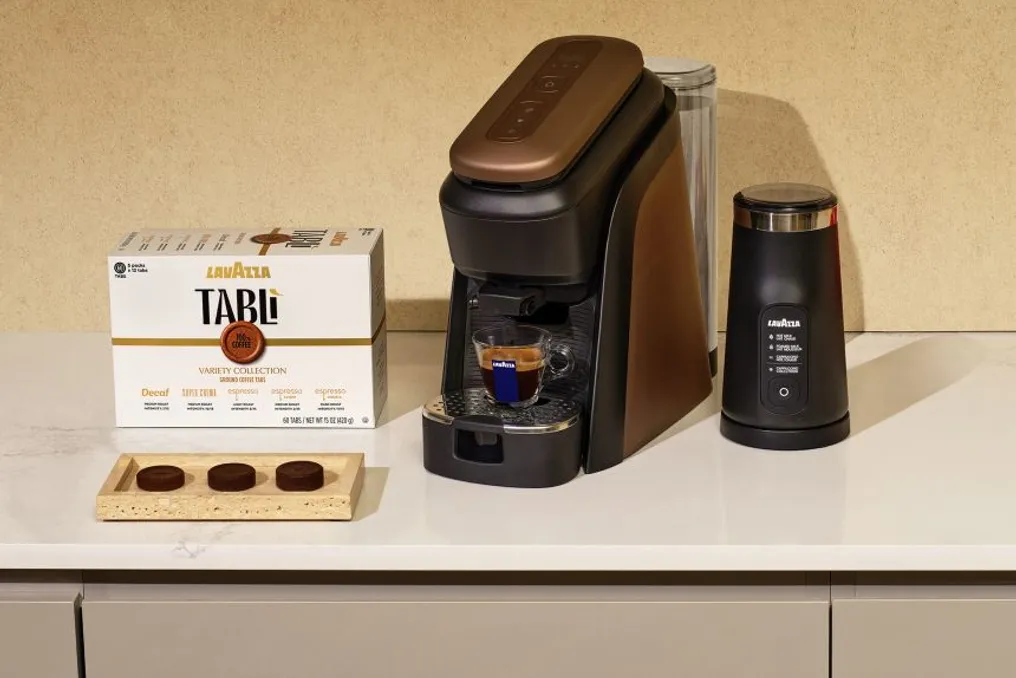
In June, Lavazza introduced the Tablì model in the US—a $129 machine that operates exclusively on disposable espresso tablets made from compressed ground coffee. This is a change from their previous capsules, which were made of plastic and aluminum. Lavazza stated in a press release that the tablets are created using a special technology that 'precisely doses, grinds, and compacts coffee into a solid, ready-to-use puck.'

The Italian company announced that Tablì is the 'biggest investment' in the US, as it aims to double revenue to $1 billion by 2029 to challenge the monopoly of Keurig Dr. Pepper in the coffee market. According to Daniele Foti, Vice President of Marketing for Lavazza North America, Tablì targets customers who want an eco-friendly alternative to traditional capsules. She emphasized that 'consumers want to enjoy coffee without the waste that usually accompanies single-serve portions.'

Keurig, which popularized plastic with its K-Cups back in the 1990s, launched a new line of compostable capsules in October with a specially designed Alta machine (the new capsules are not compatible with older models). These capsules, named AltaRounds, have been developed since 2020 in response to changing consumer preferences regarding sustainability and health. Philip Drapau, Senior Vice President of Keurig's Future Coffee Systems division, stated that the new capsules represent a 'significant reduction in plastic compared to our K-Cup capsules.' He added that 'we clearly heard from customers that they want more eco-friendly products, specifically less plastic and plastic waste.' Drapau also noted that 'our data shows that beverage variety, quality, and reduced plastic waste are high priorities for almost all groups.'

Keurig had previously faced criticism for its capsules and agreed in 2022 to pay $10 million to settle a class-action lawsuit alleging the company misled consumers by advertising its plastic K-Cups as recyclable, although Keurig denied any wrongdoing. However, despite the capsules and machine containing less plastic, they are significantly more expensive than a traditional Keurig machine. The Alta set, including glassware and capsules, costs $499.

Melissa Valiant, Director of Communications for 5 Gyres, noted that both Lavazza and Keurig products still use plastic that 'ultimately ends up in landfills, incinerators, or our environment after use, contributing to the growing crisis of plastic pollution on the planet.'

New Machine

Caraway focused its efforts on developing a $495 coffee machine released last month that is entirely made of stainless steel and glass, ensuring that no plastic comes into contact with the ground coffee. Unlike Lavazza and Keurig machines, these devices contain some amount of plastic. According to Caraway CEO Jordan Nathan, creating a plastic-free brewing system was a complex task because the expensive glass and steel components required custom manufacturing.

Nathan told CNN that they had to create the best plastic-free coffee with a fully metal body, yet in a compact size for a countertop with a single rotary dial. Concerns about kitchen plastic and its effect on the endocrine system have been growing in recent years. Nathan referenced a viral article linking black kitchen plastic to alarming levels of toxic antipyretics.

Discussion of this topic has been fueled by social media, influencers, and various scientific studies, prompting parents and other health-conscious individuals to avoid plastic wherever possible—whether in cosmetics, food, or bedding. Other Caraway products, such as cutting boards, have seen significant sales increases over the past three years. Nathan added that coffee is a natural next step because 'you should never heat plastic.'

Demand for the Caraway 10-cup coffee maker was so high that it sold out before January, forcing the company to ramp up production. Meanwhile, Keurig and Lavazza reported similar interest, as both companies' products quickly sold out after the initial release. Nathan concluded that this high interest in capsules and machines signals that the industry will move towards more environmentally friendly alternatives, adding: 'If you are not doing this, you are falling behind where the ball is going.'

Similar stories

Caffè Florian, the oldest cafeteria in Italy, located in St. Mark's Square in Venice
Read more
viagemeturismo.abril.com.br

Caffè Florian, the oldest cafeteria in Italy, located in St. Mark's Square in Venice

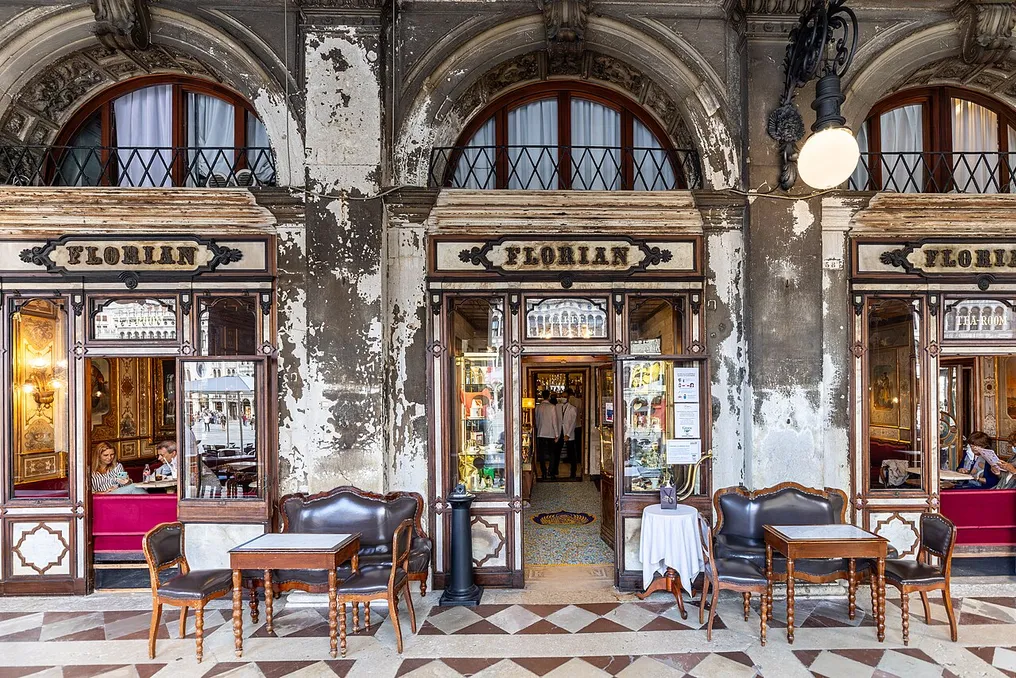
Located in the heart of Venice, specifically at Piazza San Marco, 57, is Caffè Florian, recognized as the oldest cafeteria in Italy and one of the oldest operating globally. This establishment, situated under the arches and galleries of the emblematic St. Mark's Square, keeps its doors open daily, operating from 9 am until midnight.

Popularly known as the 'noble salon of Europe,' the cafeteria distinguishes itself with its highly refined service. Orders are presented on gleaming silver trays, accompanied by delicate china and fine cutlery, served by waiters dressed in classic formal attire.

Although it may not be on the most common tourist itineraries, the venue warrants a visit, primarily to appreciate its noble architecture. Due to its accumulated historical prestige over centuries and its privileged location, costs tend to be high; an espresso, for example, costs approximately €6.50 when consumed at the table.

Caffè Florian was inaugurated on December 29, 1720, by Floriano Francesconi, initially under the name 'Alla Venezia Trionfante,' which means 'To Triumphant Venice.' Over the years, loyal customers began referring to the place as 'Andemo da Florian,' in reference to the owner's name.

The official name change to 'Caffè Florian' occurred in 1797, during the fall of the Serenissima Republic of Venice, which was overthrown by Napoleon Bonaparte, under the administration of his nephew, Valentino Francesconi. Since the 18th century, the cafeteria has consolidated itself as a meeting point for prominent figures in politics and a setting for cultural discussions, often called the 'drink of the Enlightenment' or the 'drink of reason.'

Caffè Florian possesses significant historical milestones, such as being one of the first public places to allow free presence of women. During the Venetian Revolution of 1848, the famous Republic of San Marco was proclaimed within its premises, which also served as a field hospital for wounded patriots.

The café's guest book records names of great cultural and historical importance, including Casanova—whose legend suggests his spirit still wanders through the sumptuous halls—Mozart, Goethe, Lord Byron, Oscar Wilde, Thomas Mann, Ernest Hemingway, Andy Warhol, and Charlie Chaplin.

Upon entering the cafeteria, visitors can admire a space divided into two main areas: an outdoor area, located in the square, equipped with beige chairs, cream tablecloths, and covered by awnings under the arches; and the luxurious indoor salons, which evoke a palatial atmosphere worthy of aristocratic castles. These interiors feature golden mirrors, ceiling frescoes, and reliefs adorned with gold leaf.

Among the regular attractions stands the Florian Orchestra, a musical group that performs outdoors in the style of 'café-concerts,' very popular in Central Europe. It is interesting to note that, at certain times of the year, a traditional 'orchestra duel' takes place, where neighboring cafes in the square compete musically.

The menu offers notable items such as traditional espressos, cappuccinos with whipped cream, and a variety of hot chocolates, in addition to food options like fresh croissants, known as 'cornetti,' chocolate tarts, tramezzini, and gourmet paninis. To illustrate prices, a cappuccino costs about €10.50, and a full traditional tea service is priced at €35.

Boss Banned Coffee at Work and Suggested Working Overtime to Drink It
Read more
www.aajtak.in

Boss Banned Coffee at Work and Suggested Working Overtime to Drink It

A story from an employee who reported a ban on coffee by their supervisor was published on the social media platform Reddit. The employee stated that their manager not only prohibited drinking coffee during working hours but also refused to accept coffee brought from home.

In the Reddit post, the worker specified that their manager had imposed a restriction on coffee consumption during work time. This ban applies not only to coffee from the office coffee machine but also to coffee brought in a thermos or in cans. Despite the fact that the office coffee machine is only about 20 seconds away, the employee is not allowed to drink coffee while working.

The situation is aggravated by the fact that the boss advised the employee that if they wanted to drink coffee, they should start the workday an hour later and stay at work longer. The worker noted that this advice is incomprehensible to them since they arrive at work on time. They also mentioned that some colleagues ask them to go to the coffee machine because it is difficult for them to work without coffee.

Despite the difficulties associated with the coffee ban, the employee intends to continue working in the position to improve their skills, as they perform specialized work.

The employee also shared complaints about the manager's behavior. They reported that after starting work, many warned them about the manager's manners. According to the worker, some long-term colleagues are afraid to voice doubts about the boss's decisions. Furthermore, there is a problem with office hours: the employee claims that the manager shifts the hours forward by three minutes, and when other employees try to correct it, the manager changes the time again.

The worker also mentioned that some people work overtime without objection. Reddit users reacted to the employee's post differently. One user advised looking for a better job, while another questioned whether the coffee ban was part of any safety or health regulations, which might be the case in some industrial facilities.

Other users advised the employee to keep records of the manager's behavior and contact senior management if necessary. However, it is unclear from the social media post whether the introduction of the coffee ban was based on official workplace policy or any safety measures.

Popular