The technology company Huawei demonstrated significant progress in developing both health monitoring systems and smartphone cameras, aiming to integrate complex functions into everyday consumer devices. These capabilities are the result of years of research and engineering development.
At the recent MEA Tech Innovation Talks in Dubai, Huawei gathered researchers, healthcare specialists, and technology experts. Two sessions were held focusing on the company's work in wearable medical technologies and smartphone image processing.
During the discussions, the scientific basis of Huawei's latest products was presented, including wearables for cardiovascular monitoring and cameras capable of capturing more natural colors and sharp details.
Huawei emphasized the development of wearable healthcare, inviting medical experts and researchers to discuss how smartwatches can improve cardiovascular health management and encourage people to be more proactive about their well-being.
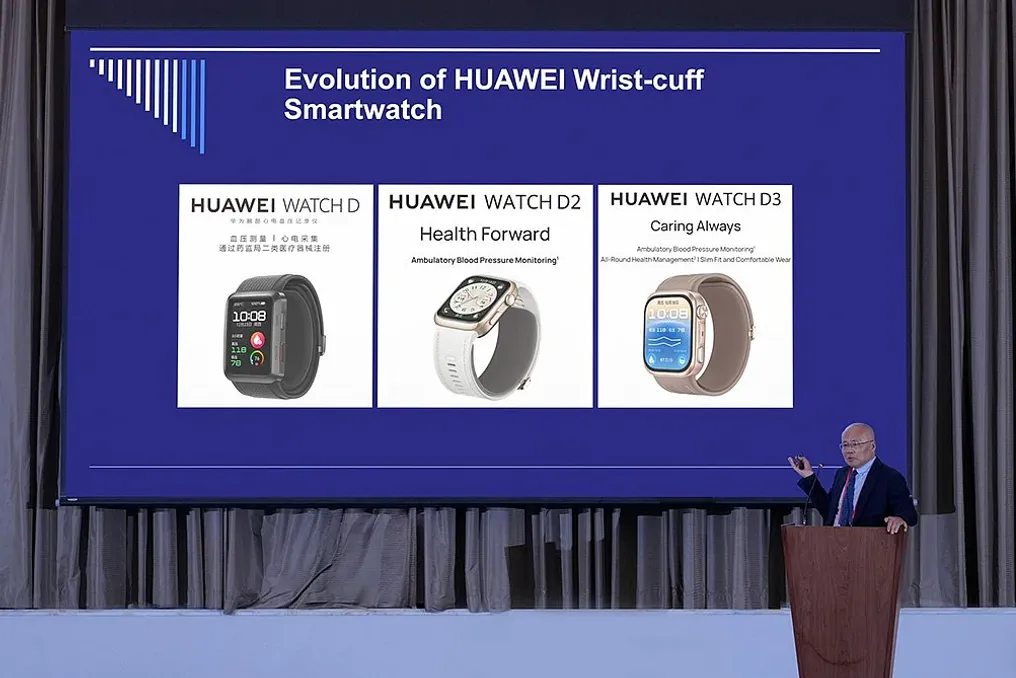
The event followed the presentation of the HUAWEI WATCH D3 at the ISH-ECS 2026 conference in Dubai, which took place from October 22 to 25. This smartwatch is equipped with medical-grade blood pressure measurement functions, intended to make regular measurements more convenient for users.
It was discussed how wearable gadgets can reduce interruptions associated with traditional blood pressure monitoring while providing useful information on blood pressure patterns.
Professor Zhiguang Wang from the Shanghai Institute of Hypertension noted the potential of the HUAWEI WATCH D3 to make blood pressure monitoring a more natural part of daily routine. He cited features such as minimally invasive ambulatory blood pressure monitoring (ABPM) and ecological monitoring reminders.
Professor George Stergiou, President of the International Society of Hypertension (ISH), characterized the HUAWEI WATCH D3 as a new and reliable wearable device capable of providing data on blood pressure profiles and patterns. He also mentioned that the European Society of Hypertension (ESH) and ISH encourage the clinical use of validated wrist cuffs for measuring pressure, stressing the need for further research into the application of these devices in clinical practice.
Professor Datin Yuk-Chin Chua from Sunway University in Malaysia also touched upon the practical difficulties of ambulatory blood pressure monitoring. She explained that reducing disruptions and the required number of measurements can make comprehensive monitoring more manageable for patients.
Huawei's research extends beyond just smartwatches. In collaboration with ISH, the company established a Blood Pressure Technology Innovation Fund to support further research in hypertension and its treatment.
Discussions also covered an area of growing interest—the possibility of using wearable technology for earlier detection of diabetes risk. Professor Mariam Al Saeed from Mohammed Bin Rashid Medical University highlighted clinical research collaboration between Dubai Health and Huawei to evaluate non-invasive wearable technologies for early diabetes risk assessment. This initiative aims to use real health data to study how wearables can support personalized prevention, stimulate earlier intervention, and improve long-term health outcomes across different populations.
Attendees were able to test the blood pressure monitoring functions of the HUAWEI WATCH D3, gaining firsthand insight into how this technology works in various scenarios.
The presentation also provided insight into Huawei's broader research goals. Edwin Yu, Huawei's CTO, spoke about the company's Tau Law technology, which explores a different approach to semiconductor development. Instead of focusing solely on shrinking transistor sizes, this technology aims to reduce the time required for electrical signals to pass through chips. Huawei claims that innovations like LogicFolding can increase transistor density and system performance, potentially opening new avenues for future processors.
Quality photography does not always depend on the maximum number of megapixels; color accuracy, detail retention, and complex lighting processing can be equally important. Anyone who has tried to photograph a concert or capture a sunset on a phone knows that the image on the screen does not always match what is seen.
Huawei solves these issues with its XMAGE imaging technology. During the smartphone innovation presentation, the company showcased its work on color reproduction accuracy, portrait photography, and optical zoom—areas that continue to shape the mobile photography experience.
A key element was Huawei's True-to-Colour Camera technology, designed to reproduce colors more faithfully by analyzing ambient light. Unlike traditional smartphone cameras that primarily rely on red, green, and blue color information, Huawei's system uses multispectral sensing to gather more detailed information about light and color. This allows the camera to distinguish colors that might otherwise appear similar, especially in challenging lighting conditions.
This technology has gone through three generations. The first focused on reproducing natural colors, the second improved performance in more demanding environments, including low light, backlighting, and mixed light sources. The latest version, True-to-Colour Camera 3.0, focuses on portrait photography, specifically the issue of capturing natural skin tones under varying lighting. According to Huawei laboratory data, this technology increases skin tone restoration capability by 62 percent.
Huawei also demonstrated progress in variable aperture technology, which gives cameras greater control over the amount of light entering the lens. This can be significant when shooting portraits, landscapes, or scenes in low light, providing greater flexibility regarding focus, exposure, and background blur.
Another important achievement is the XMAGE Z10 modular camera, which brings more advanced optical capabilities to mobile photography. Equipped with continuous optical zoom ranging from 24–240 mm and a one-inch 50-megapixel sensor, this system aims to give users more freedom when photographing subjects at different distances. This could mean transitioning from wide-angle shots to close-ups of distant objects during a concert, sporting event, or trip, without complete reliance on digital zoom.
The presentation also touched upon topics beyond photography, including Huawei's work on Kunlun Glass and foldable smartphone hinge technology. These developments address certain practical problems associated with smartphones, particularly screen durability and the reliability of folding structures.