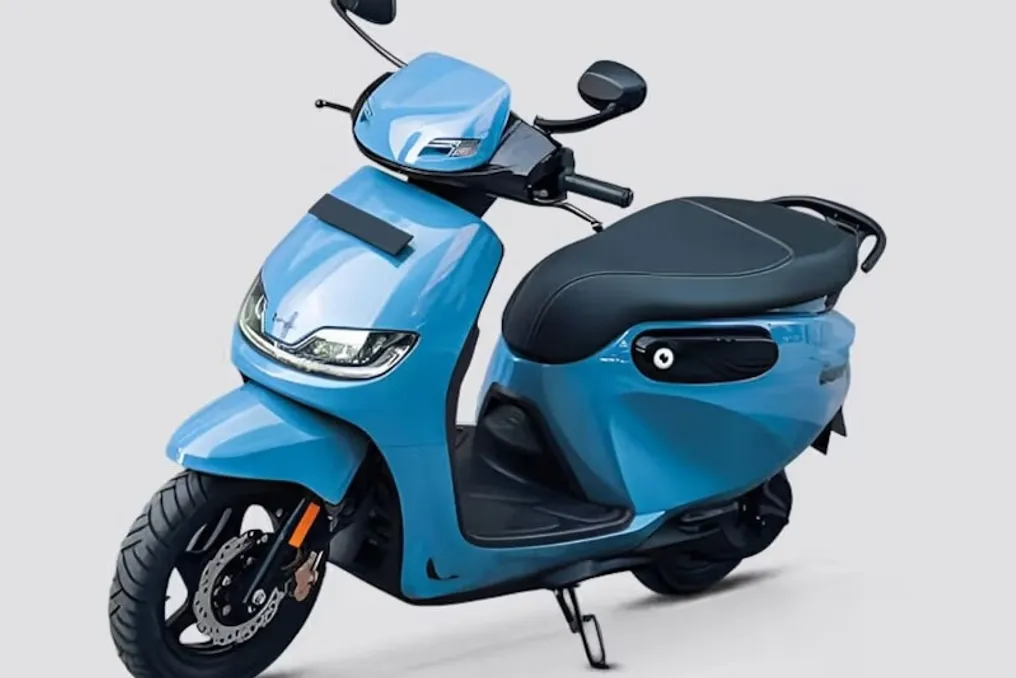
Vimag Labs targets ₹100 crore revenue by FY2028, betting on magnet-free motors
Read more
Business Standard
business-standard.com

Vimag Labs targets ₹100 crore revenue by FY2028, betting on magnet-free motors

Vimag Labs, a company specializing in the development of electric motors that do not use rare-earth permanent magnets, plans to increase the production of such motors at its facility in Haryana. The company aims to achieve a revenue of ₹100 crore in the 2028 financial year while expanding its presence in defense and global markets.

The company's first manufacturing unit was established in MET City in Jagajjar, Haryana. The company intends to grow its operations in electric mobility, industrial equipment, commercial transport, and strategic sectors, including aerospace and defense industries.

Vimag Labs plans to implement its patented Virtual Magnet Synchronous Motor (VMSM) technology across various energy consumption segments and enter international markets within the next few years. Manish Seth, CEO and co-founder of Vimag Labs, stated: 'We are currently in a deployment phase, and our target revenue is ₹100 crore for the 2027-28 financial year.'

This advanced technology, first developed in India, solves a serious problem in the global electric motor supply chain caused by the geographical concentration of rare-earth material resources and processing capabilities, price volatility, and geopolitical uncertainty associated with these critical components.

As electric mobility, industrial electrification, and defense manufacturing grow rapidly, reducing dependence on such materials has become an important strategic priority for countries seeking to strengthen domestic manufacturing capabilities.

According to Seth, 'Our patented VMSM platform replaces physical permanent magnets with electronically controlled magnetic fields defined by software, eliminating the need for rare-earth permanent magnets while providing comparable or superior performance in terms of efficiency, power density, and overall motor characteristics.'

The development of alternative motor technologies is significant as India prepares to expand its electric vehicle ecosystem, strengthen domestic defense production, and develop competencies in advanced industrial technologies. Dependence on imported critical materials can expose these sectors to risks of supply disruptions and external price pressures.

Seth emphasized: 'India has the opportunity not just to manufacture electric motors, but also to develop and own fundamental motor technologies capable of competing globally. We have developed this technology, proven its viability, and now production has begun, all in record time.'

The 10,000 square foot manufacturing facility is designed to produce motors and related control systems using advanced automation, digital processes, and quality control systems. The company plans to incrementally invest ₹50 crore in this facility, which can be expanded to 20,000 square feet.

Vimag has already exported its first batch of controllers to the United States and Germany, marking an important step toward realizing the commercial viability of its technology. In the coming months, the company also plans to move into the production of more powerful motors and power units, including applications exceeding 570 kW.

The company's expansion strategy is supported by an exclusive licensing agreement for the technology, manufacturing, and commercialization of an advanced high-voltage power electronics platform developed in the US. This platform covers inverters, charging systems, and power distribution capabilities, supporting up to 1200 volts. Recently, the company raised $5 million in a Series A round led by Accel with participation from Chakra Growth Fund and Thinkuvate.

The company's product development strategy extends beyond small mobility applications to include high-power systems for commercial transport and industrial equipment. Its immediate focus in mobility covers two-wheelers, three-wheelers, electric buses, and trucks, while the company simultaneously invests in developing ancillary technologies, including power electronics, motor controllers, and semiconductor technologies for drones, industrial applications, and high-performance electromechanical systems.

Seth added: 'Our broader vision is to make rare-earth-free electric propulsion mainstream. We want India to be recognized as a major player in creating globally competitive fundamental technologies, facilitated by international engineering collaboration and a strong global presence.'
Similar stories

Hyundai plans to launch the most affordable electric model Ioniq P in the Indian market
Read more
www.aajtak.in

Hyundai plans to launch the most affordable electric model Ioniq P in the Indian market

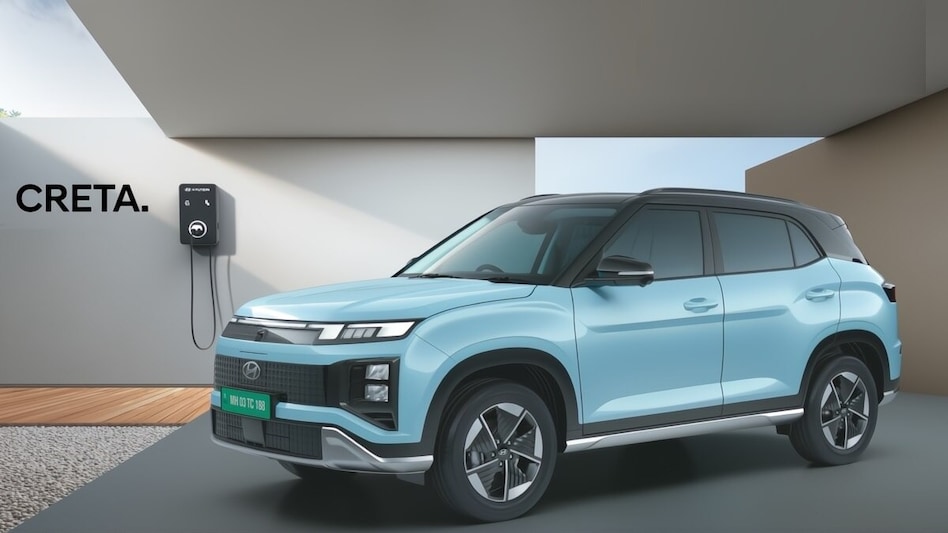
Hyundai is considering introducing a new electric model to the Indian market. To date, the company has not achieved significant success in the electric vehicle segment. The company's latest electric model is the Creta Electric, but it is currently developing a more budget-friendly and accessible option for the Indian market.

This compact electric crossover, intended for India, has the codename HE1i. According to available data, its name may be Hyundai Ioniq P. The Ioniq brand is a global designation, and using it in a compact car could make the brand more reliable and accessible to consumers.

During a conference call following the third quarter of 2026, Hyundai discussed its regional products. During this discussion, Hyundai management announced that after the Bayon model, it might introduce the Ioniq P to the Indian market. It should be noted that the official name of this vehicle has not yet been announced.

Management also noted that the Ioniq P was not directly linked to the codename HE1i. This future product will provide consumers in the electric vehicle segment with a new and economical choice. It is projected that the growth of the electric passenger vehicle segment in India will reach 90 percent in the 2027 fiscal year.

The Hyundai car will be cheaper than the Creta Electric and will expand the brand's electric vehicle portfolio. The launch of this car could happen at the end of this year or the beginning of next year. Initially, the new car will use imported battery packs.

This year, the company plans to source battery packs from local partner Exide for the Indian market. However, Exide has notified that battery pack supplies under the Hyundai-Kia program will not begin this year. The company will introduce the car with local components later. To maintain a low price, Hyundai aims to use as many local components as possible, and the cost of this compact crossover could be below 10 lakh rupees.

TVS Motor plans to increase electric motorcycle production capacity to 80 thousand units by March 2027
Read more
business-standard.com

TVS Motor plans to increase electric motorcycle production capacity to 80 thousand units by March 2027

TVS Motor Company intends to increase its production capacity for electric two-wheelers to 80,000 units monthly by the end of March 2027. This decision was made to meet the growing demand for electric scooters, according to a senior company official.

TVS Motor's CEO, K. Radhakrishnan, told investors that the company is currently operating at a capacity of about 60,000–65,000 units, but an expansion to approximately 80,000 units has already been planned.

The penetration rate of electric vehicles in the two-wheeler segment shows very strong growth. Overall, the penetration in the two-wheeler market is around 11–12 percent, while in the scooter segment, it has exceeded the 20 percent mark.

TVS Motor holds leading positions in the electric motorcycle market. Its main competitor, Bajaj Auto, is also increasing the capacity of its Chetak model range to 80,000 units. Furthermore, Ather Energy is increasing production at its existing facility to over 41,000 units, and a new facility is under construction.

Radhakrishnan noted that TVS Motor's electric vehicle sales have more than doubled, reaching 186,186 units in the second quarter compared to 80,009 units the previous year. He predicts that the momentum of electric vehicle development will continue, and very good growth is expected.

He also emphasized that the electric motorcycle industry grew by almost 75 percent in the first half of the fiscal year. TVS Motor's electric motorcycle sales in the domestic market increased by 129 percent in the second quarter, while the overall industry volume grew by 84 percent.

According to Radhakrishnan, the company will continue to grow significantly faster than the market, as the capacity expansion will support TVS's growth in subsequent quarters, given the sustained demand for electric motorcycles in the second half of the year. At the same time, management expects the growth rate of the traditional (ICE) two-wheeler industry volume to slow down in the second half of the year compared to the first half due to the high base level from the previous year.

Simple Energy releases family electric scooter Wave with discount up to 10 thousand rupees
Read more
www.aajtak.in

Simple Energy releases family electric scooter Wave with discount up to 10 thousand rupees

Simple Energy has introduced its first family electric scooter, named Wave. Although the company previously sold scooters, they were focused on performance. The first family scooter, Simple Wave, was launched at the beginning of last September.

This scooter is available in several battery options. The top version boasts a claimed range of 243 kilometers, allowing it to cover the distance from Lucknow to Prayagraj. The road distance between these cities is between 200 and 205 kilometers.

As part of a special introductory festive offer, the company announced a discount of 10 thousand rupees on the TFT variant. This offer is valid until December 31, 2026, and applies to North India, East India, Madhya Pradesh, and Gujarat.

Buyers can avail this discount directly at dealer centers as the company reduces the scooter's price. After deducting 10 thousand rupees, the TFT variant with a 3.7 kWh battery will cost 1,64,999 rupees, compared to its exclusive price of 1,74,999 rupees without the discount. Additionally, the TFT variant with a 5 kWh battery will cost 1,79,999 rupees after the discount, down from an exclusive price of 1,89,999 rupees. The goal of this discount offer is to make the family scooter more affordable during the festive season. This scooter was presented by the company on September 2, 2026.

The Simple scooter is available in four battery configurations: 2.2 kWh, 2.7 kWh, 3.7 kWh, and 5 kWh. The claimed range varies from 110 to 243 kilometers. The maximum speed of the scooter reaches 90 kilometers per hour, and the company claims it accelerates from 0 to 40 kilometers per hour in just 3.3 seconds.

The scooter is equipped with a spacious 70-liter compartment and a 920 mm seat. Using an external charger with a power of 750 W, charging to 80 percent takes about 2 hours and 15 minutes (this time is specified for the top variant); the smaller battery option charges to 80 percent in only 70 minutes. Among the scooter's features are an LED headlight, an LED taillight, a turn signal, luggage compartment lighting, and charging port lighting. The scooter is available in pearl white, coral red, twilight black, polar blue, dolphin gray, and forest green colors.

Popular