
Indian Export Bank Forecasts 28.7% Growth in India's Merchandise Exports in the Third Quarter
Read more
Business Standard
business-standard.com

Indian Export Bank Forecasts 28.7% Growth in India's Merchandise Exports in the Third Quarter

The Export-Import Bank of India (India Exim Bank) forecasts that India's merchandise exports in the third quarter of the current fiscal year 2026-27 (FY27) will reach $141.8 billion. This growth, estimated at 28.7% year-on-year (YoY), is attributed to the diversification of markets and export basket, the conclusion of new trade agreements, and improved global demand, despite existing risks.

The state bank expects non-commodity exports in the third quarter to amount to $120.3 billion, reflecting a 21.9% year-on-year increase. It is projected that the export of non-commodity goods, excluding precious metals and jewelry, will reach $106.4 billion, showing a 16.2% rise over the same period.

Despite overall uncertainty in global markets and supply chain restructuring, the bank sees key drivers for the country's export growth as maintaining product and market diversification, opportunities provided by recent trade pacts, and sustained demand in major export sectors. India Exim Bank added that the positive forecast for Indian exports will also be supported by improving global and domestic growth indicators, investment activity, and exchange rate fluctuations.

Nevertheless, the bank notes that tightening global monetary policies and changing trade regulations remain potential risks that could negatively impact export growth.

According to data from the Department of Commerce, exports increased by 23% in September this year, reaching $44.4 billion, while the trade deficit narrowed to $30.21 billion from $33 billion the previous year. Meanwhile, imports rose by 8% during the month to $74.61 billion.

For the period from April to September of the current fiscal year, exports jumped by 18.51% to $259.89 billion, and imports increased by 16.31% to $437.53 billion. China was the largest trading partner during this period, with bilateral trade growing by 29% to $91.8 billion. Exports to China increased by 36% year-on-year to $11.4 billion, while imports from China grew by 27.8% to $80.4 billion.
Similar stories

Uzbekistan's textile exports grew by 28.1% to reach $2.4 billion
Read more
uzdaily.uz

Uzbekistan's textile exports grew by 28.1% to reach $2.4 billion

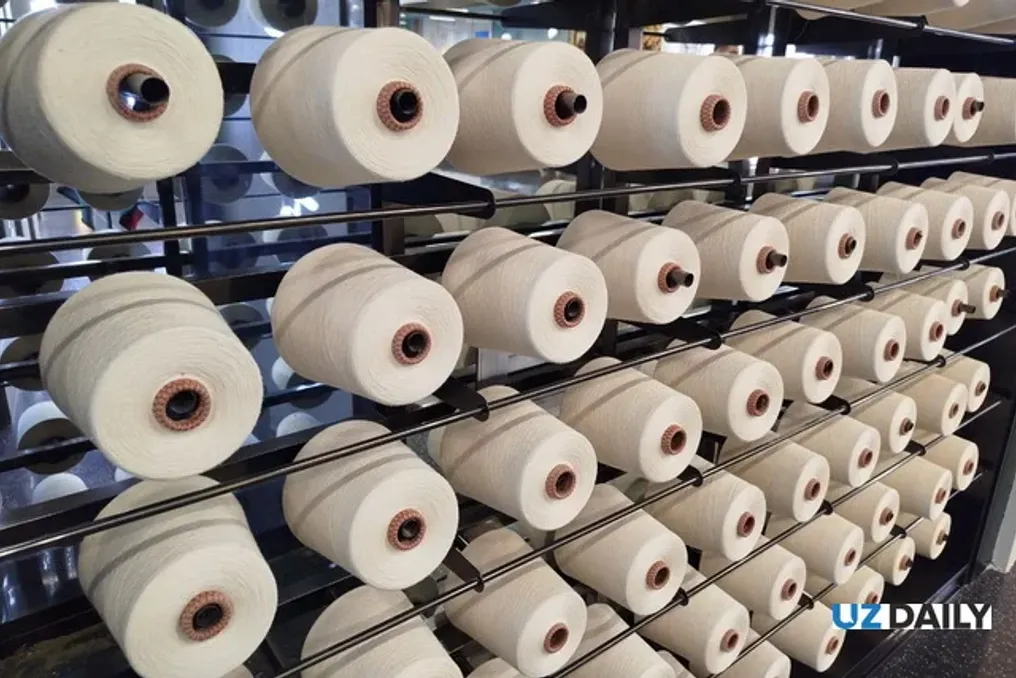
According to data from the National Statistical Committee of Uzbekistan, the volume of textile product exports from Uzbekistan for the period from January to September 2026 amounted to $2.4 billion. This figure demonstrates a growth of 28.1% compared to the same period in 2025.

Textile products accounted for 9.3% of the country's total export volume. Among types of textile products, finished goods made up the largest share (50.8%), followed by yarn (33%). Other categories included knitted fabrics (8%), woven fabrics (5%), socks (2%), and carpets (1%).

Under the Standard International Trade Classification (SITC), the export of textile yarn, fabrics, finished products, and related goods reached $1.481 billion, an increase of 25.9% year-on-year. The export of clothing and accessories for it increased by 24.3%, reaching $938.1 million.

Uzbekistan's total exports for the first nine months of 2026 amounted to $25.8 billion, which is 5.5% less than the previous year. Nevertheless, exports excluding gold grew by 31.6% to $13.3 billion, and services exports increased by 31.1%, reaching $9.7 billion.

The country's gross trade turnover for January-September 2026 reached $65.4 billion, which is 6.3% more compared to the previous year. An increase in imports by 15.7% to $39.6 billion resulted in an external trade balance deficit of $13.7 billion.

India becomes one of the largest arms exporters to Europe after the USA and Israel
Read more
www.aajtak.in

India becomes one of the largest arms exporters to Europe after the USA and Israel

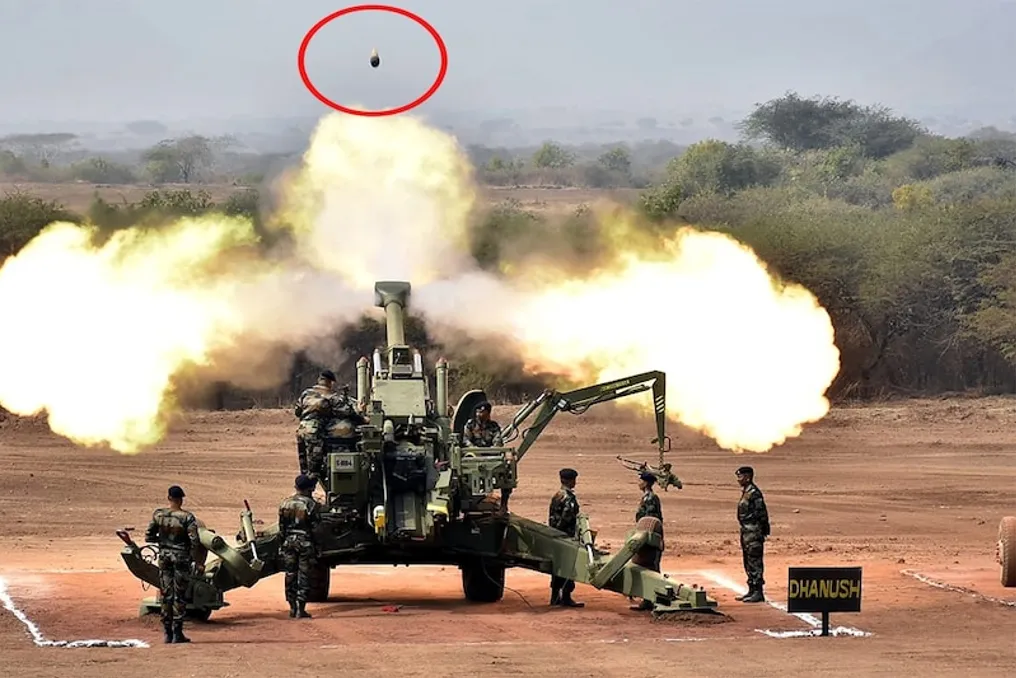
India is actively developing its defense export sector and now ranks third among countries exporting weapons to Europe. In the last fiscal year, India exported defense goods worth 38,424 crore rupees. This success is largely due to growing demand from European countries.

After Russia's invasion of Ukraine began in 2022, European states started increasing their military potential. There was an urgent need for ammunition, artillery, and explosives. India seized this opportunity by starting supplies of large batches of shells, mortars, and explosives to European buyers, leading to an increase in supplies of over 1600 percent.

The European Union decided to strengthen its security system. Many European countries faced depletion of old stocks, and new production required time. Under these conditions, a country like India demonstrated a high capacity for rapid delivery. India's defense industry production capacities were increased under the 'Make in India' program. State and private companies jointly produce artillery systems and ammunition.

Defence Minister Rajnath Singh recently stated that more joint ventures will be created in the future. This will allow for technology exchange and increased production. Today, India exports not only small-caliber weapons but also artillery systems, missile complexes, and other defense equipment. These goods go to more than 80 countries. Besides Europe, demand for Indian products is growing in Africa, Southeast Asia, and Latin America. This shift is changing India's image from an importer to an exporter of arms.

The 'Make in India' campaign has led to significant changes in the defense sector. Previously, India mainly purchased weapons from abroad, but now domestic companies are capable of producing modern weaponry. Many private enterprises have also invested in this area, which has contributed to job growth and foreign currency inflow. Demand from Europe provided Indian companies with large orders, improving their production capabilities.

Nevertheless, there are challenges. It is necessary to maintain quality standards, meet delivery deadlines, and counter international competition. To strengthen its position against traditional global arms exporters such as the USA, Russia, and France, India will have to make additional efforts. Experts believe that if India continues to focus on joint ventures and adopting new technologies, its exports could increase significantly in the coming years.

This overall progress clearly shows that geopolitical tension has opened up new opportunities for India. The war in Ukraine increased Europe's need for weaponry, and India effectively utilized its potential. Now, India is moving towards becoming a global player in the defense goods export sector. This achievement has important strategic, not just economic, significance.

ZF expects annual procurement growth in India of 10-15% over the next 3-4 years
Read more
business-standard.com

ZF expects annual procurement growth in India of 10-15% over the next 3-4 years

ZF Group forecasts that procurement volume from India will grow by 10–15 percent annually over the next three to four years. This expectation is based on Indian suppliers offering lower costs without compromising quality, according to Andreas Moser, a member of the board of directors of the German manufacturer of automotive components and industrial technology, in an interview with Business Standard.

ZF's purchases from India have already increased by approximately 20 percent over the last three years. According to Moser, sourcing materials and components from Indian suppliers provides an economic advantage of about 20 percent even after accounting for transportation costs. The company utilizes Indian resources for the entire range of products—from steel products and cast parts to fully processed components and finished assemblies for its international operations.

Moser specified that the annual growth rate of procurement will be around 10–15 percent. He also estimated the current annual procurement volume from India: about 600 million euros for commercial transport business, 500–600 million euros for passenger transport, and 150 million euros for industrial technology. These figures reflect the annual value of materials and components purchased by ZF for its international enterprises.

ZF aims for India to play a more significant role in the company's global activities, rather than remaining solely a source of relatively inexpensive materials, manufacturing, and engineering services. Moser emphasized that Indian teams should increasingly define the necessary technologies and products for local customers with support from the global structure.

He noted that the company's current business in India is valued at approximately 1.2 billion euros, employs 20,000 people, and includes 17 production sites and thousands of engineers.

Furthermore, the company develops products specifically for Indian consumers instead of merely adapting existing European models. Moser explained that goods designed for European markets can be too expensive for buyers in India, necessitating the creation of alternatives that meet local needs. As an example, he cited a transmission housing that costs about 3000 euros when developed to European standards, whereas an acceptable price in India is approximately 1500 euros.

Popular