Seven coastal communities oppose cemetery and crematorium construction in La Mercy
Read more
IOL
iol.co.za

Seven coastal communities oppose cemetery and crematorium construction in La Mercy

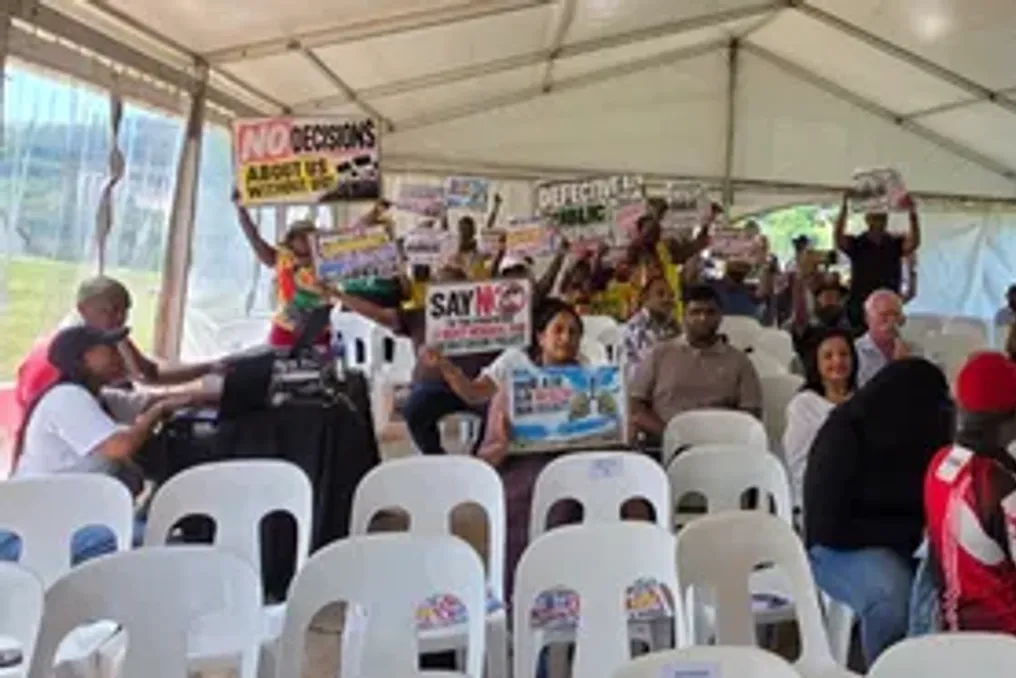
Residents of seven coastal areas located in the La Mercy area have voiced strong opposition to the proposed memorial park, which will contain 33,800 burials, as well as a six-section crematorium. The main concerns of the residents relate to consultation processes, increased traffic, safety of gas equipment (LPG), emissions, and the project's impact on future regional investments.

At a recent public meeting, residents from settlements such as Desaignagar, Citydes, La Mercy, Westbrook, Lungelani, Folani, and Tutukani strongly objected to this memorial park.

The Coastal Joint Task Team (CJTT)—a group formed by local residents to counter development—criticized District Councillor DA No. 58, Jeff Pullman, for his approach to the project. During an attempt by Pullman to address the gathering, residents began shouting and whistling.

The event, organized by environmental assessment specialists from NFZ Environmentals, was marred by delays and disappointment as participants questioned the adequacy of the consultations conducted regarding this construction. Residents asked why their elected representative had not convened public meetings to clarify the proposal, record opinions, and relay issues to the relevant authorities.

Community representatives claimed that Pullman had known about the project since 2023 but had failed to hold public meetings to inform affected residents. Consequently, the meeting had to be cancelled.

Anand Desai from CJTT stated that residents are firmly against the construction of the cemetery and crematorium. He clarified that CJTT was established after a public meeting approximately three or four weeks ago when residents learned about the development and began studying its approval process. Desai emphasized: 'CJTT reports that no resident in the affected area supports this project.'

The development is planned on the site of former sugar plantations opposite King Shaki International Airport, on the sea side of the N2 road. Although the crematorium is part of the second phase of the project, which is currently in the Environmental Impact Assessment report stage, residents expressed shock that an earlier stage had already received approval.

Desai added that the communities will continue to use all legal means to oppose this construction. Michael Singh from CJTT reported that they only recently learned about the proposal. He explained that residents surveyed surrounding informal settlements and contacted community leaders to ascertain if people were aware of the project. 'No one knew about it,' Singh noted. He questioned how properly the consultation process for the first phase was conducted, given the complete lack of awareness among the population.

Singh elaborated that the community's opposition is not simply a rejection of the development, but a feeling of unfair treatment regarding investments and infrastructure along the coast. He compared the proposed cemetery and crematorium to facilities existing in neighboring coastal areas such as Umdloti and Ballito. 'We feel there is constant bias and prejudice against us—whether from developers or the government,' he stated. He also raised the question of how the area could attract tourism, commercial investment, and residential development if a large cemetery and industrial crematorium were built there. 'How can we have ecotourism or other positive development, shopping centers, and other good housing complexes if we are going to put a crematorium there?' he asked.

Areas adjacent to the proposed construction site include established residential neighborhoods, farms, three informal settlements, and expanding housing complexes. Residents also pointed to the proximity to schools, specifically Seatides Combined School and Crawford North Coast, as a reason requiring thorough scrutiny of the project. Community representatives noted that Seatides Combined School is located approximately 700–761 meters from the proposed site.

The community demands detailed assessments of potential emissions, cumulative air pollution, LPG safety, emergency response measures, as well as an analysis of traffic load and consequences for future development.

For Deziri Singh, a resident of Desaignagar living on Park Avenue, the prospect of LPG tankers passing by her home causes particular anxiety. She reported that residents discovered the proposal after a community member cycling through the sugarcane fields noticed an advertisement. 'I am very upset about this because we definitely did not know this was happening in our backyard. We did not receive sufficient notification,' she said. Following this, residents began studying the project and organizing objections.

Singh expressed concern that instead of building a road to the new facility, they plan to use the road passing by her home for gas transport. She raised questions about steep gradients, speed bumps, and sharp turns on this road, doubting the possibility of safe passage for articulated LPG vehicles. She also touched upon the potential consequences of a gas tanker accident, citing a danger radius of 361 meters and 50% mortality.

The proposed access routes have become a serious concern for residents who fear that funeral processions, construction vehicles, service vehicles, and gas deliveries could jeopardize road safety and restrict access to their own property. Deziri warned that the impact could extend beyond the immediate residents of Park Avenue, as alternative routes, including Genazzano and Dolphin Avenue, might bring additional traffic past the school if the main access road becomes unusable.

Residents are also concerned about the potential impact on the area's attractiveness to future investors, tour operators, and homebuyers. Deziri stated that the project seems geared towards more affluent segments of society. 'Did Umdloti just get two shopping centers? Build us a shopping center. Don't build us a crematorium for rich people,' she said. She noted that this project reinforced the feeling of marginalization among residents of the predominantly Black coastal area, where three informal settlements continue to face infrastructure and development challenges.

Residents demand full transparency regarding project ownership, operational responsibility, specialized assessments, and approval records, as well as proper consideration of alternative locations and access routes.

When sundaytribune.co.za approached Pullman at the meeting, he explained that his decision not to file official objections to projects in his district was based on legal advice received after a previous application related to a cell tower in Citydes. He clarified that he does not object to any developments in the district, or indeed in the entire city, because an application for a cell tower was submitted several years ago, and he intentionally no longer files objections to any projects in the district. He added that he previously objected to the cell tower but had to recuse himself when it came to the appeal due to his position on the appeals committee. Pullman stated that the same principle applies to other committee members. 'It's just life. You can shout and curse all you want, but in reality, it means you have to fight hooligans.'

Similar stories

Cape Town's housing crisis calls into question the City's claims of serving all residents
Read more
iol.co.za

Cape Town's housing crisis calls into question the City's claims of serving all residents

The City of Cape Town frequently declares itself a city that serves all its residents. However, the housing crisis casts doubt on these assertions, particularly concerning the most vulnerable segments of the population whose rights are often overlooked.

The recent demolition of occupied homes has raised serious questions regarding the City's commitment to the rule of law, its approach to housing issues, and respect for the dignity of people who have nowhere else to live.

Early Friday morning, October 23, 2026, law enforcement officers acting on behalf of the City of Cape Town began demolishing private homes at Gate 7, Wingfield Camp in Maitland. People, including young children, were inside during this incident.

The Human Cost of Demolitions

Did the City possess a court order authorizing the eviction of these individuals and the demolition of their homes? The answer is no. At a court hearing held on Friday, October 30, 2026, the City's legal representative admitted the absence of a legal basis for the demolition and the lack of an eviction order.

This is particularly alarming because, as reported, when the media contacted law enforcement officers after the incident, they told journalists they were acting under an eviction order. The discrepancy between the City's public explanation and the position later confirmed by its legal representatives raises serious questions about public information disclosure.

Section 26(3) of the Constitution is unequivocal: no one can be evicted from their home or have their home demolished without a court order made after considering all relevant circumstances. This protection extends even to those occupying land illegally. The Illegal Eviction and Land Occupation Prevention Act ensures the realization of this constitutional protection and requires evictions to follow a lawful process.

The Costly Cycle of Enforcement

These protective mechanisms exist for a reason. Our constitutional democracy arose from a deeply unjust past where people were forcibly removed from their homes, deemed undesirable in certain areas.

Constitutional protection against arbitrary evictions was intended to ensure that such history would not be repeated. The law cannot simply be ignored just because the affected people are vulnerable and have no other place to live.

Over the past week, affected residents have been forced to sleep on the streets, exposed to the cold. Young children, some under seven years old, have been left homeless. Older children taking important school exams are sleeping outdoors. A child with a disability has been left without even a bed for the night.

However, the City's actions were not limited to demolishing these homes. It is reported that law enforcement officers remained on site around the clock, preventing anyone from even restoring a roof over their heads. One must consider the consequences: public resources are being used to ensure that people who have lost their homes remain without shelter.

The Court Intervenes

Could these resources be used for something more beneficial? We know that Cape Town faces serious crime problems. Wouldn't residents prefer to see law enforcement resources directed towards combating crime? What is achieved when officers remain at a demolition site watching people who have nowhere to sleep? And does this approach contribute to solving the root causes that led to the initial occupation of the land?

Residents were forced to seek urgent assistance from the High Court. On Friday, August 30, 2026, the Court issued an interim order prohibiting the City and law enforcement from carrying out further demolitions and obstructing our clients from rebuilding their structures.

This is a small measure of justice and protection for homeless people who were prevented from restoring even the most basic shelter. It also demonstrates a fundamental principle: the City, like everyone else, is bound by the law and cannot simply take the law into its own hands.

Demolitions Do Not Solve Cape Town's Housing Crisis

Yet, the core problem remains. These people will not disappear. They will not vanish into thin air or move to another city or country. They will find another piece of land to live on, and the cycle will continue. Demolishing people's homes does not eliminate the root causes of why they have no other place to live.

The answer is not complicated: Cape Town needs affordable housing in good areas. People should live closer to where they work. This is not just a matter of convenience; it is a necessity. Many people cannot afford to spend 40% of their hard-earned income on commuting to work. They work in Cape Town, often starting early in the morning. Their children study here. They are part of the city's economy and community. They are not a problem to be removed from the city. They are people who deserve dignity, safety, and access to housing.

There is no clearer evidence of the need for affordable housing in good areas than the ongoing land occupations in Cape Town. These occupations do not happen in a vacuum. They are symptoms of a city where housing is becoming increasingly unaffordable, and well-located land remains inaccessible to many of its residents.

The Need for Affordable Housing in Good Areas

This is not a new problem, and the City cannot claim ignorance of it. In the landmark Adonis judgment, widely known as the Tafelberg case, the Constitutional Court affirmed the importance of affordable housing in good areas for addressing spatial inequality inherited from apartheid. The Court explicitly found that the City and Provincial Government had failed in their constitutional obligations in this regard.

The Court ordered the City and Provincial Government to submit reports on their policies, programs, and projects for affordable housing in the Cape Town CBD and Sea Point. These reports were due on October 2, 2026.

What did they show? That no affordable housing had been built or was even under construction in the Cape Town CBD and Sea Point.

What Does a City That Works for All Mean?

Both the City and the Provincial Government point to obstacles and the responsibility of other branches of government. But the question remains: what specific steps are being taken, and when will people in need of this housing actually benefit?

The contrast is difficult to ignore. Significant public resources can be directed towards evicting people from occupied land and preventing the restoration of shelter. Nevertheless, providing affordable housing in well-located areas continues to lag behind constitutional requirements.

A city that works for all must mean more than just a city with functioning infrastructure, efficient municipal services, and attractive public spaces. It must also be a city where people who cannot afford market-rate housing can live with dignity, close to their livelihoods.

The constitutional promise of housing cannot be fulfilled through demolitions. And land occupations cannot be solved by law enforcement without confronting the conditions that generate them. The City must uphold the law, respect the dignity of those affected, and take meaningful steps to provide affordable housing in places where people need to live.

Ultimately, the question is not whether people should choose between illegal land occupation and spending an unmanageable portion of their income on commuting to work. The question is why, decades into our constitutional democracy, so many people still have very few alternatives.

A city that works for all must work for those who need it most.

Mother from Mfuleni unable to obtain ID card for 40 years, children suffer consequences
Read more
iol.co.za

Mother from Mfuleni unable to obtain ID card for 40 years, children suffer consequences

Natandi Harmans has been unable to obtain a South African identity document for over four decades, forcing the mother from Mfuleni to rely on irregular work and struggle to provide for her three children.

She earns only about 150 South African rand per day and reports that employers refuse to hire her due to the lack of documentation. Furthermore, her children do not have birth certificates and cannot receive child benefits.

Harmans stated: 'It hurts me deeply. Because I can't even find a job. I suffer along with my three children. Sometimes we sleep with empty stomachs. They also cannot receive child benefits. I take odd jobs in the city so we can survive, and I earn only 150 rand a day, sometimes even less. People who I work for mistreat me, but I have no choice. People came to me with job offers, but I couldn't accept the job because I don't have an ID.'

She also mentioned that she was forced to approach her children's school principal to explain the family circumstances before they could be enrolled in the educational institution.

Mother claims home birth deprived daughter of birth certificate

Harmans' mother, Nozixamle Mandla, reported that her daughter was born at home in Lady Frere, East Cape. She emphasized that she did not take the infant to a clinic or hospital, which is why a birth certificate was not issued.

Mandla specified that the family made various attempts to resolve this issue in both the Eastern Cape and Cape Town, but without success in obtaining the necessary documents.

'The biggest problem is that I gave birth to her at home in Lady Frere, and I never went to a clinic or hospital. So she has never had a birth certificate her whole life. Last time in Bellville, they told us to go back to our rural area and ask our local chief,' said Mandla. She added: 'It pains me to see how much my daughter suffers, and I don't know how to help her.'

Another resident, Nomfundu Mange, close to the family, reported knowing about Harmans' ID problem since 2005. She mentioned that she sought help from the South African National Civic Organization (SANCO), but the organization requested documents that the family could not provide.

Mange continued: 'Since then, I have tried to solve the ID problem. I approached SANCO to help us; they said we had to come with some documents. We did that, but they couldn't help her. Her mother said that at the time she was afraid to go to the clinic. I have exhausted all the options I can use. What upsets me even more is seeing on the news how foreign citizens get South African IDs without problems.'

Mange also reported that the family approached the Department of Home Affairs office in Hyelitshe, where they were required to present documents they could not obtain. Local leaders were also involved, but the family never found a solution.

Mange expressed concern about the impact of this situation on Harmans' emotional state, noting that she was becoming increasingly depressed and talking about suicide.

Department of Home Affairs did not respond to inquiries

At the time of publication, the Department of Home Affairs did not respond to media requests. The family continues to search for a way to obtain the documents needed by Harmans to apply for an ID and register the birth of her children.

IOM warns about the spread of disinformation about migrants driven by Artificial Intelligence
Read more
noticiasaominuto.com

IOM warns about the spread of disinformation about migrants driven by Artificial Intelligence

The International Organization for Migration (IOM) warned that disinformation regarding migrants is spreading rapidly, with artificial intelligence (AI) being the main driver of this dissemination, which generates a feeling of distrust.

During the opening of the International Dialogue on Migration forum, held in Geneva, Switzerland, the director-general of the UN migration agency, Amy Pope, emphasized that this situation can convert anxiety into distrust and turn individuals into targets.

Amy Pope explained that false or misleading narratives about migrants, distributed through social media and generative AI, have the effect of deepening polarization and distrust within communities, intensifying public doubts about how governments manage migration.

However, the IOM stresses that the 304 million migrants globally, including 168 million workers, contribute significantly to the economy, supporting about one million people through their remittances, which represents approximately one eighth of the world's population.

The UN agency also points out that almost half of migrants are women and young people, a group frequently exposed to risks of exploitation, abuse, and discrimination.

In her intervention, Amy Pope mentioned that factors such as climate pressures, conflicts, and economic instabilities put governments and communities under pressure. She argued that data and statistics alone are not enough to restore public trust.

For this reason, the official called for the need for 'active listening' and requested that international institutions demonstrate transparency about the shortcomings of the current system, emphasizing that it is crucial to listen and act, even when the content heard is unpleasant.

The International Dialogue on Migration, established in 2001, serves as a meeting point for member states, UN agencies, the private sector, academics, civil society, and migrants themselves, aiming to analyze the challenges and opportunities inherent in global human mobility.

Popular