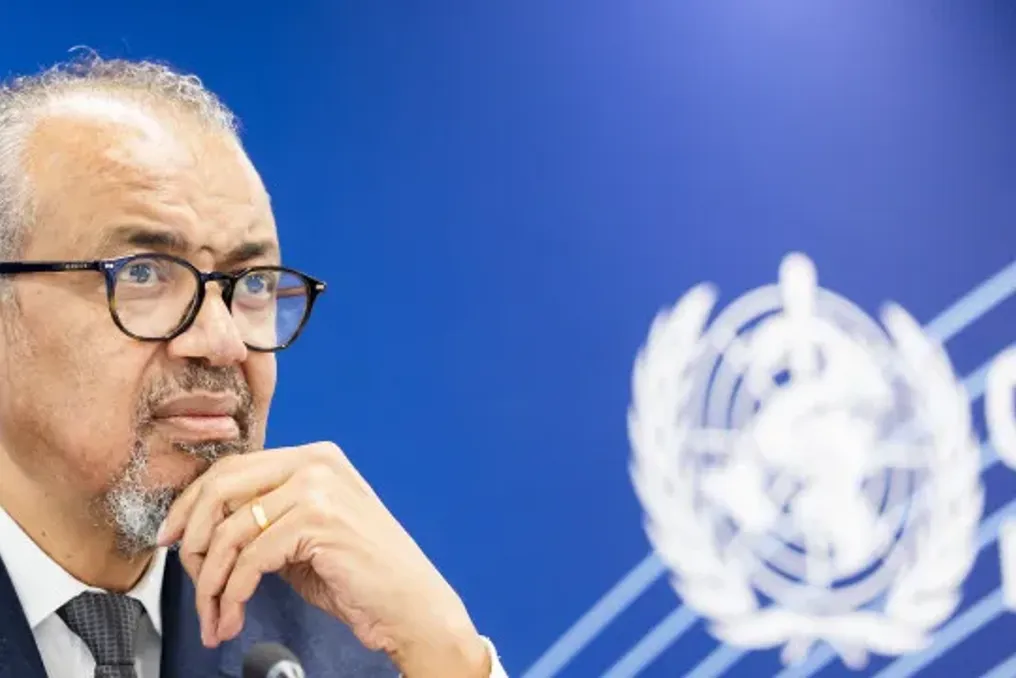
WHO warns of the urgent need to conclude global treaty against pandemics
Read more
Noticias ao Minuto
noticiasaominuto.com

WHO warns of the urgent need to conclude global treaty against pandemics

The Director-General of the World Health Organization (WHO), Tedros Adhanom Ghebreyesus, emphasized the urgency of finalizing an international pact dedicated to combating pandemics. He cited lethal epidemics, such as the Ebola outbreak affecting the Democratic Republic of Congo (DRCongo), as proof of this necessity.

Currently, divergences persist between rich nations and developing countries regarding how to implement the historic agreement established last year, which serves as the basis for managing future health crises similar to COVID-19.

During the opening of the ninth session of the Intergovernmental Working Group (IWG), running until November 13 in Geneva, Tedros Adhanom Ghebreyesus urged delegates to continue the work. He stressed that the primary purpose of concluding this treaty is the protection of populations.

The Director-General warned that any pathogenic threat, regardless of its origin, can become a danger to all inhabitants of any nation. He recalled the hantavirus epidemic that affected three people on a cruise ship in April, and the Ebola epidemic declared in May, which resulted in nearly 5,000 deaths among over 10,000 infected, concentrated mainly in the Democratic Republic of Congo.

When WHO member states formalized the agreement in May 2025, they postponed the discussion of a crucial point: a fundamental mechanism that has yet to be resolved, even after eight IWG meetings held since July 2025.

The appendix concerning the Pathogen Access and Benefit Sharing System (PABS) is considered the final piece needed for the global pandemic agreement to enter into force. This system must establish the rules for obtaining pathogenic agents with pandemic potential, as well as defining how derived benefits, such as vaccines, tests, and treatments, will be shared.

Tedros stated that PABS constitutes 'the last piece missing from our puzzle,' reinforcing that it is vital for the world to learn from the experience of the COVID-19 pandemic: 'no country can protect itself from pandemics by acting alone.' Recalling the pandemic period, he observed that although the world developed vaccines rapidly, many countries faced delays, while others received surpluses.

He concluded that this disparity caused deaths, prolonged the crisis, and increased the risk of new variants emerging, underlining that finalizing this section of the treaty is 'the key that will open the doors to a safer future.'

Similar stories

Vivo evaluates acquisition of Vero to strengthen fiber optic operations
Read more
tecnoblog.net

Vivo evaluates acquisition of Vero to strengthen fiber optic operations

Telefônica Brasil, the controlling company of Vivo, is reportedly analyzing the possibility of acquiring the provider Vero. According to information gathered by Estadão, consultants have already been hired and negotiations are underway, although no agreement has been formalized yet.

If the transaction materializes, it would significantly strengthen Vivo's presence in the fiber optic segment and expand its customer base. Additionally, Vero would bring a virtual mobile telephony operation to the company, serving both consumers and as structural support for other brands.

Vero's main value lies in its broadband base. Data provided by Anatel indicates that Vero has approximately 1.29 million fixed internet accesses, ranking sixth in the Brazilian market. Vivo, on the other hand, is in second place, with about 8.54 million accesses, trailing only Claro.

Vero provides services in hundreds of municipalities located in states such as Minas Gerais, São Paulo, Paraná, Santa Catarina, and Rio Grande do Sul. A potential acquisition also aligns with the scenario of consolidation among various providers, large and medium. Recently, Giga+ stated that it is in talks with Sky regarding a possible business merger.

Beyond fixed internet, Vero operates as a Mobile Virtual Network Operator (MVNO), utilizing TIM's network. In June, the company had about 340,000 mobile users, which already accounted for 7% of its revenue. Furthermore, it offers infrastructure for other companies to provide cell phone plans under their own brands.

Among the accredited companies are Veek, Salvy, Ampernet, and regional providers. This deal could be of interest to Vivo by providing a ready structure to serve smaller brands, although the exact role of this structure in a potential purchase has not yet been defined.

The possible sale occurs amid financial difficulties for Vero, which has a net debt close to R$ 3 billion and recorded a reduction in its subscriber base this year. Concurrently, Vivo has been investing in reinforcing its fiber infrastructure. In May, Vivo assumed full control of FiBrasil, a company created specifically to manage fiber optic networks. The incorporation of Vero would expand Vivo's presence in the broadband retail sector and add virtual mobile operation capacity.

As of now, there is no signed contract nor any guarantee that the deal will be finalized. Until the companies release an official decision, there are no confirmed changes for customers.

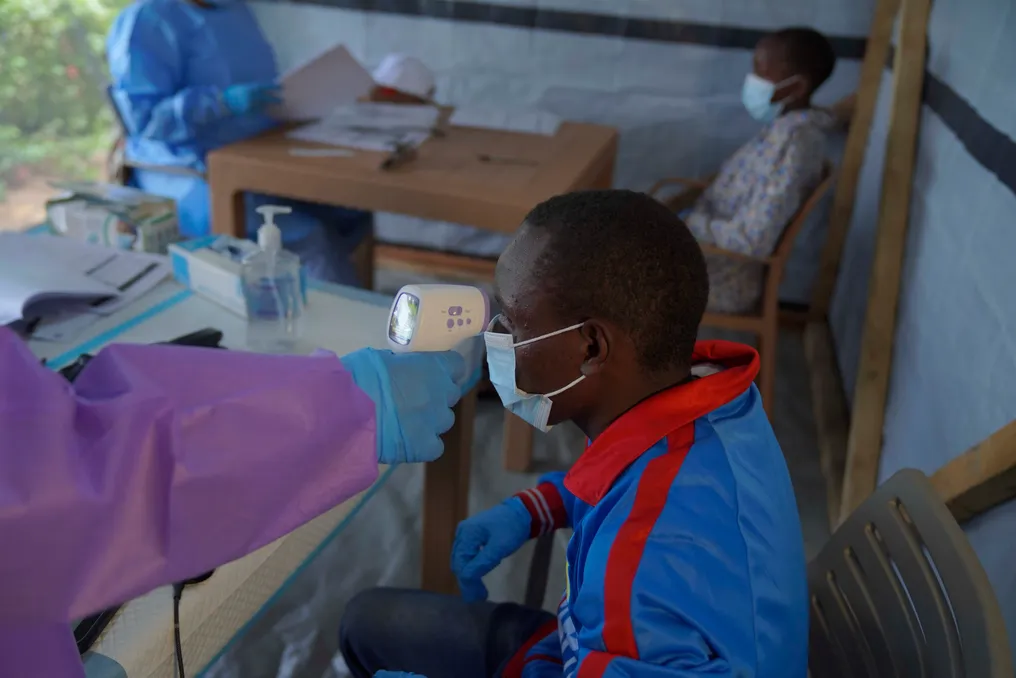
Ebola outbreak surpasses 10,000 cases in Congo, causing high mortality and containment challenges
Read more
g1.globo.com

Ebola outbreak surpasses 10,000 cases in Congo, causing high mortality and containment challenges

Government data released on Tuesday indicated that the Ebola outbreak in Congo has reached over 10,000 confirmed cases, while health authorities work intensively to control the spread of the disease in several African countries.

This outbreak is considered the fastest growing in history, and according to information from the Congolese Ministry of Health, nearly half of the 10,060 diagnosed individuals have died, making it the deadliest of the disease in the country.

The outbreak, which was reported in May, is caused by the Bundibugyo virus, a pathogen for which there are no approved vaccines or treatments. Response teams face numerous obstacles, including armed conflicts, poor road infrastructure, and public hostility driven by misinformation and distrust.

These obstacles hinder people's adherence to reporting symptoms and seeking medical assistance in communities that historically deal with violence and successive epidemics.

Comparison with previous outbreaks

Compared to the Ebola outbreak in West Africa between 2014 and 2016—the largest and deadliest in history, with over 28,000 cases and more than 11,000 deaths—the current outbreak has recorded at least three times more cases and deaths since its declaration in the same period.

The disease has spread throughout Africa, surpassing any previous outbreak, and has reached three regions. Cases have been registered in five nations, including Uganda, as well as France, which currently has no active cases.

A persistent problem in the disease's spread in Africa is the apparent failure in surveillance, given that most initial cases were only confirmed long after the onset of symptoms or after individuals traveled.

Distribution and Challenges in Congo

In Congo, the disease has expanded to 66 health zones across eight provinces, a significant increase from the three zones existing when the outbreak was declared in May. Professionals involved in the response informed the Associated Press that treatment centers in certain areas are overwhelmed, and that part of the population remains distrustful, reacting with violence.

Furthermore, health professionals have regularly gone on strike due to delays or absence of salary payments. Sephora Bgosi, a member of the team responsible for burying Ebola victims in the Ituri province, the epicenter of the outbreak, warned: 'Some people still don't seem to understand the seriousness of the situation, even though they are directly exposed to the risk.' She emphasized that 'Ebola is extremely dangerous and can be fatal.'

It is estimated that about 80% of the registered cases are still identified outside the monitored contact circle, suggesting the existence of transmission routes unknown to health authorities. The African Centre for Disease Control and Prevention (Africa CDC) points out that for the outbreak to be considered widely controlled, at least 95% of cases should be among known contacts.

At least half of the registered deaths occurred among individuals who were not admitted to treatment centers, indicating that in many localities, residents are still not reporting their symptoms.

In various areas, health professionals face everything from basic shortages, such as a lack of appropriate vehicles, to more complex issues, such as persuading families to hand over sick or deceased relatives for safe burial.

Last week, in the Nia Nia health zone in Ituri province, some Ebola response workers, including surveillance and community mobilization agents, went on strike over unpaid bonuses since the end of August, a recurring problem in several affected regions.

More than five months after the start of the outbreak, health professionals continue to be attacked by residents. A nurse was murdered and another professional was seriously injured while responding to an Ebola alert in Bafwasende, Tshopo province, last Saturday.

Impact on Healthcare Services in Congo

The outbreak has compromised essential health services, which were already operating with resource scarcity and overload, and diverted focus from other epidemics faced by the country, such as cholera.

There is an increase in maternal deaths, as pregnant women avoid hospitals for fear of infection and isolation, resulting in double the maternal mortality in some provinces shortly after the outbreak was declared.

The epidemic has also affected routine services, such as childhood vaccination, interrupted classes in regions where millions of children were already out of school, caused stigma and trauma in affected families, and worsened the living conditions of many people already in vulnerable situations.

Popular