Centrum Air airline starts direct flights from Tashkent to Mattala
Read more
UzDaily
uzdaily.uz

Centrum Air airline starts direct flights from Tashkent to Mattala

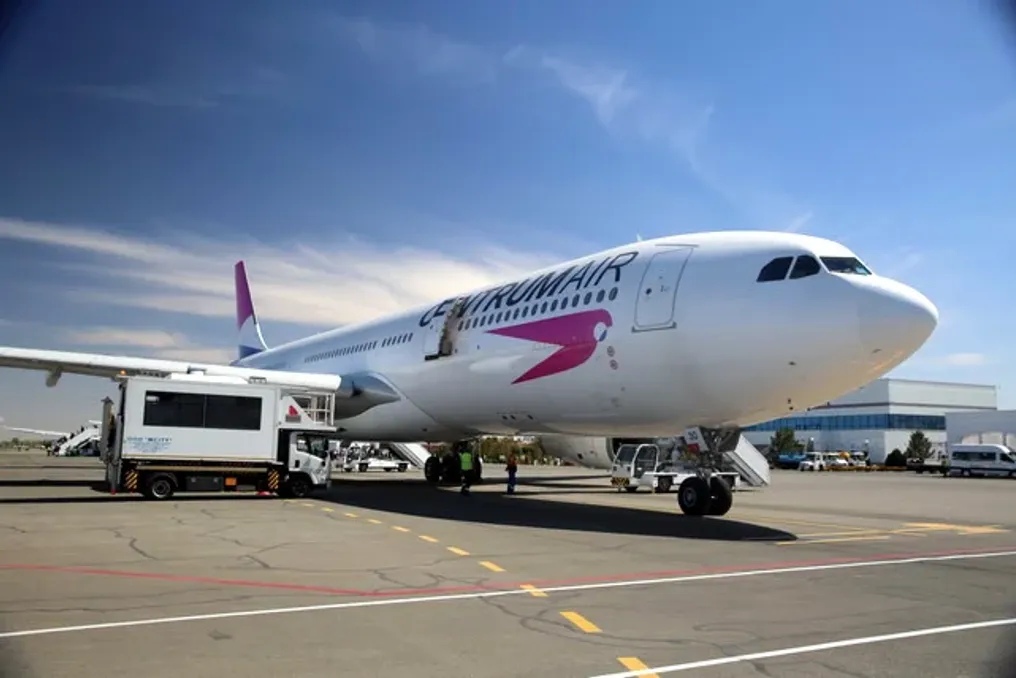
The Uzbek airline Centrum Air has launched direct flights between Tashkent and Mattala in Sri Lanka. According to the news agency Dunyo, the new route will operate twice a week, on Wednesdays and Saturdays, and will be valid until the end of March 2027.

The first flight arrived at Mattala Rajapaksa International Airport at 5:30 PM local time on October 28, carrying 160 passengers. The arrival was marked by a traditional water welcome and an official opening ceremony.

The launch of this route was the result of negotiations involving the Embassy of Uzbekistan in Islamabad, Centrum Air, and relevant Sri Lankan organizations. Representatives of the host side expressed gratitude for the introduction of a direct service on the Tashkent–Mattala–Tashkent route.

This new service is expected to strengthen transport links between Uzbekistan and Sri Lanka, as well as create additional opportunities for the development of trade, investment, and tourism. Furthermore, the direct flights will allow Uzbekistan to act as a transit hub for air transport between Sri Lanka and Central Asian countries.

Similar stories

MIAL requests airlines to submit plans for flight relocations to Navi Mumbai airport by November 3
Read more
business-standard.com

MIAL requests airlines to submit plans for flight relocations to Navi Mumbai airport by November 3

Mumbai International Airport Ltd (MIAL) on Wednesday asked airlines to provide plans for relocating some international flights to Navi Mumbai airport by November 3. This is due to MIAL's plans to temporarily shift traffic equivalent to five million passengers annually from Mumbai airport because of the reconstruction of Terminal 1.

At the meeting held on Wednesday between MIAL and the Airline Operators Committee (AOC), which represents carriers operating at Mumbai airport, a significant number of airlines, especially foreign carriers, opposed the unilateral reduction of slots in the summer 2027 schedule. They demanded that discussions for the next winter schedule begin as soon as possible.

In aviation, the winter schedule runs from the last Sunday of October to the last Saturday of March, while the summer schedule runs from the last Sunday of March to the last Saturday of October. Both MIAL and Navi Mumbai International Airport Limited (NMIAL) are managed by the Adani Group.

Over the past few months, MIAL has requested airlines to move 265 out of 770 weekly international flights from Mumbai airport to Navi Mumbai. This is necessary for the demolition and subsequent reconstruction of Terminal 1 of the old airport due to safety reasons. Airlines strongly oppose this relocation, calling it 'unilateral,' and demand data on traffic, capacity, and proper consultation.

During Wednesday's meeting, a large group of airlines stated that the reconstruction of Terminal 1 should be carried out in phases, similar to the previous reconstruction of Terminal 2, and that any transition must comply with the Ministry of Civil Aviation's (MoCA) guidelines regarding slot allocation.

At the same meeting, MIAL presented its Terminal 1 reconstruction schedule and emphasized the urgency of the work, which, according to it, has been delayed for more than nine years. The airport operator referred to structural audit reports conducted by Structwel in 2017 and IIT Bombay in 2024, which indicated the need for reconstruction.

MIAL reported that IndiGo, Air India, and Akasa Air have agreed on plans to relocate international flights to Navi Mumbai during the period from January to the summer season, which will account for about three million passengers per annum (MPPA). The airport operator specified that the remaining 2 MPPA of traffic must also be relocated by the summer of next year.

The operator informed airlines that Mumbai airport's capacity is about 55 MPPA, and the temporary relocation of traffic equivalent to five MPPA will leave about 91 percent of its current capacity unchanged. MIAL stated at the meeting that the total capacity of Mumbai airport will increase to 65 MPPA after the reconstruction of T1 and the expansion of Terminal 2.

MIAL also mentioned that the temporary reduction in traffic at Mumbai airport has already been accounted for in the approved tariff following consultations with stakeholders. It assured airlines that the international traffic temporarily moved to Navi Mumbai will be restored at Mumbai airport after the completion of Terminal 2 expansion.

The airport operator noted that a phased transition will help ensure passenger safety and minimize operational disruptions while supporting the development of Mumbai's dual-airport system.

Air India launches new business class service: in-flight dining experience
Read more
www.aajtak.in

Air India launches new business class service: in-flight dining experience

Air India has introduced a new initiative aimed at enhancing the gastronomic experience for passengers traveling in business class. The airline has begun offering high-cuisine service, comparable to a restaurant setting, on select long-haul and very long-haul international flights. Instead of serving food on a tray all at once, dishes will be presented sequentially on different plates.

This new experience will be complemented by the use of tablecloths on tables, specially designed tableware, and an elevated level of service. Air India announced this service on October 22. Currently, it is available on selected routes between India and the United Kingdom, including flights to London Heathrow, London Gatwick, and Birmingham.

The company plans to expand this option to Airbus A350, Boeing 787-9 Dreamliner, and Boeing 777-300 aircraft, allowing passengers on other international destinations to benefit from this feature.

Previously, passengers on board were typically served food on a tray, which contained the main course, salad, dessert, and other snacks together. The new system changes this approach by mimicking restaurant service. Passengers will now first be served an appetizer, followed by the main course, and finally dessert, with each dish presented on a separate plate.

Special tableware will be used for different stages of the meal. An atmosphere of comfort is created through the presence of table linens, appropriate glassware, and improved service. The goal of this system is to allow passengers to calmly enjoy their meals according to their preferences and convenience, especially on long flights, allowing them not to rush.

According to the airline, this initiative will transform in-flight dining from a mere convenience during travel into an integral and special part of the journey.

As part of the new dining service, Air India will utilize specialized tableware from the 'Vista Verve' collection. This collection includes individual plates for appetizers, main courses, snacks, desserts, and cheese. Additionally, special cups and espresso mugs have been developed.

Rajesh Dogra, Air India's Director of Customer Experience, noted that the new sequential dish presentation system in business class is part of a broader plan to improve the airline. The objective is to ensure a premium level of international travel while maintaining the warmth and authenticity of Indian hospitality.

Air India has previously made several changes to enhance passenger experiences, including updating the beverage menu, wine selection, improving tea offerings, and modernizing cabin service. Concurrently, the airline is working on fleet renewal, including the inclusion of new Airbus A350 and Boeing 787-9 Dreamliner aircraft, as well as upgrading the cabins and interiors of older aircraft.

MIAL insists on the plan to shift flights to Summer 2027, despite airline objections
Read more
business-standard.com

MIAL insists on the plan to shift flights to Summer 2027, despite airline objections

Mumbai International Airport Ltd (MIAL), controlled by Adani Group, reiterated on Monday that airlines must independently decide whether to shift their flights to Navi Mumbai airport, temporarily suspend operations in Mumbai, or seek other options within the schedule for Summer 2027.

In its communication to the Airline Operators Committee (AOC), which represents airlines operating at Mumbai airport, MIAL emphasized again that during the summer period of 2027, Mumbai airport will serve approximately 5 million fewer passengers annually due to the closure of Terminal 1 for reconstruction. Both airports, Mumbai and Navi Mumbai, are managed by Adani Group.

MIAL's response to the AOC followed two days after the committee sent a letter to MIAL rejecting any unilateral redistribution of traffic, reduction of slots, or relocation of international operations without proper procedure. The AOC stated that airlines did not agree to transfer international operations to Navi Mumbai or to any reduction or cancellation of existing slots.

In an email to AOC members on Monday, MIAL referred to a meeting held on October 13 with airlines, noting that individual carriers have complete freedom in making decisions regarding their plan for the Summer 2027 schedule. MIAL clarified: 'As we explained at the October 13 meeting, the capacity of Mumbai airport should be limited by approximately 5 million passengers per year according to the S27 schedule.'

S27 is a commonly accepted abbreviation in the aviation industry for the Summer 2027 flight schedule. In aviation, the summer schedule is valid from the last Sunday of March to the last Saturday of October, while the winter schedule runs from the last Sunday of October to the last Saturday of March.

Furthermore, MIAL reported that airlines can choose to shift part or all of their operations to Navi Mumbai, temporarily halt activities at Mumbai airport until Terminal 1 resumes operation, or seek alternative locations. The operator added that the decision to participate in consultations with the Airport Operations Control Centre (AOCC), which coordinates airport operations, remains solely up to each individual airline.

The airport operator also confirmed that it will restore all historical slots at Mumbai airport after the completion of Terminal 1 reconstruction and its commissioning by 2030. A slot is a designated time when an airline can take off or land at the airport.

The dispute began in August when MIAL started discussions about shifting international flights to Navi Mumbai as part of the Terminal 1 reconstruction. Following this, the operator proposed moving 265 out of 770 weekly international flights from Terminal 2 of Mumbai airport to Navi Mumbai during the winter schedule, which begins on October 26.

MIAL's plan is linked to the reconstruction of Terminal 1, which is expected to be closed for restoration. The airport operator stated that the capacity of approximately 5 million passengers should be limited at Mumbai airport during Summer 2027, insisting that the reconstruction is necessary to address the issues of Terminal 1's outdated infrastructure.

Airlines questioned the basis for the proposed shift and requested detailed information on terminal capacity, passenger flow, and usage. The AOC also demanded clarification regarding the methodology used to determine the proposed reduction in international operations, stating that airlines cannot be forced to shift or reduce operations without the necessary data, consultation, and regulatory process.

The Ministry of Civil Aviation intervened in the dispute earlier this month. After a meeting on October 6 involving the ministry, MIAL, and Navi Mumbai International Airport, the airport operator was advised to engage with stakeholders to develop a mutually agreed transition plan instead of following its initial proposal.

At the October 13 meeting, MIAL assured airlines that the historical distribution of slots would not be disrupted during the 2026-27 winter schedule. It also announced that a joint working group would be established to develop a plan for implementing the Terminal 1 reconstruction. The next meeting between the airport operator and airlines is scheduled for October 28.
Popular