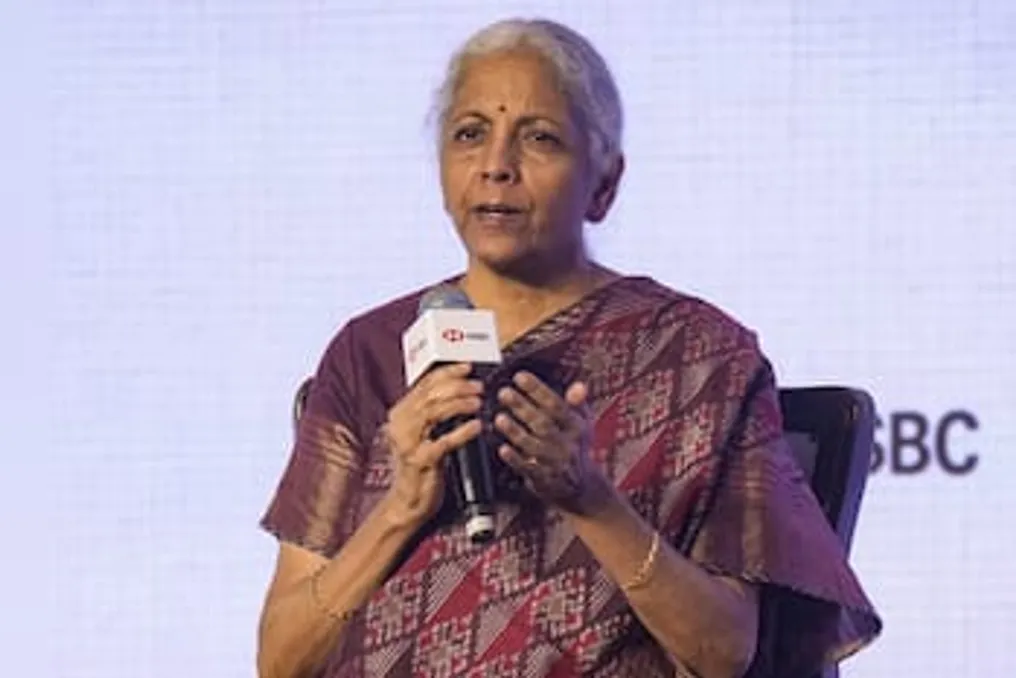
Finance Minister Nirmala Sitharaman stated that the government will focus efforts on expanding coverage with insurance and pension schemes, improving access to credit, AI training, and conducting banking reforms to stimulate financial inclusion.
'Insurance for all' will be a key focus in the government's financial inclusion agenda. The ministry aims to increase access to insurance and pension schemes, especially among the least affluent segments of the population, announced Finance Minister Nirmala Sitharaman on Monday. The government is also prioritizing broader access to credit and plans to establish AI training centers in every district to bridge the gap between industry requirements and youth skills.
At the 'Algorithm of Inclusion' event in Mumbai, organized by HSBC, Sitharaman noted that public insurance and pension programs will continue to play a vital role in providing financial protection to vulnerable groups in society. Schemes such as Pradhan Mantri Jeevan Jyoti Bima Yojana and Pradhan Mantri Suraksha Bima Yojana offer insurance coverage at minimal contributions, while state-subsidized pension programs are intended for those unable to work. The minister emphasized the government's commitment to ensuring that every needy person is covered by these schemes.
The government's emphasis on expanding insurance coverage aligns with the vision of the Insurance Regulatory and Development Authority of India (IRDAI) to achieve 'Insurance for all by 2047'. This initiative aims to guarantee every citizen access to adequate life, health, and property insurance, and to cover businesses against relevant risks. The regulator is focusing on enhancing the accessibility, convenience, and affordability of insurance products, particularly in underserved and rural areas. Initiatives within this effort include Bima Sugam, a proposed digital insurance marketplace, Bima Vistaar, a combined insurance product, and Bima Vahak, a last-mile distribution network with a focus on women.
Another priority is ensuring access to formal credit, especially for individuals looking to start or expand their businesses. Furthermore, the government is working to address the mismatch between the skills of young people entering the workforce and the needs of employers. Sitharaman stated that the ministry wants there to be an AI training center in every district, allowing youth to acquire industry-relevant skills closer to home.
The government will also support states in modernizing Industrial Training Institutes (ITIs), many of which lag behind changing industry demands. The ministry will provide funding, and states can identify leading trainers.
Regarding the banking sector, Sitharaman reported that the government will form a high-level committee to study future sector needs and develop recommendations for strengthening the Indian banking system. Although Indian banks have recovered from the difficulties of 2014–2015, the sector must continue to evolve to meet the demands of a growing economy. The committee will consult with industry participants and experts before presenting its findings.
The Ministry of Finance announced last week that the chairman of the committee will be Suresh N Patel, former Central Vigilance Commissioner (CVC), who has over thirty years of experience in the banking sector. Patel held positions as CEO and Executive Director of Andhra Bank and Oriental Bank of Commerce. The committee includes Shirish Chandra Murmu, Deputy Governor of the Reserve Bank of India (RBI), Padmaja Chundru, former Managing Director and CEO of Indian Bank, and N. S. Vishwanathan, former Deputy Governor of the RBI. The committee secretary will be the Joint Secretary (Banking) of the Department of Financial Services. According to the Ministry of Finance statement, the committee has six months to complete its work, until April 2027.
Explaining the resilience of the Indian economy amid global uncertainty, the finance minister linked it to strong domestic demand, rising purchasing power, and policy stability. She noted that growth in domestic consumption is being observed due to the large domestic market and the rising purchasing power of the middle class. While exports remain important, the expansion of the domestic market has added extra strength to the economy.
Sitharaman also attributed the decline in poverty levels to a combination of social security measures and improved access to healthcare, education, food security, and financial services. Medical coverage under the Ayushman Bharat scheme, which provides up to 5 lakh for treatment to eligible families, has helped protect households from high out-of-pocket healthcare expenses. Such expenses often force rural families to sell land and other assets to pay for treatment. Additionally, free grain distribution programs, housing, sanitation, and water supply initiatives have contributed to improved living conditions.
The finance minister also stressed the need to maintain fiscal discipline while simultaneously increasing government spending to support economic growth. Capital expenditure has significantly increased over the last four to five years, and the multiplier effect has also grown. She stated that the government will continue to support growth through capital expenditure while maintaining fiscal responsibility so that India's growth momentum does not slow down.