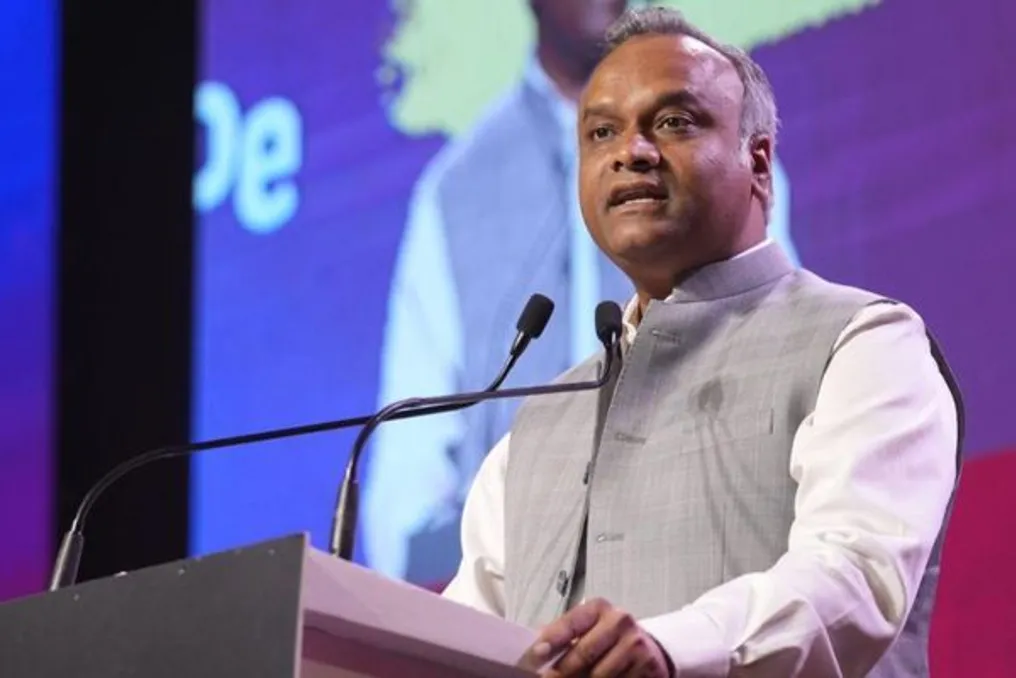
NTT DATA explores expansion in Mangaluru and Udupi, meeting with Priyank Kharge
Read more
YourStory [india, en]
yourstory.com

NTT DATA explores expansion in Mangaluru and Udupi, meeting with Priyank Kharge

NTT DATA is considering expanding its operations in the state of Karnataka, with Mangaluru and Udupi being identified as potential growth areas. These plans were discussed during meetings with Priyank Kharge, the Minister for Information Technology, Business Development and Rural Affairs of Karnataka, on November 2, 2026.

The discussion covered new opportunities for collaboration, technology investments, and ways to strengthen the company's presence in the state. NTT DATA, which recently acquired Karnataka-based companies Niveus Solutions and WinWire, highlighted the availability of skilled manpower as a key advantage for expanding operations, particularly along the coast.

Priyank Kharge emphasized the state's 'Beyond Bengaluru' program, aimed at developing technological ecosystems across Karnataka by expanding infrastructure, investments, and job creation in emerging tech clusters. He stated that this program fosters strong regional tech ecosystems through investments in upskilling, infrastructure, and progressive policy, focusing investment towards talent hubs.

The Minister added that the government is keen on close interaction with industry to develop solutions that accelerate growth in Karnataka's new technology centers. The meeting also addressed possibilities under the Karnataka Sustainable Data Centre Policy and potential partnership for NTT DATA in data centers, cloud services, and digital infrastructure.

Furthermore, Kharge presented plans for establishing a cable landing station in Mangaluru, which is expected to bolster the state's digital infrastructure, and discussed how NTT DATA's experience could support this project. The Minister also urged the company to explore opportunities beyond cloud services in sectors such as biotechnology, healthcare, life sciences, and automotive, as these fields align with Karnataka's existing industrial and research ecosystem.

Discussions also touched upon startup incubation and innovation. Priyank Kharge mentioned the recently launched state initiative, 'Government First,' which allows startups to test their solutions within government departments, and invited NTT DATA to partner in this initiative to support Karnataka's startup ecosystem.

The meeting was attended by senior government officials, including Dr. N. Mandjulu, Secretary of the Department of Electronics, IT, Business Development and Science & Technology; Dr. Avinash Menon Radranathan, IAS, Director of the Department of Electronics, IT and Business Development, and CEO of the Karnataka Innovation and Technology Society (KITS); and Sanjeev Gupta, CEO of KDEM. NTT DATA was represented by Charlie Lee, President and Global Head of Cloud, AI and Security; Ayman Hussein, Global Managing Director and VP of Business at Google; and Shashir Shetty, Chief Growth Officer.

As Mangaluru and Udupi are being considered as potential expansion sites, Karnataka aims to broaden its technological footprint beyond Bengaluru and attract more specialized technology investments to its coastal region.

Similar stories

Uzbekistan and Dassault Systèmes Discuss Creation of Digital Twins of Cities
Read more
uzdaily.uz

Uzbekistan and Dassault Systèmes Discuss Creation of Digital Twins of Cities

The Cadastre Agency of Uzbekistan held negotiations with representatives of the French technology company Dassault Systèmes and the economic department of the French embassy regarding the application of digital technologies in urban infrastructure.

The meeting took place on October 27 and was attended by Michel Latter, Head of Dassault Systèmes for Central Asia. The parties discussed possibilities for interdepartmental cooperation and experience exchange in developing digital twins of cities.

Particular attention was paid to projects related to the formation of Uzbekistan's national spatial data infrastructure. Participants also considered the possibility of organizing training programs and workshops with the involvement of international specialists.

Specific details of potential joint projects and their implementation timelines were not disclosed at this time.

Thailand prepares data center regulations amid AI development
Read more
noticiasaominuto.com

Thailand prepares data center regulations amid AI development

Thailand is developing new rules concerning the location, water supply, power supply, and environmental management of data centers (DCs). These rules are critically important for the development of artificial intelligence (AI) and follow the example of other countries.

The Thai government announced this week that the Thailand DC Policy Committee has approved a draft containing minimum requirements for site suitability, connection to electrical and water grids, and compliance with environmental standards. This draft will be presented to the Council of Ministers next week.

According to the Ministry of Interior, this draft is part of a broader initiative led by the Ministry of Economy aimed at regulating DC operations, as well as the processes for issuing permits and licenses.

The goal of the 'Digital Center One-Stop Service' (DC-OSS) project is to ensure more efficient supply of electricity and water to these facilities to prevent 'any undesirable impact on the local way of life, natural resources, and the environment of affected communities.'

The announcement by the Thai government followed the suspension by Bangkok authorities in September of issuing new permits for large DCs in the capital. These facilities are undergoing analysis regarding consumption, environmental impact, and fuel storage.

AI and the growing physical infrastructure required for it, including DCs, have become a topic of discussion ahead of the US midterm elections on November 3rd, linked to concerns of many citizens and multi-million dollar investments by the technology industry.

US President Donald Trump recently demanded that new AI-related DCs generate their own energy and provide surpluses to lower electricity prices.

These infrastructures, vital for powering AI models, face criticism due to massive consumption of water and electricity. Therefore, several countries, including Spain and Australia, are implementing regulatory measures.

The Spanish government recently announced its intention to approve a royal decree establishing requirements for digital sovereignty and sustainability applicable to DCs before the November 29th elections.

Meanwhile, the Australian state of Victoria (South) has announced a ban on building new DCs in residential areas and will require them to generate their own renewable energy.

Tehran and Bangkok Emphasize the Importance of Expanding ICT Cooperation
Read more
www.tehrantimes.com

Tehran and Bangkok Emphasize the Importance of Expanding ICT Cooperation

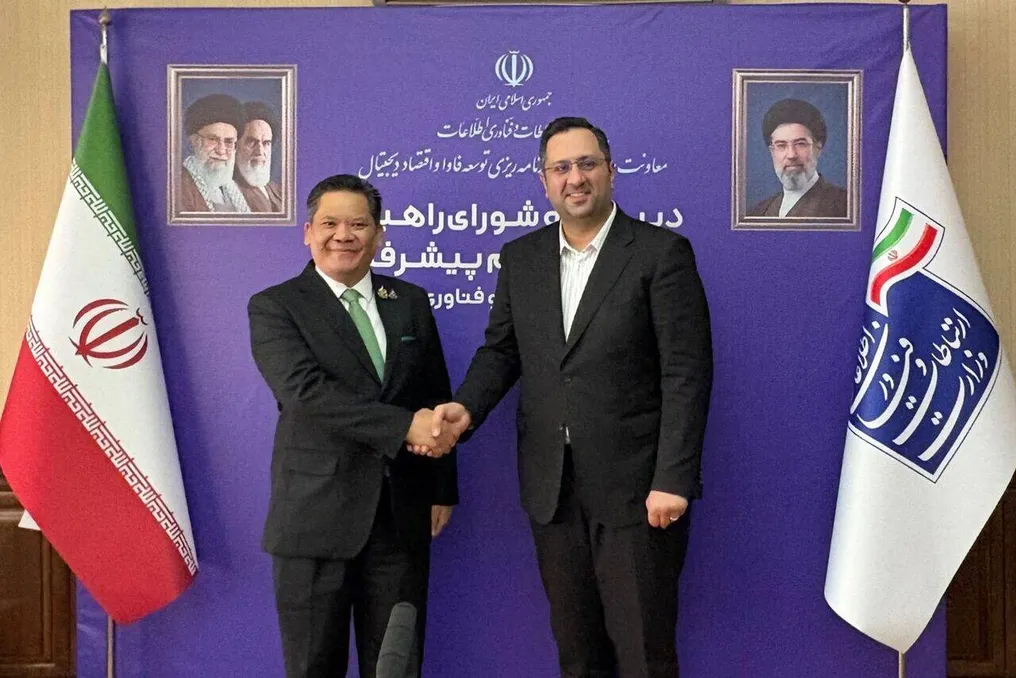
Officials from Iran and Thailand stressed the necessity of strengthening joint efforts in the field of information and communication technologies (ICT), which will promote regional and international interaction, as well as the signing of a memorandum of understanding between the two sides.

As reported by the IRNA agency, a meeting took place between Mohammad-Hafiz Hakimi, Deputy Minister of ICT, and Sake Noptaisong, the Thai Ambassador to Iran. Noptaisong, emphasizing the long-standing partnership between Iran and Thailand, called for the continuation of bilateral cooperation.

The Thai Ambassador noted that since his appointment in Tehran, he has shown interest in studying Iran's achievements and potential in various fields such as artificial intelligence, digital transformation, and new technologies.

For his part, Hakimi indicated that since the headquarters of the Asia-Pacific Telecommunity (APT) is in Bangkok, Thailand plays a significant role in enhancing technological cooperation in the region. He proposed utilizing the opportunities of both countries to develop interaction.

Both sides agreed that it is necessary to develop and sign a memorandum of understanding to stimulate technological and bilateral cooperation.

Global Innovation Index 2026: Tehran Enters Top 100 Science and Technology Clusters

According to a report published by the World Intellectual Property Organization of the UN (WIPO), Tehran ranked 65th among the world's largest science and technology (S&T) clusters this year. Annually, the GII identifies and ranks the 100 leading innovation clusters globally.

This index uses a data-driven, bottom-up approach that transcends administrative and political borders, identifying geographical areas with a high concentration of inventors, scientific authors, and venture capital (VC). These clusters often cover multiple municipalities or subnational regions and sometimes extend across two or more countries.

Three criteria determine the composition of the top 100: the location of inventors listed in patent applications filed under the WIPO Patent Cooperation Treaty (PCT); the affiliation of authors of published scientific articles; and the location of companies receiving venture capital funding.

The GII 2026, themed 'Supporting Entrepreneurs at the Forefront of Science,' analyzes how scientific breakthroughs are turning into deep science startups and spin-offs.

Besides China and India, six other middle-income economies have clusters in the top 100, including Brazil (1 cluster), Islamic Republic of Iran (1), Egypt (1), Malaysia (2), Mexico (1), and Turkey (1).

Tehran is the only cluster in Iran to make the top 100 innovation clusters in 2026. In 2026, Tehran filed 405 PCT applications, had 58,732 scientific publications, and 107 venture capital deals, with global PCT application share at 0.0%, global scientific publication share at 0.7%, and global venture capital deal share at 0.0%. This allowed it to rank 65th among the largest innovation clusters and 88th in innovation intensity, which is lower than in 2025 (63rd and 85th, respectively).

According to IRNA, the estimated population of the city cluster is 7,852,733 people, with a PCT application rate per capita of 52, and a scientific publication rate per capita of 7,497. The pre-round venture deal metric per capita is estimated at approximately 14, and the overall innovation intensity per capita is 0.097.

In patent registrations, medical technologies ranked first (with a share of 19%), followed by computer technologies, civil engineering, and pharmaceuticals.

Among the leading publishing organizations in Tehran, Tehran University stands out with 5,232 articles, Islamic Azad University with 4,081 articles, and Iran University of Science and Technology with 3,725 articles. Most published works relate to engineering fields.

In the recent StartupBlink Global Ranking 2026, Tehran's position improved by 20 places, rising to 348th among the most innovative cities in the world.

Tehran is home to 96 startups, accounting for 81% of the total number of startups in the country. The city has about one startup per 100,000 people. In 2025, the ecosystem demonstrated annual growth of over 36%. Currently, the city ranks 1st in the strength of the startup ecosystem in Iran, maintaining this position since 2025. Regionally, Tehran ranks 11th in West Asia, moving up 2 positions from 2025.

According to Iran Innovation Zone, this success is attributed to the strengthening of innovative infrastructure and the development of links between various sectors operating in the knowledge-based economy, as reported by the Mehr agency.

The StartupBlink report highlighted the role of Pardis Technology Park, the country's largest technology and innovation center, as one of the driving forces of Iran's knowledge-based economy. The park hosts hundreds of technology and knowledge companies, creating infrastructure for business development and providing a platform to improve collaboration between startups, investors, major industries, and institutions.

Furthermore, the annual hosting of the International Exhibition of Innovations and Technologies (INOTEX) by Pardis Technology Park plays a key role in establishing contacts and uniting experts in the innovation ecosystem. According to the report, thanks to the capabilities of Pardis Technology Parks, Iran's startup ecosystem ranks 95th globally.

Other key players contributing to the development of Iran's innovation ecosystem include the Innovation Fund and MCI (Hamrah Aval – Iran's first mobile operator) Ventures. Iran ranks 58th globally in the 'Corporate Interaction' indicator, which reflects effective interaction between large industry and innovative and technological companies.

Fintech, a leading industry in Iran, ranks 72nd globally and 5th in the Middle East, indicating the country's high potential in developing financial technologies. The Iranian fintech industry comprises 23 startups, making up 19% of all startups in Iran.

In the Global Startup Ecosystem Index 2026, Iran's startup ecosystem ranked 103rd globally, remaining at the same level compared to the previous year. The Iranian startup ecosystem ranks 10th in West Asia, consistently holding this position since 2025. It follows Oman and surpasses Iraq.

There are 118 registered startups in the country, accounting for one percent of all startups in the Middle East. This is equivalent to approximately one startup per 100,000 people. Over the last year, the ecosystem grew by 54.4%.
Popular