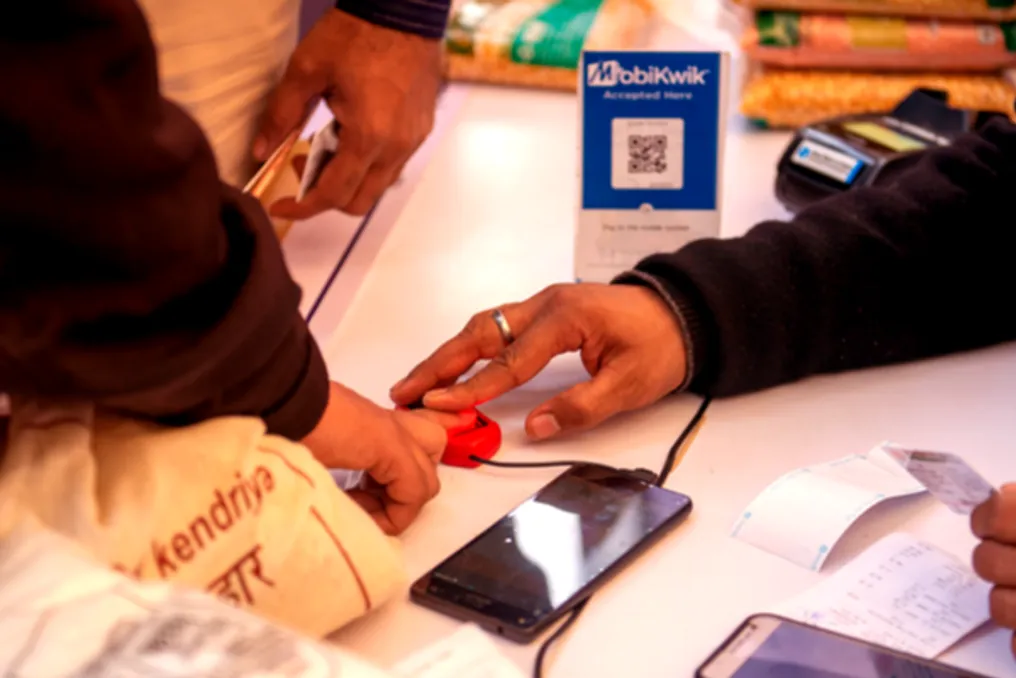
MobiKwik reports net profit of 11.83 crore rupees in the second quarter of fiscal year 27
Read more
YourStory [india, en]
yourstory.com

MobiKwik reports net profit of 11.83 crore rupees in the second quarter of fiscal year 27

The fintech company MobiKwik reported achieving a net profit during the second quarter of fiscal year 27. This result contrasts with the loss recorded a year earlier and marks the company's fourth consecutive profitable quarter, as well as its highest quarterly revenue.

For the period from July to September, the company generated a net profit of 11.83 crore rupees, whereas in the second quarter of fiscal year 26, a loss of 28.61 crore rupees was recorded. Revenue grew by 9.4% compared to the same period last year, reaching 295.70 crore rupees. MobiKwik attributes these figures to an increase in Gross Merchandise Value (GMV) and improved margins.

Bipin Prit Singh, Managing Director and CEO of MobiKwik, stated that the company believes the operating leverage in its business model will strengthen as it transitions into an AI-focused company. He added that the constant focus on cost optimization and operational efficiency strengthens the operating model and contributes to profitability growth upon scaling.

According to MobiKwik's data, its payments business demonstrated a 35% year-over-year growth in Gross Merchandise Value (GMV), reaching 59,677 crore rupees in the second quarter of fiscal year 27. In the consumer payments segment, GMV increased by 27% year-on-year to 46,375 crore rupees, while loan disbursement volume grew by 34%, reaching 1,082.6 crore rupees for the quarter.

The company's registered user base increased to 196.3 million in the second quarter of fiscal year 27, up from 183.5 million in the corresponding quarter of the previous fiscal year. MobiKwik is also accelerating the integration of Artificial Intelligence (AI) across engineering, lending, customer experience, and risk management. The company reports that AI now generates 92% of its code, helping to accelerate time-to-market initiatives by 55%. Its customer support LLM resolves 91% of queries, and fraud detection is fully managed by AI.

Furthermore, the fintech company noted that its AI-powered fundraising platform facilitates the collection of 55% of early payments and has increased collection rates by 33%. Voice AI has also contributed to higher customer contact rates—by 30–40%.

Similar stories

Jindal Stainless profit grew by 11% to 898 crore rupees, revenue increased by 18% in the second quarter of fiscal year 27
Read more
business-standard.com

Jindal Stainless profit grew by 11% to 898 crore rupees, revenue increased by 18% in the second quarter of fiscal year 27

Jindal Stainless Ltd (JSL), India's largest stainless steel producer, reported an 11% rise in profit after tax (PAT) to 898 crore rupees for the quarter ending September 2026. This figure surpasses the 808 crore rupees recorded in the same quarter of the previous fiscal year (2025-26). The company's revenue for this period also increased by 18%, reaching 12,874 crore rupees compared to 10,893 crore rupees last year.

The company noted that this quarter marked a steady recovery following operational disruptions in the first quarter, which were caused by the geopolitical situation and restrictions on industrial gas supply. Quarterly, the company demonstrated a growth in total sales volume of 14.4% and an increase in net revenue of 14.1%.

JSL explained that demand was sustained by the increase in the share of value-added products, as well as growth in the automotive industry and decorative pipes and fittings segments. The company also highlighted that globally, plates and ferritic grades have gained wide adoption, especially in home appliances, elevators, and escalators.

Meanwhile, the domestic market has seen increased import pressure since April 2026. JSL indicated that in July 2026, imports of flat stainless steel products from China reached 2.9 times the average monthly figure for the 2026 fiscal year, and the first four months of the 2027 fiscal year accounted for about 63% of all imports from China in the previous year.

JSL's exports significantly increased during the quarter, rising by 20% quarterly and 36% year-on-year. The company continues to expand its global presence, focusing particularly on developing markets such as South Korea, Colombia, South Africa, Brazil, and Japan.

Furthermore, the company's board of directors approved the merger of Chromeni Steels Limited, Rabirun Vinimay Private Limited, JSL Super Steel, and Jindal United Steel into Jindal Stainless Limited to simplify the group structure. JSL stated that the consolidation of wholly-owned subsidiaries will optimize the use of financial and other resources, enhance operational efficiency, reduce administrative and compliance costs, eliminate intra-group transactions and balances, strengthen corporate governance, and promote better management oversight and decision-making, thereby creating long-term value for all stakeholders.

Commenting on the results, JSL Managing Director Abhiuday Jindal noted that the company achieved growth in the second quarter based on the recovery from the geopolitical crisis that affected operations in the first quarter. This success was driven by stable domestic demand, supported by strong economic growth and increased sensitivity to the life-cycle cost approach. He added that after suspending quality control orders and the subsequent influx of substandard stainless steel imports into India, particularly from China and of Chinese origin, the company focused on maintaining sales volumes by serving growing domestic markets and seeking new export destinations.

Havells India's net profit grew by 9.7% to 349 crore rupees in the second quarter amid a 34.6% revenue increase
Read more
business-standard.com

Havells India's net profit grew by 9.7% to 349 crore rupees in the second quarter amid a 34.6% revenue increase

Havells India, a manufacturer of consumer electrical goods, reported on Thursday a year-on-year growth of consolidated net profit by 9.72%, reaching 349.22 crore rupees for the September quarter of fiscal year 27. This growth was driven by an increase in revenue.

According to Havells India's regulatory filings, in the July-September period of the previous year, the company recorded a consolidated net profit of 318.28 crore rupees. In the September quarter of fiscal year 27, the company's operating revenue increased by 34.57%, amounting to 6,432 crore rupees, compared to 4,779.33 crore rupees in the same period last fiscal year.

Havells' total expenses amounted to 5,991.98 crore rupees, which is 34.47% higher than the previous year. Chairman and Managing Director Anil Rai Gupta noted that the second quarter demonstrated strong business performance, including revenue growth of about 35% year-on-year and EBITDA growth of about 30%, despite stable demand amidst inflation.

Despite ongoing macroeconomic uncertainties, Anil Rai Gupta expressed optimism regarding the upcoming festive season. In the September quarter, Havells' switchgear business segment showed a revenue growth of 31.3% to 782 crore rupees. This growth was supported by increased domestic demand and the recovery of exports after disruptions in June.

The cables segment demonstrated impressive revenue growth of 47.9%, reaching 2,999 crore rupees. The growth was ensured by price increases related to raw materials, as well as a shift in the product portfolio towards larger cables. Revenue from lighting fixtures and lamps increased by 7% to 449 crore rupees due to improved demand and price stabilization.

The Consumer Electrical Goods (ECD) segment increased revenue by 10.7%, reaching 1,072 crore rupees, with growth observed across all product categories. Havells' renewable energy business continued to scale rapidly, doubling its revenue to 329 crore rupees in the September quarter, reflecting the expansion of this area. Lloyd Consumer, a consumer goods division acquired by Havells in 2017, increased revenue by 28.4% to 615 crore rupees due to increased sales volume and price hikes.

Havells India' total revenue, including other income, stood at 6,464.60 crore rupees, which is 32.86% higher in the second quarter of fiscal year 27. On Thursday, Havells India Ltd shares closed at 1,075.60 rupees on the BSE, showing a rise of 0.42% compared to the previous close.

J&K Bank's profit increased by 10.6% to 546 crore rupees due to improved asset quality
Read more
business-standard.com

J&K Bank's profit increased by 10.6% to 546 crore rupees due to improved asset quality

Jammu and Kashmir Bank reported a 10.6% increase in net profit to 546.36 crore rupees for the second quarter ending September 30. This growth is attributed to increased income and improved asset quality of the bank.

In the reporting period, the bank's net interest income increased by 5% compared to the previous year, reaching 1,502 crore rupees. Additionally, other incomes more than doubled, amounting to 314.90 crore rupees compared to 153.76 crore rupees a year earlier.

The bank presented its financial results after the Board of Directors reviewed and approved the quarterly and half-yearly figures at a meeting at the company's headquarters on Thursday.

A year ago, the bank earned a net profit of 494.11 crore rupees. Compared to the first quarter of the current fiscal year, profit has consistently grown by 28.8%, increasing from 424.18 crore rupees.

For the first half of the current fiscal year, the bank's operating expenses rose by 1.5%, and operating profit exceeded 15%, reaching 1,492 crore rupees. The cost-to-income ratio was 56.57% for the quarter, which is lower than the 60.79% recorded a year ago.

The bank's return on assets consistently increased by 20 basis points, reaching 1.07% in this quarter. Amitava Chatterjee, Managing Director and CEO of J&K Bank, noted that the growth in net interest income, the doubling of other incomes, and the increase in operating profit by more than 26% year-on-year are signs of strengthening income metrics.

He added that the recovery of return on assets above 1% highlights an improvement compared to the June quarter. In the first quarter, the bank focused on expanding its customer base and preparing for stronger future earnings. The second half of the year will focus on maintaining core income growth, strengthening stable revenue sources, improving recovery rates, and reducing funding costs through deepening deposit relationships.

Popular