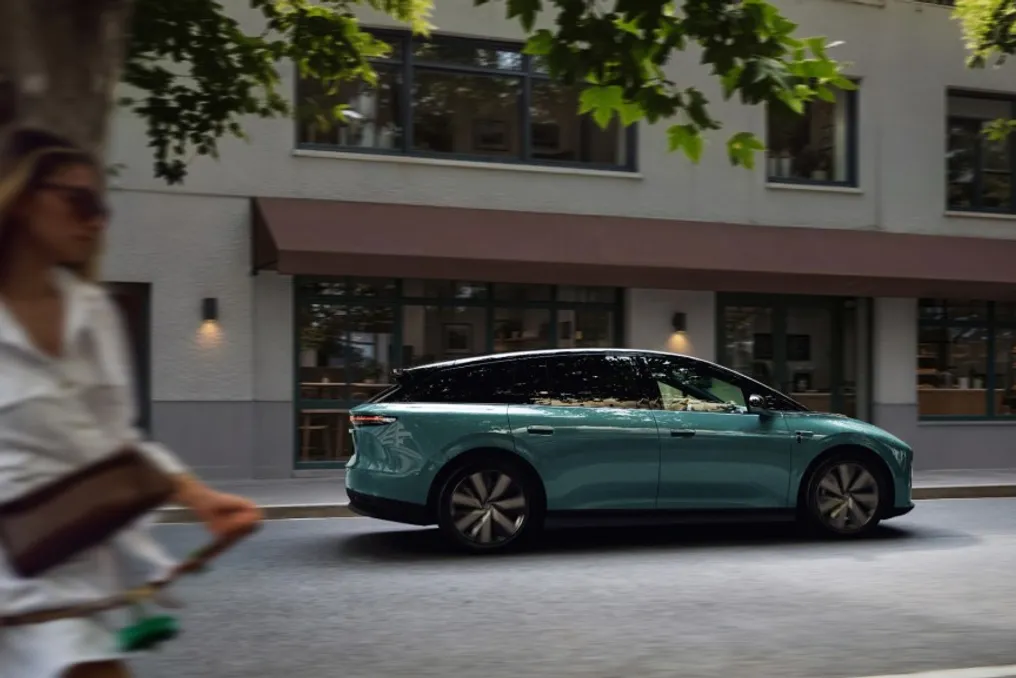
XPENG launches MONA L05 in China with prices starting from 139,800 yuan for EV versions and increased range
Read more
Pandaily
pandaily.com

XPENG launches MONA L05 in China with prices starting from 139,800 yuan for EV versions and increased range

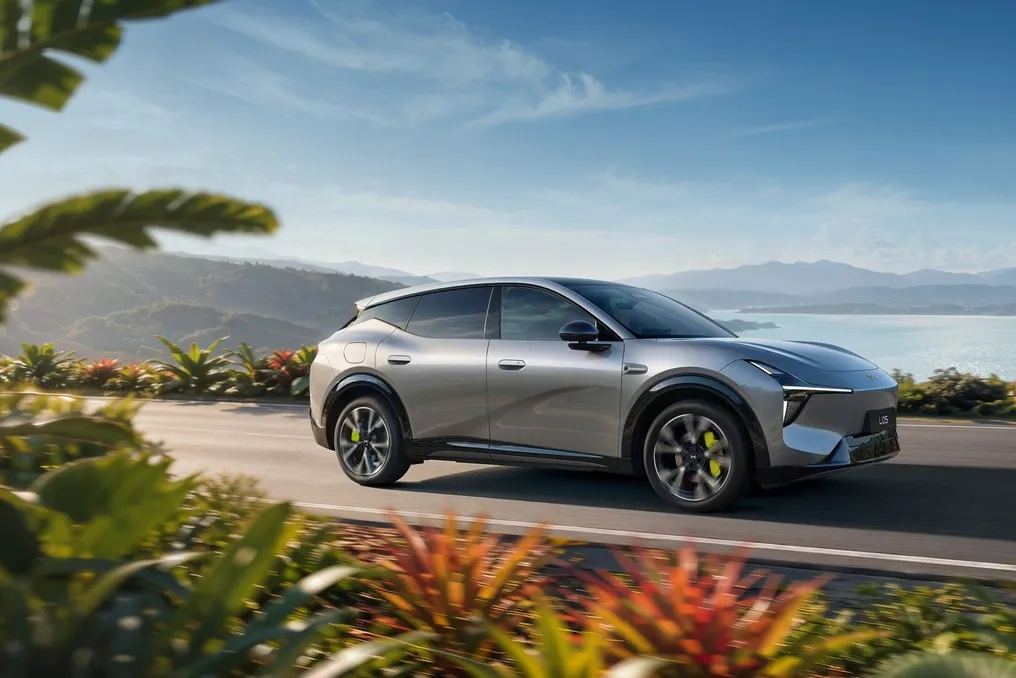
XPENG has released the MONA L05 model in China, which is the first five-seater large SUV in the MONA series. The model is available in six configurations, including both fully electric and extended-range versions.

According to an XPENG press release to Chinese media and a report by IT Home, the event took place on October 29th in Guangzhou. Official recommended prices range from 144,800 to 176,800 yuan, while launch prices start from 139,800 to 171,800 yuan. XPENG announced that the first 5,000 units have already left the special production line, and deliveries began on November 1st.

The lineup of pure electric versions includes the 560 Plus (launch price 139,800 yuan), 535 Max (149,800 yuan), 635 Max (159,800 yuan), and 635 Ultra SE (171,800 yuan). Extended-range versions are represented by the 1310 Max (149,800 yuan) and 1310 Ultra SE (161,800 yuan). These prices are approximately 20,000–30,000 yuan lower than the pre-sale range of 169,800 to 191,800 yuan, announced on October 15th, as noted by Chinese publications, including National Business Daily and Bitauto. Orders placed before December 15th are eligible for additional launch bonuses.

This SUV measures 4,870 mm in length, 1,930 mm in width, and 1,636 mm in height, with a wheelbase of 2,940 mm, which is longer than the XPENG G6. The exterior design was led by Juanma Lopez, who previously served as the head of external design at Ferrari. Storage space includes a front trunk of 102 liters and a rear trunk of 702 liters, which expands to 1,913 liters when the rear seats are folded down.

Each electric version is equipped with a rear motor of 183 kW and lithium iron phosphate batteries with capacities of 58.2 kWh or 71.1 kWh, providing a CLTC range of 560 km, 535 km, or 635 km, respectively. XPENG states an energy consumption of 11.7 kWh per 100 km, acceleration from 0 to 100 km/h in 6.8 seconds, and the ability to charge from 30% to 80% in 15.8 minutes. The extended-range model combines a 70 kW, 1.5-liter range extender and a 37.2 kWh battery, yielding an electric range of 310 km and a total CLTC range of 1,310 km.

The driver assistance system is based on a visual setup. The Max versions are equipped with the XPENG Turing AI chip with an effective computing power of 750 TOPS and run on the distilled VLA Lite model, while the Ultra SE versions use two Turing chips to achieve 1,500 TOPS and the full second-generation VLA model, whose architecture, according to XPENG, is similar to their Robotaxi program's architecture. All modifications support NGP city and highway assistance, as well as parking assistance from spot to spot. The cabin is equipped with a 26.8-inch W-HUD display, a 17.3-inch central screen, an optional roof-mounted rear screen, and the Master Agent voice assistant for route finding and trip planning.

The chassis uses a MacPherson front suspension and a rear multi-link suspension with DCC adaptive dampers. The vehicle has a turning radius of 5.4 meters and a braking distance from 100 to 0 km/h of 34.22 meters. XPENG asserts that the vehicle was designed according to five-star safety standards of China, Europe, and Australia, and is equipped with seven airbags, as well as standard automatic emergency braking and steering systems.
Similar stories

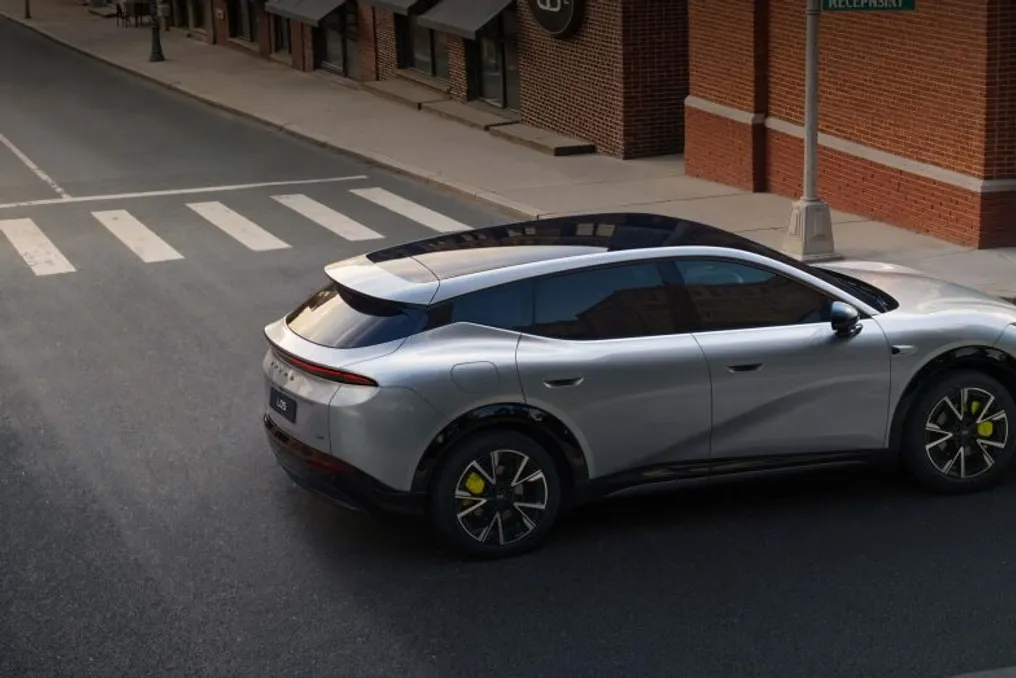
Xpeng introduces MONA L05 SUV with electric and extended range
Read more
technode.com

Xpeng introduces MONA L05 SUV with electric and extended range

Xpeng has introduced the MONA L05 model, which expands the lineup of more affordable MONA vehicles by adding its first five-seater SUV. The launch took place on October 29th.

The official starting price for the model is 144,800 yuan, but as part of a special launch offer, the initial price has been reduced to 139,800 yuan.

The MONA L05 model is available in two variants: fully electric and with extended range. The electric versions can travel up to 635 kilometers according to the CLTC standard, while the extended range version provides 310 kilometers of pure electric driving range and a total range of 1,310 kilometers.

Xpeng reported that this vehicle was designed with adaptation for 65 countries and regions. The driver assistance system uses a vision-based system. The Max models are equipped with one Turing AI chip, while the Ultra SE versions use two such chips.

The company also specified that the first 5,000 units have already left the specialized production line, allowing for the distribution of cars on the night of the launch.

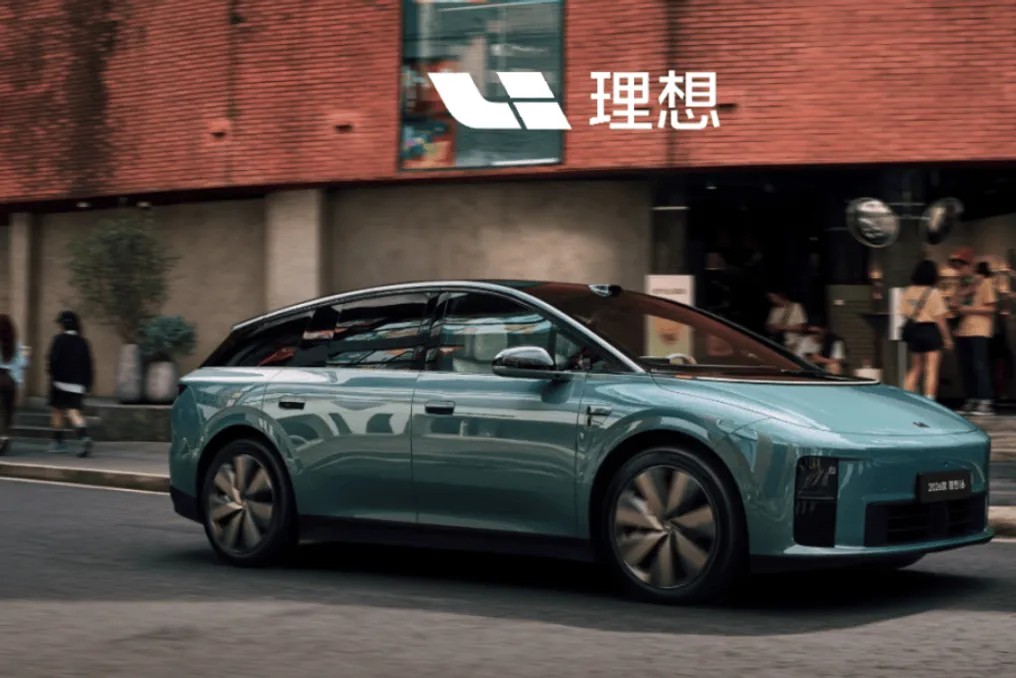
Updated Li Auto i6 model launched in China with focus on technology and comfort
Read more
technode.com

Updated Li Auto i6 model launched in China with focus on technology and comfort

Li Auto released the updated 2026 version of the i6 on Wednesday. This is the first annual update to the model since its debut a year ago. Instead of relying on significant price reductions, the new version features several improvements in the battery system, intelligent cockpit, driver assistance technologies, and comfort functions.

The model is available starting from 249,800 yuan (approximately $37,500 USD). As competition in the Chinese new energy vehicle market intensifies, automakers face growing pressure to differentiate their products through technology and functionality rather than solely through pricing.

Improvements to the powertrain have made driving range a key aspect. The standard i6 2026 is equipped with a Lishan 5C lithium iron phosphate battery with a capacity of 96 kWh. For the rear-wheel-drive version, the claimed range under the CLTC cycle increased from 720 km to 780 km, while the all-wheel-drive version offers a range of 710 km.

During pre-launch testing near Taihu Lake, the rear-wheel-drive model covered a distance of 811.4 km with four adult passengers, about 50 kg of equipment, and the air conditioning turned on. Li Auto reported an average energy consumption of about 11.8 kWh per 100 km, which corresponds to 104% of the claimed CLTC range.

These results demonstrate the coordinated operation of the battery, electric motor, and electronic control systems to maintain range and energy efficiency. However, the testing was conducted primarily on urban and adjacent roads, so the data obtained cannot be directly applied to highway or low-temperature driving conditions.

For buyers, the CLTC range figure remains a useful benchmark for comparing models, but real energy consumption, charging infrastructure coverage, and long-distance charging efficiency play an equally important role in the overall ownership experience.

The focus on intelligent features is shifting from hardware specifications to real-world performance. The new i6 is equipped with a Qualcomm Snapdragon 8797 cockpit chip, Li Auto's proprietary Mach M100 driver assistance chip, and an updated 29-inch 6K panoramic display.

According to the company, the driver assistance system has been optimized for complex road situations and parking scenarios. However, the dual Mach M100 chip configuration remains an optional upgrade, indicating differences in hardware capabilities between standard and higher-priced versions.

Thus, computational power alone is insufficient to assess the system's effectiveness; more indicative indicators of practical value are its ability to recognize complex road conditions, make reliable decisions, and improve through software updates.

Comfort continues to be an important factor for potential buyers. Features such as front seats with a double zero-gravity function, a retractable front trunk, and ADB matrix headlights further emphasize the family orientation of the i6.

The new model maintains its 3000 mm wheelbase and five-seater layout, with updates concentrated on daily comfort rather than radical exterior design changes. This approach supports the i6's existing emphasis on spaciousness while adding comfort-related features.

The price segment of 240,000 to 270,000 yuan ($36,000 – $40,500 USD) is becoming increasingly competitive, as consumers expect more from electric SUVs in terms of range, driver assistance features, interior space, and comfort.

By maintaining the starting price while adding features, Li Auto aims to simplify the purchasing decision process and increase the perceived value of the i6. However, a richer standard equipment package also raises questions about manufacturing costs and profit margins. The long-term viability of this strategy will partly depend on economies of scale and supply chain efficiency.

The i6 has already established a market presence, but the ability of the updated model to sustain sales momentum will depend on order conversion rates, actual deal prices, delivery metrics, and customer reviews.

The new i6 may appeal to families who primarily make daily trips, have reliable access to charging stations, and prioritize space and comfort. However, buyers who frequently take long trips or have specific expectations regarding highway range and advanced driver assistance should evaluate the car based on their own driving needs.

The i6 2026 represents not a radical redesign, but a systematic refinement of its core strengths. As the Chinese EV market moves beyond simple competition on price and specifications toward broader competition in user experience and technological efficiency, the effectiveness of Li Auto's strategy will ultimately be measured by actual sales figures and long-term customer satisfaction.

Li Auto releases updated SUV i6 with proprietary control chip and increased battery
Read more
technode.com

Li Auto releases updated SUV i6 with proprietary control chip and increased battery

Li Auto introduced the updated electric SUV i6 2026 version on October 28. The new version integrates a proprietary driver assistance chip and a larger battery.

The base price of the model is 249,800 yuan, but a promotional price of 239,800 yuan is available until November 30.

The updated i6 is equipped with Li Auto's Mach M100 chip, which provides a computing power of 1,280 TOPS, as well as the Mach VLA driver assistance system. Thanks to the Lianshan 5C lithium iron phosphate battery with a capacity of 96 kWh, the range of the rear-wheel-drive version has increased to 780 kilometers according to CLTC standards, compared to the previous 720 kilometers.

Additional vehicle features include a 29-inch 6K panoramic display, an onboard Snapdragon 8797 chip, and support for Apple CarPlay, Huawei HiCar, and Carlink systems. Furthermore, the SUV offers two front seats with a zero-gravity function and an electrically opening front trunk. Li Auto reported that vehicles currently in stock can be delivered within one to two weeks.

Popular