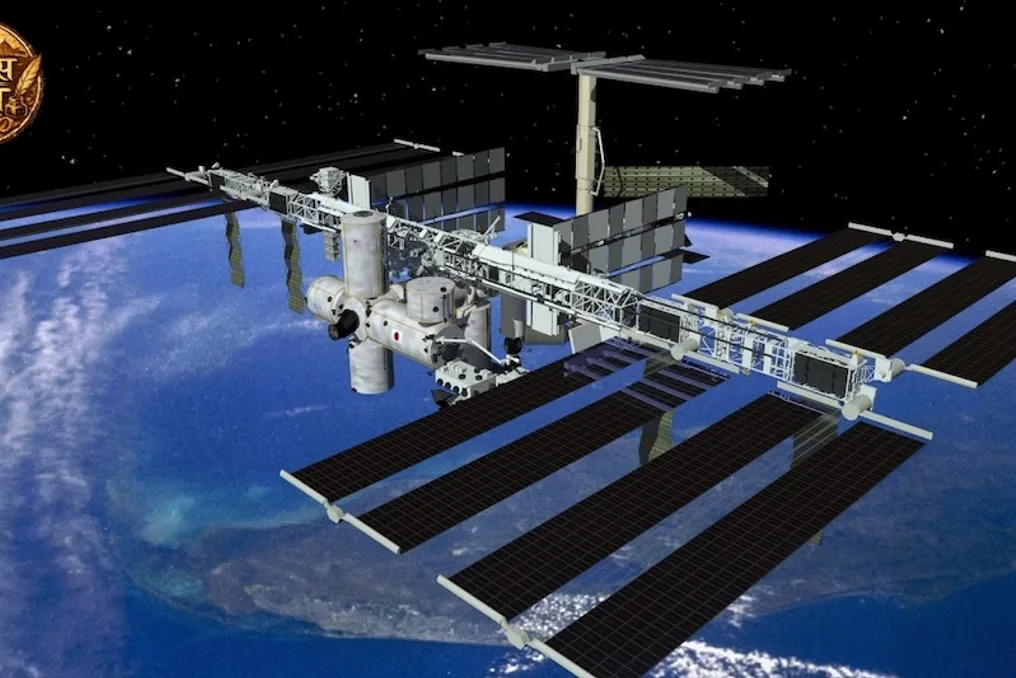
The first group of astronauts arrived at the International Space Station (ISS) on November 2, 2000. This mission was named Expedition-1 and marked the beginning of a new era of permanent human presence in space. This project became an example of international cooperation between many countries around the world.
In 1998, the space agencies of America, Russia, Canada, Japan, and Europe agreed to cooperate in the construction and operation of the International Space Station. In the same year, the first sections of the station were sent into space.
After that, various important parts of the station were delivered into space through five Space Shuttle flights and two unmanned Russian flights. These components were connected to form the initial structure of the station. However, at that time, the station was not yet fully ready, and many tasks remained to ensure human habitation.
On November 2, 2000, three astronauts were sent to the ISS using the Russian Soyuz rocket, which launched from Kazakhstan. This group included American astronaut Bill Sheffield, as well as Russian cosmonauts Yuri Gidzhenko and Sergey Krikalev.
The task of these three people was not only to live on the station. They also had to install various instruments, connect separate sections, and activate the station's systems. In other words, they needed to make their new home in space habitable.
Although this task may seem simple, special preparations are required for every small detail in space. This is evidenced by the fact that the group needed more than one day to start the food heating device on the station.
Life in space differs from life on Earth. There, gravity has a very weak effect, leading to muscle mass loss. To counteract this, astronauts have to exercise for at least two hours daily.
During their stay on the ISS, Sheffield, Gidzhenko, and Krikalev completed about 15.5 orbits around the Earth per day. During this period, they had to simultaneously monitor the station's maintenance and their own health.
During their stay, two unmanned Russian rockets and three Space Shuttle missions arrived. They delivered necessary supplies and equipment, including large solar panels that generate electricity from sunlight, covering most of the station's energy needs.