India's First High-Speed Train: Project Details and Features of Train B28
Read more
Aaj Tak
www.aajtak.in

India's First High-Speed Train: Project Details and Features of Train B28

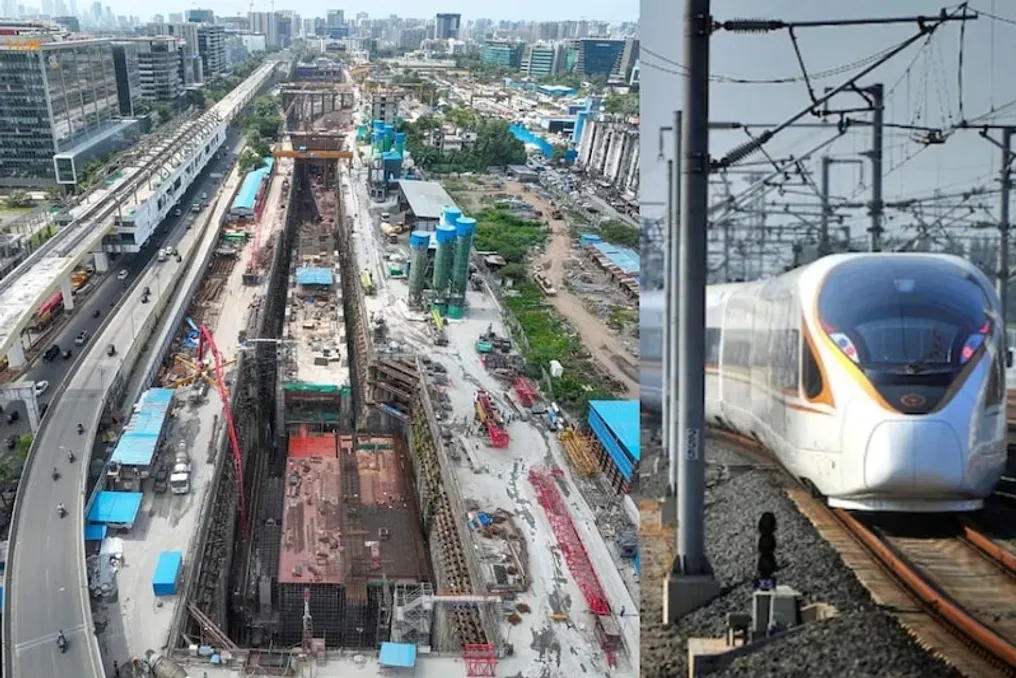
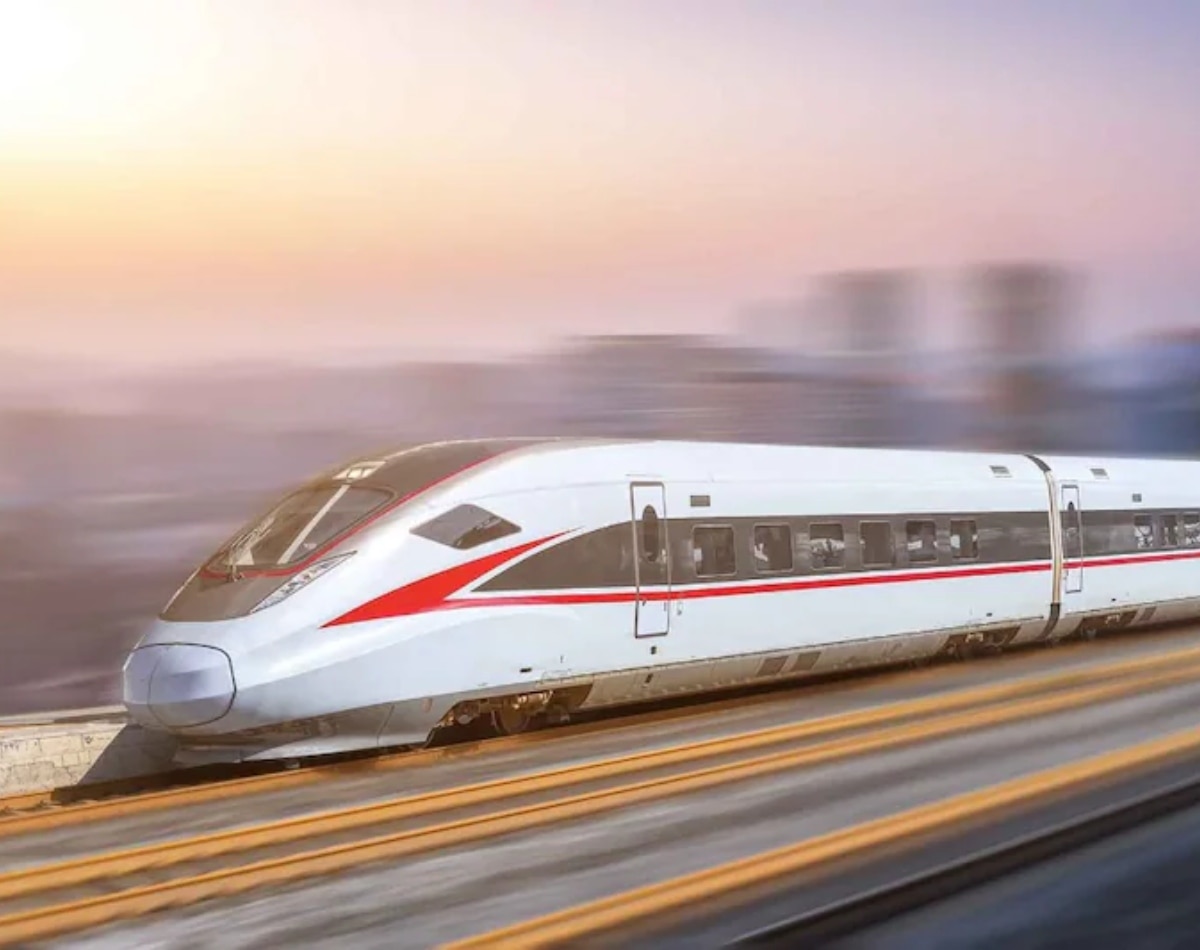
India's First Bullet Train, known as India's First Bullet Train, is nearing completion. Train B28 is being built for the Mumbai-Ahmedabad high-speed rail corridor, which has a total length of 508 kilometers. The Ministry of Railways is gradually disclosing all details of this project. In addition to high speed, the train will be equipped with numerous amenities, including comfortable seating, Wi-Fi, temperature control, and LCD displays.

According to statements from Indian Railways and Railway Minister Ashwini Vaishnaw, the first high-speed train will begin operations next year. It is planned that the train will start running on the high-speed route in May-June 2027, with commercial services expected to commence by August 2027. Before the entire 508-kilometer Mumbai-Ahmedabad corridor is fully operational, the first train will operate on a 97 km section connecting Surat and Vapi.

The nearly complete B28 train, assembled at the BEML production complex in Bangalore, is intended for the Mumbai-Ahmedabad high-speed rail corridor. The Minister of Railways and the Ministry of Railways have shown video materials regarding the progress of this train's construction. The design/test speed of this rake is 280 km/h, while the planned operational speed is 249 km/h. Ashwini Vaishnaw recently inspected the train's construction progress at the ADITYA facility in Bangalore.

The first high-speed train B28 will be approximately 202 meters long and will consist of 8 coaches running on the high-speed track. These coaches include four motorized and four trailer cars. The train can accommodate about 557 passengers. Special space is provided for people with disabilities or mobility issues (PRM). The composition will feature seven standard coaches with a 3x2 seating configuration and one 'executive' class coach with a 2x2 configuration.

Passengers traveling on the high-speed train will have access to a modern HVAC system for regulating cabin temperature and humidity, as well as a noise reduction system to ensure smooth travel. Furthermore, they will be provided with a Wi-Fi entertainment system with pre-loaded content, information displays in English, Hindi, and local languages, and automated announcements.

Other features of the composition include ergonomic seating, large windows, LED lighting, overhead luggage racks, charging points, and toilets with biodigesters. Emergency communication devices will be installed in passenger cabins and vestibules. Accessibility is ensured through level boarding design, retractable steps, wheelchair-friendly doors, and tactile Braille signage. Each end of the train will have a driver's cab with an intelligent onboard control system, and passengers can contact headquarters via the emergency communication system if necessary.
Similar stories

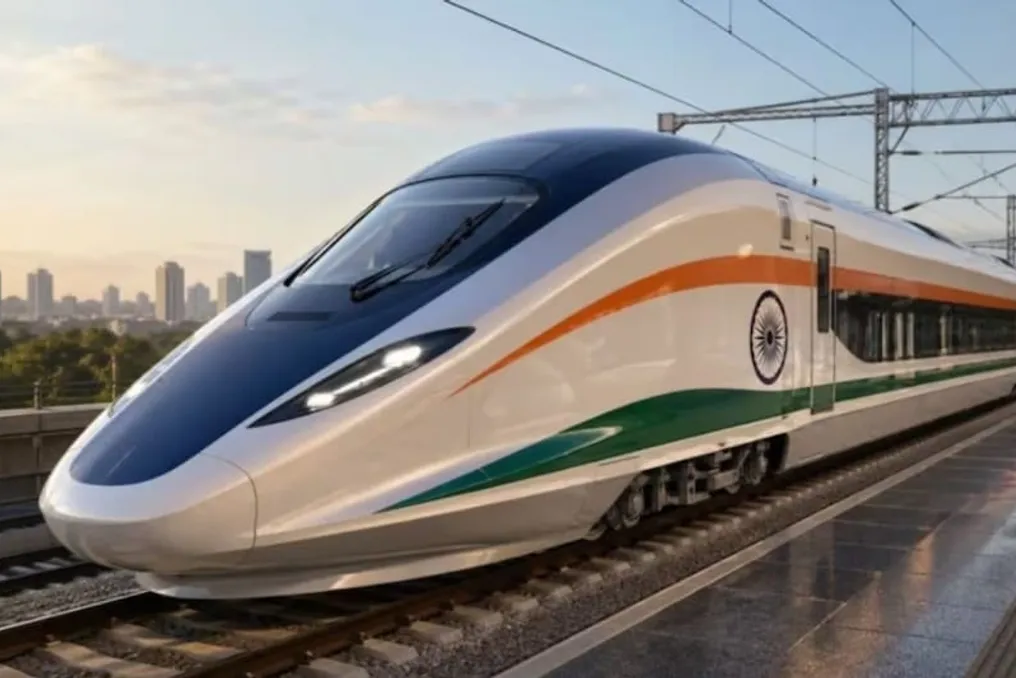
Second High-Speed Rail Corridor Approved: Delhi-Varanasi Route and Schedule
Read more
www.aajtak.in

Second High-Speed Rail Corridor Approved: Delhi-Varanasi Route and Schedule

Approval has been granted for a second high-speed rail corridor in the country. Transport Minister Ashwini Vaishnaw announced that Prime Minister Narendra Modi approved the high-speed train project for the Northern Corridor. This high-speed train will run from Delhi through Kanpur, Lucknow, Varanasi, and Patna to Guwahati.

Ashwini Vaishnaw presented this information on Saturday, noting that this decision will significantly simplify connectivity between the capital and residents of northern regions, as well as small business owners. The government made this decision with the aim of improving travel for ordinary citizens. This step will substantially reduce travel time between New Delhi and Varanasi, Lucknow, Patna, and Guwahati, as well as between Agra and New Delhi.

He specified that after the completion of the Northern Corridor construction in the coming years, the journey from Delhi to Agra will take only 59 minutes. The travel times will be as follows: Delhi to Kanpur – 1 hour 45 minutes; Delhi to Lucknow – 2 hours 12 minutes; Delhi to Varanasi – 3 hours 33 minutes; and New Delhi to Patna will require 4 hours 33 minutes.

Ashwini Vaishnaw refuted rumors that this high-speed train is intended only for the wealthy, emphasizing that its cost will be very affordable and significantly lower than airfare. Furthermore, the train will ensure faster arrival at the destination at a lower ticket price.

Under the Central Budget for 2026-27, the construction of seven new high-speed rail corridors is planned, including the Delhi-Varanasi, Mumbai-Pune, Pune-Hyderabad, Hyderabad-Bengaluru, Hyderabad-Chennai, Chennai-Bengaluru, and Varanasi-Siliguri (via Patna) lines.

India's first high-speed train, the Mumbai-Ahmedabad project, is actively being implemented, and its operation is planned to begin next year. The Mumbai-Ahmedabad high-speed railway corridor is scheduled to start running by August 2027. These trains are designed to travel at speeds of up to 320 km/h.

Currently, there is no information regarding a specific launch year or date. However, upon receiving this approval, the mapping and site demarcation process will commence, followed by work that may take several years. Work on this major route will be carried out in phases.

High-Speed Train Works on Mumbai-Ahmedabad Route: 508 km and 14 Substations
Read more
www.aajtak.in

High-Speed Train Works on Mumbai-Ahmedabad Route: 508 km and 14 Substations

The country's first high-speed train is being prepared for launch on the Mumbai-Ahmedabad corridor. This 508-kilometer route will completely change modes of transport in India, making journeys faster and more comfortable.

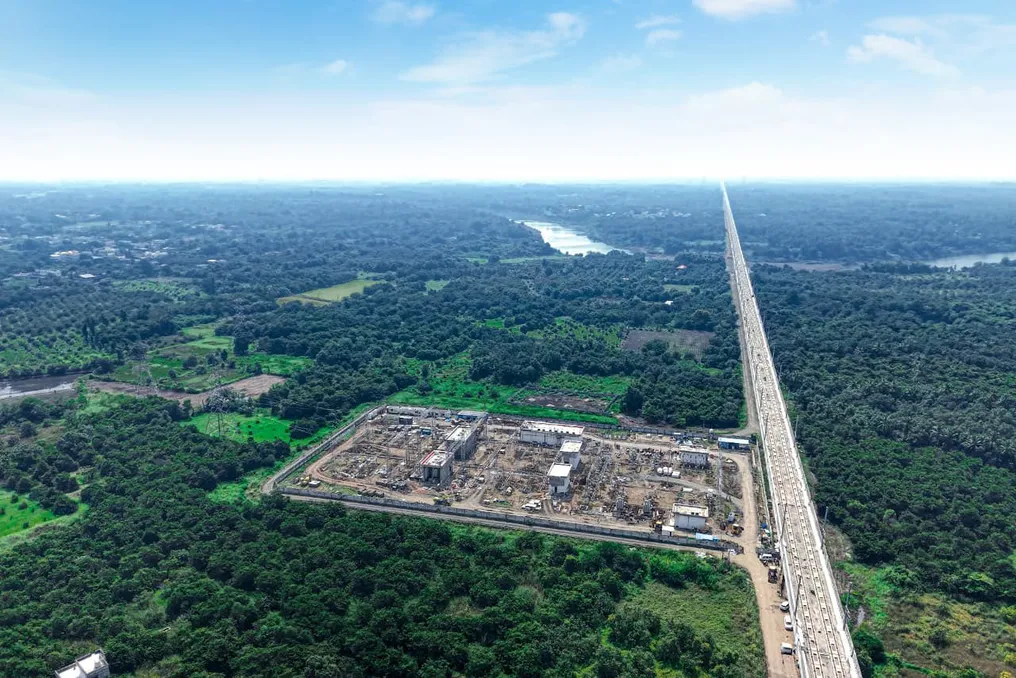
Fourteen electrical substations are being built along the track to ensure the safe and continuous operation of the train to its destination. This project will serve as a model for future high-speed trains that will be built in other cities across the country.

These substations are the main nodes for supplying electricity to the train. Their function is simple but critically important: they step down the high-voltage electricity coming from the national power grid to a level at which the high-speed train can move safely.

Since even a brief power outage can damage the high-speed train, the substations are designed so that if one system fails, a backup system is immediately activated.

The 14 substations are located along the entire 508-kilometer route at specific intervals. This guarantees an even distribution of electrical load across the entire line, providing the train with constant power on every section. Furthermore, the construction of these substations provides the country's engineers and workers with the opportunity to master modern technologies.

Modern circuit breakers and transformers are installed in these substations to promptly eliminate any technical malfunctions. The entire train will run on electricity, which will reduce the use of diesel and gasoline fuel and contribute to improving air quality.

India's first high-speed railway: underground station 100 meters deep, tunnel under the sea
Read more
www.aajtak.in

India's first high-speed railway: underground station 100 meters deep, tunnel under the sea

Preparations for the launch of India's first high-speed railway are in full swing, including work on tracks, bridges, and railway stations. The Bullet Train is expected to begin operating on the high-speed route in 2027. Transport Minister Ashwini Vaishnaw announced on social media that India's first high-speed railway is taking concrete shape.

He detailed the railway stations being prepared for the high-speed train service, as well as the underwater tunnel. Specifically, a station is being built in Mumbai located 100 feet underground, and a 7-kilometer tunnel under the sea is being created through which the Bullet Train will pass.

The Transport Minister shared project details in a post on the social media platform Twitter (now X). He emphasized that India's first high-speed railway is no longer just an announcement; it is a 508 km construction project that is progressing at full speed. The first operation is scheduled for the fourth quarter of 2027. The Bullet Train will first run on the high-speed route between Ahmedabad and Mumbai.

According to the minister's statement, construction of the high-speed railway station is underway in the Bandra-Kurla Complex (BKC) area of Mumbai, situated about 100 feet (approximately 32 meters) below ground level. This underground station is a unique engineering achievement located in the heart of Mumbai's business district. Three levels are being prepared for this station: the platform, concourse, and service area. Six platforms are planned, each exceeding 400 meters in length.

Several kilometers from this underground station, under Thane Creek, India's first underwater railway tunnel system is being constructed using a rock-cutting machine. This is the tunnel through which the Bullet Train will travel at high speed. According to the minister, the high-speed rail corridor in Maharashtra passes through a 21 km tunnel, with 7 km of it located underwater under Thane Creek, making it India's first underwater railway tunnel system.

The post also noted that two tunnel boring machines were launched in Viroli and Savli in July 2026. These machines are among the largest ever used in India. Each machine is equipped with a 13.6-meter diameter cutter head, equivalent to the height of a four-story building. The weight of each machine exceeds 3000 tons, equivalent to approximately 500 Asian elephants. The length of each machine is 96 meters, comparable to five cricket fields.

At full speed, the Bullet Train will reach a speed of 320 kilometers per hour, and between Ahmedabad and Mumbai, it will travel at an average speed of about 300 kilometers per hour starting next year. The 508 km Mumbai-Ahmedabad corridor passes through the states of Maharashtra, Gujarat, and Dadra and Nagar Haveli, and includes 12 major stops. These include: Mumbai (BKC), Thane, Virar, Boisar, Vapi, Bilimora, Surat, Bhuchar, Vadodara, Anand, Ahmedabad, and Sabarmati.

Popular