Mass protests erupt in Bangladesh over low wages, hundreds of factories shut down
Read more
Aaj Tak
www.aajtak.in

Mass protests erupt in Bangladesh over low wages, hundreds of factories shut down

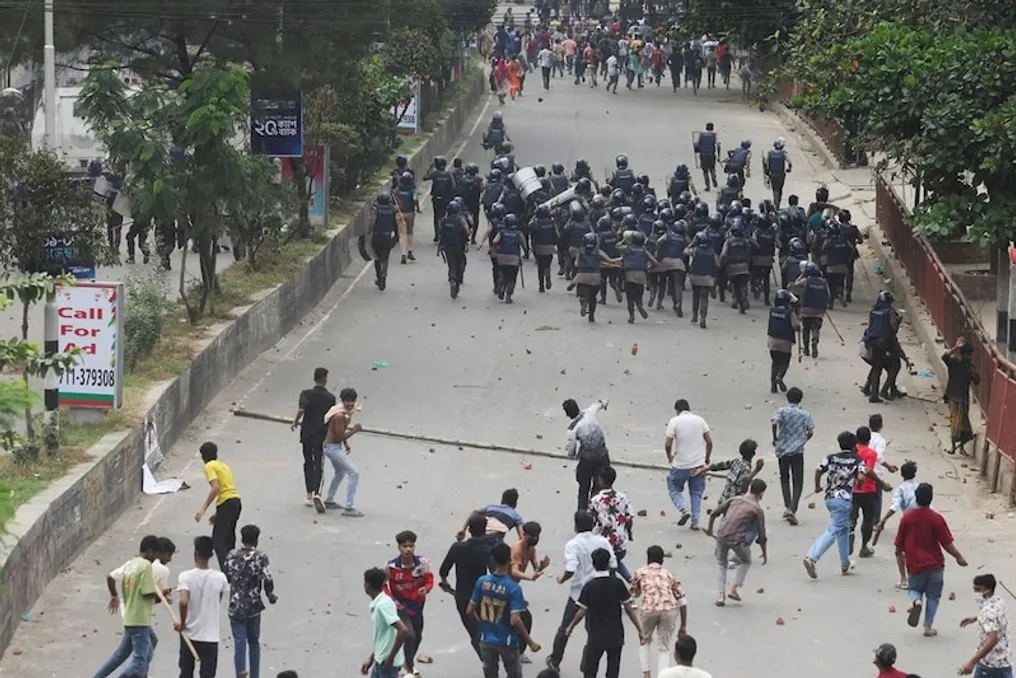
The situation in Bangladesh has flared up again after nearly 28 months as residents took to the streets. The protests have been accompanied by attacks on police officers, arson, and stone-pelting. Although many roads remain blocked, the cause of the current demonstrations is not a change in government, but rather the demand for a wage increase among textile industry workers.

Earlier, in July 2024, protests against Sheikh Hasina took place in Bangladesh. However, the current demonstrations are characterized by an organized movement: textile workers are taking to the streets, halting traffic and shops, and becoming aggressive when met with resistance.

These demonstrations began on October 31. Workers blocked roads in industrial areas such as Mirpur (Dhaka), Ashulia, Savar, and Gazipur, and suspended the operation of garment factories. As a result of the protests and strikes, about 529 enterprises were affected, and approximately one million workers were impacted.

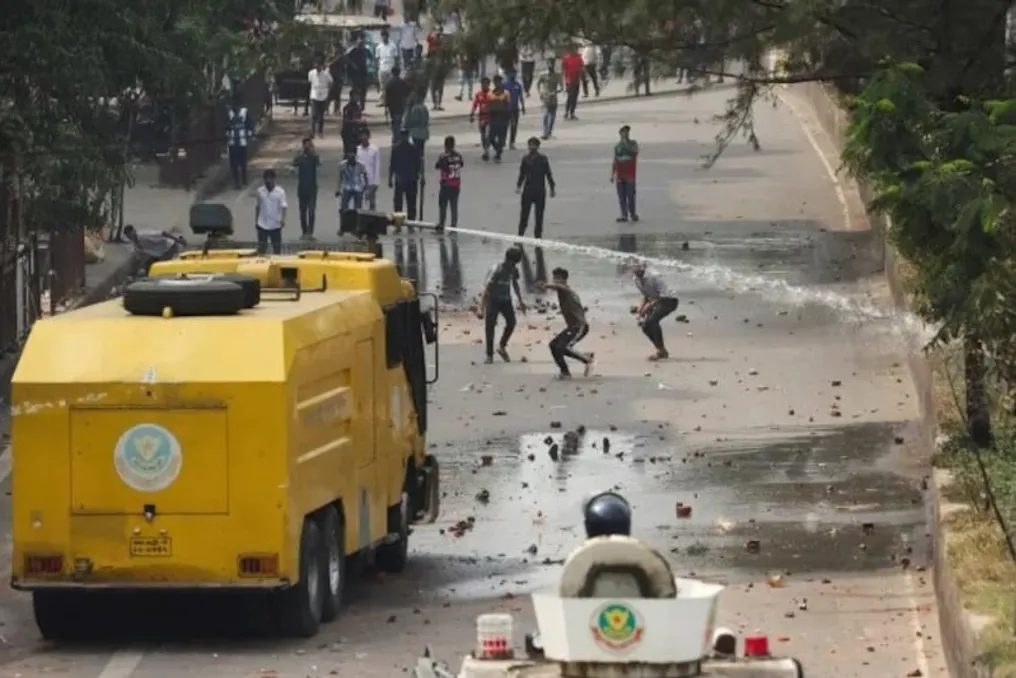
Incidents of violence, arson (of police vans and vehicles), and vandalism occurred in some places. Police used tear gas, water cannons, and sonic grenades; BGB forces were also deployed in several areas.

Work resumption was expected on Monday, but this did not happen. Workers took to the streets again. Demonstrations are ongoing in several streets in the Mirpur area of the capital, where clashes are being observed.

According to the English newspaper The First Alo, on Monday morning, around 10:45, some workers attempted to exit an alley in the Senpara Parbat area (Mirpur-10) onto the main road. Police drove them away and released several tear gas balls. Later, in Mirpur-2, near the Proshika intersection next to the stadium, workers also tried to get onto the road, and the police pushed them back.

Eyewitnesses reported that workers arrived in small groups from the Rupnagar area and moved through Mirpur-2 towards Proshika, bypassing the stadium. The situation remains tense, and metro service is disrupted in Mirpur.

Textile workers in Bangladesh are demanding a minimum wage of 30,000 Taka, whereas they are currently paid only 12,000 Taka. Workers argue that rising prices and the increased cost of living (including food, housing/rent, transport, and healthcare) have significantly reduced their purchasing power, making it impossible to support a family at the current pay level. It is believed that wages in the Bangladeshi garment sector are among the lowest in the world.

Recent instability in the Bangladeshi garment industry is linked to the involvement of industrialists associated with the ousted government of Sheikh Hasina. According to The Daily Star, Home Minister Salahuddin Ahmed stated on November 2 that some factory owners connected to Awami League, former MPs, and ministers are provoking instability in the textile industry. He accused supporters of the overthrown government of inciting workers to block highways, commit arson, and engage in violence, asserting that the government possesses video and audio evidence of these events. The minister also noted that some factory owners deliberately closed their businesses to exacerbate the situation.

According to The One Report, during the unrest, at least 529 textile factories in Mirpur, Savar-Ashulia, Gazipur, and Mymensingh declared holidays. The government has established a special commission to determine the minimum wage level.

The garment industry is considered a pillar of the Bangladeshi economy. The ready-made garment sector is among the country's largest export industries and is the primary source of foreign currency earnings. Bangladesh is among the leading textile exporters, and its products are in high demand in major markets, including Europe and America. Factories produce T-shirts, shirts, trousers, jeans, jackets, and other ready-made clothing. Millions of people work in this industry, a significant proportion of whom are women.

In 2024–2025, exports from this sector amounted to approximately $39.35 billion, exceeding 81% of the country's total exports. Bangladesh ranks second globally in ready-made garment exports, trailing only China. Nevertheless, this sector faces several challenges, such as low worker wages, poor working conditions, demands for salary increases, and factory strikes.
Similar stories

Workers Protest in Bangladesh Over Wage Hike, Riots Occur
Read more
www.aajtak.in

Workers Protest in Bangladesh Over Wage Hike, Riots Occur

Workers in Bangladesh held demonstrations on Sunday in Gazipur and the capital Dhaka, demanding an increase in the minimum wage. In Gazipur, workers blocked the Dhaka-Tangail highway, insisting on a monthly salary of at least 30,000 Taka, which is approximately 23,000 rupees.

During the protests, the government announced the creation of a new minimum wage council. Local media reported that in Gazipur, workers took to the highway with slogans, and employees arrived at many sections of the highway, including Safipur Bazar, Chandra Palli Bidhyut, Mauchak, and Telichala, armed with batons. Workers from neighboring factories joined the action after registering at their workplaces in the morning.

During the demonstrations in the Konbari area, a police box located in the middle of the Dhaka-Tangail highway was set on fire. The incident was provided by the head of the Konbari police station, Iftehar Hossain. Five platoons of the Bangladesh Coast Guard (BGB) were deployed to stabilize the situation.

Similar actions also took place in Dhaka, where textile industry workers blocked the Mirpur-10 intersection. Employees arrived from various areas of Mirpur on Sunday morning and blocked the intersection, leading to the closure of the Mirpur-10 metro station gates. Police were dispatched to the scene.

Bangladesh's textile industry comprises about 4,000 registered factories employing over 4 million people. According to the Bangladesh Garment Manufacturers and Exporters Association (BGMEA), the country is the second-largest textile exporter in the world after China. In the fiscal year 2025-26, textile exports from Bangladesh amounted to $38.70 billion, with products sent to over 150 countries.

Meanwhile, Minister of Labour and Employment Ariful Haque Chowdhury called on protesting workers to return to work. During a press conference at his secretariat, he stated that the government is considering the workers' demands 'with the utmost seriousness.' He announced that a new minimum wage council has been established in response to workers' requests and expressed hope that workers would now leave the streets and return to their factories.

Sheikh Ashfaqur Rahman, a senior district and session judge, will serve as the chairman of the new minimum wage council. Employer representatives on the council include ABM Shamsuddin, Director of BGMEA, and Asif Ayub, General Secretary of the Bangladesh Employers' Association. Worker representatives include Babul Akter, General Secretary of BGIWF, and Anwar Hossain, Chairman of the Bangladesh Ethnic Workers' Party. Professor Mosleh Uddin Ahmed from the Faculty of Public Administration at Dhaka University has been appointed as an independent representative of the council. Babul Akter noted that he received information about the establishment of the wage council and hopes that the government will soon begin its work.

Tokyo refutes rumors of agreement to employ one hundred thousand Bangladeshi citizens in Japan
Read more
www.aajtak.in

Tokyo refutes rumors of agreement to employ one hundred thousand Bangladeshi citizens in Japan

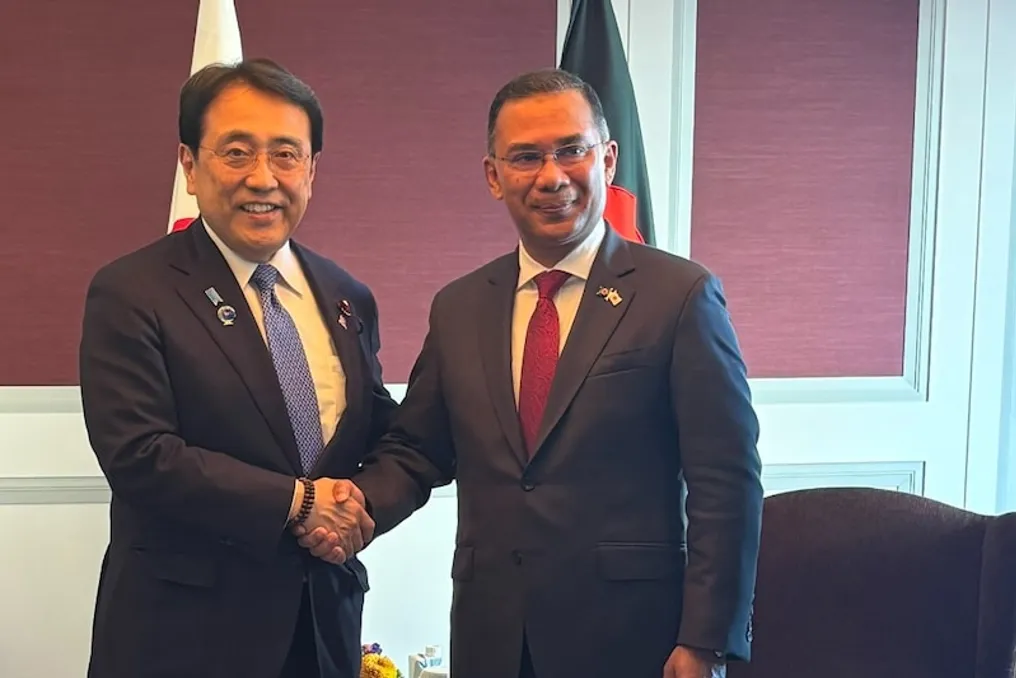
Japan issued a clarification regarding viral claims on social media that the country had agreed to accept one hundred thousand workers from Bangladesh. Japan emphasized that no such agreement was reached during the summit between the two countries held on October 27th.

Toshikazu Kitamura, Japan's Secretary for Foreign Affairs, refuted these reports, calling them erroneous. He stated that during the meeting between Prime Minister Sanae Takaichi and Bangladeshi Prime Minister Tarique Rahman, no commitments were made regarding the provision of jobs for one hundred thousand Bangladeshi citizens in Japan.

Kitamura clarified that false information is circulating on social media claiming that the Japanese government approved the acceptance of one hundred thousand employees from Bangladesh, but such facts do not exist, including discussions at the Japan-Bangladesh summit on October 27th.

According to an official statement from the Japanese government, the October 27th summit focused on strengthening economic cooperation, investment, ties, and regional security. Japan forecasts that private investments by Japanese companies in Bangladesh could reach approximately one hundred million yen over the next five years, potentially creating around two hundred thousand jobs.

Furthermore, both countries agreed to promote the development of the Bay of Bengal Industrial Growth Initiative (BIG-B) under a new mechanism for achieving common prosperity.

The viral rumor about one hundred thousand workers stems from an announcement made in May 2025. At a human resources seminar held in Tokyo at that time, representatives of Japanese businesses announced plans to provide employment to at least one hundred thousand Bangladeshi citizens in Japan over the next five years. Two memorandums were also signed during this event between Bangladeshi employment agencies and Japanese organizations.

However, this announcement differed from the Japan-Bangladesh summit held in October 2026. Japan clearly stated that no decision on accepting one hundred thousand employees was made at the recent heads of government meeting.

A separate employment and skills development agreement was signed between Japan and Bangladesh on October 17, 2026. The purpose of this document is to establish a foundation for the recruitment process, worker rights protection, and skills development. Under this system, the recruitment process will begin on April 1, 2027, and will initially be valid for five years, with the possibility of extension for another five years. It is important to note that this agreement does not set a mandatory annual quota for sending one hundred thousand Bangladeshi citizens to Japan.

Japan faces a labor shortage in several sectors and seeks to increase the recruitment of workers from other countries to meet its needs. On the other hand, Bangladesh is looking for more opportunities for its citizens to work abroad.

呆
Uttar Pradesh Government Increases Minimum Wage for Workers Starting October 1, 2026
Read more
www.aajtak.in

Uttar Pradesh Government Increases Minimum Wage for Workers Starting October 1, 2026

The government of the state of Uttar Pradesh has increased the minimum wage for workers to help them cope with inflation. Workers employed in 74 approved enterprises in the state will now receive an additional monthly payment ranging from 174.25 to 238.39 rupees.

The new rates will be effective from October 1, 2026, until March 31, 2027. The Department of Labour issued the relevant government order on October 21, 2026. The wage increase was made considering inflation data and applies to unskilled, semi-skilled, and skilled workers.

For unskilled workers in Gautam Buddha Nagar and Ghaziabad, the minimum monthly wage has been raised from 13,690 rupees to 13,883.59 rupees, representing a monthly increase of 193.59 rupees. Similarly, the wages of semi-skilled workers have been raised from 15,059 rupees to 15,271.41 rupees, providing them with an additional income of 212.41 rupees. As for skilled workers, their minimum monthly salary has increased from 16,868 rupees to 17,106.39 rupees, giving them an increase of 238.39 rupees monthly.

In districts of the state with municipal councils, excluding Gautam Buddha Nagar and Ghaziabad, the minimum wage has also been increased. Here, the wage for unskilled workers rose from 13,006 rupees to 13,189.68 rupees. Semi-skilled workers will now receive 14,507.46 rupees instead of the previous 14,306 rupees, and skilled workers will receive 16,250.86 rupees instead of 16,025 rupees. Thus, in these areas, workers will receive an additional amount ranging from 183.68 to 225.86 rupees monthly.

The minimum wage for workers employed in other districts of the state has also been adjusted. For unskilled workers, the monthly rate increased from 12,356 rupees to 12,530.25 rupees. Semi-skilled workers are now entitled to 13,782.30 rupees instead of 13,590 rupees, and skilled workers to 15,438.42 rupees instead of 15,224 rupees. In these remaining districts, workers will receive an additional amount ranging from 174.25 to 214.42 rupees per month.

The government made changes to the wages based on inflation figures. This was done by taking the average Consumer Price Index across all of India for the period from January to June 2026, which amounted to 431 points, compared to the previous base level of 400 points. A Variable Dearness Allowance (VDA) was established to account for the index growth. According to government rules, the daily minimum wage will be calculated by dividing the monthly wage by 26. Furthermore, the salaries of employees who already earn more than the established minimum rate will not be reduced.

The Department of Labour expects that the concerned companies, industrial establishments, and institutions will pay wages to workers according to the new rates. When making payments, the worker's qualification category and the minimum wage applicable in the respective area must be taken into account.

Popular