
Bianca da Costa uses scenography to represent the resistance of the Amazon in Villa-Lobos's work
Read more
RTP Noticias
rtp.pt

Bianca da Costa uses scenography to represent the resistance of the Amazon in Villa-Lobos's work

Brazilian visual artist Bianca da Costa developed a scenography for Villa-Lobos's work 'Amazon Forest,' aiming to transcend the immediate representation of the forest. Her objective was to establish a dialogue between the music, the projected images, and the contemporary reality of the Amazon, focusing on the theme of resistance.

The scenographic design was conceived in a circular format, symbolizing the idea that the Amazon must be at the center of the discussion about environmental and political issues. This concept was influenced by the book 'The Amazon is the Center of the World,' written by Brazilian journalist Eliane Brum.

Bianca da Costa explained to Lusa that the intention was to reposition the Amazon and its ecological and resistance dilemmas at the center of attention, creating an environment where various universes could interact through light, sound, and images.

The artist emphasized that she avoided realism, refusing to simply overlay one image within another created by the music. She deliberately sought to escape representations considered 'exotic' or 'postcard-like,' opting instead to work with textures, colors, repetitions, and overlaps, aligning her visual language with the musical rhythm and texture.

This approach also included the intentional omission of images at certain moments, from the beginning of the concert, allowing the audience to concentrate on listening to the music and constructing their own imagination, following Villa-Lobos's original suggestion.

With training in scenography and experience as a visual artist, Bianca da Costa's research has investigated for over ten years the connection between nature and human beings, encompassing political aspects related to territorial exploitation.

Her first immersion in the Amazon occurred in 2021, during the production of the short film 'Interior of the Earth,' which addressed the advance of deforestation under the management of Jair Bolsonaro. Since then, she has collaborated with indigenous leaders and communities, whose worldviews and ways of living with the forest nourish her art.

For 'Amazon Forest,' the sumaúma tree was chosen as a symbolic element, given its age and height, and is known in some communities as 'vovozona.' The artist associated this ancient tree with the ideas of hope and resistance found in the territory, where the sumaúma shelters the curupira, guardian of the forests.

A more concrete reference to the current political and economic situation arises with the inclusion of images of soy exploration boats. This inspiration came from a trip to Santarém, in the state of Pará, where Bianca da Costa sailed down the Tapajós River and observed the large ships transporting soy to global markets, such as Europe and the United States.

She recalled the mobilization of indigenous leaders from various regions of Brazil against a plan aimed at deepening the rivers to accommodate larger vessels, a measure that, in her view, threatened the preservation of resources and territories.

The sequence of images of the soy boats connects to the 'Sailing Ships' part of Villa-Lobos' composition, which Bianca da Costa interpreted by drawing an analogy between Amazonian boats and sailing ships from the colonization era. By inserting videos of soy transporters with visual effects, the artist sought to make visible a frequently neglected reality, despite its great regional impact.

The political dimension of the work extends to the situation of indigenous peoples after the 2022 Brazilian presidential elections, which brought Luiz Inácio Lula da Silva back to the Presidency after four years of Bolsonaro's government. Bianca da Costa argues that the change in government did not end the threats against indigenous communities, citing attacks and intimidation from groups linked to agribusiness and Bolsonarism.

She emphasizes that the struggle is simultaneously won and unwon, as indigenous peoples continue to face violence and danger, even with the political change in the country. In her analysis, the resistance of these communities is fundamental to understanding the future of the forest, given the continuous conflict between economic interests and territorial defense.

In conclusion, Bianca da Costa mentioned being deeply impacted by the political, ecological, and social issues, but also by humanity and the strong connection with nature and the resistance of indigenous peoples, who sustain this fight. This perspective will be presented in the scenic composition for the Symphony Orchestra of Casa da Música, scheduled for November 14.

Similar stories

Artistic Director of Casa da Música states that universalism means respect, not imposition
Read more
rtp.pt

Artistic Director of Casa da Música states that universalism means respect, not imposition

The Casa da Música's Amazon Forest Festival uses Villa-Lobos' music to promote an artistic journey through the Brazilian forest, exploring the interaction between cultures and challenging how Western societies relate to nature.

François Bou, artistic director of Casa da Música, argues that contact with other cultures, especially the knowledge of indigenous peoples, can help Western societies reevaluate their bond with the natural environment.

In an interview with the Lusa agency, he emphasized the need for modesty and deep respect for the wisdom of native peoples, referring to the festival scheduled for November 12th to 28th in the city of Porto.

Bou argues that Western culture, despite scientific advancements, has lost touch with a wisdom intrinsically linked to the earth and nature—a wisdom that persists in various traditions and communities.

The Festival is based on the work of the Brazilian maestro and composer Heitor Villa-Lobos, specifically 'Amazon Forest,' but expands this inspiration into an artistic approach that blends languages, colors, images, and cultural references. In the concert performed by the Casa da Música Symphony Orchestra on the 14th, set designer and visual artist Bianca da Costa contributed her vision.

Bianca da Costa explained that Villa-Lobos' music is highly descriptive, portraying the atmosphere, sounds, and colors of the Amazon, which allowed for the creation of sets based on the composition itself.

However, the festival's proposal is not intended to be a literal representation of the forest. Bou clarified that its character is more abstract and philosophical than illustrative, differentiating it from, for example, an opera. The scenic element draws inspiration from the textures and colors of the peoples, not just photographs of the Amazon.

The general intention is to offer an experience of 'travel through matter, plants, and earth,' also encompassing the philosophy and wisdom of the forest inhabitants, including a feminist perspective on the Amazon.

For François Bou, the artistic dimension of the event must foster reflection on the connection between humanity and nature, a theme he considers extremely urgent given the gravity of the current environmental, social, and political situation.

He reiterated that the wisdom of indigenous peoples can guide Western peoples in conceiving the link between humanity and nature in a different way, stressing that this is not a partisan intervention but rather a philosophical and political reflection in a broader sense.

He added that, given the seriousness of the environmental, social, and political scenario, the festival serves as a small point of reflection for the public and those involved.

In his view, these peoples share fundamental knowledge built from a close and respectful relationship with the earth and nature. This connection, he says, is being lost in Western societies despite technological and scientific advances.

Bou observed that while humanity is very strong in science and many other aspects, it is losing touch with the wisdom of the earth and the universe—knowledge that transcends science, literature, and all established civilization.

It is in this recognition of the diversity of knowledge and perspectives that François Bou bases his notion of universalism, which he warns should not be confused with the imposition of cultural models or values. He stated categorically that universalism does not consist of imposing rules or viewpoints, but rather of dialoguing and learning from other civilizations that have the same right to possess distinct wisdom and visions.

In summary, Bou declared: 'Universalism is not imposing. Universalism is respecting,' believing that transformation arises from the encounter between different worldviews, because 'from the confrontation of these different points a better world can be born.'

Villa-Lobos is cited by François Bou as an example of this capacity for dialogue. The Brazilian composer visited the forest and collected indigenous music, but he did so with a posture of respect, avoiding colonial appropriation. He reported that Villa-Lobos was 'listening, listening to the noises, the sounds, the colors of the Amazon' before transcribing it into his music.

By using a Western musical language, the composer managed, in Bou's opinion, to convey part of the essence of the forest without distorting its origin, which justifies its universal character.

Finally, the festival does not aim to present a definitive conclusion about the Amazon or cultural interactions. François Bou insists that art must open paths for reflection, allowing the public to construct its own interpretation. He concluded that the goal of art is to 'awaken consciences,' encouraging each individual to meditate on what they witnessed.

The union of the historical and cultural link between Portugal and Brazil reinforced François Bou's desire to organize a cycle dedicated to Heitor Villa-Lobos. The Amazon Forest Festival - Turning Worlds represents this aspiration in a broad program, which, for the artistic director of Casa da Música, 'can help open the doors of the soul.'

E-commerce platform promotes Amazon art and crafts to the national market
Read more
g1.globo.com

E-commerce platform promotes Amazon art and crafts to the national market

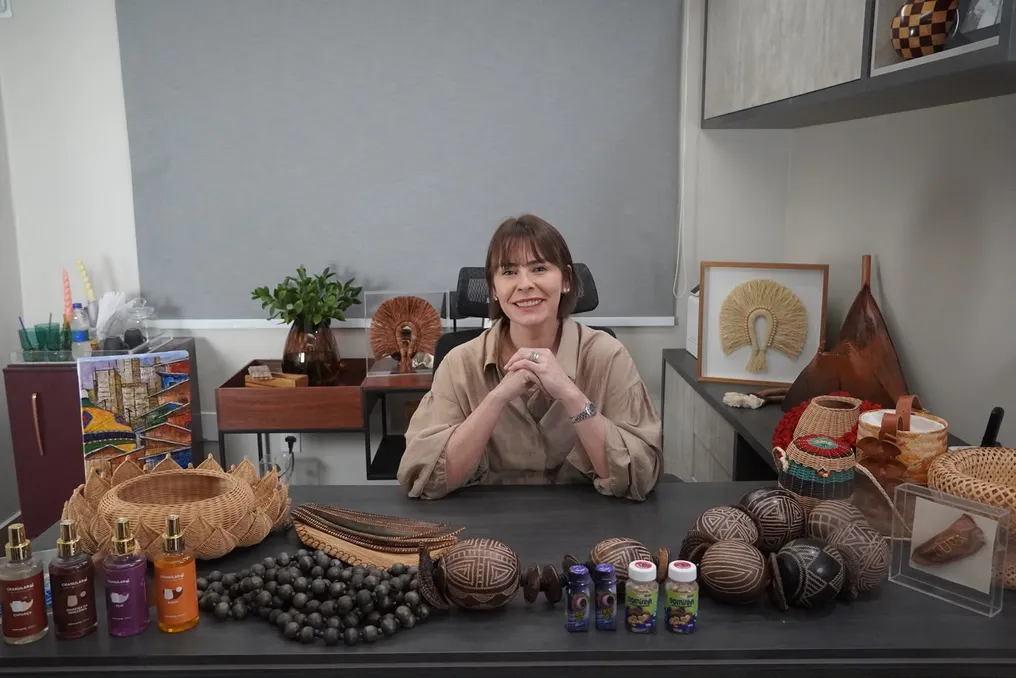
Made in Amazon was created with the purpose of being more than just an online store; it functions as a link between producers and residents of the forest and an audience that would otherwise have difficulty accessing these works outside the region. Thus, the platform aims to give visibility to artists and communities from the Amazon in Brazil and on the world stage.

For an item originating from the Amazon bioeconomy to become a commercial asset, it is necessary to go beyond good presentation. According to Pamela Mota Oliveira, the platform's founder, the process begins with rigorous selection. She explains that they seek a keen eye, a curation that combines contemporary elements with traditional craftsmanship, recognizing that the consumer, whether tourist or not, has high expectations for quality, and that pieces with Amazonian identity add differentiated value.

The manager emphasizes that the challenge is to demonstrate that modern style and craftsmanship are not mutually exclusive. The goal is to reinforce that the products, even if handmade, can be applied in multiple ways—whether to decorate a space, create jewelry, put together an outfit, or even a recipe—presenting them as modern and timeless.

Rita Prossi, a partner biojewelry designer, exemplifies this proposal by transforming Amazonian fibers and seeds into original pieces that now reach markets outside the state. Rita shares that her childhood took place in Itacoatiara, in the Eva Paraná, experiencing a riverside life with strong contact with nature. She states she has been a poet since early on, and poetry guided her to become a jewelry and fashion designer. Her start was in crafts in São Paulo, but upon returning to Manaus, she established a jewelry store in Academia Cagim, where she conceived the first symbols of her riverside childhood, such as the canoe, paddle, sieve, fan, bow and arrow, sapé, and turtle.

While researching a durable fiber capable of replacing chains, Rita discovered arumã, a fiber used by indigenous peoples, and began working intensively with it. She highlights that what unites her first creations are the Amazonian fibers and seeds, keeping the connection to her childhood alive.

Another artist integrated into the Made in Amazon group is Katula Garcia, a textile art specialist, who uses manual techniques to produce original pieces inspired by Amazonian culture. For Katula, witnessing her work transcend the borders of Amazonas encapsulates the meaning of this collaboration. She describes the experience as extremely rewarding, feeling fulfillment and recognition when seeing her works reach people from various places through Made in Amazon. Katula emphasizes that each piece carries a fragment of her history, creativity, and artisanal dedication, and that the support of people from other states motivates her to further expand textile art.

Popular