Digitization of Farming: The Process of Transitioning from Paper Records to Digital
Read more
Food For Mzansi
foodformzansi.co.za

Digitization of Farming: The Process of Transitioning from Paper Records to Digital

The transition to digital farm management is a long process, not an instantaneous transformation. With the support of Agritistics, scattered notes, WhatsApp messages, and spreadsheets can be organized into unified digital formats for tracking costs and yields.

For many farmers, the idea of 'going digital' seems like a large and expensive step, often associated with complex software, applications, sensors, dashboards, and systems. However, digitalization does not necessarily have to start with the use of advanced technologies.

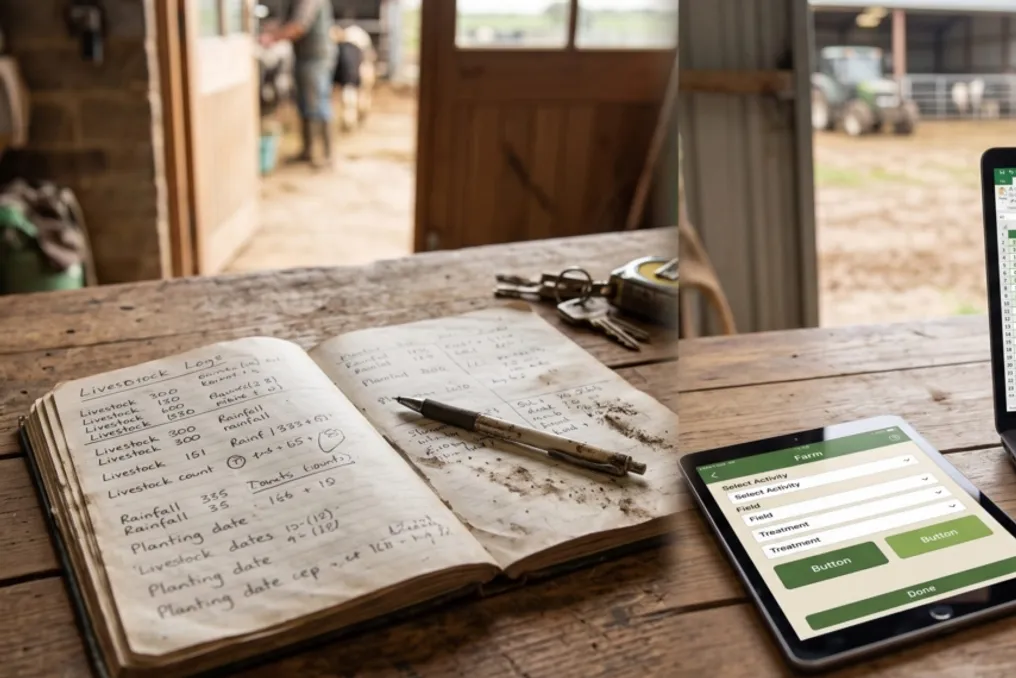
It can start with something simple, such as improving note-taking methods in a notebook, creating a more structured Excel spreadsheet, or consolidating already collected information in one organized place.

The essence of digitalization is not about increasing the number of technologies used, but about making farm information easier to record, search, compare, and utilize, thereby supporting more informed management decisions.

Before investing in software or changing data collection methods, it is necessary to determine what information is needed to understand one's business. For example, a livestock farmer might want to know the number of animals on the farm, locations of mortality, volume of feed consumed, which animals perform best, and production costs per animal.

A crop grower, on the other hand, may need to compare resource costs, rainfall data, sowing dates, yield per hectare, and profitability across different fields. These questions should determine exactly what data should be collected. Collecting a large volume of data without a clear understanding of the recording purpose can only increase the workload without improving decision-making quality.

A notebook itself is not a bad tool for management. The problem usually arises when the information is incomplete, inconsistent, or recorded long after the action took place. A useful farm record must clearly state what happened, when, where, who or what was involved, and, if necessary, the quantity or cost.

Recording information as close to the moment of the event as possible reduces the risk that records will be forgotten or become inaccurate.

For many farms, a very practical next step is using a structured Excel spreadsheet. If data is recorded sequentially, Excel helps in searching for information, calculating sums, comparing periods, and identifying trends. The most important thing here is the structure of the information itself, not the software.

For example, a record of animal treatment will be much more useful if the animal ID, date, condition, type of treatment, product, and quantity are entered into separate columns, instead of writing all this in one long sentence. A sequential recording format significantly simplifies subsequent analysis.

As the farm grows, information often becomes scattered across multiple spreadsheets, notebooks, WhatsApp messages, photos, and individual computers. At this stage, the problem is no longer a lack of data, but the difficulty of accessing and comparing it.

A centralized platform allows various types of farm information to be gathered in one environment, providing users with access from a single source.

After basic records are structured, one can consider using custom-configured digital forms or applications to simplify repetitive data entry. Employees can select predefined options, such as animal, field, date, treatment, or activity, instead of constantly entering the same information manually.

The best digital system is not necessarily the most advanced; it is one that is practical enough for correct and consistent use. The technology should reduce administrative burden, not create it.

Once farm data is accurate, consistent, and well-organized, it can be visualized for easier trend detection. Instead of reviewing hundreds of lines of information, it can be presented as a graph or chart to monitor indicators such as mortality, feed expenses, yield per hectare, diesel consumption, bee productivity, or sales by category. This is where farm records turn into management information, as one can move beyond simply knowing what happened to understanding where productivity is improving, where losses are occurring, and where attention should be directed.

Digitalization should happen in stages. For one farmer, the next step might just be a better spreadsheet, while another might benefit from data centralization. A more developed farm might be ready for custom applications, automated data collection, or interactive dashboards.

Agritistics helps farmers determine what information is worth collecting, improve and structure existing records, develop custom Excel solutions, centralize farm data, create custom applications, and visualize information through reports and dashboards. You do not need to digitize the entire farm in one day. Start with the right information, create a system that matches your farm's way of working, and develop further. Contact Agritistics to discuss your farm's current status and the next practical step on your digital journey.

Similar stories

Uzbekistan and the World Bank Discuss Agricultural Digitalization Projects
Read more
uzdaily.uz

Uzbekistan and the World Bank Discuss Agricultural Digitalization Projects

The Ministry of Agriculture of Uzbekistan and representatives of the World Bank office in the country held discussions on expanding cooperation in the field of digital transformation of the agricultural sector. Topics discussed included satellite monitoring, artificial intelligence, and modern information systems.

The main focus of the meeting was on the possibilities of implementing advanced digital technologies in agricultural processes and increasing the effectiveness of existing digitalization projects. Representatives of the ministry presented information on the digital platforms currently being implemented in the sector, current technological initiatives, and priority goals for the near future.

Special attention was paid to the 'Digital Agriculture – Agroportal' information system, which integrates over one hundred different services. Participants also reviewed projects related to satellite observation of agricultural lands and the use of Geographic Information Systems (GIS) for analyzing the condition of individual land plots.

Another subject of discussion was the application of artificial intelligence technologies for yield estimation. Representatives of the ministry and the World Bank studied the possibilities of integrating advanced international technological solutions into Uzbekistan's agricultural practices. The conversation also covered the development of new digital tools and measures aimed at increasing the efficiency of already implemented projects.

At the end of the meeting, the parties reached a preliminary agreement on continuing joint work and developing prospective initiatives in the field of agricultural digitalization. Furthermore, they agreed in principle on the phased implementation of future projects according to mutually approved plans.

How to become a commodity trader: career path and prospects
Read more
g1.globo.com

How to become a commodity trader: career path and prospects

To become an agricultural commodity trader, it is necessary to understand that a successful career requires more than just a final position. Before entering the sourcing, trading, or brokerage department, a specialist must form a basic understanding of the market, develop analytical skills, master the fundamentals of risk management, practice trading, and be able to interpret market scenarios.

The good news is that there are many paths

Specialists in agronomy, administration, economics, engineering, foreign economic activity, and other fields can enter the commodity market through various routes. In recent job postings for agricultural product traders, companies requested higher education in areas such as administration, foreign trade, economics, agro-engineering, and production engineering, as well as skills related to market analysis and position control. Common to these profiles is the ability to translate information into decision-making.

The first step is building a market foundation. Anyone who wants to work as a trader must understand the logic of price formation. This includes studying topics such as supply and demand, Brazilian and international harvests, Chicago, exchange rates, premium, basis, logistics, export, physical market, futures contracts, and options. It is important not just to know if the price of soy has risen or fallen, but to try to understand the reason for the market movement, what variables are behind this change, and how it affects your position or trade. This foundation is useful for those planning to work directly in the department as well as those starting in sourcing, market analysis, or commercial service departments.

Next comes learning to interpret numbers. A trader constantly works with information such as price, volume, margin, position, freight, exchange rate, premium, and result. Therefore, developing analytical thinking is an important part of preparation. This does not necessarily mean being an expert in advanced mathematics, but it is necessary to feel comfortable comparing scenarios, assessing margins, and understanding how small changes in certain variables can alter an operation. For example, in a sourcing department, a specialist may track bought and sold positions, already assessed volumes, open exposure, and logistical impact. Current regional sourcing trader vacancies also mention controlling cash positions, long and short positions, and monitoring profit and loss (P&L). It is then that market knowledge begins to become a working tool.

Risk management is part of the routine

A trader is not synonymous with someone trying to guess the price direction. This is one of the most important ideas for those entering the market. Their function is to manage risk exposure. This can mean understanding how much is bought, how much is sold, how much is already assessed, how much remains at risk, what risks exist, and what tools can be used to mitigate some of these risks. Concepts such as hedging, futures contracts, and options appear here. The goal is not to eliminate all risk, but to understand what level of risk the company is willing to accept and what it needs to control. Therefore, knowing protective instruments and developing discipline are as important competencies as tracking market news.

Practice is as important as theory. There is a big difference between understanding a strategy in class and making a decision when the market changes. This is why simulations play such an important role in trader training. They help specialists cope with situations such as market growth, market decline, exchange rate changes, basis changes, the need to protect margin, the possibility of buying, or the decision to sell. In a simulated environment, decisions can be tested and their consequences understood without the financial risk of a real operation. This experience helps develop what is difficult to learn only through theory: speed of thought. Many decisions on the market must be made with incomplete information and within short timeframes.

Sourcing can be an entry point

Those aiming to build a career as a trader in the agricultural sector do not always start directly with the title of trader. One possible path is through the sourcing department. A sourcing specialist works in close contact with producers, cooperatives, and suppliers, tracking product availability, prices, commercial terms, and business opportunities. This function combines market knowledge, networking, and negotiation. Over time, this specialist can expand their activities to managing positions, commercial strategies, and trading desks. Another option is to start in market analysis, intelligence, operations, commercial, back-office, logistics, or brokerage departments. The main thing is to use this experience to understand the functioning of the entire chain.

What aspects do companies usually evaluate? Although requirements vary for each vacancy, the following points are often encountered: technical knowledge (understanding the physical market, price formation, and core sector instruments); analytical skills (quick interpretation of numbers and scenarios); communication and negotiation (much of the activity involves interaction with clients, producers, buyers, and other departments); commercial profile (even in very technical functions, there is often a strong link to business and results); organization and control (commodity operations involve volumes, deadlines, contracts, and financial exposure; errors can have significant consequences); languages (English can be an important advantage depending on the company and the international nature of the work). The market also values specialists who can combine technical knowledge with business acumen.

What does an agri-trader's routine look like? No two days are exactly alike. However, the routine may include tracking market openings, analyzing Chicago and the exchange rate, communicating with producers and buyers, monitoring positions, assessing opportunities, discussing strategies with the team, keeping up with news, agreeing on prices, controlling execution and logistics, and reviewing operational results. During periods of high volatility, the pace can be intense. Daily data can change prices and require rapid reassessment of positions or offers. Therefore, curiosity and the ability to keep up with information are part of the profile.

How much does a commodity trader earn? This is a frequent but complex question to answer definitively. Compensation heavily depends on experience, region, company size, type of commodity, responsibility for positions, the presence of a variable component, and results. Recent Glassdoor data for a commodity trader in Brazil indicates an average base salary of about 10 thousand Brazilian reais per month, with a wide range of approximately 2 to 18 thousand Brazilian reais monthly. The platform also indicates an average variable compensation of about 4 thousand Brazilian reais per month. For broader trader roles, Glassdoor shows an average base salary of about 8 thousand Brazilian reais per month, but recent entries vary widely, highlighting how important experience, sector, and company are. Therefore, these figures should be viewed only as market orientation, not as a salary promise. In some structures, the variable component can play a larger role as qualifications grow and results are achieved.

How can a career develop? A possible path might look like this: Analyst or Assistant $ ightarrow$ Sourcing Specialist $ ightarrow$ Junior Trader $ ightarrow$ Senior Trader $ ightarrow$ Lead Trader $ ightarrow$ Desk or Commercial Manager. But this path is not fixed. Some specialists move from sourcing to trading. Others go through analysis. There are those who build careers in brokerage firms and then advance to commercial positions. There is also mobility between cooperatives, trading houses, banks, industry, and commodity companies. Over time, the specialist may take on greater responsibility for volumes, client relationships, positions, and results. Evolution depends both on technical knowledge and the ability to gain trust and make the right decisions.

Brokerage firms are also part of this market. Another professional opportunity is deal intermediation. Brokers connect buyers and sellers and monitor prices, availability, negotiations, and market conditions daily. This type of activity practically demonstrates how knowledge in commercialization, price formation, and negotiation is applied daily by industry specialists. For those building a career, knowing the different links in the chain helps understand that 'being a trader' can mean working in completely different contexts.

Path for beginners

If we summarize the path step-by-step, it can look like this: 1. Study market basics: understand price formation, supply, demand, exchange rate, Chicago, and basis. 2. Develop analysis: learn to compare scenarios, margins, and positions. 3. Study risk management: understand hedging, futures, and options. 4. Practice: use exercises, case studies, and simulations. 5. Study the physical market: understand sourcing, buyers, sellers, and logistics. 6. Develop negotiation skills: a trader also needs to communicate, listen, and build relationships. 7. Gain experience: sourcing, analysis, brokerage, or commercial departments can be entry points. The career is built by connecting these stages.

Trader preparation: turning knowledge into practice. Training programs cover topics such as agromarketing, price formation, basis, sourcing, fundamental analysis, supply and demand, hedging, options, and commercialization strategies. The curriculum combines technical knowledge and practical application, bringing the participant closer to decisions made in the market. To build a career in the commodity market, there is no shortcut, but there is a clear route. Market knowledge, practice, risk management, networking, and analytical skills form an important foundation for those who wish to work in this field.

Production of modern agricultural machinery under the Nasaf brand has begun in Kashkadarya
Read more
podrobno.uz

Production of modern agricultural machinery under the Nasaf brand has begun in Kashkadarya

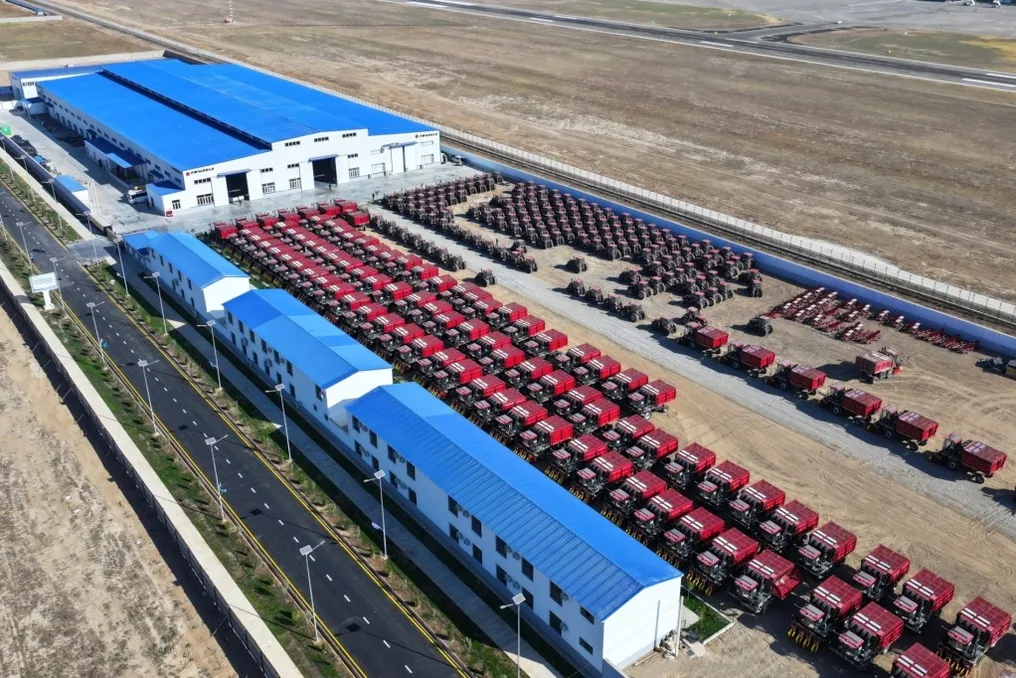
A line for assembling modern agricultural equipment under the Nasaf trademark has been launched in the city of Karshi. This production facility manufactures five different models of tractors, as well as cotton harvesting machines and other types of equipment.

It is planned that in the future, thirty percent of all produced goods will be sent to neighboring countries, with an annual export volume targeted at fifty million dollars.

President Shavkat Mirziyoyev inspected the activities of this enterprise, FM World, on October 21. This project, with a total cost of 20 million dollars, was fully financed by external investments.

The production site covers five hectares of land, of which 12 thousand square meters are allocated for production workshops. Two hundred jobs have been created at the facility, and some production processes are already automated.

The assembled tractors are equipped with GPS navigation and autopilot systems. Fertilizer application and machine monitoring processes are carried out remotely. The use of such technologies allows for more precise field work and reduces the consumption of fuel and other resources.

In addition to direct production, the enterprise organizes personnel training on operating the equipment directly in the field. Specialists learn skills in machine maintenance, prompt fault detection, and compliance with safe operating standards.

Currently, the localization level in tractor assembly reaches 30%. The enterprise independently manufactures one hundred thirty-eight types of components and parts. Plans include increasing this figure through the development of its own production and establishing partnerships with local companies.

The enterprise is part of the Chinese corporation Jiangsu World Group, which is listed among the five hundred largest private enterprises in China.

During his visit, the president emphasized that the development of local production of modern agricultural machinery will help reduce dependence on imports and ease the work of farmers. He also noted that the growth in the localization level corresponds to the reforms being implemented in the agrarian sector.

In the future, the enterprise aims to expand export destinations and enter the markets of neighboring countries.

Popular