How Artificial Intelligence Can Make India a Global Content Exporter
Read more
YourStory [india, en]
yourstory.com

How Artificial Intelligence Can Make India a Global Content Exporter

India established itself in the 1990s and 2000s as a global back office for software development. At TechSparks 2026, a flagship event by YourStory, one of the founders asked whether the country could achieve similar success in storytelling. He confidently answered yes, as artificial intelligence makes video production more economical and efficient.

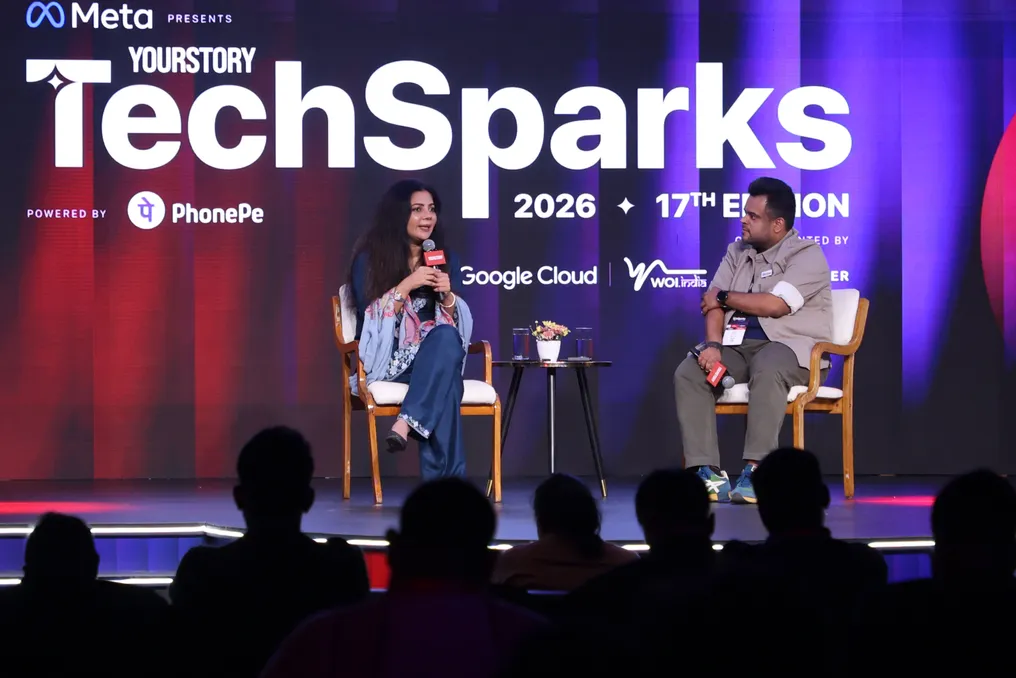
A session titled 'Can AI turn India into a global content export hub?' began with a demonstration of Dolphin AI by Saurabh Pandey, founder and CEO of Eloelo Group. This was followed by a discussion in a conversational format with Shraddha Sharma, founder and CEO of YourStory and The Bharat Project.

Pandey noted that India has long produced outstanding intellectual properties such as Baahubali, Kantara, and RRR, but rarely acted as an exporter. He compared this to Japan succeeding with anime, South Korea with dramas, China with microdramas, and the US with Hollywood, emphasizing that each of these countries used content to strengthen its soft power.

In Pandey's view, AI is changing this situation because tools previously available only to a limited number of markets are now open to everyone. Opportunities extend not only to the film industry but also to localized advertising, commercial videos, and social media content intended for international clients.

To illustrate his points, Pandey presented Dolphin AI, Eloelo's newest product. The company initially worked in live entertainment, then moved to microdramas through the Story TV app, and recently added a micro-learning application called Master.

Dolphin AI solves a common problem for content creators: creating a single video often requires stitching clips and edits from about twenty different tools. Dolphin AI replaces this process with an agent chat and a set of templates. A simple prompt allows for the creation of a complete video, while the system independently manages context and narrative continuity. Furthermore, it integrates with Claude and ChatGPT via MCP, helping authors create longer AI-based videos. The presentation concluded with a short demo reel.

When Sharma joined Pandey on stage, she reacted with pride to the demonstration, stating: 'This is amazing. It's real, and it's happening in India.'

The discussion then moved to implementation issues. Pandey reported that during the early access period, Dolphin AI generated approximately 15,000 videos in just eight days solely through organic search.

He then explained why this is important for storytellers. High-quality visual effects previously required huge budgets, which served as a filter determining who could create ambitious stories. Pandey stated: 'With AI, with tools like Dolphin AI, we aim for you to be able to release content without any gatekeepers.' He clarified that AI does not replace actors but replaces expensive locations; for instance, a historical drama no longer needs a real palace. Since distribution has become largely algorithmic, a storyteller from India can reach an audience in the US or Europe.

When asked about the reasons for India's lag, Pandey did not blame creativity. He compared South Korea, with 52 million inhabitants and a content export economy worth about $15 billion, to India's population of 1.4 billion. He countered: 'I would refuse to believe that we lack creativity.' In his opinion, success requires the combination of technology, aspiration, distribution, and capital, and Indian developers too often viewed the domestic market as the only significant one.

Regarding whether microdramas can become a viable business in India, Pandey cited the example of China, where this category brought in about $8 billion in revenue last year and is now growing to $10–11 billion, with one platform earning more than China's entire box office. In India, he said, the aggregate growth rate of the top four or five players exceeds 5,000 crore rupees, achieved in about 18 months.

Historically, high production costs were a barrier, consuming 50–60% of revenue. AI, according to Pandey, finally solves the supply problem. He compared this to the moment of rapid commercialization in the entertainment sector. Pandey expects platforms to consolidate around two or three players, similar to what happened in food delivery and e-commerce, but the supply will remain open. Eloelo released 200 new microdramas last month for its Story TV platform and collaborates with about 90 production companies, a number he predicts will double.

He advised new entrants to focus on the supply side. Small, agile AI studios, consisting of several editors, promo producers, and line producers, can supply microdramas and OTT content to platforms. He urged writers and producers to view AI as a brainstorming partner and proposed the idea of creating an AI-made 'Mahabharata.' Pandey concluded: 'The next Disney or the next major intellectual property can be created right now if the right supply engine appears, because the demand is very obvious.'

Pandey added that Eloelo, which grew from one platform to five, is currently not planning an immediate IPO and is focused on sustainable growth while building the foundation for India's global ambitions.

Sharma noted that Pandey's journey from a Flipkart employee to a globally operating founder serves as a reminder of what Indian ambition can achieve. She urged the audience to tell their teams and networks that the window of opportunity for development in this area is open. The session suggested that if India managed to turn code into global exports, stories could be next.
Similar stories

The Future of Cryptocurrencies: Regulatory Sandboxes, AI Assistants, and the Rise of Derivatives
Read more
yourstory.com

The Future of Cryptocurrencies: Regulatory Sandboxes, AI Assistants, and the Rise of Derivatives

Investing in cryptocurrencies is moving beyond the initial hype. Regulation, increased investor awareness, risk management, and new technologies are transforming how digital assets are traded while raising important questions about responsible participation in this space.

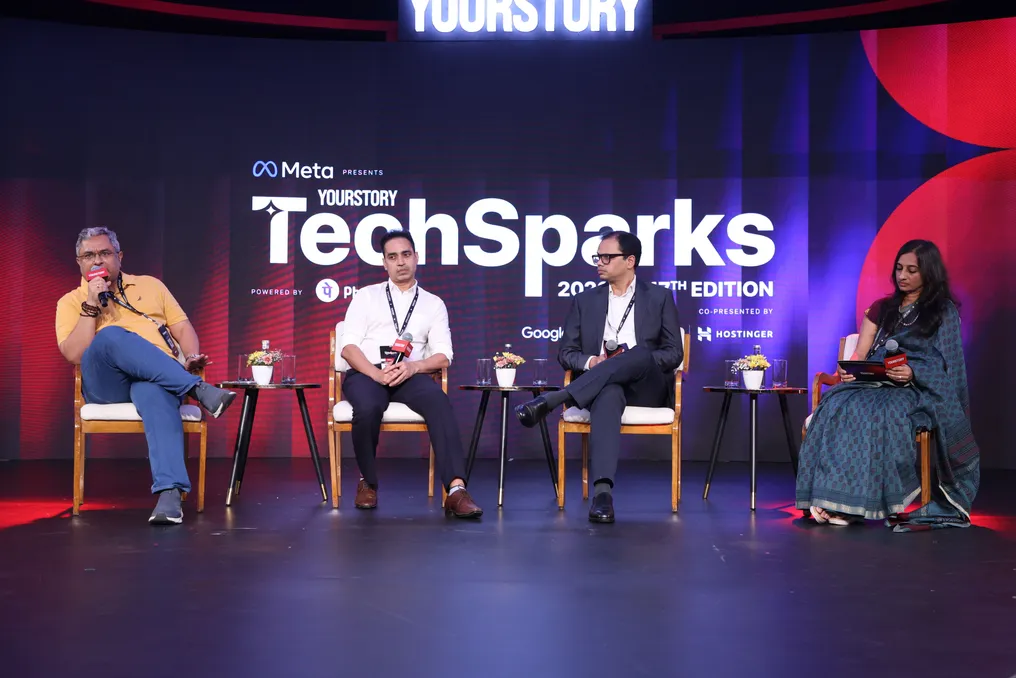
At the TechSparks 2026 event, Rajagopal Menon, Vice President of WazirX; Satish Mishra, CTO of Pi42 and SharkExchange; and Sharad Chandra, founder of EmpowerEdge Ventures, participated in a discussion with Suetha Kannan, Deputy Editor of YourStory. They discussed the changing landscape of the crypto industry, the need for regulatory clarity, and the growing role of artificial intelligence in trading.

The Indian cryptocurrency market has traditionally been a dynamic space that grew rapidly during the 2021–2022 bull cycle. Menon noted that WazirX spot markets processed nearly $48 billion in transactions during that period. However, subsequent tax measures introduced in the budget have significantly altered the market.

In Menon's view, the situation resulting from these changes puts Indian exchanges at a disadvantage compared to foreign platforms. He emphasized that local exchanges are obligated to withhold Tax Deducted at Source (TDS) and operate within the 30% tax regime, whereas foreign exchanges have not faced such requirements. He opined that a stable or improved environment should involve applying the same rules to everyone so that support for the 'Make in India' initiative is directed towards Indian exchanges.

Menon also pointed out a shift in trading activity: as spot trading volumes decline, futures and derivatives are gaining popularity. He predicts significant adoption of this segment in India.

Turning to regulation, Chandra stated that exchanges have facilitated investor education on various crypto assets and risk understanding, but gaps remain in the legal framework. He asserted that after regulation, there could be a significant inflow of capital into the country.

Chandra indicated that while exchanges are required to comply with KYC norms, shortcomings persist in identity verification as assets move across the blockchain. He suggested that regulatory sandboxes could help resolve some of these issues. SEBI and IFSCA already have such sandboxes to stimulate innovation in capital markets, but fintech companies focused on native digital assets have not yet received permission to participate.

He also highlighted the potential of tokenization, citing the tokenization of corporate bonds as an example. Currently, participation in this process is limited to institutional players. Chandra proposed that opening regulatory sandboxes to a wider range of Web3 fintech companies would allow them to test new ideas, refine existing processes, and play a more significant role in the tokenization process.

Unlike traditional financial markets, cryptocurrencies trade 24/7, seven days a week. For technical teams, this means constant system monitoring, risk management, and incident response without the predictable downtime provided by market closing hours.

Mishra described how trading activity on crypto platforms can intensify during evenings and weekends, partly in response to movements in US markets. This creates continuous demands for observability, alerting, and leverage monitoring. His experience building a spot trading exchange showed how quickly demand for derivatives can outpace infrastructure development. The Pi42 team initially chose a different approach, creating a platform specifically for derivatives instead of adapting a spot trading system. Mishra noted that production incidents occurred on weekends when systems could not keep up with demand. This experience underscored the necessity of building infrastructure around the 24/7 operational model of cryptocurrencies.

As more people enter the crypto market, investor education and effective regulatory compliance become increasingly vital. Menon mentioned WazirX's 'Gangs of Cryptopur' campaign, aimed at helping investors understand what they are trading. He also spoke about the need for a disciplined approach to cryptocurrencies, comparing the historical returns of various asset classes to Bitcoin. His advice was to think long-term rather than viewing cryptocurrency as a series of short-term bets.

For exchanges, simplifying the user process is as important as maintaining compliance checks. Mishra explained that KYC can be frustrating if an application is rejected, forcing the user to start over. Technology can simplify this by allowing users to resume where they left off and clearly explaining what needs correction. He added that genuine users are generally less concerned about compliance checks than those trying to bypass them. The goal is to make the process smoother for users while retaining the checks necessary to detect suspicious activity.

Artificial intelligence is also changing how traders research markets and assess potential deals. Menon reported that WazirX implemented an AI-based feature that scans over 300 tokens to identify those exhibiting bearish momentum. WazirX AI is the first AI agent for cryptocurrencies in India that acts as a conversational assistant, processing complex multi-step queries, including technical indicators like MACD and RSI, and offering users options for consideration. Traders must confirm the chosen strategy before the AI places an order with stop-loss and take-profit parameters. Menon views AI as a way to analyze large volumes of market data and identify patterns, but he also stressed that AI should support decisions, not make them for users.

Mishra also strongly urged traders to backtest AI-generated strategies and monitor their performance before using them in live markets, advising: 'If you ask AI for a strategy and then act on it, make sure you are also watching it so that when it starts going wrong, you can turn it off.'

Chandra noted that the regulatory implications will depend on how AI is used. Educational tools may be viewed differently from systems offering personalized investment advice, which could fall under investment advisor regulations. He also emphasized the need for AI systems to be robust, explainable, auditable, and fair.

As the crypto landscape evolves under the influence of new regulations, AI breakthroughs, and changing investor expectations, Menon, Chandra, and Mishra were asked about the next phase of the sector. For Menon, this was futures and derivatives. Mishra agreed, noting that derivatives continue to grow and meet specific needs within the crypto ecosystem. Chandra pointed to another emerging opportunity: compute futures, given developments such as the launch of CME compute futures in the US, indicating how new asset classes can emerge at the intersection of AI and digital assets.

As the market develops, the discussion highlighted three interconnected priorities: clearer regulation, stronger infrastructure, and more conscious use of AI. The next phase of crypto investing in India will depend not only on new products and trading opportunities but also on how effectively the ecosystem manages risks and gains trust.

AI Dividend Exchange in the Asia-Pacific Region: Expert Perspectives
Read more
cgtn.com

AI Dividend Exchange in the Asia-Pacific Region: Expert Perspectives

Many APEC economies face common challenges such as frequent extreme weather events, uneven capacity of public services, and growing energy demand driven by increased computational needs.

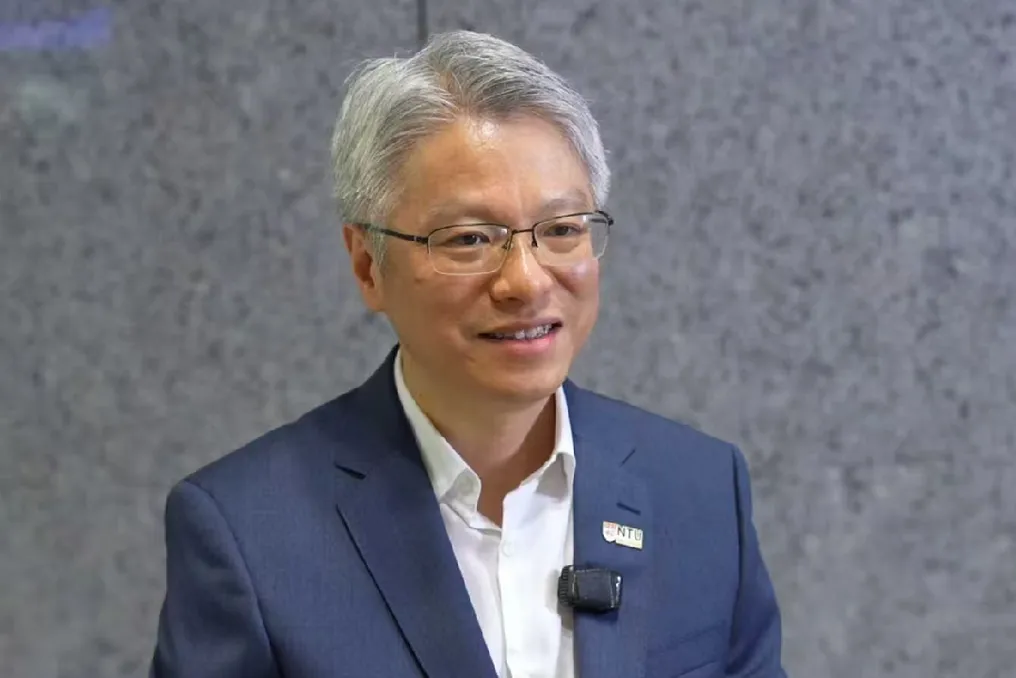
Experts in quantum and computing technologies, Professor Lin Jing from the University of Hong Kong and Professor Wen Yungang, Associate Vice President of Nanyang Technological University and member of the Singapore Academy of Engineering, discussed ways to utilize advanced technologies in the region.

AI-based early warning systems process real-time weather data to issue warnings for typhoons and floods, while also supporting local community preparedness for natural disasters. Furthermore, open AI tools are being shared across the region for public health, assisting local medical teams in providing routine care.

Embodied intelligence prototypes presented at humanoid robot competitions are viewed as promising means for elder care and on-site emergency rescue, thereby filling service gaps where labor shortages exist.

Professor Lin Jing, academic curator of the 'Future of Computing · Future Computational Power' forum at the World AI Conference 2026, noted that hybrid quantum and AI architectures offer unique research advantages for high-precision climate modeling and molecular-level drug discovery. However, this technology remains predominantly in the realm of laboratory research.

Lin emphasized that quantum computing is still in the fundamental research stage and is not ready for widespread adoption as standard digital infrastructure. Although it possesses theoretical advantages for modeling complex natural systems, it requires continuous funding from governments, universities, and research institutions to advance.

She proposed that Hong Kong could become a regional hub for quantum cooperation in the Asia-Pacific, connecting talent and capital from around the world. Partners could first jointly develop prototypes before determining suitable pathways for local implementation and broader regional scaling.

Lin pointed to a viable model of collaboration represented by open quantum computing cloud platforms and joint Asia-Pacific research laboratories. These initiatives focus not on one-off technology transfers, but on sharing computational resources, joint experiments, and cross-border academic exchange.

In her view, inclusive access to technology cannot be achieved overnight and requires voluntary long-term cooperation between economies at different stages of digital development.

Sustainable computing is another common regional concern. The increasing load on AI leads to higher energy consumption in data centers, placing a particular strain on economies with limited land resources in Southeast Asia.

Wen's research focuses on designing space-based data centers. He argues that computations located in space can leverage greater solar irradiation and natural radiative cooling in space, while orbital resources can help alleviate terrestrial land constraints.

Wen noted that many Southeast Asian economies have rapidly expanded their data center infrastructure. Some are studying Singapore's regulatory framework: aligning data center growth with renewable energy sources, implementing regular energy efficiency audits, and setting limitations to promote more ecological digital infrastructure.

He believes that innovators in the Asia-Pacific can forge unique technical paths for next-generation computing, similar to the diverging development trajectories observed in the global electric vehicle sector.

Both experts observed that the digital divide among APEC economies means that a uniform, top-down technology rollout does not suit regional conditions. For regional advanced technology cooperation for societal benefit, voluntary knowledge exchange, joint laboratory research, and capacity building are more practical approaches.

They stated that regional stakeholders aim to translate advancements in AI, quantum modeling, and sustainable computing into tangible outcomes: enhanced climate resilience, more accessible healthcare, and improved social services.

Vijay Subramaniam discusses the impact of artificial intelligence on the changing media landscape
Read more
yourstory.com

Vijay Subramaniam discusses the impact of artificial intelligence on the changing media landscape

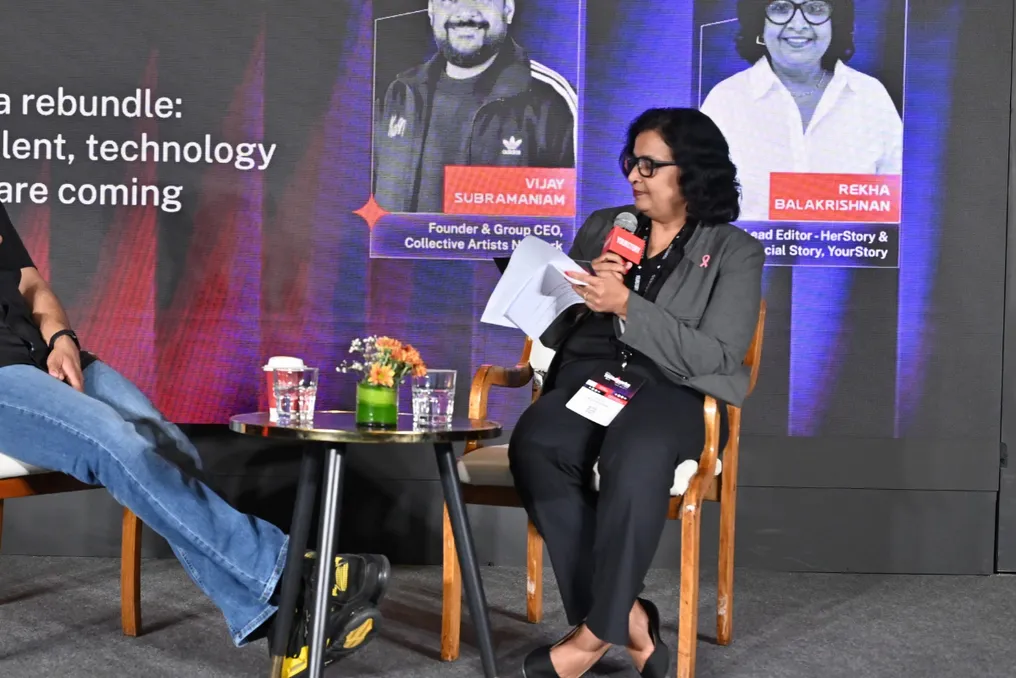
The media industry has long functioned in isolated segments: agencies managed stars, studios created films, platforms distributed content, and brands paid for audience reach. However, these boundaries are blurring today. Creators are building their own enterprises, artificial intelligence is transforming the content creation process, and one story or character can become the starting point for films, series, and brand partnerships.

Collective Artists Network, founded by Vijay Subramaniam, operates in several such areas. During a fireside chat titled 'The Great Media Repackaging: Why Content, Talent, Technology, and Commerce Are Merging at TechSparks 2026,' Subramaniam discussed how his project integrates layers in communities of talent, marketing, and technology, as well as the role of AI in this overall scheme.

Having earned the nickname 'the AI man in the media industry,' Subramaniam stated that despite concerns, he confidently embraces this role because technology will remain here forever. He expressed the conviction that content creation should be equal in opportunity. Historically, only a few elites had the right to tell stories, but in his opinion, anyone who has a story should have the ability to tell and consume it. His company actively implements this idea, possessing, according to him, the world's largest portfolio of AI-enhanced content.

According to Subramaniam, the media business is recession-proof. He noted that during the COVID-19 pandemic, everyone was forced to stay home to consume content, meaning media risks losing nothing. The risk exists for media operators who fail to adapt to changes.

He also pointed out that the Indian media ecosystem is experiencing a decline of oligarchs for the first time. Citing successful post-pandemic projects like KGF, Mahavatar Narsimha, and Netflix shows, including the recently released Musafir Cafe, which became a Netflix hit, he emphasized that success is achieved by new faces and fresh talent, not by people who have controlled the industry for decades. He believes that these newcomers will prevail.

Regarding whether AI makes content cheaper and more profitable, Subramaniam answered affirmatively. He stated that business profitability will increase by two hundred percent, and storytelling will become democratic, allowing stories to be created from anywhere, such as Jabalpur or Coimbatore. However, he warned that this is not just about writing a prompt and getting 'AI sludge'; the same principles as in animation are required: production designer, costume artist, cinematographer. He added that AI will never replace a screenwriter and dialogue, as there must always be a person behind the project capable of conveying the director's vision.

The company built its tool G5 by working with four National Award-winning directors: Rajesh Mapushkar (for the film Ventilator), Hansal Mehta, Sanjay Puran Singh Chauhan, and Manu Anand. These directors defined what should be in the product, and this is being implemented in the current development.

Speaking about a fully AI-generated animated and visual series about the Mahabharata, set to release at the end of 2025, Subramaniam admitted that lessons were learned from the first release. He reported that they are proud to be the first in the world in this field, and thanks to technological improvements starting next month, viewers will see enhancements: the content now includes emotion, comedic timing, as well as genuine stress, grief, and other expressions.

Although creators' economies are rapidly evolving thanks to AI, new business models, and direct sales channels, the industry faces a question: what will determine success in the next five years—talent, stories, or access to the audience? For Vijay Subramaniam, the answer lies in recognizing that the audience is becoming increasingly unpredictable. He noted that any formula they try to use is inevitably broken.

Examples like Musafir Cafe challenge the belief that big-budget streaming shows must match the scale of Game of Thrones or House of the Dragon. Similarly, the success of films like Dhurandhar refutes the notion that audiences will not dedicate time to theatrical releases. In a situation where established formulas offer little guarantee, Subramaniam believes that the fundamentals of a successful creative business remain the same: finding the best storytellers, providing them with the necessary resources, and ensuring economic viability.

Popular