Corruption and distrust in South Africa viewed as a hidden tax hindering job creation
Read more
IOL
iol.co.za

Corruption and distrust in South Africa viewed as a hidden tax hindering job creation

Responses to the recent column in IOL have been numerous. Readers shared their experiences living in a country where economic pressure is felt in family budgets, small businesses, and communities awaiting opportunities.

Two comments particularly sharpened the discussed thesis. One reader compared corruption to an additional tax passed on to ordinary citizens. Another argued that fuel subsidies might alleviate immediate burdens but cannot create the jobs South Africa desperately needs. These remarks point to a deeper truth: economic policy cannot succeed only on paper; people must be able to trust the institutions implementing it.

The first commenter raised issues about corruption at both national and local levels. They cited examples of alleged losses related to the power supplier in Johannesburg, as well as claims of serious corruption linked to free higher education for poor South Africans. These assertions require thorough investigation. However, the broader conclusion of the comment author is that when public funds are lost, misused, or managed inefficiently, the costs do not disappear without a trace. They can return to the public through increased tariffs, taxes, declining service quality, or reduced resources for schools and infrastructure.

This is why corruption functions like a hidden tax. It takes money from people without a clear 'corruption' label on the bill. Instead, a family might face a higher municipal fee, unreliable electricity, or a non-functional government service. Businesses face a similar burden when forced to plan operations around unreliable infrastructure, crime, delays, and administrative hurdles.

The damage is not only financial but also civic. When citizens believe that public money is being squandered and no one is held accountable, trust in the government erodes. Citizens become less likely to believe that new policies will help them, even if their goals are sound. They start asking: who will benefit? Who will pay? Will the money reach its intended recipients? These are not cynical questions, but a natural reaction from people watching promises go unfulfilled.

The second commenter highlighted another crucial point. Fuel assistance can provide welcome support, especially when prices rise and families are already struggling. Nevertheless, a temporary reduction in costs does not eliminate the conditions preventing businesses from expanding and hiring staff. As the commenter noted, lower fuel prices do not solve problems with energy supply, ports, bureaucracy, and crime.

This observation touches the core of the employment problem. An entrepreneur deciding to hire does not view one policy in isolation. Their decision depends on whether the lights will stay on, whether goods can reach their destination, whether the rules are clear and manageable, and whether the safety of employees, customers, and property can be ensured. If these conditions remain uncertain, companies may postpone investments, limit operations, or forgo growth. Those who need their first job, a stable salary, or a chance to build a small business suffer the most.

South Africa does not have to choose between immediate aid and long-term reform. Struggling people need practical support here and now. However, aid should not become a substitute for addressing the deeper issues that keep opportunities out of reach. The government can ease one pressure today while continuing to tackle the reasons why families and employers feel strain tomorrow.

Furthermore, confidence cannot be restored merely by announcing well-intentioned policy measures. Trust is earned through visible results: accountability for public funds, fair investigation of wrongdoing, improved infrastructure, the creation of workable rules, and consistent delivery of services. Accountability must extend to all levels of government and political lines. Otherwise, citizens will continue to perceive reforms as just another promise that could ultimately cost them more.

The commenter who warned that growth could take years after reforms are implemented also raised an important question. Trust does not return the moment policy changes. People need time and evidence. They need to see that the rules are stable, that state institutions are capable of keeping their promises, and that those who abuse public resources are held responsible. Confidence grows through repeated proof.

The residents of South Africa do not need another abstract debate about whether the government should help people or if markets should work. They need a public sector that uses resources responsibly, and an economy where businesses can invest and people can find decent work. These goals are interconnected. Public trust makes reforms possible; reliable infrastructure and fair rules help businesses create jobs; jobs provide families with greater security and independence.

The readers' comments served as a reminder that economic policy is ultimately judged in daily life. Is the electricity working? Can a business afford to hire staff? Are public funds reaching their target? Does a family see a future for its children? It is these answers, not just promises, that will determine whether South Africa believes in the possibility of change.
Similar stories

Temporary measures introduced to reduce fuel levy in South Africa, but economists doubt long-term improvement in citizens' financial situation
Read more
iol.co.za

Temporary measures introduced to reduce fuel levy in South Africa, but economists doubt long-term improvement in citizens' financial situation

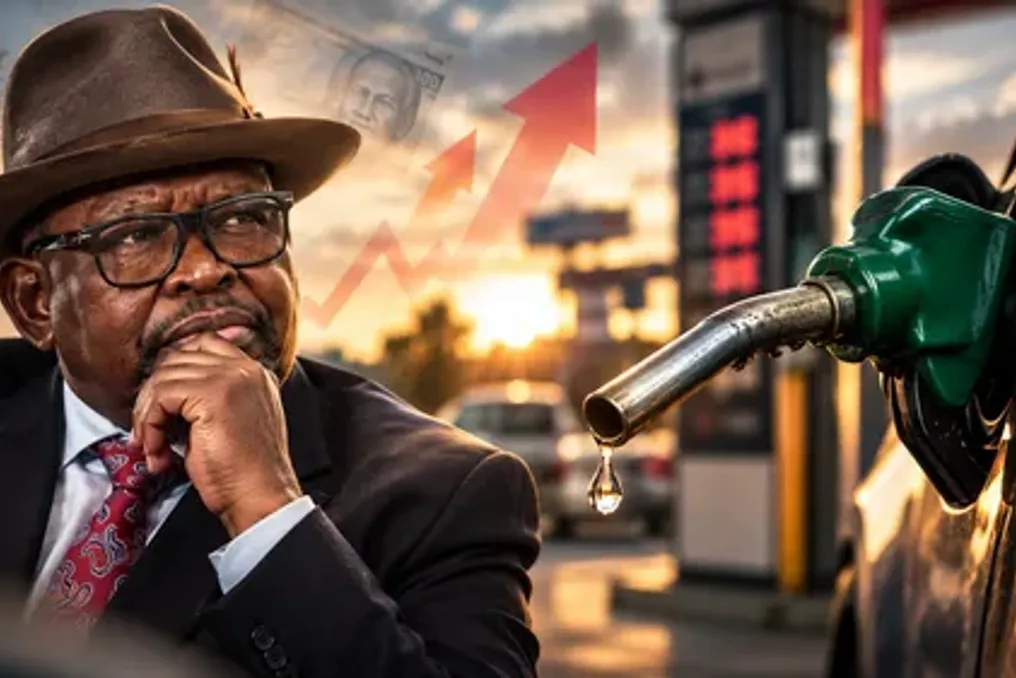
Residents of South Africa will receive temporary support at petrol stations in November, but the intervention by Finance Minister Enoch Godongwana, which involves reducing the fuel levy by 10 billion rand, does not guarantee cheaper transport or a sustainable improvement in household finances.

Economists warn that consumers will continue to be burdened by higher international oil prices, inflation, and borrowing costs, despite the government's reduction in fuel taxes.

In the Medium Term Budget Policy Statement (MTBPS) presented on Wednesday, Godongwana announced a reduction in the fuel levy by R1.50 per liter of petrol and R3 per liter of diesel from November 4 to December 1. After this reduction, it will decrease to R1 per liter of petrol and R1.50 per liter of diesel until January 5, 2027.

For drivers purchasing 50 liters, the initial assistance will amount to R75 for petrol and R150 for diesel compared to prices without this measure. During the second phase, these savings will drop to R50 and R75 respectively. Nevertheless, these reductions relate to the levy, not the final retail price at the pump, which remains dependent on global oil prices, exchange rate fluctuations, and other adjustments.

Inflationary peak has not yet been reached

Preparations for the MTBPS led Dr Lerato Ntuli, an economist from Anchor Capital, to state that September inflation data is unlikely to mark the peak of the current inflationary cycle. According to Statistics South Africa, consumer inflation rose to 4.5% in September from 4.4% in August.

Ntuli notes that inflation in the transport sector accelerated to 10.8%, adding 1.5 percentage points to the overall figure after the fuel price hike in September. In September, the price of petrol increased by R1.34 per liter, and diesel by approximately R3, followed by another increase in petrol price of R3.33 per liter in October.

According to the Central Energy Fund as of October 20, average shortfalls were R1.52 per liter for petrol 95 and R1.25 per liter for diesel, indicating further upward pressure before the levy intervention began. She also cites international oil prices and the weakness of the rand as sources of inflationary pressure, as the Brent crude price approaches $110 per barrel.

Ntuli believes that any fuel assistance in the budget can mitigate the expected inflation peak, but is unlikely to significantly change the overall inflation forecast in the short term. Ntuli argues that the slowdown in core inflation to 4% and the deceleration of services inflation to 4.9% strengthen the case for the South African Reserve Bank to keep the repo rate unchanged at 7.25% at its November 19 meeting. However, she cautions that the Reserve Bank remains vigilant about how higher fuel costs may affect other prices.

Growth remains slow

Sanish Pakrisami, a group economist from Momentum Group, similarly warns that temporary support cannot indefinitely shield consumers from high international oil prices. She points out that the Ministry of Finance lowered its growth forecast for 2026 to 1.2% from 1.6%, predicting growth of 1.6% in 2027.

According to Pakrisami, higher living costs, increased borrowing costs, and weak investment remain obstacles to economic activity. For homeowners and prospective buyers, interest rates are another issue. Samuel Seeff, Chairman of Seeff Property Group, welcomes the temporary fuel levy reduction but argues that consumers also need help in the form of reduced borrowing costs.

He states that high interest rates, the cost of living, and weak employment growth continue to restrict disposable income and hinder first-time homebuyers. Seeff wishes to avoid further interest rate hikes and to lower borrowing costs when conditions allow. Dr Andrew Golding, CEO of Pam Golding Property Group, also welcomes the measure but emphasizes that sustained growth and improved housing affordability are crucial to supporting the real estate sector. Golding identifies transport costs, financing costs, and financial pressure on households as factors influencing housing demand, especially among first-time buyers.

In addition to fuel and interest rates, the MTBPS includes measures affecting public services upon which households depend.

Where the funds are going

Godongwana announced the allocation of an additional R21.8 billion for equitable share of local government in the medium term to help cover increased costs for free basic water, sanitation, electricity, and waste removal. The Minister also allocated another R20.5 billion for the equitable share of provinces to address rising healthcare and education expenditure.

Organisation Undoing Tax Abuse (OUTA) welcomes the fuel levy reduction but questions whether additional spending will improve service quality without strengthening accountability. OUTA refers to a Finance Ministry review concerning R887 billion transferred to provinces and municipalities through targeted infrastructure grants between 2017/18 and 2023/24. According to the organization, the review found that projects were often delayed, incomplete, or did not yield the expected benefits. OUTA also expresses concern over excessive municipal operational spending while neglecting maintenance and infrastructure investment.

Godongwana acknowledged the financial weaknesses of municipalities in his speech and outlined proposed changes to financial management legislation, stronger intervention in troubled municipalities, and measures to incentivize reinvestment of service revenues into infrastructure.

Why this matters

Pakrisami believes these reforms are important because weak municipal finances and deteriorating infrastructure undermine prospects for sustainable economic improvement. She also notes that the Ministry of Finance increased the budget for non-interest expenditure by R45 billion this year while identifying R38.1 billion in targeted savings in the medium term, including cuts to inefficient programs and social grant fraud.

Pakrisami cautions that protecting vulnerable households remains necessary, but continuous expansion of social support requires sustainable funding. For drivers, the first change takes effect on November 4, when the initial levy reductions begin. By December, the assistance will be less, and it is planned to end at the beginning of January. Ntuli's inflation assessment and Pakrisami's growth forecast suggest that any long-term improvement in household financial well-being will depend on more than just a temporary reduction in fuel taxes.

South Africa's financial indicators are improving, but benefits have not yet reached households and youth
Read more
iol.co.za

South Africa's financial indicators are improving, but benefits have not yet reached households and youth

According to assessments by financial and industry experts commenting on this year's Medium-Term Budget Policy Statement (MTBPS), South Africa's public finances are stabilizing, but positive changes are not yet felt by ordinary citizens or young job seekers.

Jorgen Ekmann, an asset manager at Consult by Momentum, noted that the government's financial condition is recovering faster than the budgets of most households. He reported that the Minister confirmed that 'debt has stabilized at 78.4% of GDP and is now decreasing, and the deficit is slightly better than projected in February.'

However, Ekmann warned that while this is favorable for the long term, it does not put money in people's pockets this month, given that domestic petrol exceeds 30 rand per liter and the mortgage rate is 10.75%.

Regarding the reduction in fuel levy by 1.50 rand per liter starting November 4th, Ekmann advised viewing this measure within context. He cautioned that early forecasts indicate a possible further increase in November, so the reduction may only mitigate price hikes rather than lower them at the pump, advising: 'Do not plan your budget based on this.'

Discussing the broader economic situation, Ekmann emphasized that growth rates have been lowered to 1.2%. He stated that in a slowing economy, employment is the most significant financial asset of a person, and urged citizens, where possible, to build a reserve fund covering three to six months of expenses and keep savings in two 'pots' for real financial emergencies.

Concerning the fiscal forecast, Ekmann noted that the Treasury expects tax revenues this year to exceed the February projection by 17.1 billion rand. However, he added that this amount is below the range of 40 to 50 billion rand expected by some economists, and most of these revenues are linked to commodity prices, which will not last long. He concluded that tax breaks cannot be relied upon in February.

On the topic of cryptocurrencies, he mentioned that although the Treasury aims to 'move away from preliminary approvals for cross-border crypto transactions,' it is still a project, and no changes have occurred yet.

Nkosinat Malangu, a specialist in youth employment and entrepreneurship at Momentum Group Foundation, opined that the fiscal forecast presents a mixed picture. He noted that the Minister's confirmation of the stabilization of South Africa's public finances is encouraging, especially the consistent commitment to infrastructure investment.

However, Malangu pointed out that with economic growth slowing to just 1.2% in 2026, the question remains how to translate this progress into meaningful employment opportunities for young South Africans.

He cautioned against ignoring the impact of high fuel and energy costs, as well as unreliable water supply, on economic growth, noting that such factors hinder attracting new investments and maintaining the viability of existing businesses, especially SMEs, for job creation.

Although infrastructure projects supported by IFISA have a potential investment value exceeding 200 billion rand, Malangu stressed that infrastructure spending does not automatically lead to youth employment.

He insisted on the need to develop targeted mechanisms to connect youth with these projects through apprenticeships, technical training, local procurement, and entry-level employment opportunities.

Malangu added that infrastructure ambitions have often featured in previous budget speeches, but there is still insufficient reporting on what has actually been implemented, what progress has been made compared to previous commitments, and importantly, how many jobs have been created as a result.

He was particularly pleased by the Minister's acknowledgment that expenditures do not always translate into results, referencing a review of 887 billion rand transferred to provinces and municipalities, where projects were often 'delayed, incomplete, or did not yield the expected benefits.'

He insisted that it is necessary to measure not only the volume of public spending but also how many young people actually acquire skills, find jobs, or start sustainable businesses as a result, and called on public procurement policy to ensure the 'targeted provision of opportunities for youth-owned enterprises.'

Malangu concluded that the Statement offers few concrete goals for youth employment or specific intervention measures, warning that without clear accountability, young South Africans risk being left behind.

In the energy sector, David McDonald, CEO of SolarAfrica, stated that the focus remains on private investment and implementation. 'From an energy perspective, this year's MTBPS is largely a continuation of existing policy, although it is encouraging to see some tangible progress in fulfilling previously made promises.'

McDonald highlighted the Credit Guarantee Mechanism, stating: 'The most significant development is the Credit Guarantee Mechanism, which is now included and has received conditional capital commitments of $553 million.'

He called this a 'positive step towards unlocking private investment in infrastructure, especially in power transmission, which remains one of the biggest constraints on South Africa's energy market.'

'We urgently need more grid connections to accommodate private generation and bring electricity to the market at more competitive prices,' said McDonald.

He emphasized that accessible electricity is critical for economic growth because it allows energy-intensive industries, such as smelters, to resume operations, and producers to gain confidence in expanding rather than contracting due to excessive energy costs.

While the Minister reiterated commitments to restructuring Eskom and creating an independent transmission operator, McDonald noted: 'Both are critical for creating a competitive electricity market,' but 'we still need greater clarity on implementation timelines.'

He also welcomed the additional 3.5 billion rand for smart metering in municipalities, explaining that 'improving revenue collection is crucial because when municipalities and Eskom cannot recover the cost of supplied electricity, the financial burden ultimately falls on paying customers.'

Concluding on the outlook, McDonald summarized: 'Overall, the direction remains positive, but execution is key right now. Grid expansion, improved revenue collection, and the introduction of significant market competition will ultimately determine whether South African businesses can receive electricity at prices that allow them to grow.'

South African Finance Minister Announces Financial Stabilization but Warns of Growth Challenges
Read more
iol.co.za

South African Finance Minister Announces Financial Stabilization but Warns of Growth Challenges

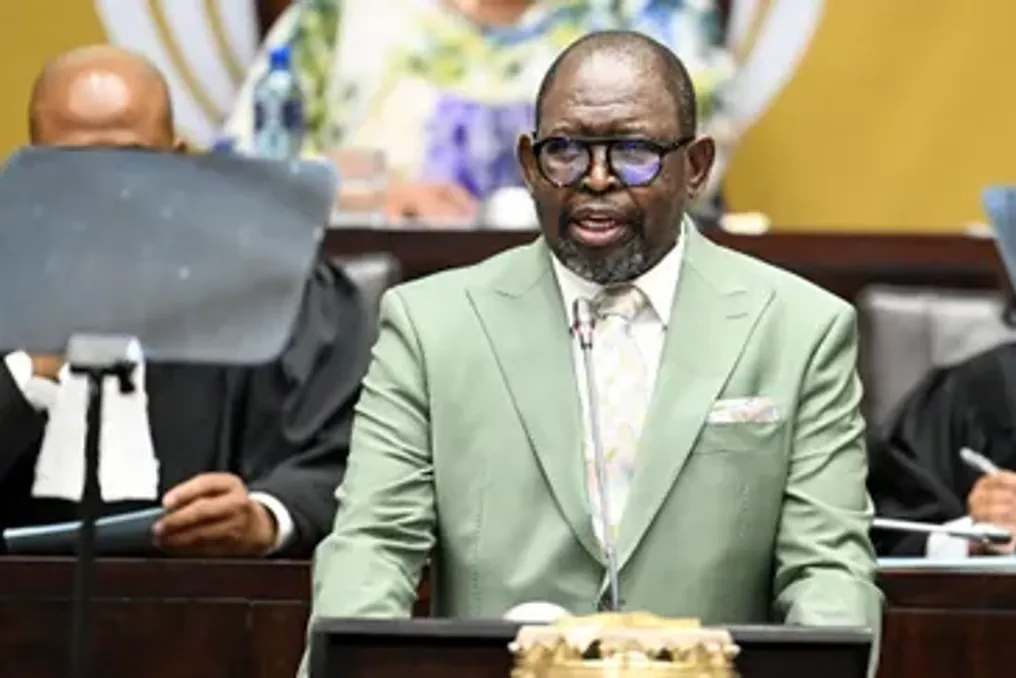
Despite South Africa achieving improvements in public finances, Finance Minister Enoch Godongwana warned on Wednesday that transitioning from fiscal stability to faster economic growth is a more complex task. This is because the deteriorating global situation threatens to undermine the achievements made.

Speaking at the mid-term budget policy statement in Parliament, Godongwana reported that the debt-to-GDP ratio is declining for the first time in nearly two decades. He stated that the debt-to-GDP ratio stabilized at 78.4% in 2025/26, which is the first occurrence in twenty years. Furthermore, the budget deficit is narrowing to 3.9% of GDP, which is better than the February forecast of 4%, and the primary surplus is increasing from 1.7% of GDP this year to almost 3% by 2030.

Godongwana noted that at the beginning of this year, all three major credit rating agencies announced positive actions on South Africa's rating. However, the global situation worsened since February. Acknowledging that 'growth remains too low,' he mentioned that the attack by Israel and the US on Iran led to the closure of the Strait of Hormuz, causing a rise in global prices for oil, food, and energy.

As a result, global growth is now estimated at 3.1% in 2026, compared to the January forecast of 3.3%. The Ministry of Finance has adjusted its domestic growth forecast to 1.2% for 2026, lowering it from 1.6% in February.

Reduction in Fuel Levies

The most immediate measure to respond to cost-of-living pressures was a temporary reduction in fuel levies. Godongwana announced that from the election day, November 4, the levy will be reduced by 3 cents per liter of diesel and by 1.50 cents per liter of petrol until December 1, with a smaller reduction following until January 5, 2027.

Financial costs amounting to 10 billion cents will be covered by returning funds previously transferred to the Central Energy Fund into the National Revenue Fund. The Minister also reported that gross tax revenue was revised upwards by 17.1 billion cents compared to the February estimate, driven by corporate tax, dividend tax, and VAT.

Godongwana cautioned that a significant part of the improvements reflects rising commodity prices and will not be permanent. In the medium term, an additional expenditure reduction of 38.1 billion cents has been identified, including 13 billion cents from reduced fraud in social grants. The fiscal anchor bill, presented for public consultation in October, requires each administration to set its own fiscal targets and report on them with every budget. This document is expected to be introduced in Parliament in 2027.

Preparation for Growth

Additional revenues allow for an increase in expenditure of 45.5 billion cents compared to February. The Infrastructure Financing and Implementation Agency supports projects with a potential investment value exceeding 217 billion cents, while the Transport Guarantee Mechanism has secured conditional commitments of $553 million from development partners and is planned to launch by 2027.

Regarding gender-based violence, 3.8 billion cents have been allocated to hire over 3,500 social workers, and courts for sexual offenses are expanding from 55 to 101. Consolidated government spending is growing by 3.6% annually, reaching 3 trillion cents by 2029/30, with capital investment being the fastest-growing item at an annual increase of 5.3%. Godongwana stated: 'If we maintain the course, growth could exceed 3% per year.'

Popular