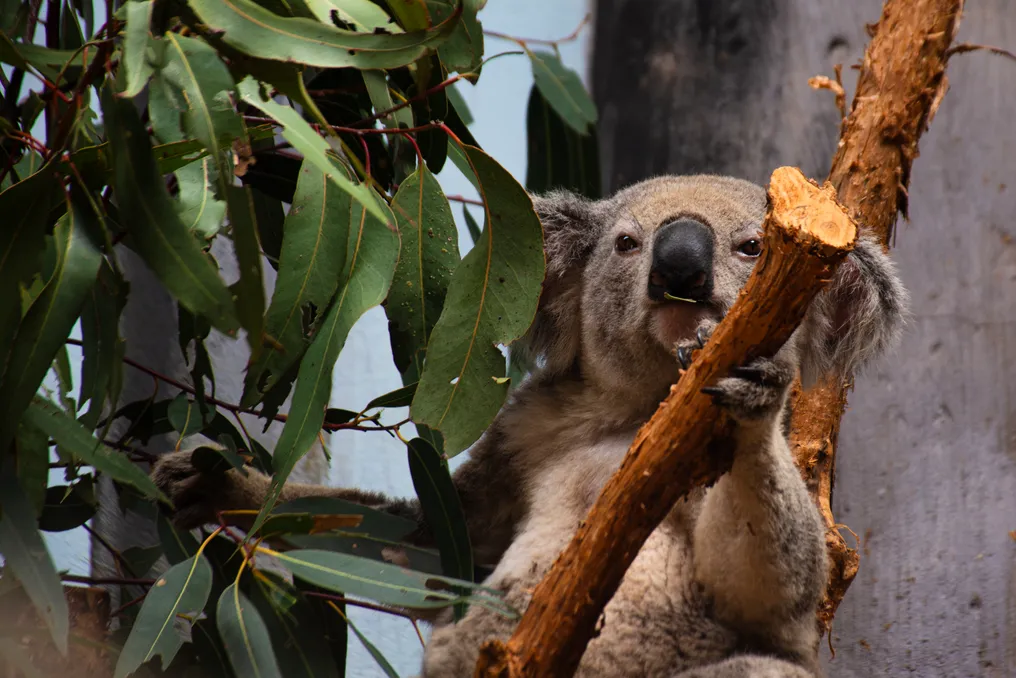
The São Paulo Aquarium, located in the Ipiranga neighborhood, has welcomed two new residents, adding a touch of charm to its collection. They are Andi, a female, and Kingsley, a male, both three-year-old koalas, who were brought from a zoo in Australia to reside in the capital city of São Paulo. Visitors have had the opportunity to meet the pair since Thursday, the 29th, observing them spending a large part of their time sleeping.
The arrival of these animals required several modifications to the aquarium. Before receiving the koalas, the facility underwent rigorous evaluations to meet the requirements set by the Australian government. These assessments covered everything from enclosure preparation to the training of teams responsible for handling and veterinary care.
The space was properly equipped with structures that replicate the trees where the species spends most of its life. The branches feature multiple ramifications, allowing the animals to find comfortable places to rest. Sleeping is a central activity for koalas, potentially lasting up to 18 hours daily.
The koalas' diet is strictly controlled, consisting solely of eucalyptus leaves, and they can consume over half a kilogram daily. At the aquarium, these leaves are changed twice a day, while the team monitors both the amount ingested and the animals' adaptation to the different varieties offered.
In addition to nutrition, Andi and Kingsley receive constant monitoring from veterinarians and behavior specialists, including regular health check-ups. Care includes preventive measures and vigilance against diseases affecting the species, such as those related to the Chlamydia bacterium and Koala Retrovirus.
Koalas, native to Australia, are classified as vulnerable to extinction by the International Union for Conservation of Nature (IUCN). In certain areas of the country, such as Queensland and New South Wales, the situation is even more critical, with populations categorized as 'Endangered,' indicating a high risk of disappearance in the wild.
The main threats to the species involve habitat destruction, the advance of urbanization, the incidence of diseases, and the impacts of climate change. Because they depend on eucalyptus trees for shelter and food, koalas are particularly sensitive to vegetation degradation. This problem was intensified by the bushfires that ravaged Australia between 2019 and 2020, coupled with prolonged droughts and heatwaves that compromise animal survival.
The arrival of Andi and Kingsley at the aquarium integrates the São Paulo Aquarium's Koala Conservation Program. This initiative encompasses eight areas of work, focusing on the reproduction, health, and well-being of the animals, in addition to including genetic studies and collaboration with other international institutions.
The program also aims to raise public awareness about the challenges faced by the species. It is hoped that visiting will help attendees understand the effects of urban expansion and climate change on biodiversity, reinforcing the need to protect natural ecosystems.
Visitors can already observe Andi and Kingsley in an enclosure specifically adapted for the species, accessible from the public viewing area. Access to the interior of the enclosure is restricted only to the professionals responsible for animal care.
Promotional tickets cost R$ 150 for adults and R$ 120 for children aged 2 to 12 years, with reduced fares available for seniors, teachers, and people with disabilities. Purchases can be made through the official São Paulo Aquarium website, where scheduling conditions can also be checked. The aquarium operates daily from 9 am to 5 pm, located at Rua Huet Bacelar, 407, approximately 590 meters from the Santos-Imigrantes station on Line 2-Green of the subway.