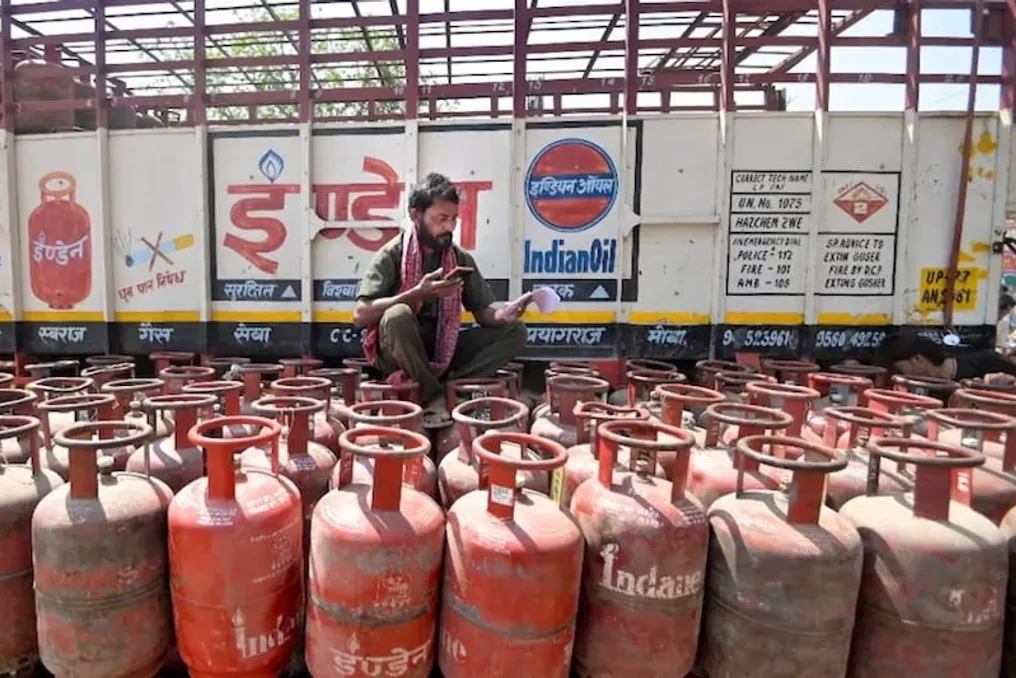
The author, located in Delhi, encountered a situation where employees of a gas company from Ranchi demanded a personal visit to provide a gas cylinder, casting doubt on the effectiveness of the 'Digital India' concept. The problem was exacerbated by failures in the operation of digital services.
The author's gas contract is registered in Ranchi, Jharkhand, although the author resides in Delhi. His family uses this gas connection in Ranchi. When attempting to order a cylinder, it was discovered that the eKYC procedure was incomplete. The author repeatedly tried to complete electronic identification via mobile phone, but the process constantly interrupted: either facial recognition failed, or the application would not proceed further.
Upon contacting S.K Gas Service in Ranchi, he was informed that a personal visit to Ranchi was necessary to complete eKYC. This means that a client from Delhi has to travel hundreds of kilometers because the company's digital verification system is not functioning correctly.
This situation is not unique; millions of people across the country have gas connections in their hometowns or at their parents' homes but live elsewhere due to work or other reasons. For such citizens, the eKYC process should be simplified, not create new difficulties.
Representatives of S.K Gas Service in Ranchi noted that a new gas cylinder is not issued for months. As a result, there is only one option: either travel from Delhi to Ranchi for verification at the center, leave the family without food, or purchase gas on the black market. In Ranchi, the black market offers a cylinder for a price ranging from 2200 to 2500 rupees, which raises questions about stimulating speculation.
The Ministry of Petroleum and state oil companies mandate biometric verification based on Aadhaar for LPG consumers. The goal of this measure is to eliminate fictitious connections, identify erroneous or duplicate entries under one family name, and ensure the timely receipt of government subsidies by the intended recipients. The principle of this goal is not disputed, but questions are being raised about its implementation methods.
In its communication dated September 19, 2026, the Ministry of Petroleum clearly stated that visiting a gas agency is not mandatory for Aadhaar biometric verification. Indane customers can complete this procedure at home through the IndianOil ONE application. Furthermore, the delivery employee can conduct verification through their mobile application. Clients can also complete this task at the gas agency showroom.
Thus, the government proposes three possible solutions. The question arises as to how justified it is to require a client in Delhi to personally travel to Ranchi if they cannot complete the verification via their phone. Often, after filing a complaint with Indane, no response was received. Customer support also informed that regardless of the client's location, they must personally visit the gas agency for verification because the eKYC validity period has expired.
The author wonders: if there is a technical malfunction in the application, shouldn't the agency or company have an alternative method? Should the client have the ability to file a complaint, resolve the verification issue, or confirm their identity through another authorized channel?
Currently, the use of mobile applications is growing in many areas, from banking to government documents. However, a digital service is only useful if it functions correctly. The facial authentication process using Aadhaar depends on camera quality, lighting, internet connection, correct facial recognition, and the technical system of the application. UIDAI also recommends adhering to good lighting conditions, using a clean camera, and properly framing the face in its guidelines.
But what should a client do if they repeatedly try to verify but fail? Should they repeat the same procedure over and over? The primary responsibility here lies with the oil company and the government. If the company makes the digital procedure mandatory, it must also guarantee that the client receives immediate assistance if technical problems arise. The reason for the application failure, a complaint number, and deadlines for resolving the issue must be provided.