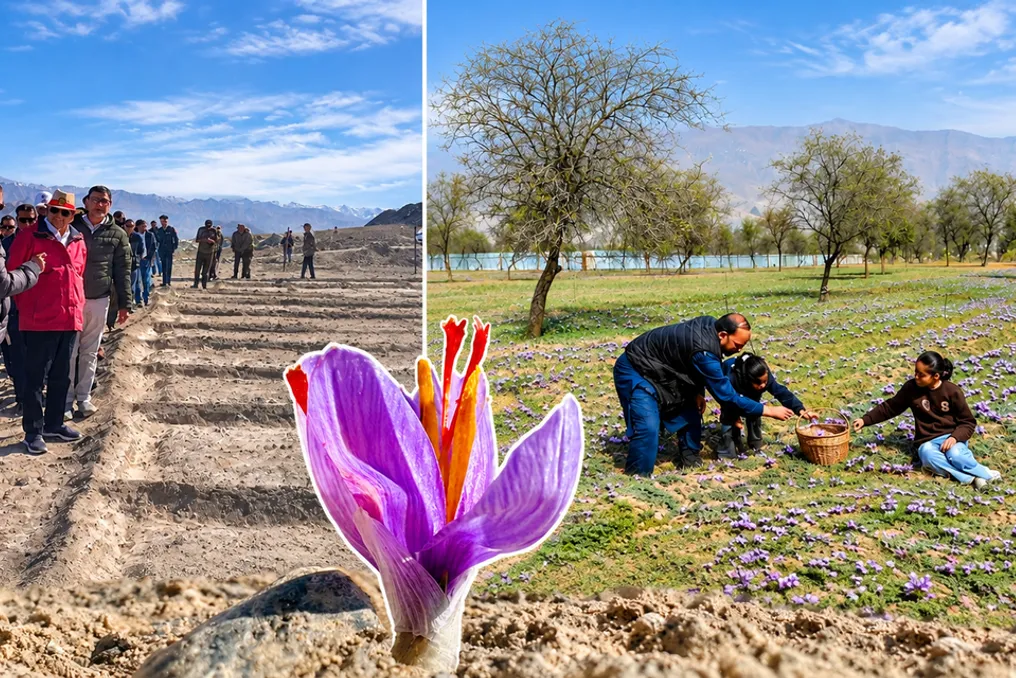
In the high-altitude cold region of Le in Ladakh, land previously considered unsuitable for agriculture has begun to yield one of the world's most expensive spices. Saffron flowers started blooming in less than 30 days after planting, offering new hope for the agricultural sector amid challenging cultivation conditions.
The first buds appeared in a plot restored under the Khim Sarovar Project—an experimental initiative launched by Ladakh Deputy Governor V. K. Sakseena. A notable aspect of this trial was that the flowers bloomed significantly earlier than expected. Typically, plantings require almost two months for flowering, but in Le, the flowers appeared in less than half that time.
This experiment has the potential to open new opportunities for cultivating high-value crops in Ladakh, potentially creating additional income sources for farmers, local entrepreneurs, and youth.
From Barren Land to Saffron Field
The experiment began on October 1, 2026, when approximately 800 kg of premium Iranian saffron corms were planted on an area of 4,000 square meters in Le. These underground structures, similar to bulbs, facilitate the growth and flowering of saffron plants. The total number of planted corms amounted to about 90,000, representing a significant undertaking for the region.
Previously, the land was in a degraded state and unsuitable for cultivation. It was restored as part of the Khim Sarovar Project. Saffron was then planted to test whether the crop could grow in the high-altitude conditions of Ladakh. Within a few weeks, signs of life began appearing on the once barren plot. Although the plant usually requires about two months to flower after planting, in Le, the first flowers appeared in less than 30 days.
First Harvest Shows Encouraging Results
When Sakseena visited the experimental field on Sunday, November 1, he personally saw the first flowers. The field produced an average of 20 to 25 flowering flowers daily. On the day of his visit, the count reached 72, which was the highest daily figure to date.
The team also managed to harvest nearly 22 grams of pure saffron in four days. Although this is a small yield so far, it is an encouraging start for the crop being tested in a region where it was not traditionally cultivated on this scale. The administration is currently studying how the plants function in local conditions and whether these results can be sustained after the initial flowering period.
Why Saffron Could Become a Valuable Crop
This crop is among the most expensive spices in the world. It is widely used in culinary and traditional dishes, and its high market value makes it attractive to farmers who can successfully cultivate it.
Saffron production in India is mainly concentrated in Jammu and Kashmir, which accounts for about 90 percent of the country's total output. For Ladakh farmers, growing saffron could offer another way to generate income from their land. Instead of relying solely on traditional farming methods, they could potentially cultivate a high-value crop with the potential for better profits.
The administration hopes that this experiment will help diversify agriculture in the region, increase farmers' incomes, and create opportunities for youth interested in the agricultural sector and entrepreneurship. However, the project is still in the pilot stage. The first flowers are a positive sign, but further trials are necessary to determine if the crop can be grown stably and profitably on a commercial scale.
Developing the Success of Ladakhi Floriculture
This is not the first instance where the administration has conducted experiments with high-value flower cultivation in Ladakh. Large-scale trials have previously been conducted here with lilies and gladiolus. These flowers helped create earning opportunities for farmers, self-help groups, and local entrepreneurs. The success of these initiatives prompted the administration to focus on other crops that could grow in the region and provide better economic returns. Saffron is the latest addition to these efforts. If the current trial proves successful, its cultivation could provide local farmers with another option besides traditional crops and stimulate the growth of small agribusiness.
The Ministry of Agriculture of the Union Territory of Ladakh and the staff involved in the project were commended by the deputy governor for their work in implementing this experiment. So far, the 4,000 square meter field in Le offers an encouraging hint of what is possible. Nearly 90,000 planted corms on the restored land have already yielded the first flowers, and the first saffron harvest will follow shortly. It remains to be seen whether this experiment can ultimately turn into a commercial agricultural opportunity. But for a region constantly seeking ways to make agriculture more viable, these early blooms have given farmers and the administration something new to look forward to.