Hostinger Employee Auxe Zhirgule Discusses Where Founders Should Focus Instead of Coding
Read more
YourStory [india, en]
yourstory.com

Hostinger Employee Auxe Zhirgule Discusses Where Founders Should Focus Instead of Coding

As software creation has become a rapid process, as demonstrated by the example of a founder from Srinagar who quickly built a website and application on Hostinger, the focus for businesses is shifting from the question of whether a product can be created to the question of why the consumer will choose this specific product.

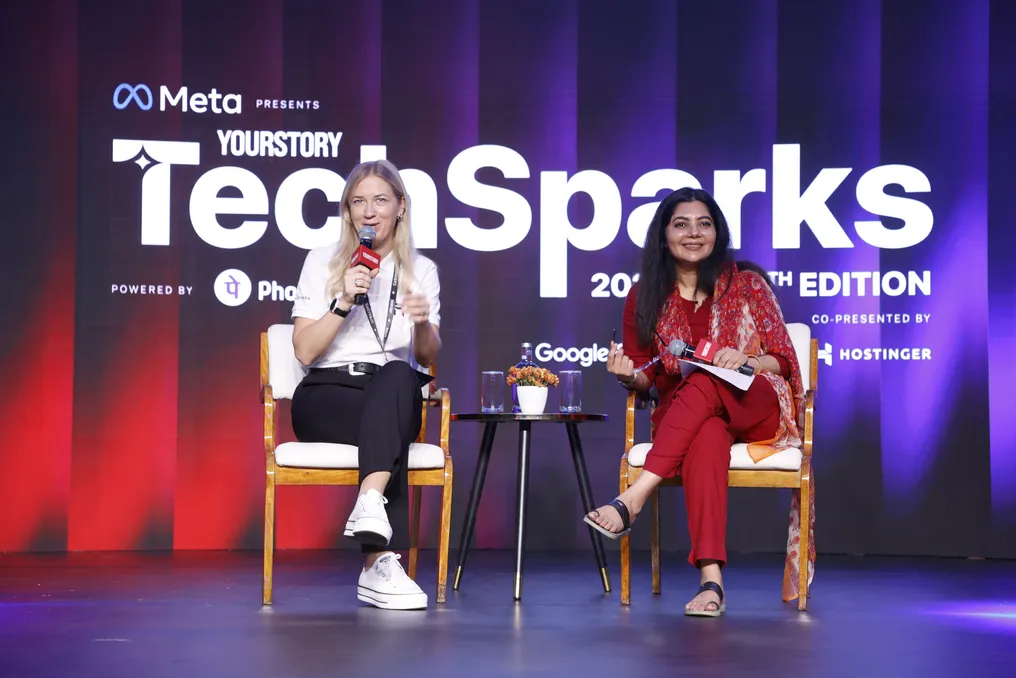
This shift became a topic of discussion at the TechSparks 2026 event in Bengaluru, YourStory's flagship event. Auxe Zhirgule, Vice President of Product at Hostinger, held a conversation with Shraddha Sharma, Founder and CEO of YourStory and The Bharat Project, about the implications of any business being able to create its own software independently.

Zhirgule began her talk by describing how customer requests to Hostinger have changed. Previously, publishing a website was a complex task for people without technical skills, and the company's mission was to help everyone succeed online. However, now that artificial intelligence has eliminated many of these barriers, founders no longer need to worry about how to build a product; they focus on attracting customers, increasing revenue, and managing the business.

Part of the problem is fragmentation: a new founder might purchase a domain on one platform, set up email on another, and run campaigns on a third, resulting in five subscriptions and five accounts. When something breaks, the founder is forced to act as an integration specialist or technician. Hostinger's response is to take over the entire workflow and integrate AI agents into it.

Since code is no longer a scarce resource, the competitive advantage shifts towards understanding customer needs. Zhirgule argues that founders must know precisely what problem they are solving and test the product as early as possible. Innovation, in her opinion, does not necessarily mean inventing something entirely new; for instance, the iPhone succeeded not because it invented the mobile phone or the touchscreen, but because it provided the best user experience.

Referencing the book 'Monetizing Innovation,' she highlighted a point often forgotten by developers in the rush to test: a great product does not always guarantee a successful business. It is necessary to start thinking about how the product will reach the market at early stages. This is why she insists that customer obsession must remain constant. 'Customer obsession is the foundation, and I know AI is everywhere now, but that is the part we must preserve,' she stated, referring not to automated emails surveys, but to genuine conversations.

Sharma shared a lesson learned during The Bharat Project's travels through the states of Bihar, Eastern Uttar Pradesh, Assam, and Chhattisgarh. The team expected responses via email or WhatsApp, but many people observed them on Facebook. Sharma noted that customers are not always where founders assume they are.

As agents take on more decisions, the question arises of who makes the final decision. Currently, according to Zhirgule, it is still the founder. 'AI can do a lot, but the founder has the final say,' she said. She added that trust must be earned. She gave the example of a Hostinger agent that agreed to an email conference, and the CEO only learned of the agent's participation through LinkedIn. Her conclusion was to treat the agent like a new employee: 'I look at it as a new colleague,' which implies vetting their work and observing their behavior before assigning them more responsibilities. This trust is what concerns her most, despite the enthusiasm for the speed of technological development.

Zhirgule noted that sales approaches vary greatly depending on the market, citing India and Brazil as examples, so products must adapt. Sharma observed that the conversation about AI in tech circles can differ significantly from the real world. Zhirgule agreed that adoption cycles vary, and those who are not yet convinced need to be shown the value of AI.

Audience questions covered where automation should stop, whether customer expectations will rise, and how non-technical founders can write good prompts. Zhirgule advised that agents should be thoroughly tested and monitored before automating anything else, and rising expectations mean that products with strong user experience and high quality will prevail.

If software launches become as fast as the founder from Srinagar, the session showed that what will differentiate a business is customer knowledge, final decision-making, and earning trust, whether from a user or an AI agent. Code may cease to be scarce, but these three qualities remain so.

Similar stories

Giga+ and Sky discuss possible merger that could create a major player in the Brazilian fiber optic market
Read more
tecnoblog.net

Giga+ and Sky discuss possible merger that could create a major player in the Brazilian fiber optic market

Giga+, formerly known as Alloha Fibra, confirmed that it has maintained conversations with Sky in recent months regarding a potential merger and acquisition. This information was disclosed in a statement to the market after B3 requested clarifications, prompted by a news item published by the Broadcast website, which belongs to Grupo Estado.

However, the company emphasized that there has been no deliberation by the company's management, nor the formalization of any agreement, commitment, or binding contractual document, as reported by the Teletime website.

A union of Giga+'s broadband operations with Zaaz, which is the fiber operator of Waiken ILW, the controller of Sky, would have the potential to establish the fourth largest fixed internet provider in Brazil, boasting approximately 1.91 million users.

In its statement, Giga+ declared that it has held dialogues with Sky and other industry players in recent months. The operator also mentioned that it conducts periodic evaluations of business opportunities and strategic alternatives aimed at expansion and capital management.

Such a transaction could be advantageous for Giga+, given that it registered a 16.5% drop in its access base during the twelve months ending in August. In contrast, Sky and Zaaz's broadband operation showed an expressive growth of 47.7% in the same period.

In addition to operating in the fiber optic network, Sky is seeking to penetrate the mobile network segment. In August, the company officially launched the commercial plans for Sky Móvel, which operates as a virtual operator (MVNO) using Surf Telecom's infrastructure. There are also plans to introduce Sky Link, a competitor to Starlink in the satellite internet market.

An eventual operation would include Giga+ and the broadband assets of the Waiken ILW group, which owns Sky and Zaaz. According to data from the consultancy Teleco, Giga+ had about 1.29 million accesses in August, while Sky and Zaaz totaled approximately 627 thousand customers. Combined, these operations would reach about 1.91 million subscribers.

This volume would position the consolidated group behind only the large companies Claro, Vivo, and Nio—the latter having absorbed Oi's fiber clientele—but ahead of Brisanet, which had about 1.58 million accesses at the same time.

The geographical reach would also be expanded. The two operations would operate in 1,110 combined cities, leading in 173 municipalities. Currently, there is a network overlap between the companies in only 123 cities.

Currently, Brisanet holds the fourth position, slightly ahead of Brasil TecPar, which has about 1.38 million accesses. The latter also aims to increase its market share through the acquisition of Ligga Telecom's operation, a deal that has already received approval from Anatel and the Administrative Council for Economic Defense (Cade), but which is still awaiting a ruling from the Ministry of Communications.

CleverTap Co-founder Anand Jain discusses whether marketing AI generates profit or is just noise
Read more
yourstory.com

CleverTap Co-founder Anand Jain discusses whether marketing AI generates profit or is just noise

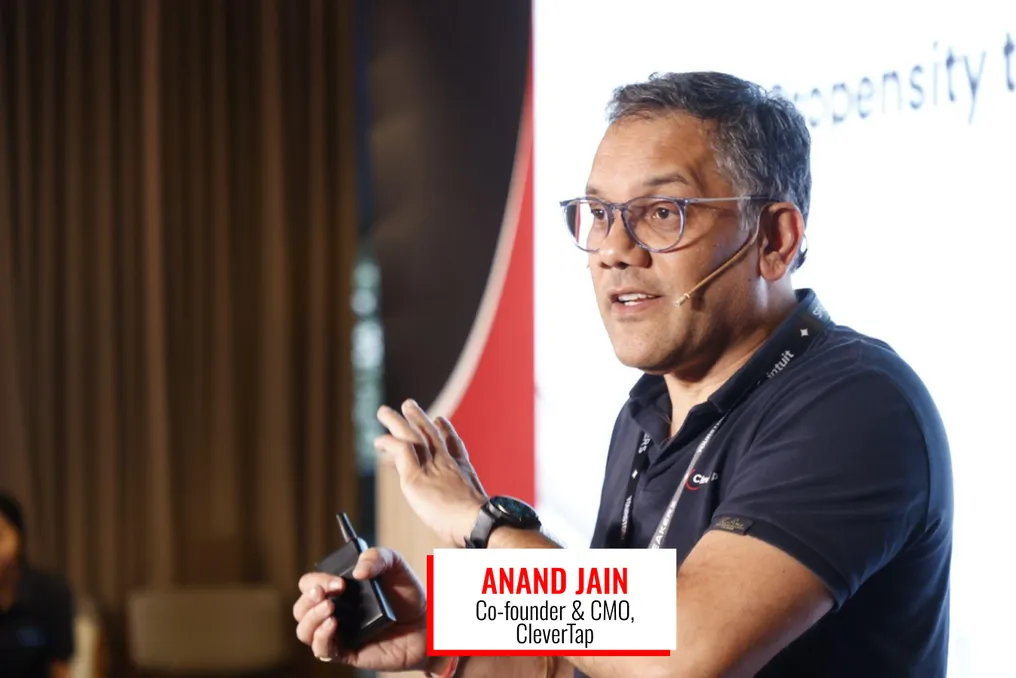
Most modern marketing teams use artificial intelligence to save time on tasks such as drafting emails, creating image variations, and summarizing long documents. However, Anand Jain, co-founder and CMO of CleverTap, a platform for marketing automation and customer engagement, argues that basic tools performing these functions rarely contribute to increased company profit.

During a marketing strategy masterclass at the TechSparks 2026 event, Jain urged leaders to look beyond simple ways to speed up work. He emphasized the need to shift from using AI for entertainment to applying it for real business results.

While AI-powered content creation speeds up work and saves time, Jain questioned whether this truly contributes to growth, asking: 'Will this actually impact business outcomes, or is it just the same thing?'

Traditional digital campaigns usually operate on a 'push' model, where companies decide what they want to sell instead of understanding what consumers want to buy. In contrast, an offline consultant remembers a client's personal preferences, notices instant reactions, and suggests products matching their budget and style. Digital marketing must adopt a similar approach.

Jain stated: 'Not what I want to sell, but what my customer wants to buy. That's how it needs to be flipped.' Instead of blasting general promotions to wide audiences, modern marketing systems should analyze customer actions in real time to match individual needs.

This method marks a transition to the highest level of AI maturity, known as 'real-time decision making.' Marketing technologies typically evolve through three stages. The first level focuses on basic time-saving tasks, the second covers experiments like A/B testing (comparing two ad versions to determine the best), and the third achieves true automated decision-making.

Jain noted: 'You start with productivity, then you run experiments, and the hardest part is decision-making. When you are actually building an entire system for one group of people, and that one person could be one of several millions appearing in your app or on your website.'

Instead of bombarding users with promo codes, a decision-making system first offers soft, helpful steps, such as building brand trust or explaining product benefits. Real-time decision-making relies on a single data hub that combines the historical customer profile with their recent real-time actions. Traditional A/B testing usually stops after selecting one fixed winner, whereas a decision-making system uses reinforcement learning—a smart system that continuously learns from user responses and adjusts offers on the fly.

Furthermore, instead of relying solely on propensity scoring (calculating the probability of purchase), a decision-making system uses uplift modeling. This method identifies the specific nudge, message, or channel needed to prompt an individual user to take the next positive step.

As automated systems manage campaign delivery across thousands of message variations, the marketer's role shifts from execution to strategic guidance. Instead of manually creating creative variations, marketers define high-level goals and set strict operational constraints. Jain emphasized: 'Your job is to create budget constraints, brand constraints, regulatory constraints. Do not use the word 'free' if you are offering something, if you are a bank.'

By setting clear boundaries, marketing leaders allow intelligent decision-making systems to operate autonomously, maintaining the safety of brand messaging while simultaneously ensuring genuine commercial profitability, he added.

Popular