Two Schoolgirls from Uttarakhand Create Environmental Movement Uniting Communities
Read more
The Better India
thebetterindia.com

Two Schoolgirls from Uttarakhand Create Environmental Movement Uniting Communities

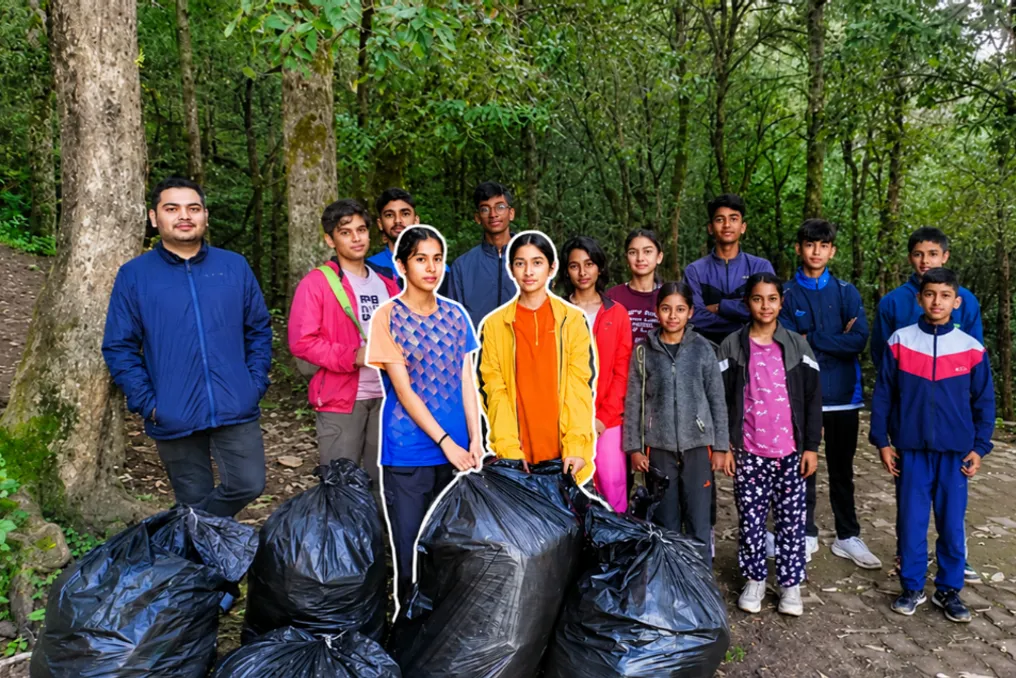
In Pauri Garhwal, Uttarakhand, it was impossible to ignore the trash along the roadsides. However, instead of just walking past, two schoolgirls, Manvi Rawat and Anshika Gaur, decided to act differently. They started collecting garbage independently, without expecting help from others.

Initially, their efforts did not receive support; people mocked their actions, turning a simple attempt to clean up the surroundings into a test of resilience against criticism. Nevertheless, they continued their work.

What began as a small cleanup campaign transformed into the organization Pauri Eco Warriors—a student initiative aimed at engaging youth in the fight against plastic pollution and waste. Today, the group has grown significantly: besides the two founders, it includes over 40 students, and about 15–18 volunteers participate in each cleanup event.

Manvi and Anshika's activities went beyond simple waste collection. Through tree planting initiatives, distribution of saplings, and holding the Maulyaar festival dedicated to environmental action, they strive to make nature conservation a shared responsibility, rather than a one-time event.

From Mockery to Movement Creation

The problem addressed by these two students is familiar to many cities and villages in India. Public spaces, roadsides, and water bodies accumulate plastic wrappers, single-use packaging, and other waste. In mountainous regions where settlements and natural landscapes coexist, trash can become an environmental issue that extends beyond the point of disposal.

For Manvi and Anshika, the first step was eliminating the visible trash around them. Their decision was not easy, and the ridicule they faced illustrates one of the social barriers that can hinder people's participation in community work.

Why Cleanup is Important in a Mountain Town

The landscapes of Pauri Garhwal are part of a larger mountain ecosystem where forests, rivers, settlements, and roads are closely interconnected. Trash left in public places can be carried by rainwater into drains and waterways, and discarded plastic can remain in the environment long after a person throws it away.

Cleaning up trash helps remove existing waste, but it does not prevent the problem from recurring on its own. Pauri Eco Warriors aims to develop this idea by combining cleanup drives with tree planting, sapling distribution, and environmental awareness campaigns. The organization's mission is to protect the mountains, forests, and rivers of the district through community-managed conservation and the implementation of more sustainable practices.

Maulyaar: Taking Conservation Beyond Cleanup

The founders also incorporated their efforts into community events through the Maulyaar festival. This celebration brings together activities such as eco-runs, tree planting, cleanups, and information campaigns. Environmental awareness ultimately lies not only in knowing about the harm of plastic pollution but also in transforming that knowledge into habits and collective action.

What Happens After Cleanup?

The achievements reported by Pauri Eco Warriors go beyond that of a typical student group. The initiative reports planting over 10,000 trees, cleaning more than 15 rivers, attracting over 500 active volunteers, organizing more than 25 events, operating in over 30 villages, and receiving five awards.

These figures indicate that the effort has grown far beyond the initial cleanup campaigns organized by the founders. For Manvi and Anshika, the journey from being mocked for picking up trash to creating a student initiative serves as a reminder that community work can start small. Furthermore, this does not replace the responsibility of local authorities to ensure effective waste management, but it allows more people to be involved in protecting their common spaces.

Similar stories

Babeiha village in Odisha maintains street cleanliness thanks to a teacher's idea
Read more
thebetterindia.com

Babeiha village in Odisha maintains street cleanliness thanks to a teacher's idea

In Babeiha village, a tribal settlement in the Mayurbhanj district of Odisha state, a teacher's idea has been alive for fifteen years. Madhusudan Marandi dreamed of turning his village into a model, and after his passing, the community continued to realize this dream.

A characteristic of Babeiha is that maintaining cleanliness has become the shared responsibility of all residents. Local people cooperate, use bins, and ensure that streets and surroundings remain free from scattered garbage and plastic. Maintaining cleanliness in the village is a habit that exists year-round.

Residents take care of their streets, homes, and common spaces not only during festivals and special occasions but constantly. Over the years, this collective responsibility has become an integral part of daily life in Babeiha. The spirit of teamwork dates back decades.

Nearly forty years ago, residents united to fight drugs under the leadership of Faguram Murmu. It is also reported that there have been no major crimes in the village recently.

The Pataparva festival arrives, which lasts three days and brings the village together. Houses are carefully painted, streets are impeccably cleaned, and bins are installed throughout the village. The celebration is complemented by traditional music and performances.

The painted walls of Babeiha are another part of its identity. Women from the Santal community decorate mud and straw houses with the traditional art of Bhit Potau, using natural colors derived from clay, stones, tree bark, and flowers.

During Pataparva, the clean streets, colorful houses, and cultural traditions of the village become the main attraction. Thousands of visitors from surrounding areas come to enjoy traditional dances, music, and picturesque houses.

Babeiha demonstrates what can happen when an entire community takes responsibility for the place it calls home. For fifteen years, residents have upheld Madhusudan Marandi's idea through their daily actions. Although the teacher may be gone, his idea continues to live on.

Bengaluru residents clean up the city, turning plastic into road debris
Read more
thebetterindia.com

Bengaluru residents clean up the city, turning plastic into road debris

In Bengaluru, residents, students, volunteers, and officials regularly participate in initiatives to improve urban spaces. For instance, on October 11, 2026, the 75th "#IamBengaluru – Volunteer for Parks" event was held on the banks of Jakkur Lake in North Bengaluru. This event brought together families, environmental organizations, and members of the public, with support from Multigen, and aimed to raise environmental awareness.

Participants included Professor Sadagopan, former director of IIIT-B, and Commissioner of the North City Council of Bengaluru, Pommala Sunil Kumar. Professor Sadagopan urged citizens to move beyond complaints and actively participate in long-term efforts to improve their surroundings. This raises an important question about how communities can contribute when government bodies fail to fulfill their duties.

Cleanup in Jakkur combines with phone consultations

The issue of official responsibility was also discussed during the event. As reported by Mirror Now on October 12, Commissioner Sunil Kumar acknowledged the difficulties municipal services face in waste management and the problem of illegal dumping. He emphasized that the infrastructure is insufficient to solve the problem without changing public behavior.

He announced weekly telephone sessions on solid waste management every Tuesday, in addition to existing Friday meetings. Furthermore, he invited residents to monitor micro-waste management plans at local collection points where sanitation workers operate. The event also included activities such as weed removal, plogging, and workshops for children, including students from Greenfield Public School in Sampigehall.

When a daily walk becomes tree watering

In East Bengaluru, near Venugaya Lake, residents are using their regular walks to sustain young trees instead of holding large-scale cleanup drives. According to a report by Bangalore Mirror on May 15, an initiative called Bhagiratha involves walking enthusiasts bringing water in bottles and cans to nourish hundreds of saplings during the summer months.

Participants in this drive included T. S. Palya K. N. Guruprasad and Navin A. B. Guruprasad, who brought cans and organized a private water supplier, while Navin also participated by using water and collecting wastewater from his home's reverse osmosis purifier for the saplings. Volunteers also help maintain cleanliness around the lake.

Forty residents, one road, three hours of work

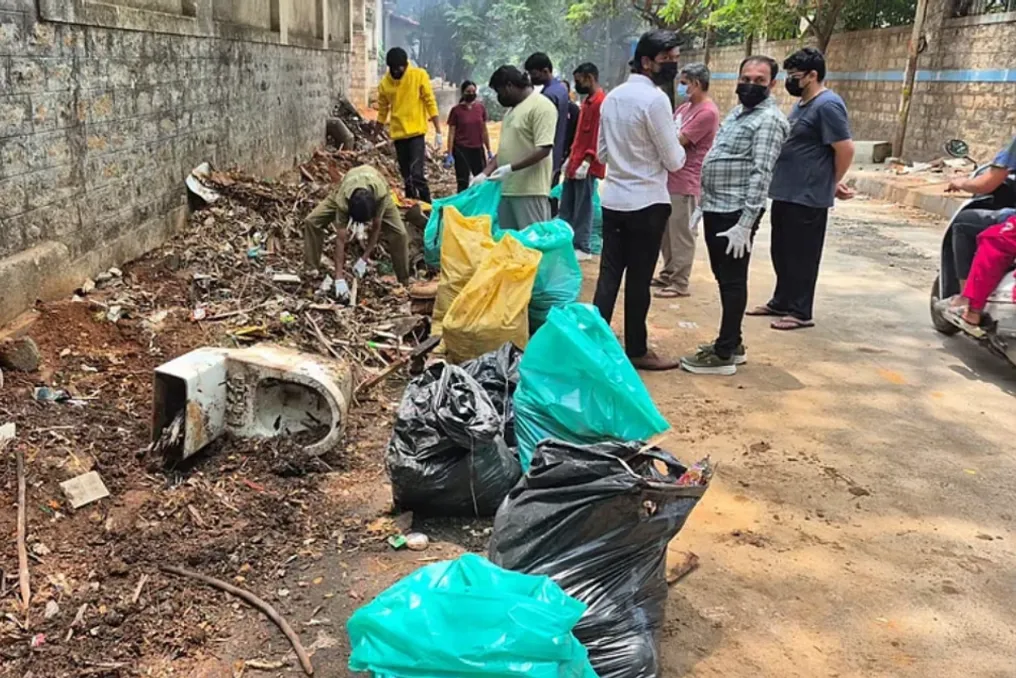
In January, the issue concerned not lake debris but dust accumulating along a road in East Bengaluru. According to The Times of India, about 30–40 residents from Balagere, Panathur, and Varthur, many of whom are IT professionals, gathered on January 17 to clean a 100-meter stretch between the Balagere intersection and the Varthur police station.

Using funds raised through crowdfunding, they rented equipment and removed a ton of silt in three hours. Residents noted that mechanical sweepers are not used regularly, leading to road dust accumulation and dispersal by traffic. They also expressed concerns about respiratory problems, allergies, road surface damage, and risks to passengers and schoolchildren.

Return of the pavement: cleaning wall by wall

In March, over 70 volunteers from CGI India, including children, participated in a cleanup and beautification campaign along Old Madras Road in Indiranagar, as reported by Bangalore Mirror on March 10. The section between Halasuru Lake and the SV Road metro station was covered in trash and posters, and broken pavement slabs made it unattractive for pedestrians.

In collaboration with the Greater Bengaluru Authority and the civic group The Ugly Indians, volunteers removed trash, took down posters, and repainted walls. A similar partnership emerged in Basavanagudi in May. On May 17, residents, college students, volunteers, and municipal workers spent over four hours cleaning Mallikarjuna Temple Street in NR Colony. Deccan Herald reported on May 27 that this action followed complaints about piles of garbage, foul odors, and public urination in the area used by students, hospital visitors, and temple pilgrims.

Members of the Basavanagudi Ward 154 Residents Association, APS College, and BMS College sorted waste, while municipal staff and engineers helped remove it using tractors and tankers. Organizers stated their intention to conduct similar events in other parts of the neighborhood.

What 75 minutes can teach us

On September 12, students from Christ University campus in Bannerghatta joined the Indian Ploggers Army and the South Bengaluru City Council to clean around Madivala Lake. New Indian Express reported on September 13 that the 75-minute plogging session managed to collect 110 kg of plastic waste. This waste, consisting of bottles, milk sachets, wrappers, and straws, filled 15 bags within a 100-meter radius of the lake. This was the 1032nd event of the Indian Ploggers Army under the leadership of its founder, Nagaraj, known as Plog Raja.

This collection demonstrates what can be achieved with short, organized work and shows how much plastic initially ends up on the shores of water bodies.

Care as part of civic life

A common thread in all these initiatives is that people are integrating care for public spaces into their daily civic lives. A student collecting wrappers, a walker watering a sapling, or a resident reporting illegal waste dumping—all of this can help foster a culture where public spaces are not seen as someone else's problem.

However, volunteer work cannot replace government services. Bengaluru still requires reliable waste collection, street sweeping, sewage treatment, combating illegal dumping, and continuous maintenance of parks and lakes. Municipal authorities must remain responsible for providing these services. The value of citizen-led efforts lies not in demonstrating that residents can do the government's job, but in how communities can change daily behavior, draw attention to neglected issues, and collaborate with state institutions to protect shared spaces.

Popular