Despite winning the championship, Pakistan faced ICC sanctions for slow pace of play; captain Shahin Afridi admitted the mistake
Read more
Aaj Tak
www.aajtak.in

Despite winning the championship, Pakistan faced ICC sanctions for slow pace of play; captain Shahin Afridi admitted the mistake

The Pakistani team won the title by defeating Sri Lanka in the ODI Tri-series final, which took place on October 31 at Gaddafi Stadium in Lahore. However, despite the brilliant victory, the team was subject to measures from the International Cricket Council (ICC).

The team was fined five percent of the match fee for slow pace of play. Jeff Crowe, match referee of the Emirates ICC elite panel, determined that the Pakistani team was one over behind the allotted time, taking into account the permissible time deviation.

According to the ICC Code of Conduct, a fine of 5% of the match fee is applied for every over bowled in less time. Since the Pakistani team bowled one over less, they were subjected to the corresponding fine.

The accusations against the Pakistani team were raised by field umpires Ahsan Raja and Wen Knights, as well as third and fourth umpires Sharufuddulla Ibn Shahid and Rashid Riaz. Pakistan's captain, Shahin Shah Afridi, admitted his fault and accepted the proposed penalty.

During the match, the Pakistani team first batted as bowlers and allowed Sri Lanka to score 325 runs, winning 8 wickets. Then, thanks to the outstanding stoic performance of Fakhar Zaman, the Pakistani team reached the target of 326 runs with nine balls remaining.

Fakhar Zaman scored 127 runs off 99 balls, including 11 fours and six sixes. His performance helped Pakistan achieve a memorable victory, but the slow pace of play forced the team to pay a fine after winning the title.
Similar stories

Indian team loses to Pakistan in Hong Kong Sixes match after Crunal Pandya's decisive over
Read more
www.aajtak.in

Indian team loses to Pakistan in Hong Kong Sixes match after Crunal Pandya's decisive over

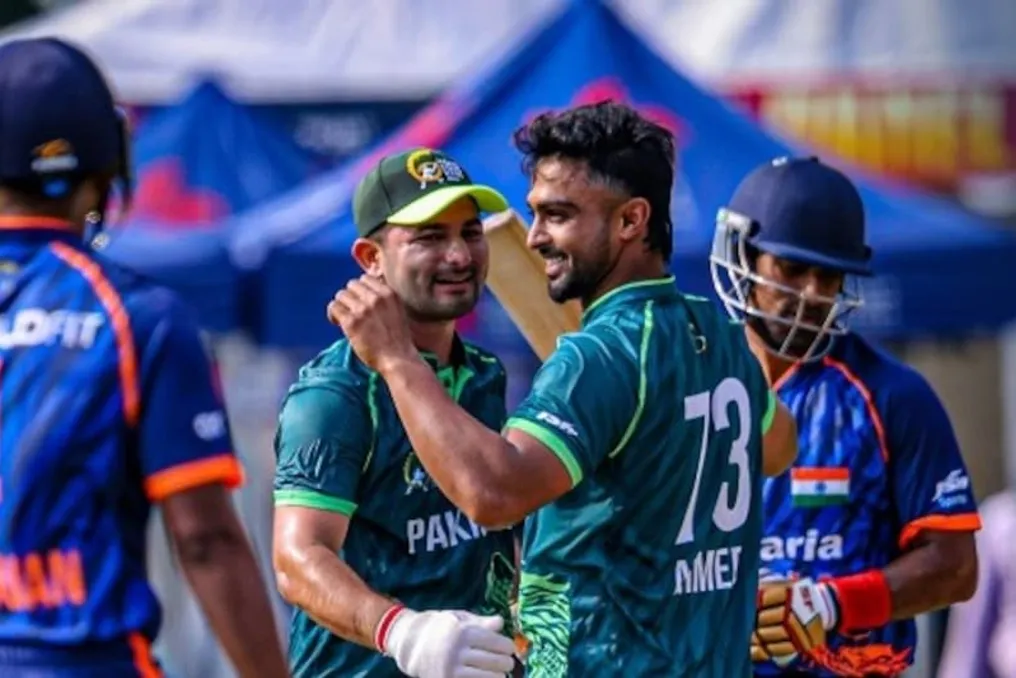
In the Hong Kong Sixes 2026 match between India and Pakistan, the neighboring country secured a convincing victory over the Indian team with a score of 4 wickets. The game, played in Group C at the Mission Road Ground in Hong Kong on Friday, October 30, concluded with Pakistan reaching the target of 89 runs in just 3.5 overs.

India started the game with batting, scoring 88 runs and losing five wickets in six overs. Pakistan decided to start with bowling after winning the toss. India's start was not the most successful: Rahul Tripathi was dismissed after scoring only 9 runs. Then Nitish Rana was forced off the field after scoring 19 runs off 14 balls.

However, Shashank Singh demonstrated an impressive attack, actively countering the Pakistani bowlers. He scored 40 runs off just 11 balls, including five sixes. A key moment was the partnership between Shashank and Nitish Rana, which brought in 57 runs off 18 balls for the second wicket. Ti Natarajan remained on the field without being out, scoring 12 runs. Thus, India finished its innings with a score of 88/5 in 6 overs. From Pakistan's side, Abdul Samad took two wickets, conceding 10 runs in one over.

The Pakistani team, which came onto the field aiming to score 89 runs, showed an aggressive attitude from the beginning. Captain Abbas Afridi changed the course of the match by hitting five sixes in Crunal Pandya's very first over. In the first two overs, Pakistan scored 59 runs. Quaid Nafe also played brightly, scoring 41 runs off just 12 balls, which included two fours and five sixes.

Despite Quaid Nafe's performance, Pakistan's pace did not slow down. Irfan Khan sealed the victory for Pakistan by hitting a magnificent six off Rahul Tewatia, allowing them to reach the winning total in just 3.5 overs. Abbas Afridi was named player of the match for his outstanding performance; he scored 35 runs off 8 balls in the attack, including five sixes and one four, and also conceded 10 runs in one over while bowling.

This victory allows Pakistan to make a strong comeback in the tournament, as they previously lost their opening match against the UAE by a narrow margin. India, in turn, will play its last group match against the UAE on October 31.

It is worth noting that the Indian team is currently participating in a five-match T20 series against New Zealand. Following this, five ODI matches are scheduled, followed by a two-Test match series. On the other hand, Pakistan is hosting a three-match ODI series against England and Sri Lanka and has already secured a spot in the final thanks to its brilliant victories.

Shadab-Rauf helped Pakistan achieve historic victory over England in ODI Tri-series
Read more
www.aajtak.in

Shadab-Rauf helped Pakistan achieve historic victory over England in ODI Tri-series

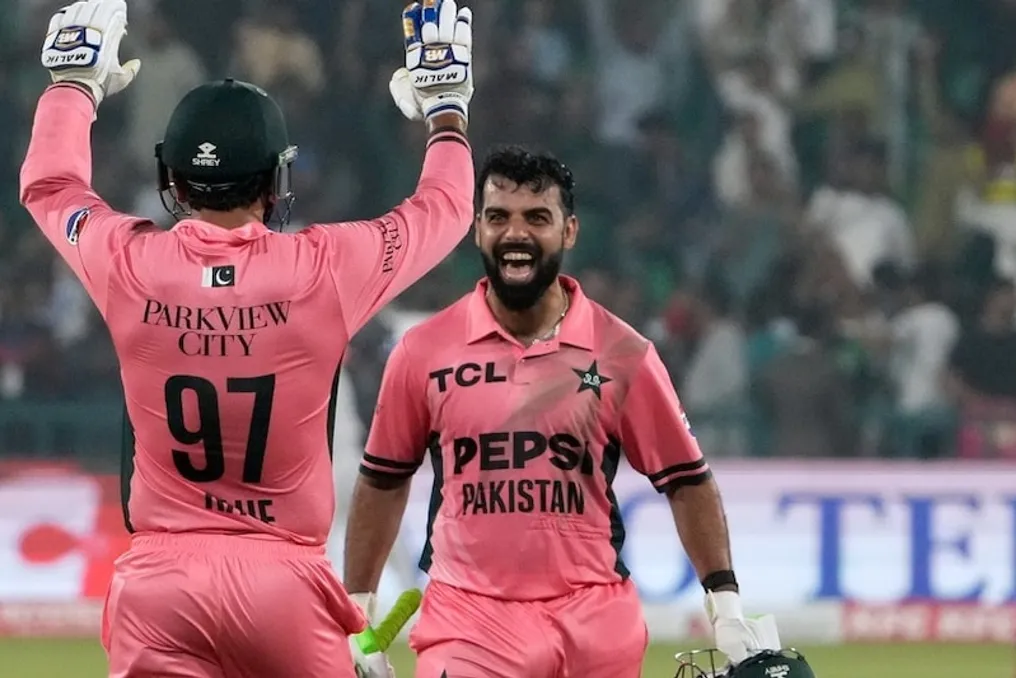
In the ODI Tri-series match between Pakistan and England, held on October 25th at Gaddafi Stadium in Lahore, Shadab Khan played a decisive innings, turning a defeat into a victory for the Pakistani team.

Pakistan lost nine wickets with a score of 154 runs, and an additional 88 runs were needed for victory. However, Shadab, along with Haris Rauf, managed to change the course of the game by adding 89 runs without loss of wicket for the tenth wicket, securing the win for Pakistan and qualification for the Tri-series final.

Shadab Khan scored 113 runs without loss of wicket off 96 balls, including 13 fours and five sixes. This marked his first century in ODI format. Haris Rauf, batting at number eleven, supported him by scoring seven runs.

Despite England having the last wicket remaining, both batsmen maintained composure under pressure. Ultimately, Rauf hit the winning four, bringing an unforgettable victory to Pakistan.

The partnership between Shadab Khan and Haris Rauf became the largest partnership in successfully chasing a target in ODIs for the tenth wicket. Previously, this record belonged to Derek Murray and Andy Roberts, who scored 64 runs without loss of wicket against Pakistan during the 1975 World Cup.

During his innings, Shadab reduced the pressure of the target by constantly hitting boundaries. Rauf, on the other side of the field, defended his wicket and played thoughtfully when necessary. Their combined play completely changed the course of the contest.

Prior to this, Pakistan captain Shaheen Shah Afridi played a key role in restricting England's score to 241 runs. He took four wickets for 46 runs, while Rajaulullah, making his ODI debut, secured two wickets.

England's innings started poorly, and the team lost three wickets for only 19 runs. After this, Ben Duckett stabilized the game, scoring 105 runs off 111 balls. Sam Curran earned 42 runs, and they formed a partnership of 93 runs for the fifth wicket. In the end, Gus Atkinson added 36 runs without loss of wicket, taking the team to an acceptable total.

Pakistani cricket personality Basit Ali highly praised India's performance after the match against New Zealand
Read more
www.aajtak.in

Pakistani cricket personality Basit Ali highly praised India's performance after the match against New Zealand

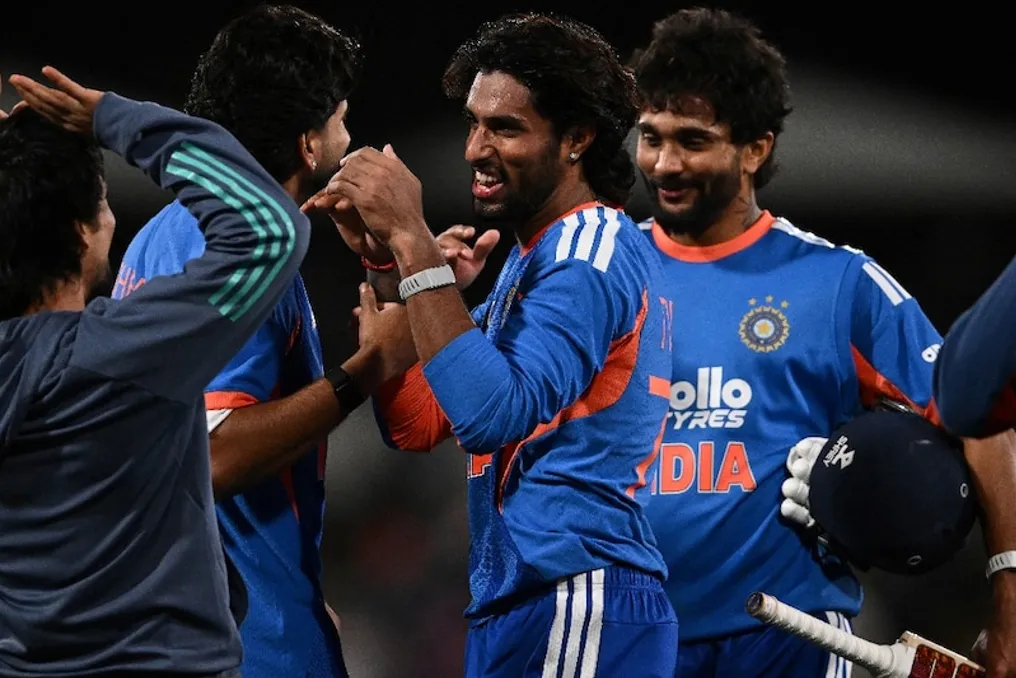
Following a tense T20 match between India and New Zealand in Christchurch, Pakistani former cricketer Basit Ali expressed high praise for the Indian team's performance on his YouTube channel. Analyzing the game, Basit Ali named young batsman Tilak Verma as the true hero of this victory, noting that thanks to him, India managed to win a match that seemed lost.

In his show, Basit Ali stated that when India's early wickets fell quickly, there was a feeling that the game had completely gotten out of control. It was at this moment that Tilak Verma demonstrated great skill by stabilizing the course of the match. He noted that Tilak did not take risks trying to hit the ball for big boundaries, but instead effectively used singles, doubles, and small boundaries.

He also positively commented on Captain Shreyas Iyer's decision to send Vaibhav Suryawanshi to the third position. Nevertheless, Basit Ali believes that the team composition could change if Ishan Kishan is able to return to fitness. Furthermore, Basit Ali highly praised the contribution of young Pakistani players to the sport, commending Naman Dhir and Nitish Kumar Reddy for scoring strong runs in the lower order, which helped turn the tide of the game.

Basit Ali criticized the captaincy of New Zealand's Mitchell Santner, stating that due to some tactical errors, New Zealand let go of a match that was theirs. Although Mitchell Santner played strongly with four wickets taken, as a captain he made decision-making errors. Basit Ali sharply hinted that the New Zealand players would think about how the match slipped away from them. He emphasized that in limited-overs cricket, the match does not end until the last ball is bowled.

In Basit Ali's opinion, this young Indian lower middle order not only proved its competence but also demonstrated how strong India's squad depth is.

Popular