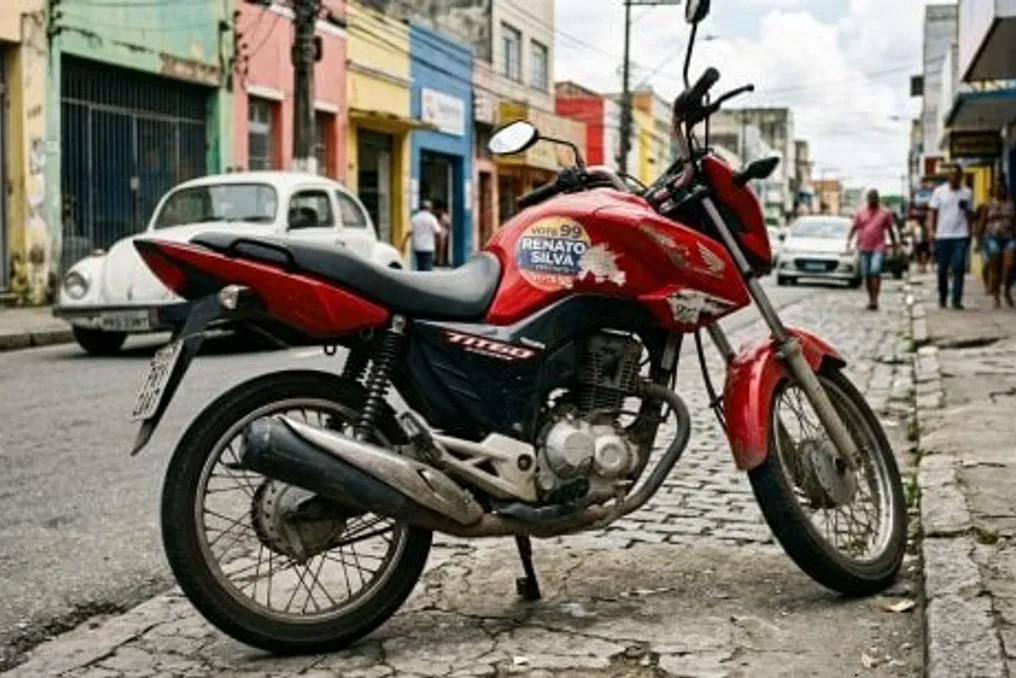
After elections, promotional stickers left over from campaigns often remain on vehicles. In addition to cars, stickers on motorcycles can also cause problems when attempting to remove them. Upon forceful peeling, there is a risk of damaging the sticker itself, adhesive sticking to the paintwork, and what seemed simple turning into a need for rework.
According to engineer, expert, and automotive aesthetics specialist Kleber Bertotto, owner of Tuio Car Detail, specialized products for removing adhesive material are now easily available. However, the issue lies in selecting and correctly applying this product.
Currently, many agents are available on the market for such tasks, but caution must be exercised because some of them can damage the paintwork to the extent that repainting will be required," explained the specialist. The solution is not in strength or aggressive products, but in using the appropriate agent. Adhesive and resin removers soften the sticker, allowing it to detach on its own without needing to be scraped off. Acidic compounds used in automotive aesthetics are intended for other purposes, such as intensive wheel cleaning, and degreasers are for grease. Neither of these products is designed for glue, and both can leave stains on paint and plastic.
More caution is required on a motorcycle than on a car because almost all elements onto which stickers are applied are made of plastic. If the remover is left on too long, it will begin to affect the fairing lacquer. And on black untreated parts—such as wings, protective elements, or covers—it can cause drying and leave a whitish surface.
Those who start removal incorrectly often face issues even after completely removing the sticker from the motorcycle. Bertotto asserts that in such cases, the same specialized products that should have been used initially solve the problem. In more complex situations, light polishing may be necessary.
It is important not to confuse this polishing with rubbing anything over the surface. Polishing is the controlled removal of a microscopic layer of lacquer using a suitable paste and polishing pad. A sponge, steel wool, or sandpaper does not perform this function—they cause damage.
Scissors, blades, steel wool, and kitchen sponges, especially the green side, are the most common mistakes. All of them scratch or sand the motorcycle's paint. Tuio notes: "This is poison for any type of paint; it is dangerous even for glass. Alcohol is another enemy. If you use alcohol, you will remove the glue, but then you will leave stains on the paint."
The residue left after removal depends on the material that was adhered. "There are millions of types of glue. There is the most expensive sticker, which is usually not used in campaigns: it leaves no traces and peels off easily," explains Tuio. During an election campaign, the standard practice is the opposite: "Usually, the cheapest sticker is placed. If it has a paper base, it crumbles, so caution is needed during removal."
Regarding stains on the paint, in his opinion, the probability of this is less than it seems, except for one specific case. "I think there is no time to leave a stain on the paint. If the paint was applied recently, and a sticker was placed on top of it, discoloration may occur. Then you can try to conduct professional polishing to solve this problem."
Every case is unique. In some, removal will be simple, while in others, serious cleaning of the motorcycle may be required. Bertotto concludes: "It is not a magic cure. If you do not know, or do not feel confident, I recommend contacting a company, an aesthetic studio, to perform this removal correctly."