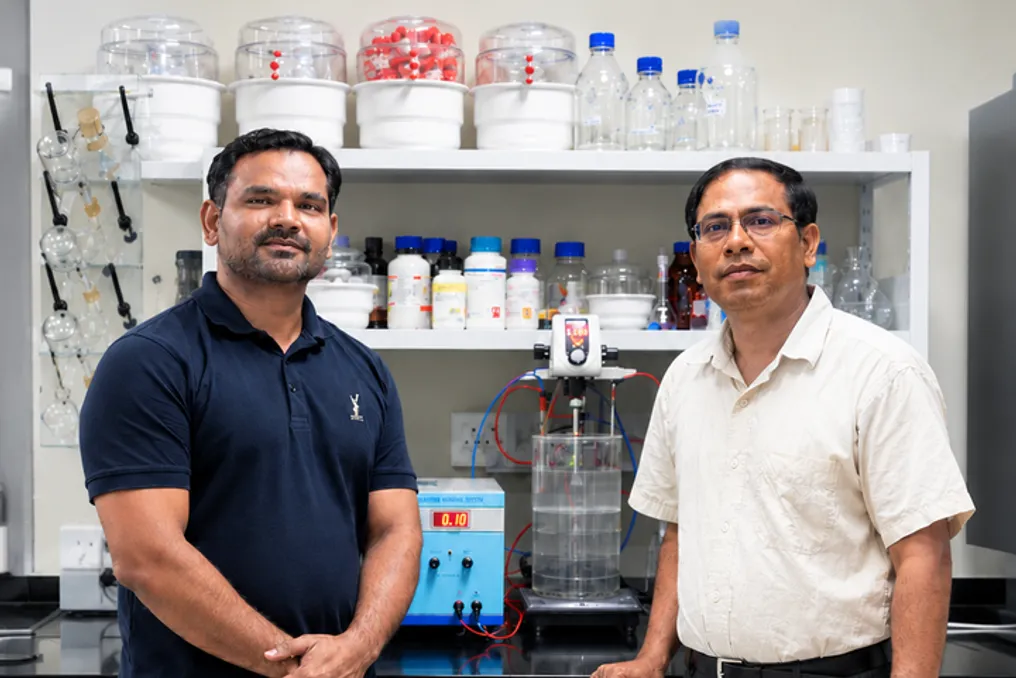
Despite its crystal-clear appearance, a glass of groundwater can contain two invisible pollutants: fluoride and arsenic. Researchers from IIT Guwahati have created a reactor capable of removing both substances in just a few minutes.
Millions of people in India rely on groundwater for drinking. According to a government report from December 2023, fluoride contamination was found in 469 districts across 27 states, and arsenic contamination in 230 districts across 25 states.
Neither of these pollutants reveals its presence through color, taste, or smell. Long-term exposure to arsenic can lead to skin, vascular, and nervous system diseases, as well as cancer. Excessive fluoride content causes skeletal fluorosis, which results in joint stiffness.
The scale of the problem is alarming: a 2024 review showed that 80 million Indians are exposed to arsenic above WHO permissible limits, and 120 million to excessive fluoride. Both these pollutants require effective and accessible removal methods.
Arsenic and fluoride behave differently during traditional water treatment, and they also compete for the same binding sites. This means that a method successful in removing arsenic might leave fluoride, and vice versa.
Professor Mihir Kumar Purkait and his team at IIT Guwahati modified electrocoagulation—a purification method that uses electricity and metallic electrodes. Their innovation lies in rotating the aluminum anode instead of keeping it stationary.
When the electrode rotates, it mixes the water, improves contact with contaminants, and constantly renews the surface. This prevents passivation—the formation of a coating on stationary electrodes that gradually reduces their efficiency. Electricity releases aluminum ions, which react with hydroxide ions to form tiny particles of aluminum hydroxide called floc. Arsenate and fluoride attach to these particles through adsorption, coagulation, and precipitation, allowing them to be removed.
When tested on real waters from Assam, the reactor removed 98.20% of arsenate and 91.46% of fluoride within three minutes under optimal conditions. The processing cost is estimated at 18–58 rupees per 1000 liters.