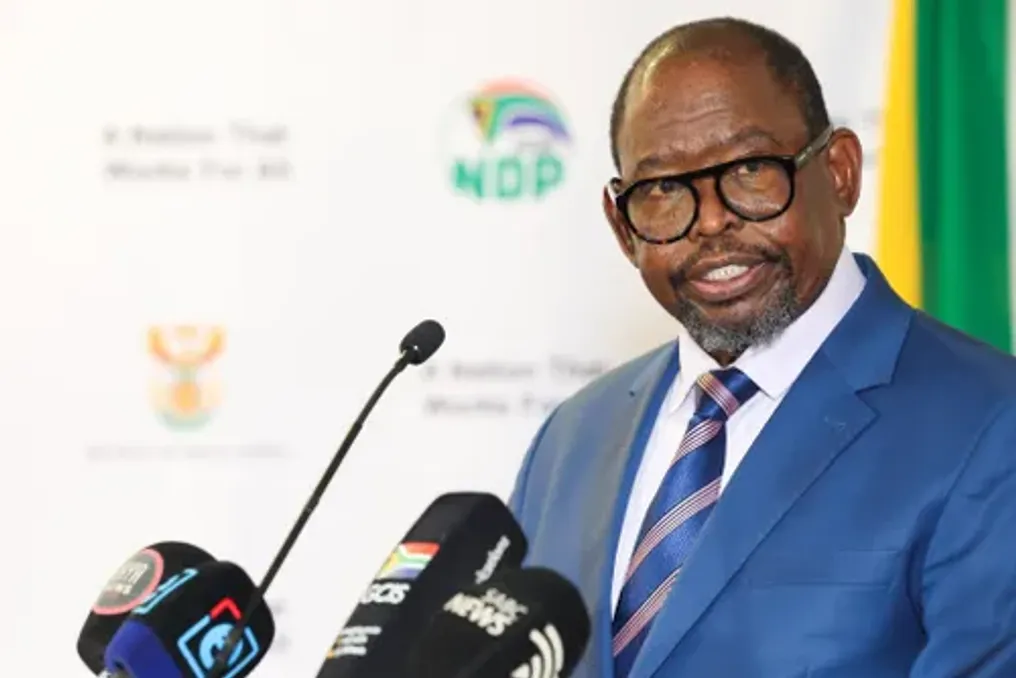
The city of Johannesburg is facing a serious financial crisis that requires deeper solutions than mere political promises. In July, the city, along with 69 other municipalities, received notification of the suspension of the Equity Distribution tranche from the National Budget. According to the Minister of Finance, the reason was financially inefficient management, adoption of an unjustified budget, failure to repay debts to creditors (mainly Eskom and Water Boards), and a R10 billion deal with staff, which the Minister deemed 'unacceptable.'
This incident is considered one of the worst possible for the municipality five months before municipal elections. Although the city began addressing problems, including repaying debt to Eskom, and eventually received the allocated funding, claiming that the economic capital of Mzansi has completely emerged from the crisis would be an exaggeration.
The question arises as to what the new mayor and their Mayoral Committee will do, given that infrastructure debt exceeds R200 billion, the city collects less than 95% of due rates and fees, and the population continues to grow while being ambitious yet under economic pressure.
The article's author suggests considering these issues collectively to assess whether the city possesses sufficient resources to fulfill its duties to residents, whether it has enough capacity for effective governance, and if political parties and candidates have convincing answers for voters.
Analyzing the situation reveals a tension between the issue of management and accountability on one hand, and a structural fiscal problem on the other. This problem is characteristic of most municipalities, with 66% in financial difficulty. Add to this a decade of leadership instability in Joburg, constant billing crises, frequent power and water outages in the same areas, and the problem of cross-subsidization, which is difficult to solve without creativity. Therefore, voters demand better leadership.
Any candidate who promises to solve the financial crisis without fundamentally altering the financing model offers only a partial solution. The author believes that beneath the loud headlines about mismanagement, looting, 'state capture,' and incompetence lies a deeper problem: in 1998, a municipal financing model was developed for a dream society, not for the existing society.
The reality is that 35.9% of the city's workforce is unemployed, which is higher than the national rate of 33.6%; 40% of the population lives on meager social benefits, and two out of three residents earn less than R3000 per month. The question arises as to where residents will get the money for the services they consume. It is also noted that over 76.6% of surveyed residents reported unreliable water supply, and 70.3% reported poor road and drainage conditions.
It cannot be assumed that neighbors are not using municipal services due to payment problems. It must be remembered that you and I together owe 70% of the R484 billion owed to municipalities. Furthermore, in the financing model of provinces and municipalities, the same resident is viewed differently: 95% of provincial budgets are financed from the national fund, most healthcare and education expenses are subsidized, whereas municipalities receive less than 10% of expenses from the same source, requiring residents to cover the remaining 90%.
In light of this, the author suggests that candidates answer five key questions: what is the plan to repay debt to Eskom, how will the billing crisis be resolved, what is the position on increasing transfers from the national fund (additional discretionary funding or targeted grants), how to protect residents from the rising cost of living without additional transfers, and what is the plan for sustainable servicing of both solvent and insolvent residents.
Previously, during a survey before the presentation of the White Paper on Local Government, 80% of residents stated that municipalities should improve billing, debt collection, and cut wasteful spending, while 37% supported an increase in national transfers. The author concludes that residents best understand their problems and have solutions, and the task lies with the leadership, which is ready to make difficult decisions.