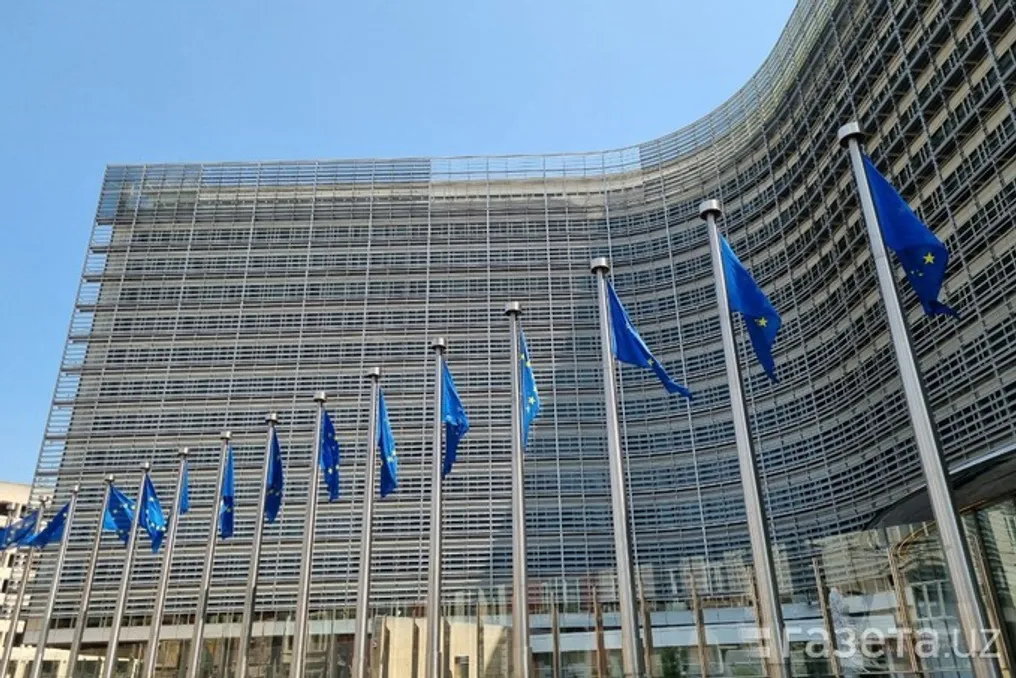
Eldor Aripov, Director of the Institute of Strategic and Interregional Studies at the President of Uzbekistan, stated that the concept of Central Asia's strategic autonomy should not imply the need to choose between external partners, but rather should increase the region's spectrum of opportunities.
Speaking at the first Forum of Analytical Centers 'Central Asia — European Union' in Brussels, Aripov noted that Central Asia is no longer viewed solely through the prism of Russian, Chinese, or Afghan influence, gaining its own strategic significance. At the same time, closer ties with the European Union should contribute to expanding the region's access to investments, technologies, markets, and transport routes, rather than imposing a choice between external players.
Central Asia gains strategic importance on its own merits
Previously, international interest in Central Asia largely depended on its proximity to Russia and China or its role in the context of Afghanistan. However, changes are now evident: Central Asia's economy demonstrates annual growth exceeding 6%, which is roughly double the global average. By 2050, the region's population is projected to reach 100 million people.
Furthermore, the region is strengthening its position as an important transport hub amid problems with traditional maritime, Middle Eastern, and northern routes. Central Asia also possesses large reserves of resources vital for modern technology and industry. Aripov specifically highlighted the strengthening of internal connectivity among the region's countries, as they increasingly put forward a common agenda when interacting with external partners. More than ten 'Central Asia plus' formats already exist, leading to the development of common infrastructure and deepening economic interdependence.
According to Aripov, the region is transforming from a collection of five separate national markets into a more integrated economic space, making it a more reliable and attractive partner for the global community and Europe.
Principles of Partnership with the EU
Aripov believes that cooperation between Central Asia and the EU should be based on three key principles. The first is complementarity, meaning that interaction with Europe should not be seen as replacing the region's existing relations with other partners. He emphasized that the goal is to add new opportunities, not replace old ones, stressing that strategic autonomy should mean 'more choice.'
The importance of cooperation with the EU lies in increasing the number of markets, routes, sources of investment, and technologies for Central Asian countries. At the same time, the new partnership should not lead to replacing one form of dependence with another. The second principle is resilience to external shocks, which for Central Asia means the ability to maintain development pace and independence even in an unstable world. An example could be cooperation with the EU in renewable energy, reducing dependence on fossil fuels, as well as creating legal opportunities for Central Asian citizens to find employment in European states, which will help diversify migration flows.
The third principle is long-term commitment. Although the geopolitical situation has increased Europe's interest in the region, Aripov insists that rapprochement should continue regardless of the factors that initially accelerated it. He noted that truly strategic partnership must have value independent of current political trends, requiring projects designed for decades, not just the next political cycle.
Key Areas of Cooperation
One of the most important aspects mentioned by Aripov is the formation of joint value chains. In light of the growing interest of the EU in Central Asia's critical minerals, cooperation should not be limited to a model of raw material export followed by processing in Europe. Deeper cooperation is necessary, covering geological exploration, environmentally responsible extraction, production, research, and human resource training.
The goal of this interaction should be to unite Central Asia's industrial development with Europe's economic security. Simultaneously, there is a need to simplify the entry of Central Asian products into the European market by supporting certification, compliance with technical standards, and enhancing the competitiveness of local businesses.
Water and climate issues are also highly significant. Since rising temperatures, glacier melt, and stress on water resources are already affecting agriculture and energy, the EU can provide expertise, financial tools, and technologies for implementing water-saving methods and modernizing irrigation. In the transport sector, the EU has included the Trans-Caspian Transport Corridor in its Global Gateway priorities, but Aripov stressed that the effectiveness of these projects is determined not only by the length of the routes or the volume of cargo, but by how quickly, cheaply, and predictably companies can move goods.
Achieving this efficiency requires improving border and customs procedures, digital system compatibility, and better coordination of transport infrastructure. Furthermore, cooperation must address human capital. Aripov reminded that management and infrastructure development skills take much longer to develop than building the objects themselves. Next steps could include joint educational programs, research centers, and professional training, including in AI and digital technologies.
Labor mobility is also important. Given the labor shortage in some European sectors and the availability of labor resources in Central Asia, the parties can develop cooperation in recognizing qualifications, language training, and creating legal employment channels.
Afghanistan and Regional Stability
Addressing the future of Central Asia, Aripov specifically highlighted Afghanistan, stating that it is impossible to seriously discuss the long-term development and transport connectivity of the region while ignoring Afghanistan. For the countries of the region, the situation in Afghanistan is not an abstract security threat but a direct problem that directly affects the economic prospects of the entire Central Asian space.
Therefore, Uzbekistan, according to Aripov, consistently promotes an approach that combines security issues with economic development, education, and the creation of practical opportunities for the residents of Afghanistan. Achieving long-term stability, he said, is not possible through isolation but requires closer economic ties with neighboring states.
What are the next steps?
The main criterion for evaluating the new stage of relations between Central Asia and the EU will be the transition from declarations to real practical implementation. Aripov emphasized that Central Asia and the European Union have sufficient strategies and political plans, but the decisive factor now is their realization.
For Central Asia, cooperation with the EU must expand its opportunities without limiting ties with other partners. In turn, for the EU, the result of the interaction should be a more stable and economically strong Central Asia capable of independently realizing its priorities. If the cooperation yields tangible results in the fields of trade, transport, education, and human capital, the strategic nature of the relationship will be evident in practice, not just in documents.