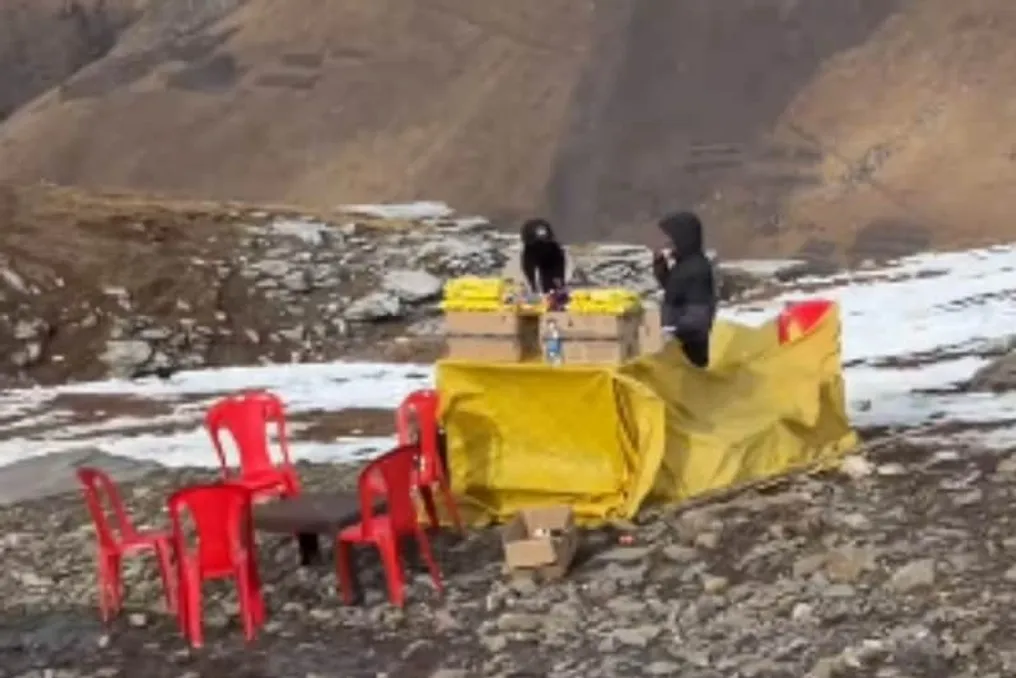
Sale of instant noodles and tea in the mountains brings significant income even in the low season
Read more
Aaj Tak
www.aajtak.in

Sale of instant noodles and tea in the mountains brings significant income even in the low season

For people visiting the mountains, the taste of instant noodles and tea becomes part of the journey. In cold weather, tourists often stop to enjoy a hot bowl of noodles. However, the question arises about what daily income a noodle vendor by the roadside in the mountains can earn. The story of the noodle seller at Rohanga Pass in Himachal Pradesh is currently being actively discussed on social media.

It is claimed that even in the low season, his shop generates about 14-15 thousand rupees in daily revenue. Nevertheless, it is incorrect to consider this amount as net profit, as it includes expenses for goods delivery and shop maintenance. This fact was recorded and published by a tourist on social media.

Content creator Harsh Chauhan visited Rohanga Pass. During his visit, he spoke with the noodle vendor about his business. When Harsh asked about the sales volume, the vendor noted that it was the low season. After a follow-up question about sales specifically during the low season, the vendor stated that he sells approximately 60 to 70 bowls of noodles daily.

The price of one bowl is 100 rupees. Additionally, about 200 cups of tea are sold daily at a price of 40 rupees per cup. The shop also takes orders for eggs, although the quantity remains small.

According to the vendor's data, selling 60-70 bowls of noodles brings in 6,000 to 7,000 rupees daily. Meanwhile, sales of 200 cups of tea generate about 8,000 rupees. Thus, the total estimated revenue reaches 14,000–15,000 rupees per day. This amount does not include income from egg sales. Harsh Chauhan shared a video of this conversation on social media, emphasizing that these figures pertain to the low season, and questioned what the business volume would be during peak tourist season.

Social media users discussed not only the sales volumes but also the difficulties of operating in places like Rohanga Pass. Many noted that delivering goods to such locations is not easy. Transportation costs are related to the fact that goods such as noodles, tea, eggs, and gas cylinders must be delivered from Manali up the slope.

Some users also mentioned that water has to be brought from afar, and work is conducted in cold and windy conditions. In such weather, gas consumption for cooking may increase. One user stated that delivering goods from Manali to the shop costs approximately 2,000 rupees, although this expense is based on a claim made on social media.

Through this conversation, Harsh Chauhan wanted to demonstrate that the potential of a business is determined not by its size, but by its location, customer needs, and method of operation. The noodle and tea shop at Rohanga Pass serves as such an example. However, a daily revenue of 14-15 thousand rupees does not equate to equivalent profit, as the seller's actual costs and savings remain unknown.

Similar stories

Engineer Earning 100 Thousand Rupees in Village Considers Moving to City Due to Boredom
Read more
www.aajtak.in

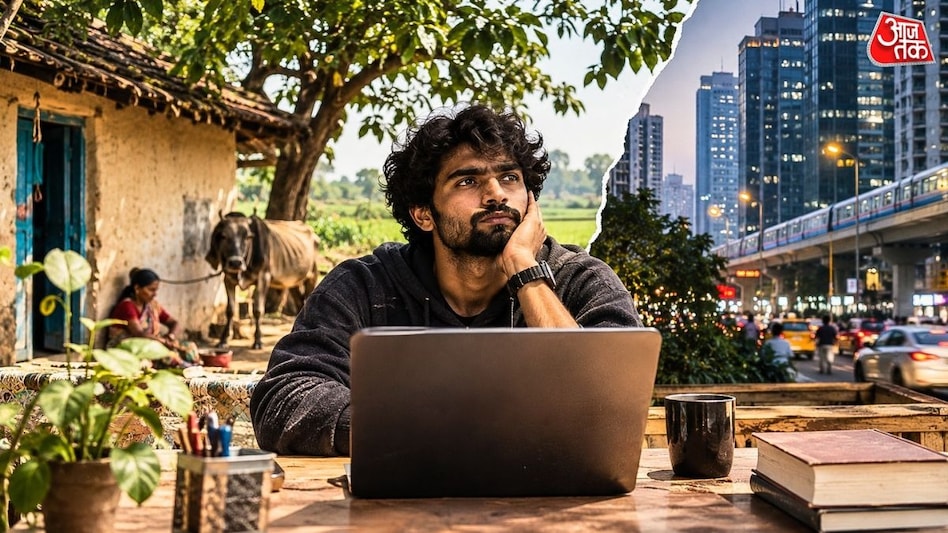
Engineer Earning 100 Thousand Rupees in Village Considers Moving to City Due to Boredom

Many remote employees face the need to overcome various difficulties to work from home or in a village, away from the hustle and bustle of big cities. While this lifestyle is favorable for some, others experience significant challenges. Nevertheless, it allows for savings on rent and many daily expenses. However, the question arises: is the income and savings high enough for a happy life?

The story of a software engineer who earns 100 thousand rupees monthly while living in a village raises exactly this question. Despite a good salary and low expenses, he is tired of village life and is now considering moving to the city. The engineer reached out to Reddit users for advice to find out more about the situation.

The software engineer shared his problem with users on the subreddit r/developersIndia. He stated that he has about a year of experience and works entirely remotely. Since he lives with his family in a village, he does not have to pay rent, and other expenses are limited. Because of this, he can save most of his monthly salary of 100 thousand rupees. His concern, however, is not related to work, but rather that village life seems too monotonous to him, despite the financial benefits.

In his Reddit post, the engineer noted that there are few options for entertainment and leisure outside the home in the village. There are no gyms, cinemas, or cafes. Moreover, there is no access to food delivery services like Swiggy or Zomato. He added that sometimes he wants to eat something delicious, watch a movie, or just take a walk, but there are no such places in the village. His daily routine consists of waking up, working, using his phone, and sleeping.

To get out of this situation, he is considering living in the town of Kota, located about 80 kilometers from his village. There, he can find amenities such as a gym, cinema, and restaurants. However, moving to the city means increased expenses for rent, food, and other household needs. He is also concerned that his savings might not remain the same after the move. Furthermore, since the job remains remote, he is unsure how much his daily life will change in the city.

The engineer's post sparked various opinions among Reddit users. Some advised him to move to the city and lead such a lifestyle. Others suggested using the freedom afforded by remote work to travel and work in different places. One user advised him to spend a few days in the mountains or by the sea. Another suggested that he could try living in the city for a while if he wanted to experience city life.

Uzbekistan's foreign trade revenue reached $65.4 billion in 9 months
Read more
sputniknews.uz

Uzbekistan's foreign trade revenue reached $65.4 billion in 9 months

According to the National Statistical Committee, Uzbekistan's foreign trade revenue for the period from January to September 2026 amounted to $65.4 billion. This figure exceeds the same period in 2025 by $3.9 billion, which represents a growth of 6.3 percent.

However, the main growth was driven by imports. Imports increased by $5.36 billion compared to last year, reaching $39.6 billion. At the same time, exports decreased by $1.49 billion, totaling $25.8 billion.

As a result of this imbalance, the negative balance in foreign trade reached $13.7 billion. Nevertheless, if gold is excluded, the export of goods grew by 31.6% compared to the previous year, reaching $13.3 billion.

Young Generation (Gen Z) Can Get Rich by Investing Just 500 Rupees with the Right Strategy
Read more
www.aajtak.in

Young Generation (Gen Z) Can Get Rich by Investing Just 500 Rupees with the Right Strategy

The dream of wealth for Generation Gen Z is no longer unattainable. Thanks to the internet, the ability to start investing at an early age, and the power of mutual funds, they have every chance of success. Even a small amount, such as 500 rupees monthly, can form a large capital over time, but this requires the right approach and discipline.

Regular Systematic Investment Plans (SIPs), the effect of compounding, and increasing the SIP amount over time (step-up SIP) play a key role in this strategy. An annual increase in the investment amount can significantly change the final sum after 20 or 30 years. At the same time, it is crucial to continue investing patiently, without succumbing to panic during market downturns.

An example of this strategy is illustrated by the story of Rahul, who is 21 years old. After graduating from college, he was interning at a small company. After covering monthly expenses, he had barely 500 rupees left. Instead of spending this money on entertainment or non-essential purchases, he decided to invest it through SIP in a mutual fund.

Rahul chose an equity mutual fund plan focused on growth. He set up automatic debits of 500 rupees on the 5th of every month. Initially, he doubted that 500 rupees would yield anything significant, but later he realized the power of compound interest in financial planning.

The mathematics of this strategy is quite simple. Rahul saves 500 rupees monthly, which is only 16 or 17 rupees per day. If this amount is invested in an equity mutual fund and assumes an average annual return of about 15%, the fund will grow over time.

In one year, Rahul's total investment will be 6,000 rupees. After five years, his total investment will reach 30,000 rupees, but thanks to compounding and returns, this amount will approach 41,000 rupees. After ten years, the total contribution will reach 60,000 rupees, and its value will grow to approximately 1.16 lakh rupees.

The effect of compounding becomes more noticeable in the long term. If Rahul continues this SIP for 20 years, his total investment will be 1.20 lakh rupees, and the fund amount will grow to approximately 7.5 lakh rupees. If he extends this for 30 years, when he turns 51, his total contribution will be only 1.80 lakh rupees, but the total fund value will exceed 35 lakh rupees.

A vital part of this strategy is the step-up SIP. This means that as age and income grow, the SIP amount should increase by a predetermined percentage each year. This increase can be 10% or 20%.

If Rahul increases his SIP of 500 rupees annually by 10%, the amount for the next year will be 550 rupees, and so on. This small change can lead to the final fund growing from 35 lakh to several crore rupees over 20 or 30 years.

Generation Gen Z needs to consider several important points in this process. Firstly, investments should be made in equity mutual funds to earn returns that can outpace inflation. Secondly, one should not panic when the market falls; during a market decline, more units are bought via SIP at a lower price. Thirdly, patience must be maintained, as compound interest requires time to show its results.

The small habit of investing 500 rupees every month can ensure the financial independence of Gen Z. Regular contributions, a long time horizon, and an annual increase in the SIP amount allow for the creation of a large capital. Today's modest investment lays the foundation for a large capital tomorrow.

Popular