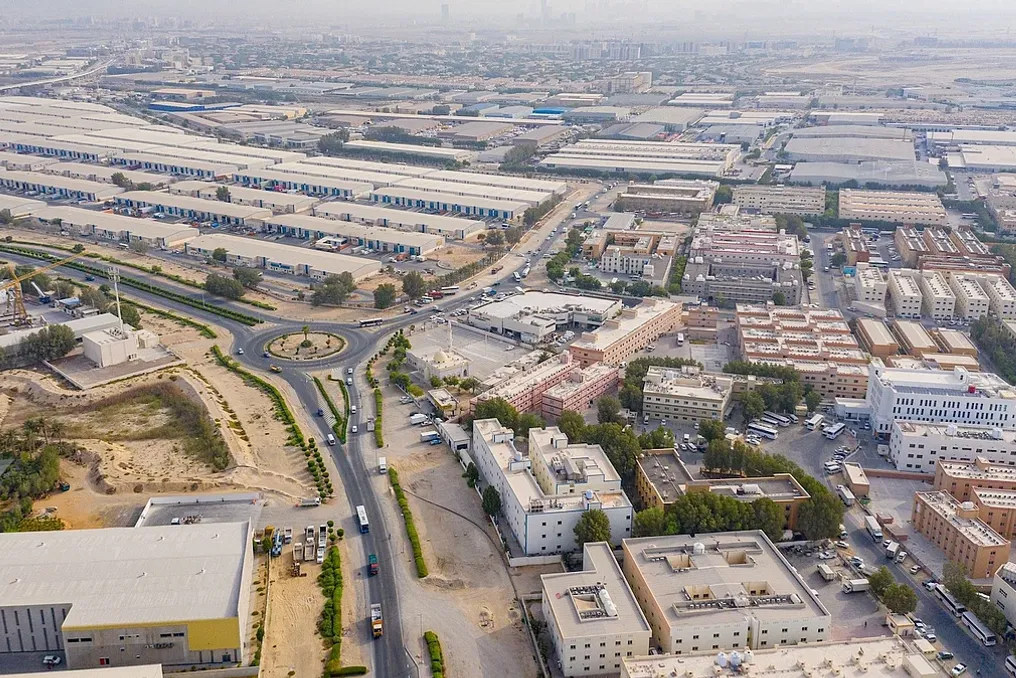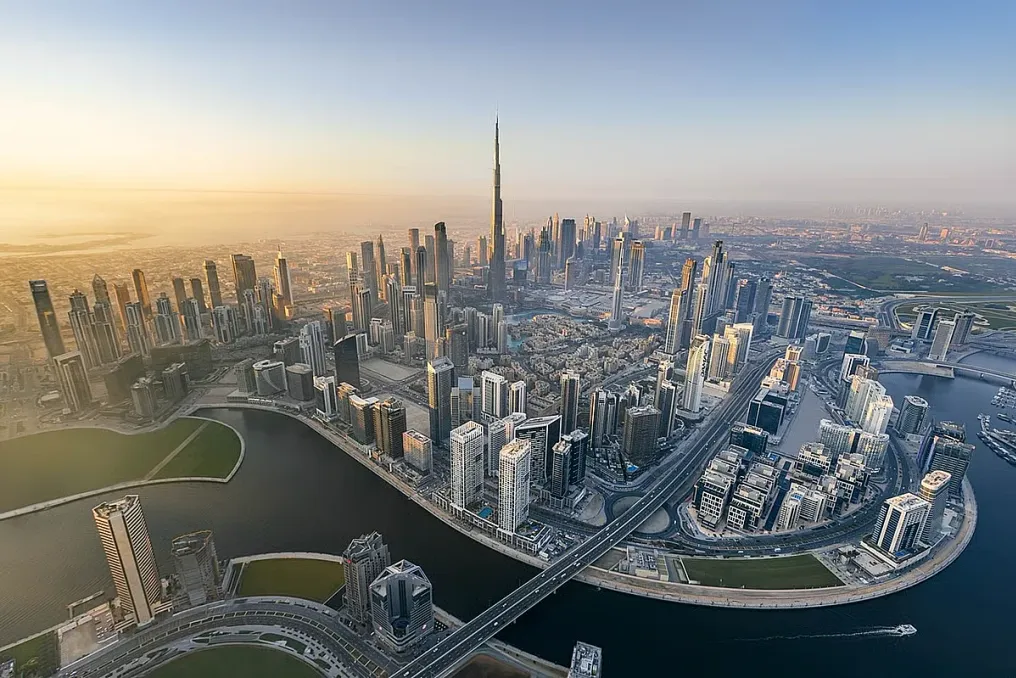
In Dubai, the share of tenants paying less is growing amid increased housing supply
Read more
Khaleej Times
www.khaleejtimes.com

In Dubai, the share of tenants paying less is growing amid increased housing supply

According to a new study by the consulting firm Cavendish Maxwell, more than one in five tenants in Dubai now pays less than they did under their previous contract. This is linked to the increase in the volume of ready-to-live housing, which gives tenants greater negotiating power.

In the third quarter of 2026, 21.4 percent of rental transactions recorded a decrease in rent compared to the previous contract, significantly higher than the 4.8 percent registered in the first quarter. Meanwhile, 38.7 percent renewed contracts on the same terms, while the share of deals with increased rates fell to 40 percent from 59.4 percent during the same period.

Cavendish Maxwell notes that this shift indicates a weakening of landlords' pricing power and an expansion of tenants' opportunities for negotiation. The average rental rate in September was 77.3 dirhams per square foot per year, which is 5.5 percent higher compared to the previous year. This sharp slowdown contrasts with the 11.5 percent annual growth recorded in September 2025. Rates initially decreased in the second quarter before recovering in the third quarter to the level of March 2026.

More than 172,000 rental contracts were registered in the third quarter. The total number of renewals was 94,300, which is 10.6 percent lower than last year, while new contracts increased by 18.2 percent, reaching 77,700.

The consulting firm predicts that the growth in the available stock will put pressure on rent growth rates in the future, especially in the apartment segment, which constitutes the largest share of completed projects. The average rental yield was 6.6 percent for apartments and 4.9 percent for villas and townhouses in the third quarter. The yield for apartments slightly decreased compared to the previous year but remains attractive against other major global housing markets.

The leaders in apartment yields were Dubai Investments Park (10 percent), International City (9 percent), and Dubai Production City (8 percent). Among villas and townhouses, Dubai Industrial City led with 6.5 percent, surpassing Jumeirah Golf Estates (5.8 percent) and Damac Hills 2 (5.7 percent).

From January to September, Dubai delivered about 38,000 residential units, which is 41.4 percent more than in the same period of 2025, exceeding the annual figures for 2023 and 2024. Only about 12,400 homes were delivered in the third quarter. Another 24,400 properties are planned for the remainder of 2026, but based on historical delivery rates, the actual number of delivered properties is expected to be between 7,300 and 12,200. The planned volume is even higher, with 136,100 units scheduled for 2027 and 155,700 for 2028, totaling 291,800.

Ronan Arthur, Director and Head of Residential Property Valuation at Cavendish Maxwell, noted that 'the reduction in launches highlights a significant slowdown in development pace caused by developer caution and regional uncertainty, leading to the postponement of some projects. Meanwhile, the volume of new units planned for delivery over the next two years is quite substantial, even considering the delivery rates.'

He added that demand absorption will depend on population growth, household formation, employment, and investment demand.

Residential sales volume reached 72.6 billion dirhams in the third quarter across 33,900 transactions, which is 13.2 percent less than the third quarter of last year and 2 percent less than the second quarter of the current year. Year-on-year, the value dropped by 47.6 percent, and volumes by 38.6 percent, resulting in transactions reaching the lowest quarterly level since the first quarter of 2024.

The average selling price was 1,644 dirhams per square foot in September, which is 2.2 percent lower compared to the previous year. This marks the first annual decline since the start of the post-pandemic recovery, after prices turned negative in August. However, prices rose by 0.3 percent quarter-on-quarter.

Off-plan deals accounted for 72.2 percent of total transactions, or 24,500 deals worth 47.1 billion dirhams, but they decreased by 41.9 percent compared to last year. Transactions in the ready market grew by 19.7 percent compared to the second quarter, reaching 9,400, although they are still 28 percent below the third quarter of 2025.

Arthur stated: 'After two years of sustained sales activity growth, transaction volumes have been declining over the last four quarters, with purchases in the third quarter of 2026 being at the lowest level since the first quarter of 2024 and more than 38 percent below peak levels recorded a year ago. Cavendish Maxwell reports a more subdued investment environment in recent months, and this latest observation underscores how regional tension continues to affect investor confidence and buyer sentiment.'

Dubai South led off-plan apartment sales with 4,776 transactions, more than 2.5 times the figure for Downtown Jebel Ali (1,865). Following them were Azizi Milan (1,283), Jumeirah Village Circle (1,153), and Dubai Residence Complex (946).

In the ready segment, Jumeirah Village Circle maintained the top spot with 1,111 apartment sales, double the figure for Business Bay (555). Sobha Sanctuary led off-plan villa and townhouse sales with 282, while Damac Lagoons led in ready villa and townhouse sales with 211.

Luxury homes priced at 20 million dirhams and above were sold in quantity 257 for 9.6 billion dirhams, a 40.5 percent decrease compared to last year. Sales of ultra-luxury homes, priced at 50 million dirhams and above, amounted to 42 transactions worth 3.4 billion dirhams, with nine properties sold for over 100 million dirhams.

Developers launched 48 projects with 15,300 units in the third quarter, which is 72.7 percent and 62.9 percent less than last year, respectively, although the launch of units more than doubled compared to the second quarter. In the first nine months, 190 projects with 49,800 units were launched, which is 67.7 percent and 65.5 percent less than the same period in 2025.

Cavendish Maxwell believes that developer caution and regional uncertainty have prompted many to postpone project launches. The company expects downward price pressure to continue until 2027, and rent growth will continue to slow down.
Similar stories

DIP Holding sets IPO price for UAE's first offering in 2026
Read more
www.khaleejtimes.com

DIP Holding sets IPO price for UAE's first offering in 2026

DIP Holding, a subsidiary of Dubai Investments, has opened subscriptions for its Initial Public Offering (IPO) on the Dubai Financial Market. The share price range is set between Dh1.10 and Dh1.15, valuing the company at between Dh9.5 billion and Dh10 billion.

As part of this offering, Dubai Investments plans to sell approximately 1.74 billion existing shares, which constitutes 20 percent of DIP Holding's total issued share capital. The IPO is expected to raise between Dh1.9 billion and Dh2 billion, depending on the final offer price.

Subscriptions will be open until November 3rd for individual investors, professional investors, eligible employees of Dubai Investments, and qualified shareholders of the parent company. The final offer price is scheduled to be announced on November 4th, with trading on the DFM planned for around November 11th, subject to regulatory approvals and market conditions.

DIP Holding aims to pay annual cash dividends of Dh700 million in 2026, Dh725 million in 2027, and Dh750 million in 2028. Based on the 2027 dividend forecast, the offer price range implies an approximate dividend yield of about 7.27 percent at the upper end and 7.60 percent at the lower end.

The company intends to distribute dividends twice a year, subject to the recommendations of the board of directors, shareholder approval, and other applicable conditions. The first post-listing dividend of Dh350 million, covering the second half of 2026, is expected in April 2027. DIP Holding clarified that eligible shareholders will receive dividends for the entire second half of 2026, not just for the period after listing.

A payment of Dh362.5 million is planned for October 2027, and another Dh362.5 million in April 2028 for two periods of the 2027 fiscal year. Regarding 2028, the company anticipates two equal dividend payments of Dh375 million in October 2028 and April 2029. From 2029 onwards, DIP Holding expects to maintain annual dividends at or above the 2028 level.

The offering is divided into four tranches: 92 percent of the shares are allocated to professional investors, 5 percent to individual subscribers. Employees of Dubai Investments and its subsidiaries will receive 1 percent, and 2 percent is reserved for qualified shareholders of Dubai Investments. Successful individual subscribers are guaranteed a minimum of 2,000 shares if they meet the prospectus conditions. Eligible employees and shareholders have a minimum of 5,000 shares if their subscriptions meet the necessary requirements.

Investors wishing to participate in the individual tranche must possess an active National Investment Number on the Dubai Financial Market. For the shareholder tranche, eligibility is determined by ownership of Dubai Investments shares as of October 28th, with the last day to acquire shares for qualification being October 26th.

The final IPO price will be determined through a book-building process based on demand from professional investors. It is important to note that all offered shares are existing shares owned by Dubai Investments; therefore, the proceeds will go to the seller, not DIP Holding.

Following the IPO, Dubai Investments is expected to retain an 80 percent stake in the company, provided the size of the offering remains unchanged. The seller may alter the size of the offering before subscription closure upon receiving regulatory approval.

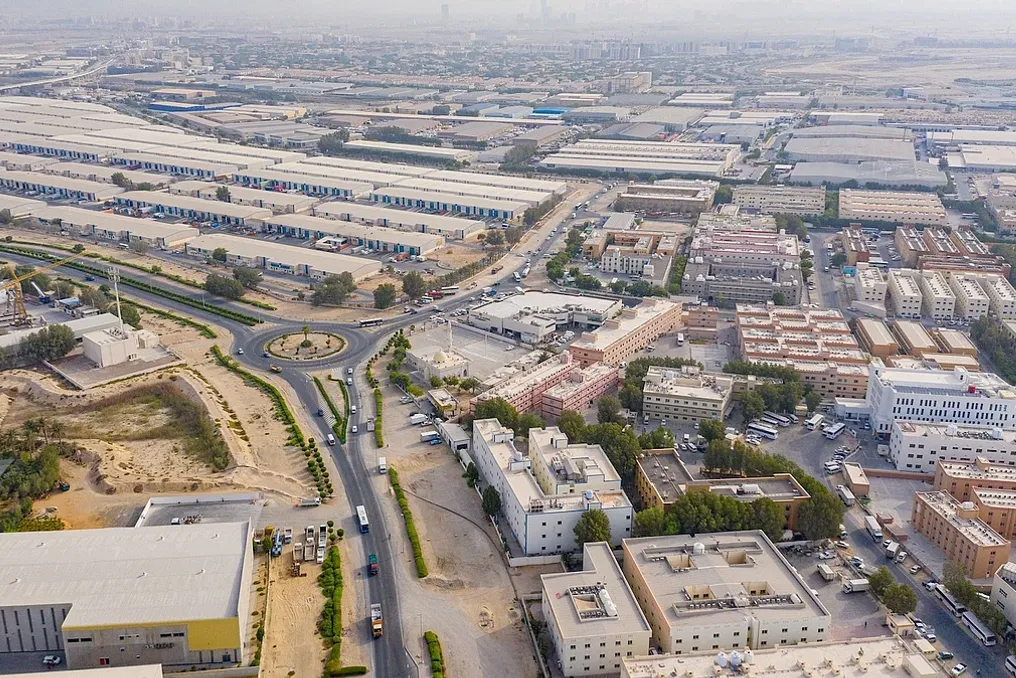
DIP Holding is registered in the Dubai International Financial Centre and owns Dubai Investments Park Development Company, which manages Dubai Investments Park. This 23 million square meter property provides long-term land leases and infrastructure services for industrial, logistics, residential, and commercial properties. The business operates as a ground lease and services platform, supporting companies and residents within one of Dubai's established mixed-use complexes.

Internal Sharia committees from Emirates NBD and Dubai Islamic Bank have issued opinions confirming the offering's compliance with Sharia principles, although investors are advised to conduct their own due diligence. Citigroup, Emirates NBD Capital, and HSBC are acting as joint global IPO coordinators. Emirates NBD is the lead receiving bank, while other participating banks include ADCB, Abu Dhabi Islamic Bank, Dubai Islamic Bank, Emirates Islamic, First Abu Dhabi Bank, Al Maryah Community Bank, and Wio Bank.

The company expects the final allocation and commencement of fund returns for the respective retail, employee, and shareholder tranches to occur on November 10th, the day before the anticipated listing on November 11th. More detailed information about the offering is available on the official IPO website: ipo.dipark.com.

Rules for Selling Real Estate with a Mortgage in Dubai: Debt Transfer Options
Read more
www.khaleejtimes.com

Rules for Selling Real Estate with a Mortgage in Dubai: Debt Transfer Options

The owner of property in Dubai who has an outstanding mortgage loan and plans to sell the real estate before returning to their home country needs to know the relevant rules. The question arises whether the buyer can take over the remaining mortgage debt, if bank approval is required, and what the legal procedure is for transferring ownership and settling or transferring the loan.

According to Dubai legislation, since the property is located in Dubai, the Dubai Mortgage Law applies. The seller (mortgagor) is permitted to sell, gift, or otherwise dispose of the mortgaged property, or create any rights on it, only upon obtaining the consent of the mortgagee and provided that the buyer agrees to assume all the seller's obligations under the mortgage agreement. The mortgagee also has the right to stipulate that the seller and buyer will jointly be responsible for these obligations. This corresponds to Article 10 of Dubai Law No. 14 of 2008 on Mortgages in the Emirate of Dubai.

There are two main options available to consider.

Option 1: Selling the Property by Settling the Existing Mortgage

The property can be sold, and the proceeds used to fully repay the existing mortgage loan. The general sequence of practical steps is as follows:

  1. Obtain a Letter of Obligation from the Bank: It is necessary to request a document confirming the outstanding loan amount and the required amount to close the mortgage, including any applicable early repayment fees or other payments.
  2. Agree on Sale Terms: A sales contract is concluded with the buyer, taking into account the existence of the mortgage, and the repayment of the loan amount is arranged.
  3. Registration of the Transaction with the Dubai Land Department (DLD): DLD provides a service called 'Registration of Sale of Mortgaged Property'. Under this service, the seller and buyer visit the Real Estate Registration Centre office with the necessary documents. The transaction is first registered to protect the interests of both parties while the mortgage repayment process is underway.
  4. Repayment of the Outstanding Loan: The DLD procedure involves the use of manager's cheques, including a cheque in favor of the bank for the debt amount and a cheque in favor of the seller for the remaining sale amount, if any. After this, a letter from the bank confirming the release of the mortgage is obtained.
  5. Completion of Ownership Transfer: After the DLD provides the mortgage release letter, it finalizes the registration procedures for the sale and the removal of the mortgage. If the buyer is obtaining a new mortgage, the corresponding financing and mortgage registration procedures must be completed.

This procedure is particularly relevant if the buyer pays for the purchase with their own funds or receives separate financing, and the seller's existing loan is settled using the sale proceeds. Exact documents and payment terms should be agreed upon with the bank and the Real Estate Registration Centre before completing the transaction.

Option 2: Transferring Existing Mortgage Obligations to the Buyer

Alternatively, permission can be requested from the bank for the buyer to assume the current mortgage obligations, if they are willing. In this case, you must approach the bank with a proposal for the deal and request confirmation on whether the buyer can take over the existing loan. The bank may assess the buyer's financial situation and require updated or replacement financing documentation. Any transfer of ownership and associated mortgage obligations must be documented and registered in accordance with bank approval and DLD requirements.

Based on the above provisions and procedures, the possibility of selling the property before returning home can be considered. The most suitable path will depend on whether the bank allows the buyer to assume the existing loan or requires the loan to be repaid using the sale proceeds. Written confirmation from the bank regarding the proposed procedure should be obtained, and actions should be coordinated with the DLD or the Real Estate Registration Centre to finalize the transaction.

For further clarification, it is recommended to contact your mortgage lender and the DLD.

Applicable Provision: Dubai Law No. 14 of 2008 on Mortgages in the Emirate of Dubai.

DIP Holding plans IPO on Dubai Stock Exchange; Dubai Investments sells 20% of shares
Read more
www.khaleejtimes.com

DIP Holding plans IPO on Dubai Stock Exchange; Dubai Investments sells 20% of shares

DIP Holding has announced its intention to conduct an Initial Public Offering (IPO) on the Dubai Financial Market (DFM). As part of this process, its parent company, Dubai Investments PJSC, intends to sell a package of existing shares amounting to 20 percent of the company's total issued share capital.

The offering includes 1,735,243,300 shares. The subscription period is expected to run from October 27 to November 3, 2026, with trading on the DFM planned for approximately November 11, subject to obtaining necessary regulatory approvals and favorable market conditions.

The offering is divided into four tranches. The first tranche (5%, 86,762,165 shares) is intended for private investors and individuals holding an active DFM Investor Number (NIN). Successful subscribers are guaranteed a minimum of 2,000 shares, with a minimum subscription amount of Dh5,000.

The second tranche (92%, 1,596,423,836 shares) is available exclusively to professional investors, requiring a minimum subscription of Dh1 million. The final offer price will be determined through book-building, based solely on orders from this tranche.

The third tranche (1%, 17,352,433 shares) is designated for employees of Dubai Investments and its subsidiaries, with a guaranteed minimum of 5,000 shares. The fourth tranche (2%, 34,704,866 shares) is allocated to Dubai Investments shareholders registered as of October 28; the purchase of these shares must be completed by October 26. This tranche also has a guaranteed minimum of 5,000 shares and a minimum subscription of Dh5,000.

DIP Holding forecasts annual dividend payments of Dh700 million in 2026, Dh725 million in 2027, and Dh750 million in 2028. Note that the 2026 figure does not include a Dh100 million dividend paid by Dubai Investments prior to the IPO in September 2026. From 2029, the company plans to make payments at a level equal to or exceeding the 2028 level, subject to board of directors recommendation, shareholder approval, and the availability of distributable reserves. The first post-IPO payment of Dh350 million, scheduled for April 2027, will cover the entire second half of 2026, allowing qualified investors to receive dividends for the whole period, not just the time after listing in November.

The company's financial performance shows growth: revenue increased to Dh960 million in 2025 compared to Dh892 million in 2024 and Dh838 million in 2023. Adjusted EBITDA reached Dh678 million in 2025, and net profit was Dh1.09 billion.

In the first half of 2026, revenue grew by 7 percent to Dh492 million compared to Dh460 million the previous year, using a metric that excludes assets transferred from operating to financial leases in 2025. Reported revenue for the first half of 2025 was Dh483 million. Adjusted EBITDA rose to Dh355 million from Dh326 million, corresponding to a margin of 72 percent versus 71 percent. Net profit increased to AED444 million from Dh418 million, and cash conversion stood at 97 percent compared to 98 percent.

Sublease income grew by 31 percent on a like-for-like basis to Dh92 million, and land rent increased by 4 percent to Dh302 million. Additional income decreased by 2 percent to Dh98 million.

Khalid Jassim Bin Kalban, Chairman of DIP Holding, noted that this listing is a 'natural next step in a journey that began more than 25 years ago.' Omar Al Mesmar, CEO of DIP Holding, stated that the IPO 'marks an important milestone,' and the company's priorities as a public entity remain 'disciplined execution, operational excellence, and predictable, sustainable performance.'

Global co-ordinators are Citigroup Global Markets, Emirates NBD Capital, and HSBC Bank Middle East. Joint bookrunners are ADCB, Arqaam Capital, Dubai Islamic Bank, and EFG Hermes, with Emirates NBD Bank serving as the lead placement agent. The Sharia committees of Emirates NBD and Dubai Islamic Bank have issued or are expected to issue statements confirming the compliance of this offering with Sharia principles.

xCube LLC will act as the stabilization manager for 30 days after trading commences, and Dubai Investments and DIP Holding will be subject to a 180-day lock-up period from the listing date.

Popular