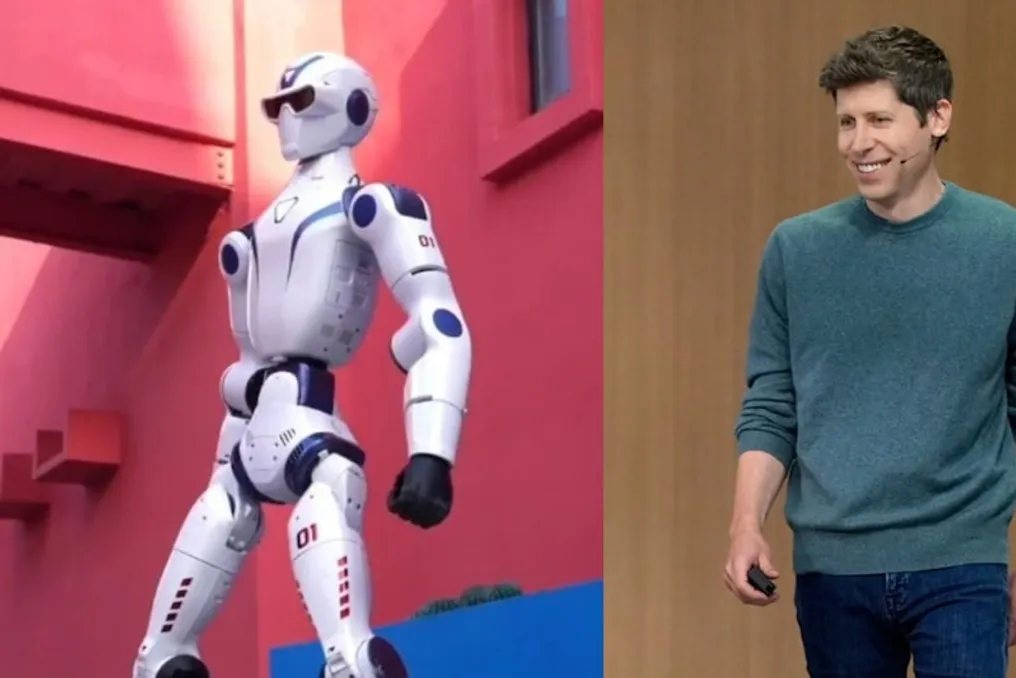
Meta develops humanoid robot prototype with Chinese company Fourier
Read more
TechNode
technode.com

Meta develops humanoid robot prototype with Chinese company Fourier

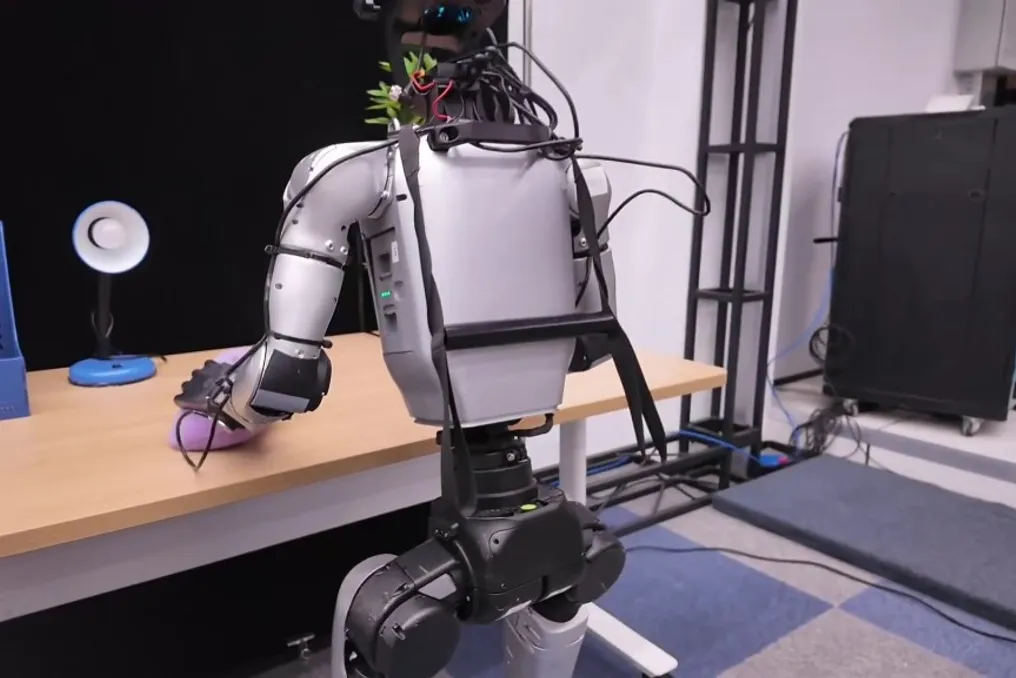
According to a report by The Information dated October 31, Meta has developed a humanoid robot prototype in collaboration with the Chinese robotics firm Fourier. Both companies are currently working on creating a second version of this device.

This project is part of Meta's broader efforts to create robots capable of performing household tasks. The first prototype, internally named Max, stands about five feet tall.

The robot's design includes speakers in the chest, a face capable of mimicking human expressions, and five-fingered hands that allow it to grasp small objects. Reports indicate that creating the first sample took the companies three months.

These prototypes are intended to support the further development of a future consumer robot. Meta has not set a release date at this time, and the existing models are used exclusively for research purposes, not for sale.

Similar stories

Alibaba's Amap Model Introduces Humanoid System Learning Full-Body Tasks from Human Movements
Read more
technode.com

Alibaba's Amap Model Introduces Humanoid System Learning Full-Body Tasks from Human Movements

Alibaba, in collaboration with Alibaba Token Hub, has introduced the λ0 model. This foundational model is designed to train humanoid robots in coordinated movements and manipulations by utilizing demonstrations shown by humans.

The system learns from first-person video recordings that are synchronized with body and arm movements. This enables robots to perform more complex tasks, combining walking, posture correction, and two-handed operations.

Researchers created the HumanVerse dataset, which includes 500 hours of recordings of people performing various actions in real-world conditions. This approach reduces the need to collect demonstrations through robot teleoperation.

During testing, the team demonstrated that λ0 achieved 62.5% success rate in tasks related to locomotion and manipulation in the real world. The project also provided researchers with configuration code for data collection equipment and data samples.

ACE Robotics releases model for robot spatial perception
Read more
technode.com

ACE Robotics releases model for robot spatial perception

ACE Robotics, founded by SenseTime co-founder Xiaogang Wang, introduced its embodied artificial intelligence model, ACE-Brain-0.6, on October 19. This model was developed through fine-tuning Qwen3.5-9B and is designed for object recognition, determining their location in images, and establishing interaction points for robots.

According to the company's statement, the model was trained using approximately one million spatial grounding samples. In conducted evaluations, ACE-Brain-0.6 demonstrated superiority over GPT-6 Astra in six out of eight grounding benchmarks.

The model scored an average of 74.53 across seven publicly available benchmarks, and achieved a result of 94.13 on the RobotGrounding test, which is based on real-world robot scenarios. These figures are higher than those of Astra, which scored 73.68 and 91.10 respectively.

OpenAI to develop humanoid robots; first demonstration expected in 2027
Read more
www.aajtak.in

OpenAI to develop humanoid robots; first demonstration expected in 2027

OpenAI, the company that created ChatGPT, plans to undertake an even larger project—the development of robots that resemble humans externally. Special attention is paid not only to these robots' ability to move but also to their capacity to understand their environment and perform tasks.

OpenAI CEO Sam Altman has hinted at a robot demonstration. This raises questions about the robot's capabilities and its expected arrival timeline.

First demonstration possible in 2027

According to a report, Sam Altman stated that OpenAI could present a demonstration of its humanoid robot in 2027. However, the company has not yet disclosed full information regarding the release date, price, or characteristics of the robot, and this does not mean it will go on sale specifically in 2027.

A natural question arises regarding the necessity of creating humanoid robots, given that machines already exist. Modern homes, offices, and factories are designed with human anatomy in mind. A robot with a structure similar to a human can function more easily in such environments.

However, simply creating a human body is not enough. The robot must possess the ability to analyze what is happening around it and make decisions about subsequent actions.

The robot's brain will be the most important

OpenAI's main strength lies in its artificial intelligence technologies. The company intends to use this technology to give the robot intelligence. For example, if the robot is tasked with picking up an object, it must first recognize the object, understand how to lift it, and then complete the task. Thus, what becomes critically important is not just following pre-set commands, but the robot's ability to make decisions based on understanding the current situation.

Competition with Tesla?

OpenAI is not the only company participating in the humanoid robot race. Tesla, led by Elon Musk, is also working on its Optimus robot. Other companies are also advancing this technology.

Currently, complete information about the OpenAI robot is unavailable. It remains to be seen what the company will demonstrate in 2027 and how effectively its robot will be able to operate in the real world.

Popular