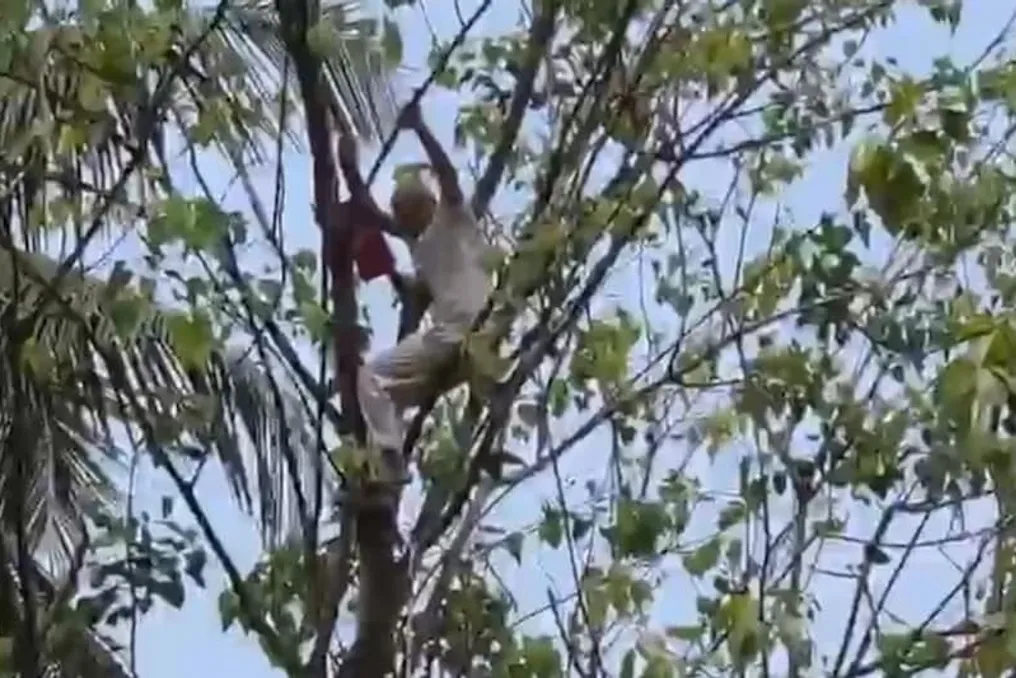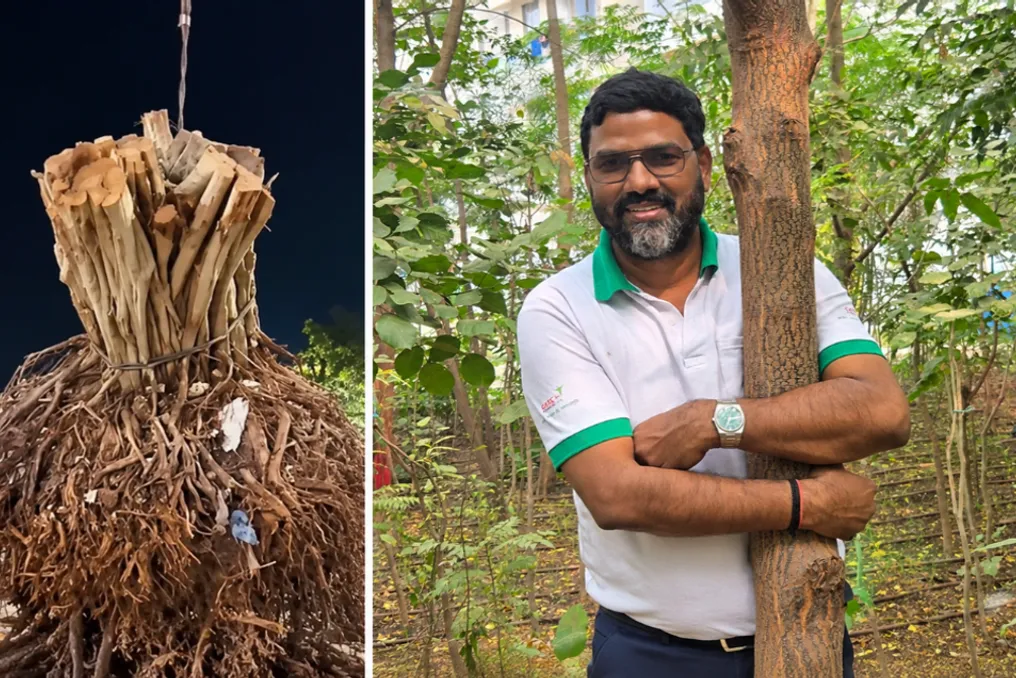
In November 2022, Barat Sisodi's team discovered a century-old peepal tree in Ahmedabad that had already been felled, leaving only about six to seven feet of trunk. It seemed like the end for a tree that had stood there for almost a hundred years. However, Barat wanted to find out if its roots were still alive, as with sufficient root system survival, the tree could recover.
This was followed by an ambitious rescue operation. His team examined the tree, brought in a 50-ton crane, and carefully moved the remaining part of the tree nearly two kilometers to another location. There, it was transplanted into a specially prepared pit, and it was monitored during its recovery.
It is reported that the peepal has begun showing new growth. For Barat, this served as a reminder of his long-held belief: planting a tree is just the beginning of responsibility towards it. Since 2014, he has been working on a concept he calls 'plantanence'—a combination of planting and care aimed at ensuring trees receive the necessary attention for survival and growth, whether they were recently planted or stood for decades.
While roads, buildings, and other infrastructure transform cities, his work raises an important question: when an old tree hinders development, can a way be found to save it?
In an interview with The Better India, Barat discussed the process of saving the peepal, why moving a mature tree requires careful planning, and what cities can do to protect existing trees.
Can a Century-Old Tree Survive After Being Felled?
When Barat and his team arrived at the site, their main concern was the tree's roots. A tree subjected to such severe cutting cannot simply be pulled out of the ground and replanted expecting survival. The chances of recovery depend on the preservation of the living root system and its ability to cope with the shock of relocation.
The team started by digging a trench about six feet deep around the peepal. They then used water to soften the surrounding soil, which facilitated the careful freeing of the roots. Moving a tree of this size required heavy machinery, manpower, and meticulous preparation. A 50-ton crane was used to lift the tree, after which it was transported nearly two kilometers to a new site.
At the new location, the team prepared a planting pit with soil amendments and nutrients to support the tree's recovery. After transplanting, they continued to care for it. This care was especially crucial because the move placed the tree on unfamiliar ground. Its roots needed to recover and re-establish themselves to draw enough water and nutrients from the soil to sustain new growth.
Several factors can influence its recovery, including the tree's condition before transplantation, the degree of root damage, and the weather in the following weeks. For Barat, safely securing the peepal in the ground was an important first step; the next task was helping it survive.
Why Does Barat Believe Planting a Tree Is Only the First Step?
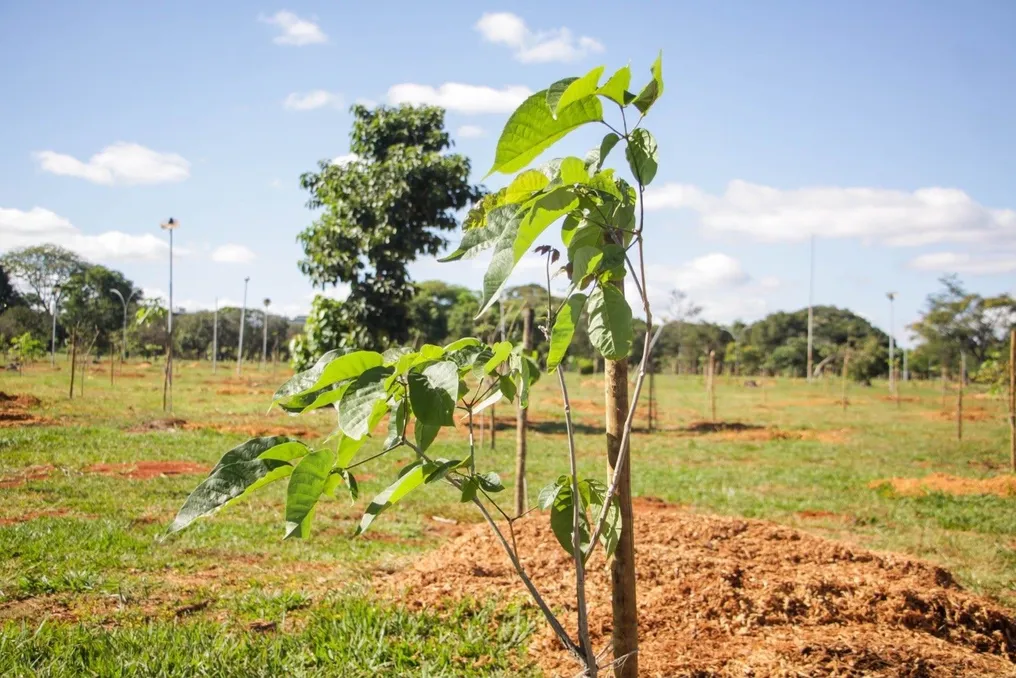
Every year, tree planting campaigns bring thousands of new saplings into our cities and neighborhoods. But how many of these saplings survive after a few months? A newly planted sapling requires regular watering, suitable soil, correct seasonal conditions, and constant attention. Without this care, even a promising planting drive can face difficulties in producing healthy, mature trees.
Barat believes that the same responsibility applies to an existing tree that is being moved. He calls this approach 'plantanence,' combining planting and maintenance so that the focus remains on the tree's long-term survival. He explains: 'An important part of plantanence is understanding what the tree needs after it has been planted or transplanted.'
Unlike moving a regular object from one place to another, transplanting a tree means disrupting a living root system that has grown in the environment for years. The recovery process can take weeks or months, depending on the tree's condition and the weather. According to Barat, favorable monsoon conditions can help the transplanted tree recover. Its roots may need at least two months to begin recovering, although the actual time depends on what portion of the original root system remained undamaged and the damage it sustained.
Protecting the main root system is particularly important. If these roots are severely damaged during excavation or transportation, the tree may struggle to absorb the necessary water and nutrients. This is why his team assesses the condition of each tree before deciding how to dig around it, lift it, and transport it.
And since every tree is unique, the same method cannot be applied to all rescues.
How Far Can an Old Tree Be Safely Moved?
Finding a suitable new home for a mature tree requires as much thought as the relocation itself. When planning a transplant, Barat and his team usually look for a site in the same region, preferably close to the tree's original location. Depending on circumstances, they might move the tree up to about 10 kilometers, and in some cases, this distance can reach 15–20 kilometers. The goal is to find a place where the tree has a reasonable chance to adapt and grow again. Keeping the relocation relatively local helps, as the ecological conditions are likely to be more familiar. The soil that moves with the tree's roots also plays a role in the transplant, helping the root system retain some of its original growing environment.
Barat notes: 'Understanding the environment is crucial.' The month, weather, and temperature must be considered alongside the tree's condition and the suitability of its new site. A crane can enable the movement of a mature tree, but its future depends on what happens before and after the move. The peepal in Ahmedabad is just one example of how Barat's team approaches a damaged tree. Another case involving a fallen banyan on a road in Ahmedabad airport shows why he believes tree protection must start from the conditions in which they grow.
When Concrete Hinders Banyan Growth
Banyans are known for their sprawling branches and extensive root systems. As they mature, aerial roots grow down from their branches. Over time, some of these roots turn into additional supporting trunks, helping the tree spread and support its growing canopy. However, in cities, the area around the tree is often covered with concrete or other hard surfaces. Barat recalls a banyan that fell on a road at Ahmedabad airport. When his team inspected the site, they found that the cemented surroundings restricted the development of its aerial roots. The tree grew in an environment where roots that could have helped support its weight had limited space to develop. According to Barat, his team eventually removed the fallen tree from the site, and he describes this operation as successful. This incident highlighted a problem that goes far beyond one banyan. He shares: 'Compacted soil, sealed surfaces, and insufficient space can affect root development. When the conditions supporting tree growth are disrupted, its long-term stability and health can also suffer.'
For a mature tree, the space underground and around it is as important as the branches and leaves we see above. And once a tree becomes unstable or falls, saving it can require much greater effort.
Tree Rescue Became a Community Effort in Vasai
Barat's work also took him beyond Ahmedabad. In Vasai, Maharashtra, he says his team helped relocate nearly 50 trees that were threatened with demolition due to National Highways Authority of India (NHAI) works. This effort required machinery, manpower, and the participation of local residents. Local people and leaders participated in the work, and the team hired community members to assist with the transplanting. For Barat, their involvement was significant. He says: 'Community involvement is truly important. When we need to transport trees, we need people to help. Local residents can make a real contribution.'
Moving a mature tree involves digging around its roots, careful lifting, organizing transportation, preparing a new site, and ensuring it receives the necessary care afterward. Involving local residents allows the community to directly participate in protecting the trees around them. This also reflects Barat's idea of plantanence: keeping trees alive is a continuous responsibility that society can share.
Can a new sapling replace a century-old tree? A mature tree develops its roots and canopy over decades. During this time, it becomes part of the environment, providing shade, supporting birds and other wildlife, and contributing to the area's biodiversity. Planting a new sapling is valuable, but this young tree will need years to grow and begin providing many of the same benefits. Barat also acknowledges that moving an old tree has its limitations. He adds: 'Their ecological functions cannot be immediately replicated by planting a young sapling in their place. Similarly, transplanting a mature tree does not automatically preserve all the ecological benefits it provided in its original location.'
Saving the peepal in Ahmedabad serves as an example that it is still possible even after a tree has been severely damaged. But Barat does not believe that every felled tree can necessarily be saved. It largely depends on its condition, the health of its roots, and the care it receives during and after transplantation. For growing Indian cities, the more complex task is preventing mature trees from reaching this point. Planning roads and buildings around existing trees, leaving enough space for root growth, ensuring suitable planting conditions, and guaranteeing long-term maintenance can help protect the greenery already present in our neighborhoods. The century-old peepal in Ahmedabad received a second chance after being cut down. Its rescue leaves us with a question to ask every time an old tree gets in the way of development: can we give it the space and care needed to continue growing right where it is?