Two Point O raised $10 million led by Transition Venture Capital
Read more
YourStory [india, en]
yourstory.com

Two Point O raised $10 million led by Transition Venture Capital

Two Point O Capital (TW.O), a platform for deploying AI-based clean energy solutions for Commercial & Industrial (C&I) enterprises, has successfully raised $10 million in a funding round. The round was led by Transition Venture Capital.

Existing investors Omnivore, along with private investors Chiranjeev Singh Saluja and Sudhir M Reddy, also participated in the round. TW.O stated that it plans to use the raised funds to expand into new asset classes, including Battery Energy Storage Systems (BESS), as well as deepen its presence in existing segments such as solar energy, energy efficiency, and wastewater treatment.

Furthermore, the company announced that the capital will be directed towards expanding into sectors requiring significant amounts of water and energy, including data centers, the automotive industry, pharmaceuticals, manufacturing, and healthcare.

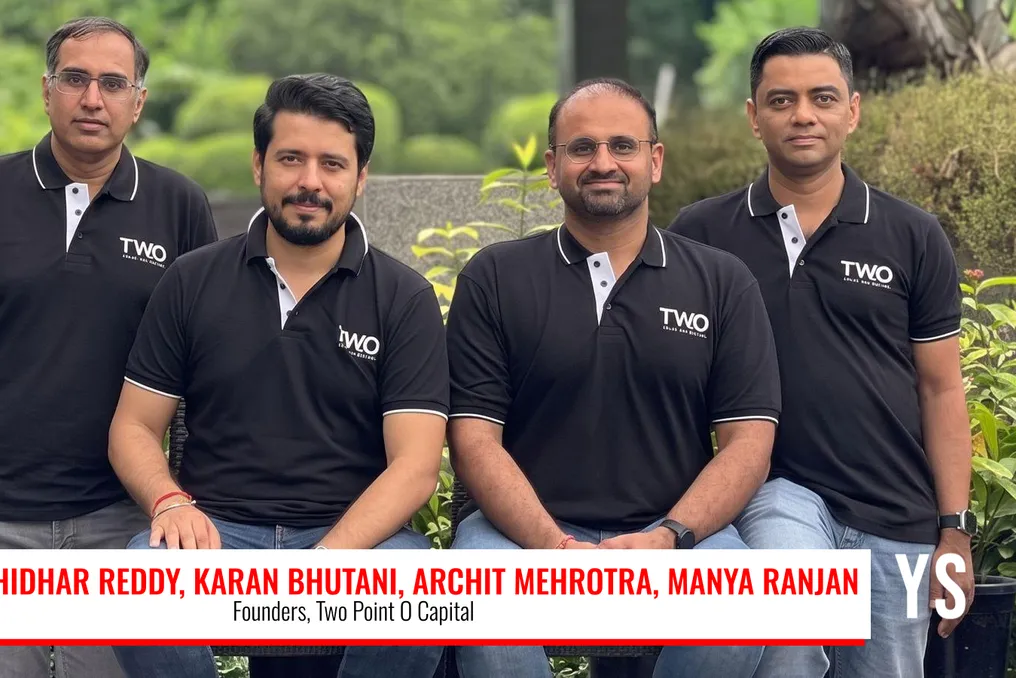
TW.O was founded in 2024 by individuals such as Archit Mehrotra, Karan Bhutani, Manya Ranjan, and Shashidhar Reddy. The company helps businesses implement clean energy infrastructure by combining financing, technology, and full project execution.

Kan Bhutani, CEO and co-founder of Two Point O Capital, noted: 'This funding will accelerate our vision to become the first and largest multi-asset and multi-solution platform in India facilitating the adoption of clean energy by C&I clients.'

TW.O collaborates with Original Equipment Manufacturers (OEMs) and Engineering, Procurement, and Construction (EPC) contractors across India. Its current clients include major commercial and industrial companies such as Premier Energies, Godrej, JK Tyre, Morepen Pharma, Wipro, and Phoenix Mills.

According to the startup's data, the company has consistently increased its assets under management by 1.5 times over the last three quarters. TW.O utilizes a proprietary AI/ML-based platform for solving tasks, underwriting, and monitoring assets.

Jashodhara Bakliwal, Vice President of Investments at Transition Venture Capital, emphasized: 'Two Point O removes the barrier of capital expenditure, accelerating the adoption of clean energy solutions. The industry often underestimates the complexity of integration into a fragmented ecosystem with multiple stakeholders. By taking full responsibility for execution, Two Point O allows clients to focus on their core business rather than construction management.'


Similar stories

Collective raises $100 million to expand AI-based financial services
Read more
ventureburn.com

Collective raises $100 million to expand AI-based financial services

San Francisco-based startup Collective has raised $100 million to develop its financial services designed for individual entrepreneurs. The platform integrates various business functions, including accounting, payroll, tax reporting, and other services.

The funding includes a $40 million Series B round, as well as $60 million from General Catalyst's Customer Value Fund. General Catalyst, QED Investors, and Gradient Ventures led the equity round; Intuit Ventures, FT Partners, and SemperVirens also participated.

Collective's founder is Hooman Radfar, who learned about the financial benefits of business tax planning through his family. Reports indicate that his father's business structure helped him save significantly more on self-employment taxes than his mother's.

The $60 million comes from General Catalyst's Customer Value Fund. Unlike traditional equity financing, this arrangement supports client acquisition through a revenue-based repayment model. Thus, the total funding package reached $100 million.

The company has not disclosed its current valuation or the specific repayment terms for the customer acquisition mechanism. General Catalyst has used similar mechanisms to support other companies in the financial and business software sectors, but the specific terms of the Collective agreement have not been made public.

A separate $40 million Series B round provides traditional equity financing for broader company expansion. Collectively, these funds support both product development and customer base growth. General Catalyst partner Pranav Singhvi noted that small businesses represent a significant opportunity and expects AI adoption to accelerate growth in this market.

Previously, Collective raised $8.65 million in a seed round in 2020, followed by $20 million in a Series A round in 2021, and $50 million in July 2023. The market potential is assessed as substantial.

Collective serves individual entrepreneurs, independent consultants, and freelancers. The company's comprehensive membership provides business registration, bookkeeping, invoicing, payroll, and tax filing. Collective members are also offered health and business insurance.

In July 2026, the company launched its Insurance Center in partnership with Coverdash and Solo Health. In April 2026, Collective acquired the AI bookkeeping startup Open Ledger. The new funding will help expand these offerings into the banking sector and add additional insurance products.

Collective reports 127% year-over-year business growth and cumulative tax savings of $350 million for its members. According to the company, its most profitable clients save up to $40,000 annually. However, the company has not disclosed revenue or customer numbers, so these figures remain metrics provided by the company itself. The company estimates that over 30 million businesses in the United States have no employees, and AI tools can help a larger number of independent founders manage complex financial operations without hiring specialized teams.

Collective faces competition from financial platforms serving independent workers and small businesses, notably Lettuce Financial. The market has also experienced turbulence, including the sudden closure of Bench in December 2024. Other AI bookkeeping startups target audit firms and corporate finance teams, which differs from Collective's approach focused on the needs of individual entrepreneurs. Collective's strategy is to automate more workflows within a single integrated platform, potentially reducing the need for separate tools for accounting, taxation, and insurance. Radfar believes that AI can enhance the efficiency of independent founders, and the next phase of the company will focus on testing its integrated financial platform's ability to deliver on this promise at scale.

Simplismart raises $14 million in Series B round to expand AI inference platform
Read more
business-standard.com

Simplismart raises $14 million in Series B round to expand AI inference platform

Simplismart, a company specializing in artificial intelligence inference infrastructure, announced that it has raised $14 million in a Series B funding round. The round was led by Dallas Venture Capital, with participation from NVIDIA, Accel, Shastra VC, and Micromax.

The funds raised will be used for the further development of the Simplismart inference platform. This will enable enterprises to launch AI-based applications more efficiently, and cloud providers to transform their Graphics Processing Unit (GPU) infrastructure into managed AI services. Furthermore, the funding will support the expansion of partnerships with cloud providers and sovereign AI, as well as growth in North American and other global markets.

Simplismart creates a software layer situated between AI models and GPU infrastructure. Its modular inference engine allows companies to customize AI model operation according to their needs for speed, cost, and performance. The company's orchestration platform manages deployment and scaling in both cloud and on-premise infrastructure.

Over the last six months, the company's annual revenue growth rate has increased 14fold. Companies such as HeyGen, Higgsfield, InVideo, Shiprocket, Apna, and Ema run production workloads on the Simplismart platform, covering video, voice, multimodal, and enterprise AI applications.

Amritaanshu Jain, Co-founder and CEO of Simplismart, noted that while the industry has spent many years improving AI model capabilities, the advantage is determined by how these models are utilized: the cost per interaction, application response speed, and reliability under increasing demand. He added that the team spent four years creating the software layer between the model and the GPU, helping clients optimize workload deployment and operation.

An example of usage is the Exotel communications platform. After Exotel found that the economics of closed API models were unsuitable for its voice agents, the company fine-tuned an open model on its own data and migrated the inference to Simplismart. By sharding GPUs, Simplismart reduced the cost per minute for Exotel by 57% compared to closed API models. Additionally, it lowered costs below that of self-hosting the same open model and reduced response time from 1.1 seconds to less than 300 milliseconds.

As part of its offering to cloud providers, Simplismart collaborates with NVIDIA to simplify the deployment and operation of AI infrastructure at scale. Unlike inference providers who buy or reserve GPU capacity and resell it, Simplismart itself does not own computing power. Instead, it provides a software layer that transforms third-party GPU clusters into ready-to-use AI production infrastructure. Cloud providers can use this platform to offer managed AI services under their own brands without building their own software stack from scratch. This approach is already used by Yotta, where the Simplismart platform forms the basis of the Shakti Studio server inference layer.

Dayakar Puskoor, Managing Partner at Dallas Venture Capital, stated that inference is becoming one of the most significant drivers of change in the AI economic model. He emphasized that Simplismart is rapidly becoming a global player, helping enterprises execute AI workloads more efficiently and enabling cloud providers to convert GPU power into scalable services.

Devansh Ghatak, Co-founder and CTO of Simplismart, reported that the company's modular inference engine allows configurations to be adapted to the requirements of individual workloads, and the orchestration platform manages deployment across various infrastructure environments. Ghatak also mentioned that the new funding will support the development of a dynamic GPU scheduling layer, which can align AI workloads with available computing power across different regions and time zones, helping cloud providers better utilize their GPU infrastructure.

Healthtech Startup Cent Raises $15 Million in Series A Round
Read more
yourstory.com

Healthtech Startup Cent Raises $15 Million in Series A Round

Healthtech startup Cent has successfully closed a $15 million funding round in Series A. The funds were secured through a combination of debt and equity capital, with Blume Ventures and existing investor South Park Commons leading the investment.

Private investors also participated in the round, including Arun Sarin, former CEO of Vodafone; Srinivas Narayanan, former CTO (B2B) of OpenAI; and Sharath Narayana, Krishna Sridhar, and Aprameya Radhakrishna.

Cent plans to use the raised capital to advance its research and development activities, as well as to expand its teams in artificial intelligence, engineering, and clinical trials.

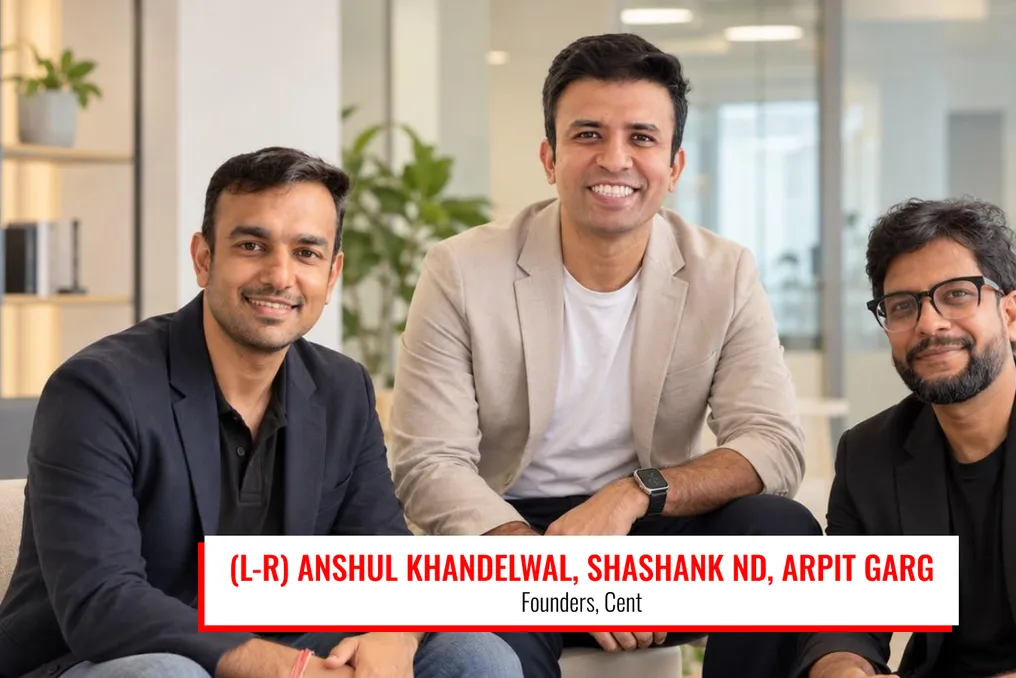
Cent was founded in 2025 by Shashank ND, Arpit Garg, and Anshul Khandelwal and is positioned as a company focused on preventive medical intelligence. Notably, Shashank ND is the founder of Practo, Anshul Khandelwal previously served as Marketing Director at Ola Electric, and Arpit Garg worked as Head of Product at Lenskart.

Cent is building a vertically integrated preventive healthcare platform that combines specialized hardware, AI-based radiology and diagnostics, and bioinformatics. The startup claims that this platform is capable of detecting diseases long before any symptoms appear.

Furthermore, Cent acquired Medsee—an AI-powered radiology reporting platform developed by Chitra Singh for qualified medical professionals. This platform generates structured reports and highlights detected findings for radiologists to review, enabling Cent to provide faster and more consistent reporting as scan volumes increase.

Anshul Khandelwal, co-founder of Cent, stated: 'The Indian healthcare system is still built on treating diseases rather than early detection. We believe the next step is preventive care, which is precise and scalable. These investments will allow us to delve deeper into AI, medical imaging, and clinical trials, and to build a preventive health infrastructure in India that can serve the world.'

According to Cent, since its inception, the company has conducted 10,000 full-body preventive scans in the cities of Bengaluru, Mumbai, and Delhi. The company's goal is to reach 10 million scans by 2035.

Karthik Reddy, co-founder and managing partner at Blume Ventures, noted: 'We believe in Cent's vision of spreading this concept from India to the world over time, which aligns with our belief in medical technology over the past decade.'

Popular