Hyundai i20 Ultimate Analysis: Model Praised for Performance
Read more
AutoPapo
autopapo.com.br

Hyundai i20 Ultimate Analysis: Model Praised for Performance

Hyundai's strategy aimed to develop a model that was closer to the Creta SUV than the HB20 hatchback, potentially even replacing it. However, the market showed resilience towards the hatchback after an initial sharp decline.

Only the derived sedan version was impacted and is scheduled to be discontinued in 2027. The manufacturer confirmed that the hatchback will continue to be produced next year. Furthermore, the compact SUV Bayon is expected to launch in the first half of 2027, and the HB20 will remain only in its most affordable version, without a turbo engine.

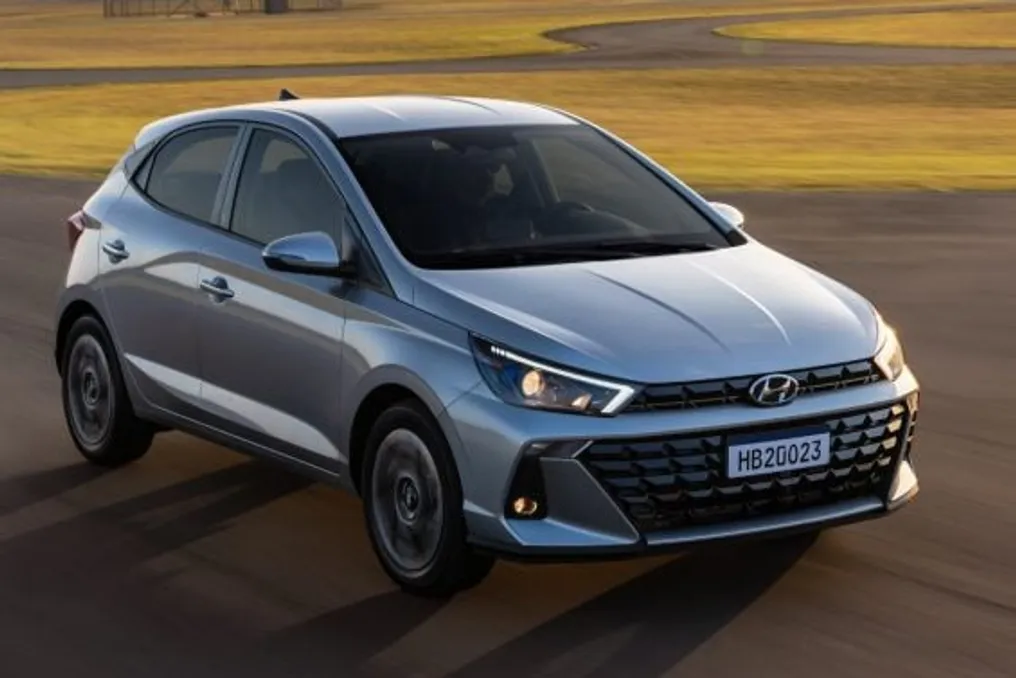
The vehicle dimensions are: length of 4,130 mm, wheelbase of 2,580 mm, width of 1,780 mm (2,045 mm with mirrors), and height of 1,505 mm. Volumes include 346 L for the trunk and 50 L for the tank. The total weight is 1,205 kg.

The engine is a 1.0L flex 3-cylinder turbo, generating 115 hp (E)/(G) of power and 17.5 kgfm (E)/(G) of torque. In terms of consumption (Inmetro km/L, city/highway), the values are 8.8/10.1 (E) and 12.6/14.3 (G). The estimated range (Inmetro km, city/highway) reaches 440/505 (E) and 630/715 (G). The car has front-wheel drive and a six-speed epicyclic automatic transmission.

Acceleration from 0 to 100 km/h takes 11.7 seconds (E)/(G). The analyzed i20, which functions as a crossover, presents a style closer to a hatchback than an SUV, although its wide rear pillar is noticeable and the bumper offers good protection to the trunk lid, which holds almost 350 L.

Inside, the highlight is the comfort provided by the leg, head, and shoulder space in both the front and rear seats. The large 24.6-inch screen, considering the combination of the instrument cluster and multimedia system, also draws attention. The steering wheel has good ergonomics and various controls on the horizontal spokes, including audio volume control. There is a dedicated button on the dashboard to turn on the radio and adjust speaker volume.

Both in urban and highway use, the performance is considered good, despite the existence of more powerful 1.0L turbo flex engines in the market, ranging from 10 to 13 hp. The vehicle incorporates advanced active safety features, such as autonomous braking capable of identifying pedestrians, cyclists, and vehicles (even at intersections and turns), hill start assist, and six airbags. Additionally, the good brakes, cornering behavior, precise steering, and the parking brake system with automatic engagement and release (auto-hold), considered essential in traffic, stand out.

The listed price for the model is R$ 135,700.

Similar stories

Hyundai aims to sell 250,000 mid-size SUVs in 2027 with Creta and Bayon models
Read more
business-standard.com

Hyundai aims to sell 250,000 mid-size SUVs in 2027 with Creta and Bayon models

Tarun Garg, Head and CEO of Hyundai Motor India Ltd (HMIL), stated on Monday that the company plans to sell at least 250,000 units of mid-size sports utility vehicles (SUVs) by 2027. This forecast is based on the rapid growth of the segment and the ability of two models—the Creta and the recently launched Bayon—to attract various customer groups.

Speaking to journalists on the occasion of the Bayon launch in Gurugram, Garg emphasized that the set target is a starting point, not an absolute limit. Bayon deliveries are expected to begin during the current festive season. Furthermore, Garg reported that HMIL anticipates selling about 170,000 units of the Creta in 2026.

According to Garg, the mid-size SUV segment in India currently accounts for 16.5 percent of the market. Over the last five years, this segment has shown a Compound Annual Growth Rate (CAGR) of 25.6 percent, and sales volume is projected to grow by 64 percent between 2026 and 2032.

Model Positioning Strategy

The size and growth dynamics of the segment allow the manufacturer to release more than one model. Hyundai intends to leverage the existing Creta customer base to promote the Bayon. However, the Bayon is positioned differently from the Creta, targeting consumers who adopt new technological solutions more quickly.

Garg clarified that the difference between the models is determined by customer attitudes and preferences, not age. The Creta relies on its established brand value and customer loyalty, while the Bayon targets those seeking a more technologically advanced experience. He noted that the Creta created the mid-size SUV market ten years ago, and the launch of the Bayon is expected to enable the company to achieve similar success over the next decade.

Hyundai market research indicated that gasoline versions will see the highest demand in the Bayon segment. The model will also receive a Compressed Natural Gas (CNG) variant in January 2027. The company decided not to offer a diesel version because too many powertrain options could complicate the assortment and confuse buyers.

Automatic transmissions are expected to account for about 25 percent of Bayon sales, with a tolerance of two percentage points. Overall, the penetration of automatic transmissions in Hyundai's portfolio is approximately 24–26 percent, with a higher share in larger models.

Data and Export Issues

Garg also stated that user data collected through the AI-based voice assistant in the Bayon will remain the property of Hyundai and will not be shared with Perplexity, whose technology provides the basic language model. The voice technology is provided by SoundHound AI and used by Hyundai globally.

The company adheres to the data privacy and security standards adopted in the US and South Korea, where regulation is significantly more developed than in India. Garg stressed that although some laws have not yet been enacted in India, they exist in the US and Korea in a much stronger form.

Despite the decline in the sedan market, Hyundai will continue to sell the Verna because exports make this model viable. The Verna is the company's best-selling exported vehicle; including exports, its sales reach 40,000–50,000 units annually, whereas domestic sales are around 7,000–10,000 units. Garg stated that the Verna plays a very important role in the portfolio, and the company intends to continue producing it despite the downturn in the segment.

Hyundai plans to start exporting the Bayon two to six months after its domestic launch, following the company's standard product export strategy. The export destinations will be announced later. The SUV will be manufactured at the Hyundai plant in Chennai and is intended for more than 50 markets worldwide.

Garg also clarified that HMIL's five-year investment plan for 2025–2030 and Hyundai Motor Group's commitment of $15.5 billion for 2026–2032 overlap. Planned expenditures for 2025 will be adjusted according to the broader group plan, with additional funding expected for the Indian subsidiary.

Hyundai HB20: 10 important facts about the used car, focusing on the first generation 2015
Read more
autopapo.com.br

Hyundai HB20: 10 important facts about the used car, focusing on the first generation 2015

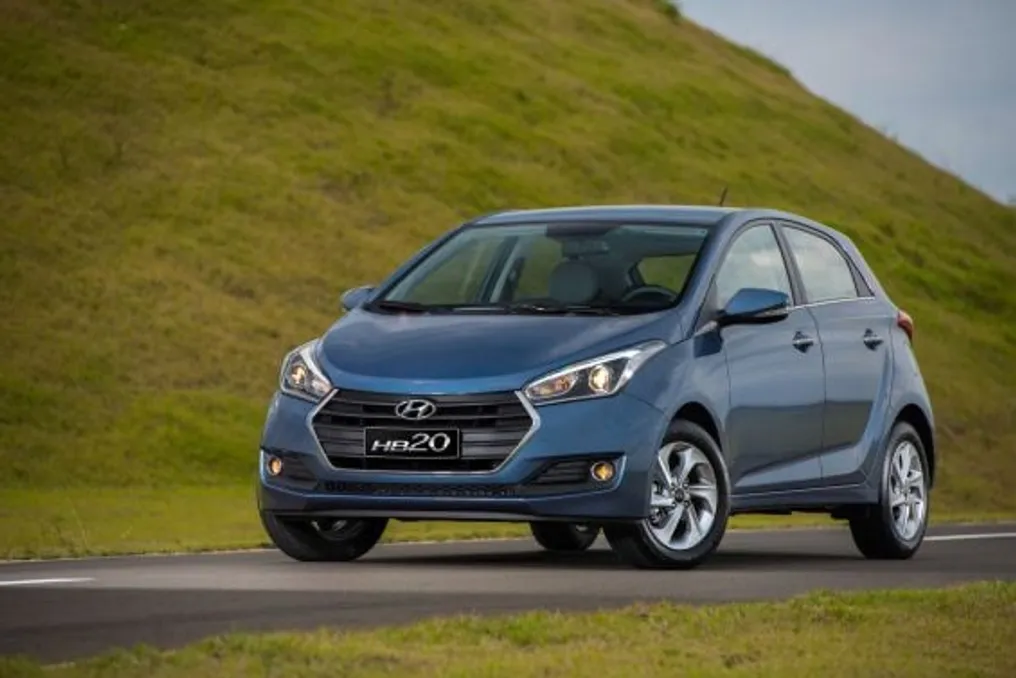
Hyundai began celebrating the 15th anniversary of the HB20, a compact hatchback that has built a history of success in the Brazilian market. Thanks to its strong acceptance, wide range of versions, good reputation for after-sales support, modern (though sometimes controversial) design, drivability, and balanced maintenance costs, the HB20 is among the most valued vehicles in its category.

This article details ten crucial points for anyone wishing to understand the Hyundai HB20, focusing specifically on the first generation and the 2015 model to aid in assessing used purchases.

The launch of the HB20 occurred in October 2012, with the goal of increasing Hyundai's presence in the national market and competing directly with the leaders of compact hatchbacks of the time, such as the VW Gol and the Fiat Palio. From the start, the vehicle attracted attention for its bolder design compared to the category average and a slightly superior finish. It offered a five-year warranty and a modern mechanical package, available in the 1.0 12V and 1.6 16V engine options.

During its first generation, the model received several updates and various special editions. In 2015, the Hyundai HB20 underwent a restyling, gained the Premium version, and started incorporating a six-speed manual transmission in the 1.6 versions. In the 2017 line, a significant innovation was the inclusion of the turbo engine, also coupled with the six-speed manual gearbox. In 2019, there were modifications to the front grille of the hatchback.

In September 2019, Hyundai introduced a second generation of the HB20, which was deeply reformulated while maintaining the original architecture. After this change, the 1.6 engine was discontinued, being replaced by a new, more powerful turbo engine in the higher-end options of the compact. In 2023, the first restyling of this new phase of the hatchback took place. Recently, Hyundai launched the i20, which serves as a natural replacement for the HB20, but the veteran model maintains its strength in the market and sales.

Although it uses the platform of the old European i20, the HB20 was designed for the Brazilian market, receiving specific design and finishing touches. This model also marked the inauguration of the Hyundai Motor Brazil factory in Piracicaba, in the interior of São Paulo, quickly becoming a pillar of the South Korean automaker's Brazilian operation.

Few compact cars managed to offer as many combinations of engine, transmission, and trim as this hatchback. In 2015, for example, consumers had nine versions available, able to choose between the naturally aspirated 1.0 and 1.6 engines. Options included five or six-speed manual transmissions, as well as a four-speed automatic gearbox, not counting the HB20X, an adventurous variant that expanded the family's possibilities.

In 2015, the HB20 also featured unique versions. The adventurous HB20X option, launched in 2013, stood out with differentiated bumpers and fog lights, darkened headlight lenses, and chrome details. The HB20X generally followed the aesthetic standard of pseudo-off-road models, featuring wheel arch moldings, darkened elements, raised suspension, and all-terrain tires. However, the adventurous HB20 had four trim configurations, always with the 1.6 16V engine.

In the following year, with the restyling of the first generation, the Hyundai HB20 launched a sporty version. This version, named HB20 R-Spec, had only bolder visual applications, without mechanical changes. It was inspired by the concept car of the same name displayed at the São Paulo Auto Show in 2012. Its features included a hexagonal grille, 15-inch diamond-cut wheels, black mirror caps, and a rear bumper with simulated air extractors, keeping the 1.6 engine.

The 2015 HB20 could be equipped with three distinct mechanical setups. The version with the naturally aspirated Kappa 1.0 engine used three cylinders, dual overhead camshafts, and variable intake cam. Despite the smaller displacement and power of 80 hp (ethanol) and 75 hp (gasoline), it delivered adequate performance for the urban category, with positive accelerations, although the 0 to 100 km/h time was close to 15 seconds.

For those seeking more agility, the naturally aspirated Gamma 1.6 engine was an interesting alternative, generating 128/122 hp and 16.5/16 kgfm of torque at 5,000 rpm. This setup provided quicker responses in the city, reaching 0-100 km/h in 9.3 seconds, with good performance at medium speeds and greater maneuverability on highways. However, this engine exhibited some roughness compared to competitors.

With the automatic transmission, performance remained interesting, registering 0-100 km/h in 11 seconds; however, the four-speed gearbox showed imprecision and slowness when shifting gears during acceleration, between 2,500 and 3,000 rpm.

The introduction of the 1.0 turbo engine in the HB20 line occurred in 2016, marking a significant advance. Hyundai adapted the naturally aspirated Kappa engine, integrating a low-inertia turbocharger with electronic management. Although it delivered less power (105/98 hp), this setup provided more low-end torque, with 15/13.8 kgfm appearing early, at 1,500 rpm, which improved response in urban traffic.

Nevertheless, the overall performance of this engine did not reach the level of some contemporary turbocharged rivals, especially those compacts equipped with direct injection.

The Hyundai HB20 2015 is recommended in the Premium version, the most complete, equipped with the 1.6 16V engine and four-speed automatic transmission. Its main attraction is the blueNav multimedia center, which features a 7-inch touchscreen, integrated GPS, digital TV, Bluetooth, iPod/iPhone compatibility, MP3 player, image and video player, USB connections, and steering wheel controls. In terms of safety, it includes the mandatory ABS and EBD systems, dual airbags, rear parking sensor, and Isofix. Additionally, it has air conditioning, electric window controls with touch control on all windows, dusk sensor, split rear seat, and height and depth adjustments for the steering wheel. Aesthetically, it features fog lights, 15-inch alloy wheels, external door handles, chrome trim, a two-tone dashboard, and a leather-wrapped steering wheel.

Consulting KBB Brazil (October 2026), the average prices for the 2015 Hyundai HB20 in the Premium 1.6 AT version can be checked. Regarding special editions, 10 editions were released in total: eight in the first generation and two in the second. The Spicy series, launched in 2015, stands out due to its aerodynamic kit with side skirts and a black rear diffuser, in addition to a glossy black hexagonal grille. This special edition came with S-wing graphite alloy wheels, glossy black mirror caps, matte black detailing on the door moldings, and darkened headlight lenses. The interior of the 2015 Hyundai HB20 Spicy featured a darkened finish, chrome door handles, gray painted molded air vents, and perforated leather seats with visible stitching, available in the 1.0 and 1.6 engine options and including the blueNav center with digital TV receiver.

The HB20 does not have a reputation for having complex maintenance. It is possible to check parts prices for models with the 1.6 16V engine, as well as the most frequent complaints from first-generation owners on forums, discussion groups, and the Reclame Aqui website.
Hyundai confirms it will keep the HB20 as the entry-level car in 2027, in the range of R$ 90 thousand to R$ 100 thousand
Read more
autopapo.com.br

Hyundai confirms it will keep the HB20 as the entry-level car in 2027, in the range of R$ 90 thousand to R$ 100 thousand

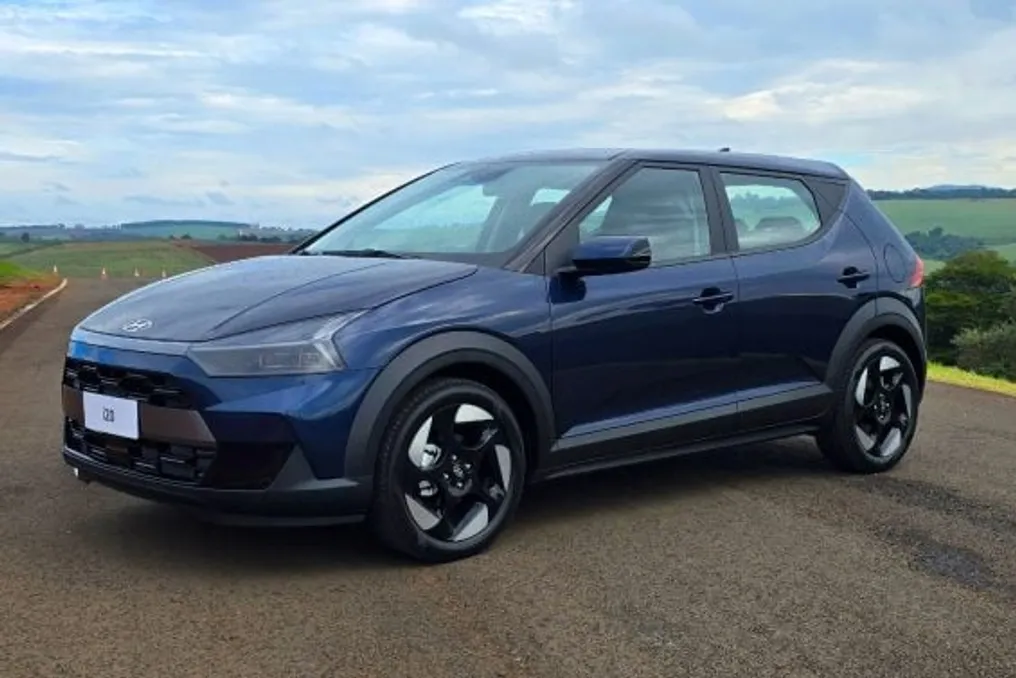
Hyundai informed the press that the HB20 model will continue to be sold in 2027 as the brand's entry-level car in Brazil. The versions of this hatchback will be concentrated in the price range between R$ 90 thousand and R$ 100 thousand, and its presence will not be replaced by the arrival of the i20.

This strategic reorganization aims to prevent the two compact vehicles from competing for the same consumer. The i20, which was introduced in June, will be positioned at a higher level, situated between the hatchback models and SUVs.

Currently, the prices of the two models are very close: the HB20 starts at R$ 96,140, while the i20 starts at R$ 99,990. Above these values will be the Creta and, in the future, the Bayon, a compact SUV derived from the i20, expected in 2027.

At the moment, the HB20 registers a significantly higher sales volume than its counterpart. According to Fenabrave, 53,589 units were registered between January and September. In September alone, the hatchback achieved 6,314 registrations, which is more than four times higher than the 1,404 registered by the i20.

To remain at the base of the product line, the HB20 will favor versions equipped with the 1.0 naturally aspirated engine, as, according to Hyundai itself, these versions have historically represented the largest share of the model's sales. However, the manufacturer did not specify whether the turbo options will be discontinued.

Furthermore, there are plans to launch a new version that will incorporate more technology and comfort features for a price under R$ 100 thousand. Details regarding name, price, and equipment list will be disclosed in the coming months.

Among the commercial initiatives planned for 2027, the year the HB20 will complete 15 years in the market, there will be an offer targeted at micro-entrepreneurs who use the vehicle for passenger transport via applications. This specific audience will have differentiated purchase conditions for the Comfort version, and this modality will also cover versions of the i20 and Creta.

The HB20, originally launched in October 2012, was the first Hyundai vehicle developed and manufactured in Brazil. Currently, the hatchback, the i20, and the Creta share the assembly lines of the brand's factory located in Piracicaba, São Paulo.

Popular