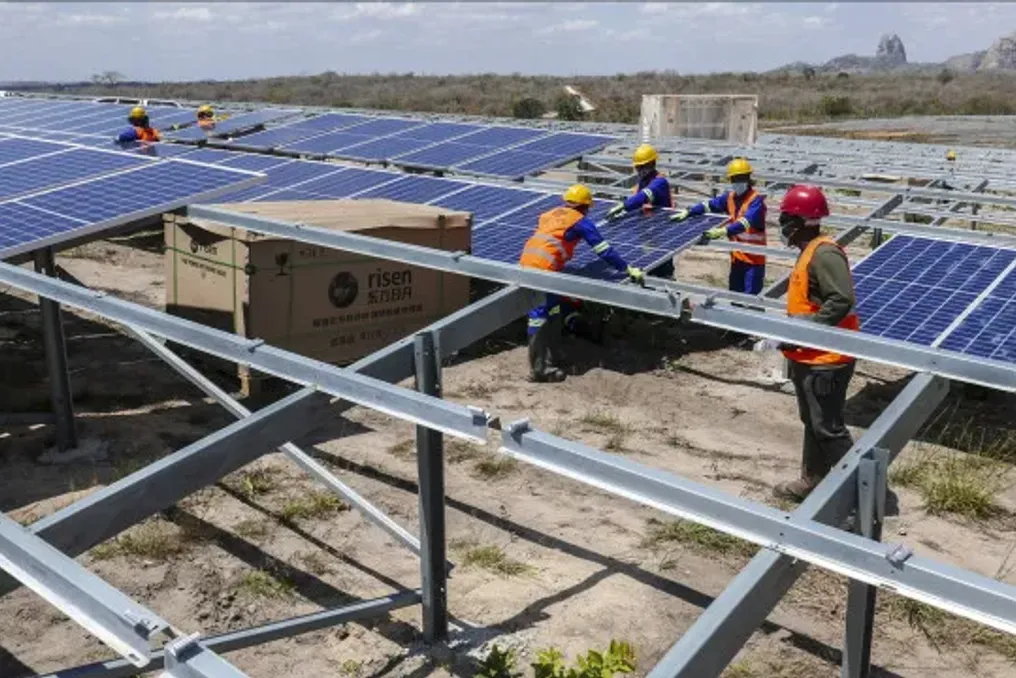
Amid an energy crisis and rising energy costs, residents of the Philippines are increasingly switching to solar power sources and electric vehicles. For instance, Fisd Salvador Badilles, a doctor from Las Piñas, installed a 12.6-kilowatt solar panel system with a 20-panel setup, a 12-kilowatt hybrid inverter, and 32 kilowatt-hour batteries.
Badilles told Dialogue Earth that this system allows her family to save 20,000 Philippine pesos (approximately $315 USD) monthly. The total cost of the system was 700,000 Philippine pesos (about $11,000 USD), and air conditioning throughout the day is no longer a problem.
Similarly, Jovi Solomon, a cafe owner in Batangas province, invested 880,000 Philippine pesos in a 40-kilowatt solar panel system, enabling her to reduce electricity expenses by 10,000 Philippine pesos monthly.
Interest in solar energy has sharply increased against the backdrop of rapidly rising electricity tariffs, which intensified after the conflict in the Persian Gulf began in late February. However, this trend has also highlighted a significant gap between those who can afford solar solutions and those who cannot.
According to a Reuters report from June 2026, the Philippines imported solar panels worth $407 million from China between March and May, representing a 145% increase compared to the previous year. It is estimated that the average household in the Philippines now spends about 12% of its monthly income on electricity.
Data from the Institute of Climate and Sustainable Cities for 2025 shows that residential installations (solar panels under 100 kW or registered under the Philippine Net Metering Program) account for about 245 megawatts out of the country's total solar capacity of 1,846 MW. Although most of this capacity belongs to utility-scale installations (projects over 1 MW), residential installations surpass commercial ones.
Net metering is a billing mechanism that compensates solar panel owners for excess energy generated and sent back to the grid.
A survey conducted in April by 20 solar companies by the non-profit clean energy organization New Energy Nexus revealed that client inquiries increased by an average of 582%, and weekly rooftop system installations rose by an average of 170% compared to the pre-energy crisis period.
Asia energy analyst Alni Demoral from the Ember think tank notes that with the tariff of the Philippines' largest power supplier, Meralco, at around 14.5 Philippine pesos per kilowatt-hour in June, 'a residential rooftop system pays for itself in approximately three years.' Since the company's tariffs have risen almost to 15.1 Philippine pesos per kWh, which is 16% more than in January, Demoral believes the initial estimate of 1,300 MW of rooftop solar installations by April was likely conservative.
Despite the surge in interest in adopting solar energy, it remains inaccessible to many Filipinos.
According to John Mark Napao, an electrical engineer and founder of Solar Hope, a non-profit that provides electrification in remote and indigenous communities through solar energy, a single DC-powered solar panel can cost between 4,000 and 6,000 Philippine pesos ($63–$94 USD).
This amount constitutes a significant portion of the country's average minimum wage, which stood at 510 Philippine pesos per day or 11,100 Philippine pesos per month as of April, according to data from the Ibon Foundation think tank. A solar system with an inverter—necessary for running appliances like air conditioners and refrigerators—will cost significantly more; for example, a basic 630-watt peak Solaric system connected to the grid starts at 114,000 Philippine pesos.
Cheryl Estella, Programs Manager at New Energy Nexus Philippines, points out that strong consumer interest in solar energy does not always translate into actual adoption. She emphasizes that the initial cost of a photovoltaic (PV) system can equal several years of electricity expenses, making the initial investment difficult for many families.
Estella adds that for many low-income households, the issue is not whether solar energy will save money in the long run, but whether they can afford the upfront investment or meet the requirements for financing.
This situation is particularly acute among the country's urban poor, according to Orli Gallano, president of SM-ZOTO, a federation of organizations serving such communities in Metro Manila and its surroundings. Gallano notes that most jobs in these areas pay the minimum monthly wage of about 15,000 pesos ($235 USD), and his own electricity bill accounts for 10–20% of his monthly salary at SM-ZOTO.
Gallano saw the benefits of solar savings when SM-ZOTO installed a 5-kilowatt solar system in its office to create mobile charging stations for the community. Since then, the office's monthly bill has nearly halved, dropping from 16,000 Philippine pesos to 9,000 Philippine pesos. This installation was implemented in partnership with the environmental organization Center for Energy, Ecology, and Development, funded by the New Zealand embassy.
He concludes that for an ordinary low-income citizen, solar energy represents a large initial expense, although it becomes an investment later as the electricity bill decreases.
Gallano plans to transition to solar energy at home after ensuring the education of his dependents.
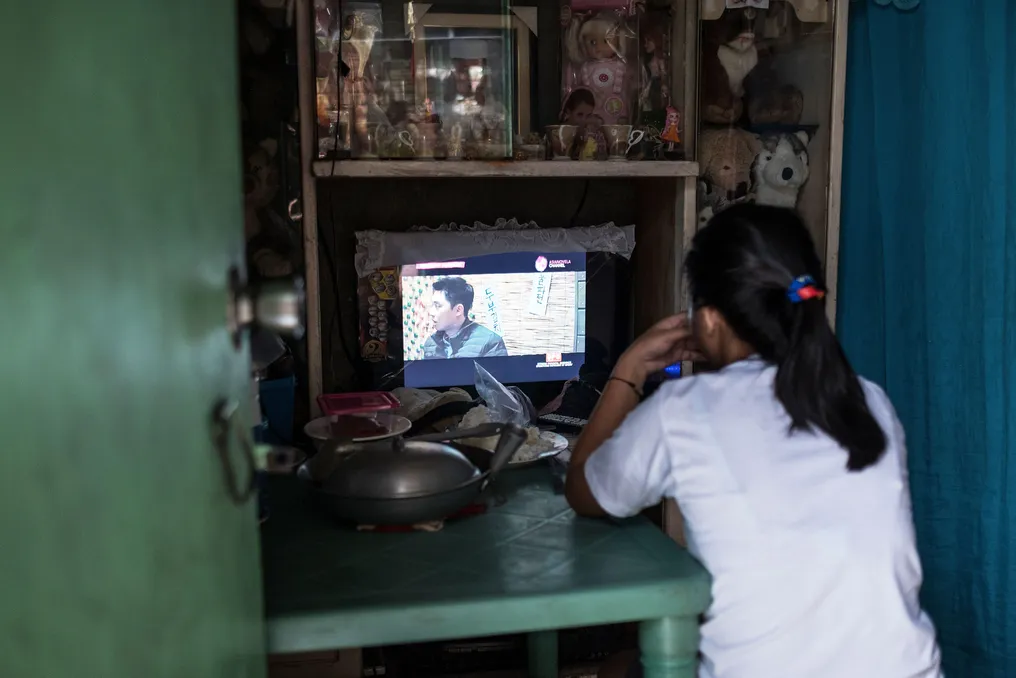
Angel Cruz, a freelance masseuse and hairdresser from northern Metro Manila, reports that her modest income leaves her with only 5,000 Philippine pesos after covering expenses. The electricity bill for the apartment she shares with her parents and three children reaches 7,000–8,000 Philippine pesos monthly. These funds cover two fans, a television, a rice cooker, charging portable devices, lighting, and an air conditioner running at night to monitor her father's hypertension.
Although her parents sometimes help with the electricity payments, a solar panel system with inverters and batteries 'is not something we can afford anytime soon.' Private banks in the Philippines offer loans for solar system installation, but requirements such as continuous employment, income thresholds, and tax returns would likely exclude low-income, contract, or informally employed workers.
The government provides credit opportunities through its savings and mutual fund agency, Pag-IBIG, which members can use to finance solar systems. However, these schemes also require people to contribute to savings for two years, as well as proof of income. Government programs, such as the Ginhawa Solar Energy Loan, are available only to civil servants and pensioners.
Jasmine Mae Sabado, senior energy transition activist at People of Asia for Climate Solutions, notes that these loan grants are based on an individual's credit history, creating obstacles for those with poor credit histories. She suggests considering a longer loan repayment term to mitigate the impact of initial costs.
Harry Arances, lead coordinator of Power for People Coalition, argues that 'accessibility is not easily extended to the poorest and most vulnerable communities who could benefit most from rooftop solar systems.' He insists that the government must allocate resources for solar rooftops in the country's poorest areas to provide both immediate relief and a long-term solution to energy shocks. Arances also calls on the government to stimulate local production cycles and offer tax incentives for solar panels and components to increase product affordability.
He specifically emphasizes the need to integrate solar energy into social programs supporting poor and underserved communities and sectors for whom credit mechanisms are unavailable.
Demoral notes that affordable financing mechanisms already exist, including government loans, which are either available or soon to be launched. However, she stresses that 'the problem lies in implementation: how quickly these programs are rolled out, how easily households and small businesses can apply, and how quickly those applications are approved.'
Sabado advises local authorities to enact solar energy readiness ordinances tailored to local conditions. Such laws would require new buildings or renovations to include infrastructure capable of hosting solar systems. This would simplify the process of applying for such energy use for households and businesses.
Sabado adds that applying for net metering can take months, despite government efforts to speed up the process. Furthermore, private households face difficulties obtaining permits for solar panel installation due to the need to provide numerous documents, such as land ownership certificates, tax returns, and proof of ownership.
Demoral notes that the recent decision by the Department of Energy to allow the installation of 'micro-solar systems' up to 1 kW without building permits or environmental certifications showed promising results in simplifying the process for small households. She says this opens up possibilities for 'plug-and-play' systems using just one or two panels, costing only a fraction of the price of a full rooftop installation. Thus, households that could never afford a complete system can now start small.
The Department of Energy did not respond to Dialogue Earth's requests for comment. Cheryl Estella concludes that 'the government plays a vital role in creating the conditions that make renewable energy accessible to Filipinos.' She clarifies that this means not only setting renewable energy targets but also removing the barriers faced by consumers and installers.
In Estella's view, the government needs to streamline permitting and net metering procedures, establish clear technical standards, and ensure their consistent application. She also considers strengthening the local solar industry through skills development, quality standards, and support for qualified manufacturers. This, she says, will expand access, improve service quality, and help create a more competitive market. Ultimately, expanding access requires renewable energy to become easier to adopt, easier to finance, and safer and more reliably integrated into the power supply system.