Icrier study shows growth in female employment in India, but under less favorable conditions
Read more
Business Standard
business-standard.com

Icrier study shows growth in female employment in India, but under less favorable conditions

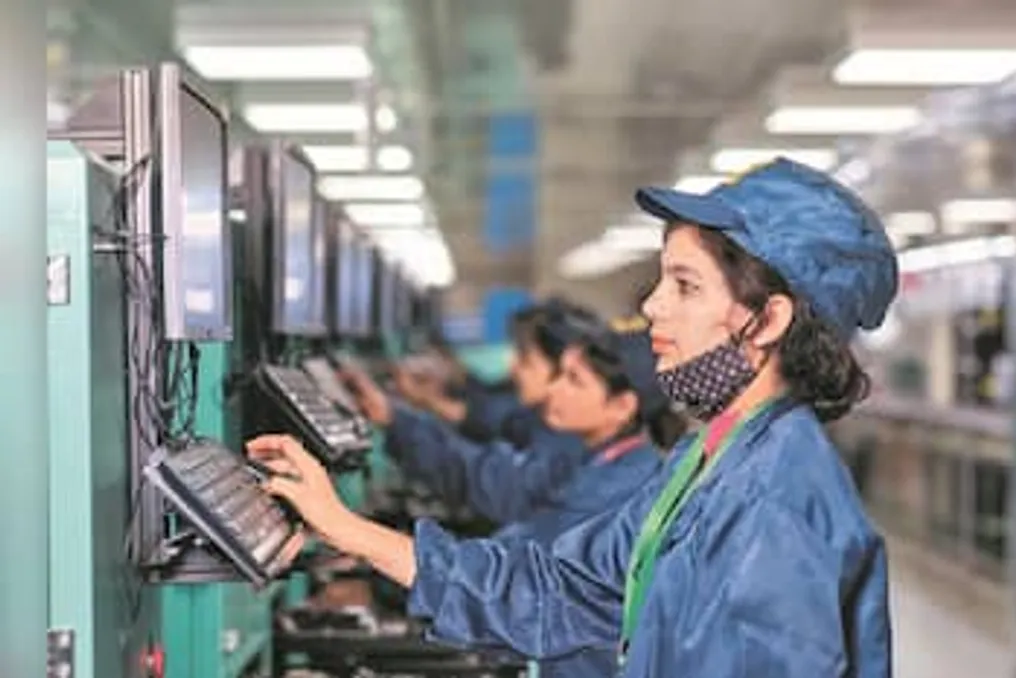
According to a study conducted by the Indian Council for Research on International Economic Relations (Icrier), the number of women in the labor force in India has almost doubled between 2017–18 and 2025. However, this growth is concentrated in unprotected employment sectors, accompanied by a reduction in working hours and an expansion of the wage gap.

The study, titled 'Participation Paradox: Women's Work and Time Use in India from 2017–18 to 2025,' found that women have taken up more paid work, while their unpaid domestic responsibilities have not decreased. This has resulted in them having less time for rest and self-care.

The authors, including Tanu M Goyal, Shravani Prakash, Ketaki Gaikwad, and Arjuna Tandon, based on data from the Periodic Labour Force Survey (PLFS), reported that the number of working women increased from 104 million in 2017–18 to 201 million in 2025. Meanwhile, the ratio of female workers rose from 22 percent to 38 percent. It should be noted that the figures for 2025 are based on a revised PLFS with an increased sample size and calendar period, and the authors caution about the need for caution when comparing with 2017–18 data.

The increase in employment was concentrated in rural India and the agricultural sector. The female worker ratio in rural areas increased from 23.7 percent to 44.9 percent, while in urban areas it grew from 18.2 percent to 25.9 percent. The share of men in the primary sector of rural areas decreased from 54.1 percent to 47.2 percent, while the share of women in rural areas increased from 70.7 percent to 73.3 percent. The study noted: 'Structural transformation is visible for men, but it has largely bypassed women in the country.'

Regular wage employment could not keep pace with the growth rate. Among rural women, self-employed workers increased from 13.9 million to 56 million, raising their share in rural female employment from 18.6 percent to 37.2 percent. Meanwhile, regular wage employment increased from 7.9 million to 13.9 million, but its share decreased from 10.5 percent to 9.3 percent. The authors concluded that 'the additional women entering the workforce primarily came through self-employment and unpaid family labor, which are the most unstable and least paid categories.'

The authors suggest that such a sharp rise in rural India is harder to interpret as a reaction to improved opportunities; rather, it indicates that rural women are 'drawn in out of necessity, whether in agricultural activities or home-related enterprises.' The report also mentions an alternative view presented by the Economic Survey for 2023–24 and some researchers, according to which the growth was driven by opportunities.

Average weekly hours decreased for all groups between 2017–18 and 2025, but the working week for rural women decreased the most—by more than six hours. The study notes: 'The increase in participation along with the reduction in hours per worker implies an expansion of the workforce towards increasingly marginal, low-intensity activities.'

The wage gap also widened. The nominal monthly wage of rural men increased by approximately 65 percent over the specified period, while for rural women, this growth was 41 percent. In 2025, rural women earned about 45 percent of the monthly salary of rural men, compared to 53 percent previously. In nominal terms, the monthly gap in rural areas almost doubled, increasing from approximately 4200 rupees to over 8000 rupees.

Unpaid labor of women remained virtually unchanged. Time use surveys for 2019 and 2024 show that the difference in unpaid domestic labor remained generally constant—about 223 minutes per day among participants in 2024, and the difference in caregiving increased from 58 to 63 minutes. In 2024, working women also had less time for self-care than women overall: 18 minutes less in rural areas and 31 minutes less in urban areas, while working men had slightly more time than men overall.

Six out of ten women not in the labor force cited childcare and household obligations as the main reason, whereas men had almost no such reasons. The authors call for a shift from maximizing participation to ensuring structural transformation. They recommend implementing more childcare services, enforcing kindergarten rules, introducing paid paternity leave and shared parental leave, setting employment targets for women in production-related incentive schemes, as well as social protection for women working in the gig economy, and conducting regular time use surveys alongside PLFS.

Similar stories

Study shows where women work in India and how job choice depends on living conditions
Read more
timesofindia.indiatimes.com

Study shows where women work in India and how job choice depends on living conditions

Initial data on employment at the district level in India indicates that women are more likely to find jobs where they have fewer choices, and less likely to find jobs where the available vacancies do not match their lifestyle. Journalists conducted an investigation in six districts representing the extremes of two labor markets.

Overall, in 396 out of 584 surveyed districts, less than half of the women participate in the labor market. No such districts were identified for men.

Choose any district in India.

In rural Gujarat, a tribal area, over 82 out of every 100 women are employed or seeking work, whereas this figure is less than 10 percent in North East Delhi.

Nowhere do women match men.

Mandi in Himachal Pradesh has the closest indicator, where the proportion of women in the labor market (69.6%) differs from the proportion of men (74.2%) by the smallest gap. Reporters visited six districts located at opposite ends of three indicators: the number of women in the labor market, the number of young women who are neither working nor studying, and the improvement in the status of young women compared to women in general.

Three questions, two poles for each

The districts included in the profile were selected from the top and bottom of the rankings; Delhi was excluded when compiling the rankings.

Women in the job market

The share of women aged 15 and older who are working or seeking work reaches 82.1% in the tribal belt of Gujarat—the highest figure in India. Meanwhile, in Yamunanagar, Haryana, this figure is only 10.0%, and only North East Delhi (9.8%) is lower.

The gap between regions is most noticeable in villages: 86.5% of rural women in the Gujarat belt are in the labor market, compared to 7.2% in rural Yamunanagar. In towns of the Gujarat belt, this percentage drops to 37.1%. If only those women who worked or sought work in the week before the survey are considered, the figure in the Gujarat belt falls from 82.1% to 57.7%, indicating seasonality of employment related to the agricultural cycle.

Anita Tadvi, a 25-year-old resident, works as a driver and guide at the Statue of Unity in Ekta Nagar. Her job is related to the influx of tourists to the world's tallest statue, which became possible after the opening of Sardar Patel's monument in 2018. The first Periodic Labour Force Survey (PLFS) of India, published in September, recorded the highest level of female labour force participation in the country—82.1% in the Dahod-Narmada-Dang-Tapi-Chhota Udaipur-Mahisagar belt. The rural figure was even higher, at 86.5%, suggesting that the rural economy contributes to this outstanding result.

In these areas, women work for several reasons: households require dual incomes, men migrate for work, farms and livestock need family labour, and also due to government programs, NGOs, and self-help groups that have opened small sources of livelihood. Swati Bedekar, an entrepreneur from Vadodara, notes that women in the tribal belt are productive and earn more than men, while balancing outside work with household duties, leaving them little free time.

Dinesh Patel, a farmer from the Mahisagar district, reported that many women work as agricultural labourers and can be hired from the labor market. He prefers hiring women because they are productive and dedicated, and noted that it is easy for women to find work in agriculture in their area. However, a high participation rate does not guarantee job stability.

Madhu Gayakwad, head of the Sociology Department at VNS in Danga, emphasized that although employment opportunities for women have increased, they remain uneven, and there is potential to improve living conditions. According to the PLFS, women in tribal Gujarat are working, but the next goal is to ensure the sustainability of this income to change their lives.

In Yamunanagar, despite the presence of factories, nine out of ten women remain outside the labor market. The district is saturated with production facilities, including plywood workshops, paper and sugar mills, and manufacturing enterprises. However, Alka Mehta, a homemaker, believes that most of this work is too physically demanding for women like her, stating that 'women cannot work there because the factories require heavy and skilled labour.'

This gap between job offers in Yamunanagar and what local women are willing to do may explain one of the sharpest findings of the PLFS: only 10% of women aged 15 and older in this district are working or seeking work—the lowest female labour force participation rate (LFPR) outside of Delhi. The problem is not simply a lack of jobs.

In brick kilns in the district, women make up about half of the workforce, but most of them are migrants from Bihar, Uttar Pradesh, West Bengal, and Assam. Women who find paid work are usually concentrated in other sectors—schools, colleges, government institutions, shops, and other service sectors.

Education is not an obvious missing link, as in 2023-24, women made up about two-thirds of students in general arts and science colleges in Yamunanagar. Nevertheless, educated women prefer government service, education, and the private sector, including IT, software, and business, according to Municipal Commissioner of Yamunanagar-Jagadhri, Suman Bahmani. This choice significantly narrows the scope of search in the industrially oriented district based on manual and factory work.

Locals note that women much more often choose work in 'business, shops, schools, colleges, and other service activities' rather than heavy labour due to its physical strain. For many families, another reason why women remain outside the labor market is that they can afford it. Homemaker Geeta Arora explained her choice: 'My husband earns well, so I don't need to work. I take care of things at home and dedicate time to childcare.'

Jobs exist, but for many women in Yamunanagar, it is not the work they envision for themselves. The situation in Delhi is even worse: six of the ten lowest districts by this indicator are in Delhi, and no Delhi district reaches 19%.

Neither working nor studying

The share of young women (15–29 years old) who are unemployed, not in school, and not in training is 73.9% in Kendrapara, Odisha—the highest figure in India. Meanwhile, in Chamba, Himachal Pradesh, this figure is only 2.8%, the lowest among all, although this estimate is based on a small sample.

Young women in Chamba are actively engaged: 70.7% of women in this district are working, with most of this labour being on family farms. In Kendrapara, this figure is 28.6%.

Working, yes. But mostly on the family farm

In Sadal Panchayat of Chamba, almost every girl now attends school or college, according to Panchayat head Pritam Singh. However, the problem arises after graduation. He notes: 'Without industry and extremely rare government sector vacancies, educated women have no viable choice but to return to the fields to help their families with manual agricultural labour.'

This gap between being counted as employed and having stable work helps explain one of the most striking results of the PLFS. Chamba has one of the lowest NEET rates among youth in the country—only 2.8% of women aged 15-29 are unemployed, not in school, and not in training—alongside a high female labour force participation rate of 70.7%. Locally, most of this participation is linked to agriculture, often on family farms, in a region where formal employment is scarce.

Kulbushan Upmanyu, president of the social action group 'Himalaya Niti Abhiyan', stated that the predominance of agriculture in the local economy means that female participation, including work on family farms and related activities, equals male participation. However, he warned that this participation should not be considered evidence of good employment. According to him, subsistence farming often yields too little income to be considered a viable livelihood. He added that in some places, fields remain uncultivated because farming no longer yields profit.

For young women, education is another part of the PLFS story. In the district, access to schools has improved, and technical institutes (ITI), colleges, and skill development programs have expanded, allowing many girls and young women to stay in education longer and reducing the NEET rate. The difficulty lies in converting education into jobs. Although formal employment opportunities in Chamba are limited, tourism is concentrated in places like Dalhousie, Barmur, and Pangi, and remains seasonal. However, a more important transition is yet to come—turning education and labour force participation into paid work.

In Kendrapara, Odisha, the picture for young women looks bleak: 73.9% of people aged 15 to 29 are unemployed, not in school, and not in training. Like Gayatri, poverty forces girls into unpaid domestic work. Some wait for marriage, while others may migrate for work, which is not reflected in local employment statistics. In Pattamunda, about 30 km away, 22-year-old Monalisa Lenka has been at home for over a year after finishing school because she could not find a local training program that could improve her chances of employment. She noted that 'the only options here are sewing or mat making.'

Female Founders Contribute to the Development of India's Social Sector, Demonstrating Better Funding Metrics
Read more
timesofindia.indiatimes.com

Female Founders Contribute to the Development of India's Social Sector, Demonstrating Better Funding Metrics

According to a survey conducted among over 145 organizations working in the social impact sector, more than 57% of non-profit organizations have at least one female founder. This figure significantly exceeds the share of women among Indian startups, which is only 18%. Furthermore, the representation of women in the non-profit sector surpasses corporate leadership, where women hold only 1.8% of CEO positions, 4.4% of CFO positions, and 29% of executive director positions.

These results are part of a report by the non-profit accelerator Change Engine titled 'East of Good: A Gender Lens,' which focuses on access to flexible funding. The study covered small, medium, and large organizations differing by annual budget. The study sample was also almost evenly divided between organizations eligible for foreign funding (with FCRA or US 501(c)) and those that were not.

Of the over 145 surveyed organizations, nearly 31% are exclusively female-founded, and about 27% have both male and female founders. The study also showed that women not only create more non-profit organizations but the structures founded by them receive better funding and have access to more long-term flexible financing.

It was found that non-profit organizations with at least one female founder have larger budgets. Data indicates that 70% of such organizations have an annual budget exceeding 1 crore rupees, compared to 43.5% of organizations founded only by men. Additionally, about 21% of organizations with female founders allocate more than 25% of their budget to flexible unrestricted funding, whereas this figure is around 13% among organizations founded only by men. Flexible funding is non-programmatic funding that non-profit organizations can use to invest in talent, technology, research, and organizational strengthening.

Regarding long-term grants, it was found that over 65% of organizations with at least one female founder have access to multi-year funding sources (three years or longer), compared to approximately 56% of organizations founded only by men. Among them, about 27% of organizations with female founders received multi-year grants exceeding 1 crore rupees, while this figure was only about 11% for organizations founded only by men.

The report emphasizes that when assessing (on a scale of 1 to 5) the ease of attracting unrestricted funds from Corporate Social Responsibility (CSR), High Net Worth Individuals (HNIs), domestic foundations, international foundations, and crowdfunding/retail, organizations with at least one female founder consistently received higher ratings across all categories, achieving an average score of 2.41 versus 2.06 for organizations founded only by men.

Nevertheless, challenges remain. The study shows that cheque sizes remain small for all: 'A striking 82% of organizations with at least one female founder and 83% of organizations founded only by men reported that typical unrestricted cheque sizes in India are less than 25 lakh rupees, demonstrating that the problem of small cheques affects both groups by gender,' the study notes.

Varun Aggarwal and Shubham Bansal, co-founders of Change Engine, noted that the data suggests that women are leading India's social sector and creating larger and better-resourced organizations. Aggarwal stated: 'We must encourage more women to enter this sector. In our accelerator, we meet female founders who are creating strong, ambitious institutions to solve some of India's biggest social problems. It is encouraging to see what we observe on the ground now supported by data. Six out of ten non-profit organizations in our survey were founded by a female founder.' Bansal added: 'However, the Change Engine founders emphasize that access to unrestricted flexible funding remains consistently low across all levels, as 80% of surveyed founders report difficulties in scaling their work due to the lack of unrestricted funding. This funding rigidity forces organizations to spend disproportionately more time on fundraising instead of focusing on innovation and impact.'

What India can learn from Mizoram regarding women's freedom
Read more
thebetterindia.com

What India can learn from Mizoram regarding women's freedom

In one of India's states, women have the ability to run their own businesses, move freely, and return home at night with greater confidence.

Mizoram presents an interesting example of how women's participation in public life, economic independence, and daily mobility can influence social perceptions. This approach goes beyond simply empowering individual women.

It challenges traditional gender roles and emphasizes how equality can emerge within the family, through habits children adopt and responsibilities shared by family members. Examples include teaching boys household chores and active participation of women in markets and public life.

The article explores what the rest of India can learn from Mizoram concerning women's safety, gender equality, and female freedom. It argues that building a more just society requires the participation of all people, not just asking women to be careful.

Popular