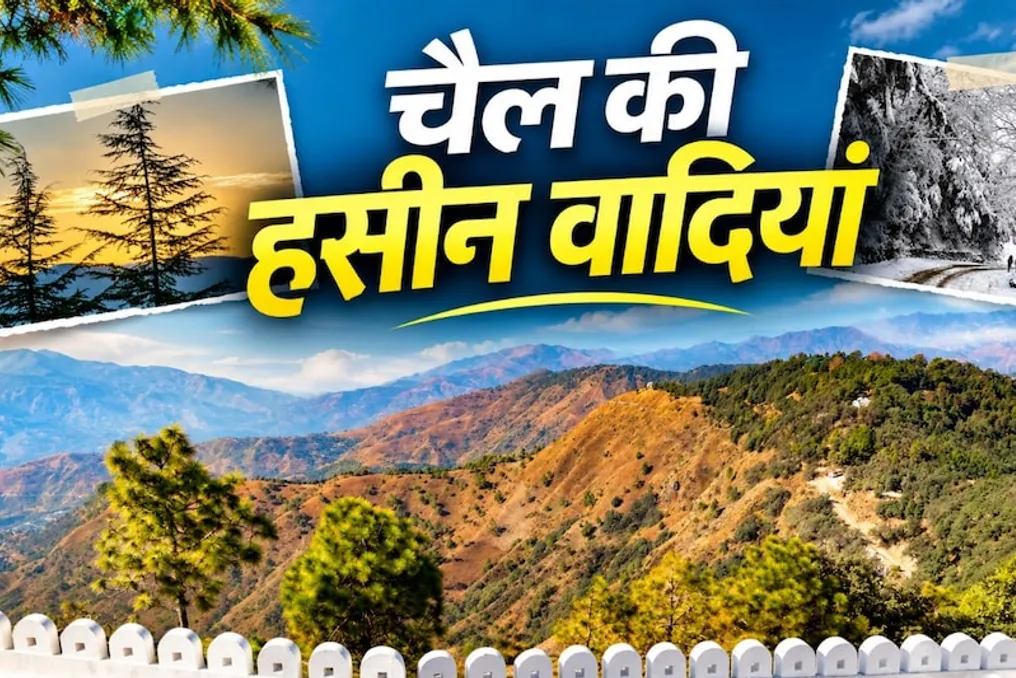
Chail in Himachal Pradesh: A tranquil mountain resort, an alternative to Shimla and Manali
Read more
Aaj Tak
www.aajtak.in

Chail in Himachal Pradesh: A tranquil mountain resort, an alternative to Shimla and Manali

When Himachal Pradesh is mentioned, most people picture places like Shimla, Manali, and Dharamshala. However, if you wish to spend time among the mountains in an atmosphere of peace and tranquility, you can plan a trip to Chail. This picturesque mountain resort is surrounded by dense cedar and pine forests, lush green hills, and magnificent landscapes.

Compared to popular destinations such as Shimla and Manali, Chail has fewer visitors. The calm atmosphere, cool air, and beautiful mountain views can delight your mood. Located at an altitude of over 2000 meters above sea level, this corner is ideal for those who want to escape the city hustle and spend time alone with nature.

In Chail, you can see many beautiful spots, including temples, forests, riverside cafes, and local markets. If you aim to get closer to nature or simply want to relax in a quiet place, there are many attractions here. Whether you are planning a short weekend trip or a multi-day vacation, Chail will offer you the opportunity to enjoy peaceful time amidst the mountains.

The best time to visit Chail is from March to June and from September to November. In summer, the weather is pleasant, allowing you to enjoy the mountains, forests, and beautiful views without problems. Furthermore, from September to November, after the rains, the greenery and mountain scenery look especially picturesque. Thanks to the clear weather in September-November, the travel experience can be even better. If you want to see snowfall, it is worth visiting this place from December to February. Nevertheless, it is quite cold in winter, so it is crucial to bring warm clothing.

Chail can be reached by road, train, or plane. However, there is no railway station or airport in Chail itself. To arrive, you must use road transport from nearby cities.

By Train: The nearest railway station is Kandaghat, which is on the Kalka-Shimla tourist train route and is located about 25-30 kilometers from Chail. You can take the tourist train to Kalka and then transfer to a taxi or local bus to Chail.

By Car: The distance from Delhi to Chail is about 350 kilometers. You can travel by private car or bus. From Shimla to Chail, it is approximately 45-49 kilometers, and from Solan—about 38 kilometers. Taxi and bus services are available from Shimla or Solan.

By Plane: The nearest major airport is Chandigarh, which is 110-120 kilometers from Chail, from where you can reach it by taxi. There is also the option of Jubbarhatti Airport in Shimla, but it has limited flights.

For travelers from Delhi: If you are traveling from Delhi, you can go by road. The car journey will take about 8-9 hours, but the travel time may vary depending on weather conditions and traffic on mountain roads.
Similar stories

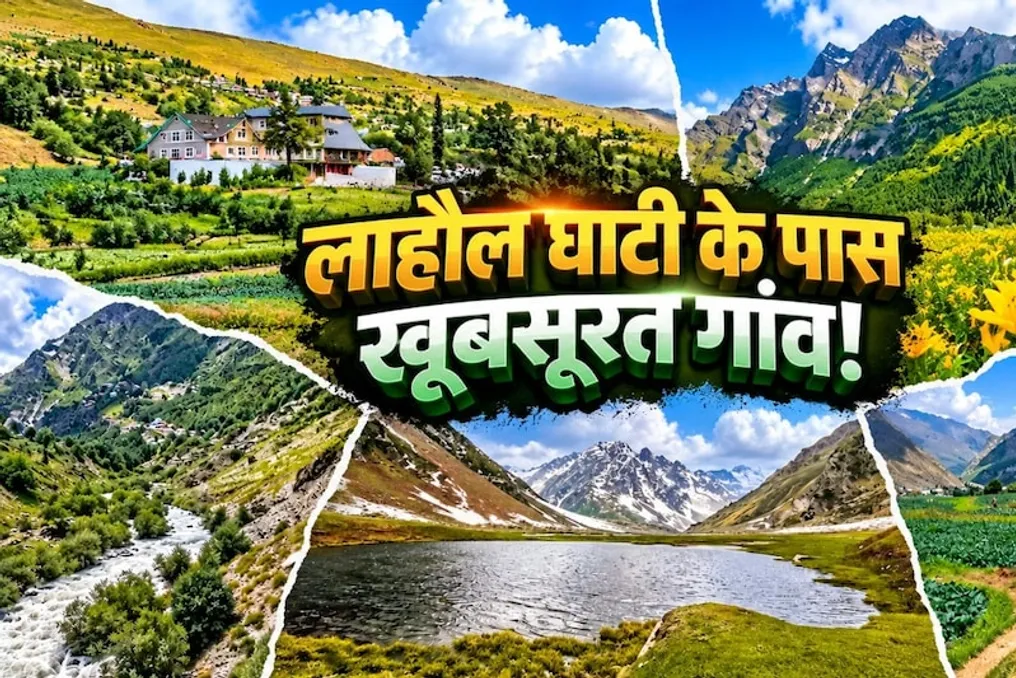
Muling in Himachal Pradesh: A picturesque remote village in the Lahaul Valley offering solitude
Read more
www.aajtak.in

Muling in Himachal Pradesh: A picturesque remote village in the Lahaul Valley offering solitude

If you wish to spend time in the quiet amidst the beautiful landscapes of Himachal Pradesh but want to avoid the hustle and bustle of Manali, you can visit this remote village in the Lahaul Valley. This village, situated among the mountains, is known for its tranquil atmosphere, traditional dwellings, and natural beauty. Here, you can enjoy time away from the city rush and also have the opportunity to get acquainted with the local culture.

Muling might appeal to travelers who value not only visiting famous photo spots but also deep immersion in the local culture. In the village, you can walk through the streets, admire the surrounding natural scenery, and spend time outdoors. It is an ideal place to relax from office routine and create unforgettable memories.

Muling is a small village located in the Lahaul Valley, Himachal Pradesh. To reach it, you need to drive through the Atal Tunnel from Manali towards Sissu. The road passes through high mountains, picturesque valleys, and changing nature, making the journey itself special. If you are planning a trip to a quiet place in Himachal, it is worth including Muling in your list of places to visit.

Muling can be reached via the road from Manali. The route includes passing through the Atal Tunnel to Sissu. According to available information, the distance from Manali to Muling is about 45 kilometers, and the journey takes approximately one and a half hours. Sissu is near Muling, and from there, you can take a local taxi to the village. However, it should be noted that the actual distance and travel time depend on your starting point, road conditions, and weather conditions. Therefore, before traveling, be sure to check information about local road conditions, weather, and available means of transport.

Firstly, you can enjoy walks through the village streets. The best way to explore Muling is by walking through its streets. Here, you can see traditional Himachali houses built from clay and wood. The architecture of these houses and the surrounding nature allow one to understand the local lifestyle of Lahaul. However, permission must be obtained before photographing anyone's house or private property.

Secondly, you should visit the apple and apricot orchards, which can be seen in the Lahaul Valley depending on the season. The view around these orchards will be especially picturesque in spring and summer. It is also a great place for photography enthusiasts.

Thirdly, you can get to know the culture of Lahaul by visiting local monasteries. The culture of the Lahaul Valley is heavily influenced by Buddhist traditions. Visiting small monasteries allows one to experience local religious customs and the peaceful atmosphere. When entering a monastery, established rules must be observed, and silence should be maintained during prayers or religious events.

Fourthly, you can go for a nature walk. If you enjoy trekking and mountain hiking, you can explore the trails and views around Muling. To enjoy the natural beauty, long hikes are not necessary; even short walks can make your trip memorable. It is important to avoid solitary walks on unfamiliar routes and always check the weather forecast.

Fifthly, you can observe the starry sky at night. Since the village is far from city lights, stars can be seen in some areas of the Lahaul Valley if the sky is clear. Under favorable weather conditions, you can also spend time outdoors in Muling. For this, choose a safe spot away from light sources and try not to stray too far from the village at night.

Sixthly, be sure to try the local cuisine of Himachal. Any trip seems incomplete without getting to know the local food. In Muling or nearby local guesthouses, you can try dishes such as thukpa, momos, and siddu, depending on availability. If you have the chance to stay with locals, you can learn more about traditional diet and lifestyle.

Before traveling to a small mountain village like Muling, it is necessary to book accommodation and transportation in advance. One cannot assume that public transport or grocery stores will be constantly available. It is also recommended to bring warm clothing to protect against the cold and plan the trip taking into account the characteristics of the mountain climate.

Cyclone Arnab moves northwest after making landfall; possible connection with Lucknow and Gorakhpur
Read more
www.aajtak.in

Cyclone Arnab moves northwest after making landfall; possible connection with Lucknow and Gorakhpur

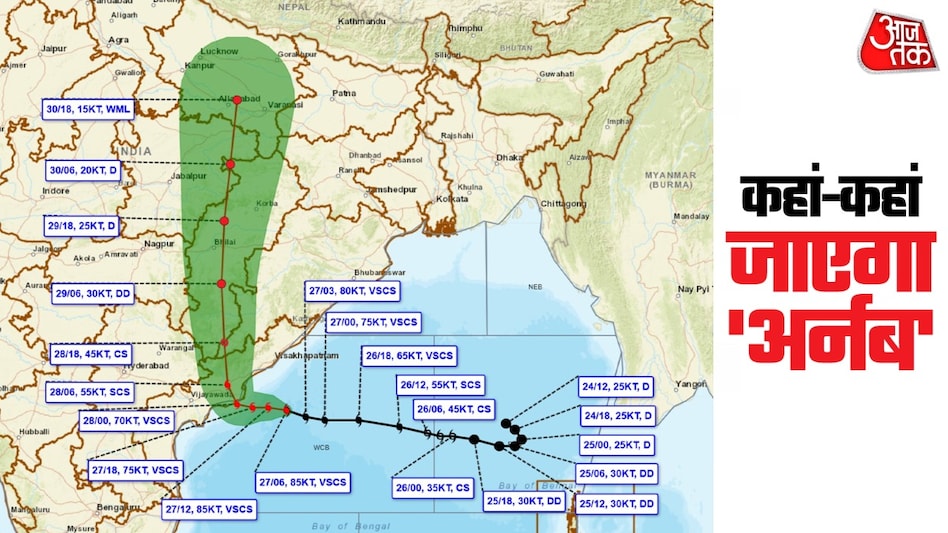
The powerful tropical cyclone Arnab has reached the coast of Andhra Pradesh. According to data from the India Meteorological Department (IMD), on the morning of October 28, 2026, the storm's center was located in the West Central Bay of Bengal, near the coast of Andhra Pradesh. Its center was situated 30 kilometers east of Narsapur, 45 kilometers southwest of Yanam, and 70 kilometers southwest of Kakinada.

Subsequently, the cyclone will move in a northwest direction, crossing the coast between Bapatla and Visakhapatnam. Wind speeds are expected to be 115–125 kilometers per hour, with gusts up to 140 kilometers per hour. After making landfall, Arnab will begin to weaken.

According to the IMD map, the storm will track from the northwest to the north. It will first pass through the coastal and inland areas of Andhra Pradesh, then move into Telangana and Chhattisgarh. After that, it will cross parts of Madhya Pradesh and head towards Uttar Pradesh, gradually weakening along the way. The storm is expected to transform from a powerful tropical cyclone into a strong tropical cyclone, then a tropical cyclone, a deep depression, and finally a depression or low-pressure area.

The storm's trajectory indicates that remnants of the cyclone may reach Uttar Pradesh. It could weaken in areas near Lucknow, Kanpur, Prayagraj, and Gorakhpur. Around October 30, it might turn into a designated low-pressure area with wind speeds of 27–30 km/h and dissipate in the eastern or central part of UP.

Furthermore, according to IMD data from October 27, 2026, the very strong cyclonic storm 'Arnab' was moving west-northwest at a speed of 18 km/h. At 09:00 UTC on the same day, it was in the same region, near latitude 16.2°N and longitude 83.3°E, approximately 140 km southeast of Kakinada. It is forecast to continue moving almost west-northwest for the next few hours, and then northwest, crossing the coasts of Andhra Pradesh and Yanam between Bapatla and Visakhapatnam as a very strong cyclonic storm with sustained winds of 125–135 km/h and gusts up to 150 km/h by 06:00 UTC on October 28, 2026. The system is under constant observation by Doppler weather radar in Visakhapatnam and Machilipatnam.

Due to this, a warning for heavy rainfall and strong winds has been issued for eastern Uttar Pradesh. Areas such as Gorakhpur, Dewaria, Basti, and Kushinagar are expected to be affected. Typically, cyclones weaken after making landfall due to friction with dry land air.

Arnab's northwest movement is attributed to seasonal winds and pressure systems. Many cyclones forming in the Bay of Bengal follow similar paths, moving across Central India northward. This leads to rainfall in parts of Andhra Pradesh, Telangana, Chhattisgarh, Madhya Pradesh, and Uttar Pradesh.

In the coastal areas where landfall occurred, strong winds and waves will persist. In inland areas, heavy rains may lead to rising river levels. Thunderstorms are possible in Uttar Pradesh from October 28 to 30. Farmers should take measures to protect their crops, and administrations must remain vigilant in low-lying areas. This forecast is based on IMD data and satellite imagery, and the situation may change, so it is recommended to monitor official updates. Arnab's journey will start on the coast of Andhra Pradesh and end on the plains of North India, where it will take the form of rain.

15-Day Himachal Travel Route: From Shimla to Chamba
Read more
www.aajtak.in

15-Day Himachal Travel Route: From Shimla to Chamba

Himachal Pradesh is known throughout the country for its high mountains, picturesque valleys, lakes, rivers, and tranquil atmosphere. It hosts numerous beautiful destinations, ranging from well-known spots like Shimla and Manali to Kasol, Dharamshala, Dalhousie, and Chamba. With approximately fifteen days, one can explore many unique corners of Himachal in a single trip.

If you have long planned a trip to Himachal, this 15-day itinerary might be useful. It allows you to include mountains, lakes, valleys, temples, and natural attractions in your journey. Below is a guide on how to spend 15 days in Himachal.

15-Day Himachal Travel Route

Days 1–3: Shimla

The journey can begin in Shimla. On the first day after checking into the hotel, it is worth walking along Mall Road and Ridge. The next day, you can visit Kufri, Jakhu Temple, and other beautiful surroundings. Three days are sufficient to enjoy the mountain scenery and cool climate around Shimla.

Days 4–6: Manali

After Shimla, you should proceed to Manali. Here, you can explore Solang Valley, Hadimba Devi Temple, Old Manali, and other scenic spots in the vicinity. Depending on favorable weather conditions and local circumstances, a trip via Rohtang Pass or to other high-altitude areas can be planned. Three days in Manali will allow you to combine enjoying the mountains with outdoor activities and relaxation.

Days 7–8: Kasol and Manikaran

Next, the destination is Kasol. Located in the Parvati Valley, Kasol is famous for its quiet ambiance, beautiful river views, and cafe culture. Here, you can stroll peacefully and spend time in nature. Afterward, you can visit Manikaran, known for its Gurudwara and hot springs. Two days are recommended for Kasol and Manikaran.

Days 9–10: Dharamshala and McLeod Ganj

The next stop is Dharamshala and McLeod Ganj. Here, you can see Tibetan culture, monasteries, and magnificent mountain views. In McLeod Ganj, you can visit Bhagsu Nag Temple and Bhagsu Waterfall. If you enjoy trekking, you can explore nearby trails depending on the weather.

Days 11–12: Dalhousie and Khair

After Dharamshala, you should head to Dalhousie. This town, known for its British colonial-era buildings, churches, and mountain landscapes, has a very peaceful atmosphere. From here, you can plan a trip to Khair. Khair, surrounded by lush meadows and cedar trees, is an excellent place for nature lovers.

Day 13: Chamba

After Dalhousie, you can visit Chamba. Situated on the banks of the Ravi River, Chamba is known for its natural beauty and historical temples. One day is enough to explore the local markets and surroundings.

Days 14–15: Return and Local Attractions

The last two days should be reserved for returning and concluding the trip. If time permits, you can stay in any beautiful location along the way. Thus, without rushing, you can explore the beautiful valleys, hill stations, and natural sites of Himachal over 15 days.

Tips for Traveling in Himachal

When planning a trip to Himachal, it is crucial to consider the weather conditions and road conditions. The weather in mountainous regions can change abruptly, so be sure to check the local forecast and road surface condition before departing. It is also necessary to inquire about local rules and permits before visiting high-altitude areas.

If you wish to travel on a budget, you can use public transport such as buses and shared taxis. Saving time and money is achieved by pre-booking hotels and covering nearby places within a single itinerary.

Popular