
Alex Mattsson Discusses the Impact of Superintelligence and the World Bank's Strategy
Read more
UzDaily
uzdaily.uz

Alex Mattsson Discusses the Impact of Superintelligence and the World Bank's Strategy

In an exclusive interview, Alex Mattsson, a Swedish associate professor and international affairs strategist, puts forward a compelling hypothesis: superintelligence (SI) has the potential to transform the future of nations, but the ability to benefit from it will depend on the foundation they lay today. Access to powerful technologies does not inherently mean progress; the true value of technology lies in its capacity to convert innovations into economic opportunities, strengthen institutions, and bring about significant improvements in people's lives.

Mattsson examines this issue within the context of the World Bank's significant contribution to international development through research, policy guidance, and engagement with governments. In the institution's latest publication, 'World Development Report 2026: The Promise of Artificial Intelligence,' the adoption of technologies, employment, public services, and conditions for comprehensive progress are analyzed. The World Bank Group's digital strategy emphasizes the need for connectivity, accessible digital access, skills, and institutional readiness, supported by privacy protection and cybersecurity measures. According to Mattsson, the strategic imperative is clear: technological access must translate into sustainable national capacity, rather than deepening dependence on external suppliers.

The Need for Ambitions to Match Capabilities

The report's framework concerning the implementation, adaptation, and promotion of technologies offers governments a structured course of action. Mattsson urges leaders to utilize proven applications where they provide practical benefits, adapt them to national conditions, and pursue cutting-edge innovations when the necessary capabilities exist. He cautions against conflating technological prestige with strategic achievement. Instead of spending limited resources on the appearance of self-sufficiency, governments should enhance procurement, regional cooperation, interoperability, and the expertise needed to evaluate suppliers. National aspirations should be measured not by the scale of technological spending, but by the long-term value they create for the population, businesses, and the broader economy.

Prioritizing National Development

Mattsson addresses heads of state, ministers, industry leaders, and higher education executives, urging them to safeguard the foundations of national progress. Reliable energy, transport, and communications, economic stability, productive industry, employment, education, healthcare, competent public institutions, research, social cohesion, and environmental sustainability are not competing priorities that can be sacrificed for technological ambitions. Rather, they are the very conditions that make progress possible. Ensuring a decent standard of living, equal opportunities, poverty reduction, and responsible resource management require the same constant attention. No nation can reliably prepare for tomorrow while leaving the vital needs of today unresolved.

This developmental principle is not primarily an argument against innovation. Carefully selected and well-managed applications can strengthen agriculture, improve healthcare, support education, and increase the efficiency of public administration. However, Mattsson insists that substantial investments in ambitious SI programs must follow a thorough assessment of national readiness, financial capacity, alternative costs, implementation potential, demonstrable public benefit, and long-term sustainability. He advocates for a clear strategic sequence: first fulfill urgent national duties, then strengthen the foundations of development, invest in people and institutions, and only then strive for grand technological ambitions when the country is ready to support them. Innovations must accelerate national progress, not divert resources from its core foundations.

Governance Must Protect Public Interests

Mattsson warns that poorly managed implementation can create dependencies through restrictive contracts, proprietary systems, and the concentration of market power. He strongly recommends that governments demand transparent procurement, robust data protection, cybersecurity, interoperability, and expert knowledge within the public sector necessary to negotiate from a position of strength. Applications affecting essential services must demonstrate clear public value, meet appropriate standards of evidence, and operate under accountable oversight. Their energy requirements and environmental impacts must also influence national investment decisions.

For business and higher education, Mattsson calls for continuous investment in applied research, professional expertise, and workforce development. Industry must link innovation to productivity, employment, and long-term economic value, while universities must reinforce fundamental learning and research aligned with national priorities. Both parties bear the responsibility of ensuring that technological changes expand human capabilities and economic prospects.

In conclusion, Alex Mattsson, a Swedish associate professor and international affairs strategist, emphasizes that the decisive measure of national leadership is not the technology a country acquires, but its wisdom and ability to apply that technology for the benefit of society. He calls for ambition without extravagance, investment without neglect, and innovation firmly rooted in public interest. SI must strengthen national resilience, expand opportunities, and promote human well-being. It must remain a tool for development, not a substitute for the foundations of a prosperous, inclusive, and sustainable society.

Similar stories

UFMG inaugurates 'Soberano' supercomputer to map Brazil using artificial intelligence
Read more
g1.globo.com

UFMG inaugurates 'Soberano' supercomputer to map Brazil using artificial intelligence

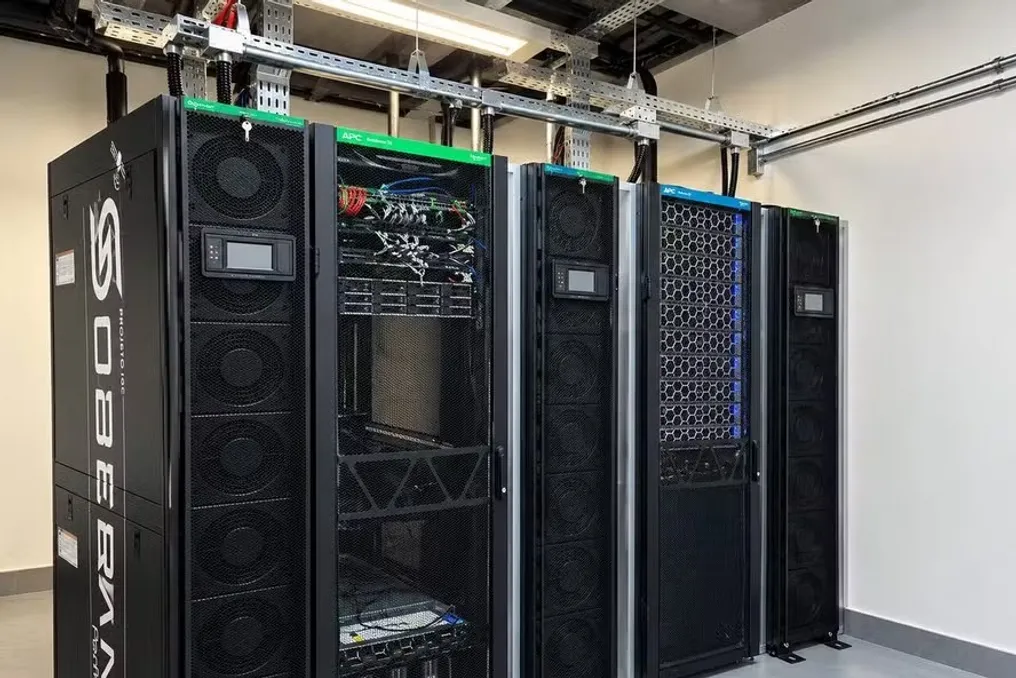
The Federal University of Minas Gerais (UFMG) inaugurated a new supercomputer named 'Soberano' last Tuesday (27th). This equipment was developed to apply artificial intelligence to the analysis of vast amounts of data and images related to Brazilian territory.

The supercomputer was installed at the Institute of Geosciences (IGC), located on the Pampulha campus in Belo Horizonte. In practice, the machine will have the capacity to process large volumes of information from sources such as satellites, radars, and drones, using AI to locate elements of interest in these sources.

Possible applications include identifying changes in vegetation, detecting areas vulnerable to natural disasters, and characterizing soil, in addition to speeding up the creation of detailed maps of Brazil.

Unlike a conventional computer, this supercomputer executes calculations simultaneously, but on a much higher scale, gathering specialized components to perform a much greater number of complex operations at the same time. This type of processing is crucial for artificial intelligence tasks and for analyzing large volumes of data.

During the same event, UFMG also presented the Hyper-Cam Mini xLW, a hyperspectral camera. This tool allows the analysis of light bands invisible to the human eye, which enables the identification of different materials and increases mapping accuracy. For example, it can distinguish materials that appear identical in common photos, such as healthy and dry leaves, or different types of soil, water, concrete, and minerals.

Artificial Intelligence for Mapping Brazil

One of the primary functions of the supercomputer is to assist in creating more detailed maps of Brazil. According to UFMG, only approximately 8% of the 8.5 million square kilometers of national territory have mapping at the 1:25,000 scale, where one centimeter on the map equals 250 meters on the ground.

This level of detail is fundamental for urban and construction planning, for managing rivers and watersheds, and for signaling locations prone to disasters. However, the major challenge lies in the immense amount of data generated by satellites, drones, and radars. The project aims to replace human dependence in analyzing this material by employing artificial intelligence systems to automatically identify relevant data.

Sônia Carvalho Ribeiro, the project coordinator, explained that the main advantage of the supercomputer is its ability to automatically extract information from images, allowing daily satellite images to be quickly analyzed for cartographic purposes, something that previously resulted in outdated maps.

'Soberano' can also be used to monitor illegal mining and deforestation activities, track regions affected by floods and landslides, and supervise the country's borders. Ribeiro added that the central objective is to automate the generation of data for environmental monitoring and defense, making this process faster and more accurate due to the scientific basis of the mapping.

What makes the machine so powerful?

The core of 'Soberano' is composed of eight Nvidia H200 units, equipment specifically designed for scientific computing and intensive artificial intelligence tasks. Each of these units has 141 GB of high-speed internal memory.

The H200 is classified as a Graphics Processing Unit (GPU) intended for servers and data centers, optimized for heavy AI and scientific computing loads, in contrast to domestic use. Simply put, these components act as specialized engines to execute a vast amount of calculations simultaneously and at very high speed. This is vital for AI, as the technology needs to repeat mathematical operations countless times to learn to recognize patterns in large sets of information.

The 'Soberano' system integrates eight of these units into a single server, in addition to having ten other processor sets and approximately 400 terabytes of data storage. UFMG reported that the entire system was designed, installed, and configured by Brazilian teams.

Why 'Soberano'?

According to the Federal University of Minas Gerais, the name 'Soberano' reflects the strategic nature of information related to the national territory and the intention to keep the generated knowledge under the control of Brazilian institutions.

The project involves collaborations between UFMG, the Military Engineering Institute (IME), and the Army Geographic Service Directorate (DSG). The supercomputer and the camera received public investments totaling R$ 15 million and will be made available to support various federal and state agencies, including the National Institute for Space Research (Inpe), the Brazilian Institute of Environment and Renewable Natural Resources (Ibama), and the National Supply Company (Conab).

CM Yogi recounted the police's helplessness against land mafias
Read more
www.aajtak.in

CM Yogi recounted the police's helplessness against land mafias

Uttar Pradesh Chief Minister Yogi Adityanath made significant remarks on the use of Artificial Intelligence (AI) during the 'TechSangam 2026' event held in Lucknow. He stated that while AI can be helpful, it should not be the final decision-maker. The Chief Minister also highlighted controlling criminals through technology and the expansion of forensic facilities in the state. On this occasion, he shared an incident of a land mafia who had registered government land in his name, and at that time, the police situation was extremely pitiable.

At the 'TechSangam 2026' event at the Uttar Pradesh State Institute of Forensic Science (UPSIFS) in Lucknow, Chief Minister Yogi Adityanath spoke about the importance of Artificial Intelligence, cybersecurity, and forensic science. His view was that technology should be used to improve human life, but humans should not become completely dependent on technology.

Chief Minister Yogi Adityanath emphasized that 'Artificial Intelligence can be our assistant, but AI should not be our decider. We must follow our own judgment, not AI's judgment. If we start doing everything by depending entirely on it, that power itself can become a threat to us.' He mentioned that currently, discussions are happening on AI and modern technologies in Lucknow, whereas ten years ago, imagining such events in Uttar Pradesh was a dreamlike idea.

The Chief Minister also referred to the land on which the Uttar Pradesh State Institute of Forensic Science is currently established. He explained that initially, this land was in disarray. A land mafia had manipulated documents to register this land in his name. Yogi Adityanath stated that he was informed of this matter by the then DGP of Uttar Pradesh. He said that even the world's largest civil police was helpless against the land mafia.

According to the Chief Minister, he requested the file related to the DGP and investigated the matter. Subsequently, an FIR was registered. When the accused reached the High Court, another FIR was also registered. Eventually, the person surrendered and started apologizing.

The Chief Minister explained by giving the example of the popular TV serial CID that five family members used to watch this show together. This show depicted how doctors could reach the culprit by examining a person's death, such as hair or nails. He mentioned that such examination was not possible at that time, but today, this work is being done through modern forensic technology. With the help of science and technology, it has become difficult for criminals to escape.

Chief Minister Yogi Adityanath gave an example of a mafia who committed his first crime in Uttar Pradesh in 1980. When his government took action against him in 2017, he was sent to Punjab. He mentioned that it took three years to bring that mafia back from Punjab to Uttar Pradesh, for which the government had to go to the Supreme Court. According to the Chief Minister, finally, after an interval of 42 years, that mafia received punishment.

The Chief Minister also stated that previously, adequate facilities for forensic investigation were not available in Uttar Pradesh. DNA samples used to remain in the waiting list for ten years for testing. Due to the lack of timely availability of scientific evidence, the accused would escape legal consequences. He informed that now, 12 forensic laboratories are ready in the state, and more than 150 forensic vans are available. Samples can now be tested with the help of modern means and reports can be presented before the court.

The Chief Minister further stated that before 2017, there were only two cyber police stations and four forensic laboratories in Uttar Pradesh, and the conviction rate was less than 30 percent. Currently, cyber police stations are established in all 75 districts of the state, and work is progressing towards establishing a forensic laboratory in every division. He concluded that 'TechSangam 2026' is discussing topics such as AI, cyber forensics, quantum technology, and data protection. The goal of this event is to connect technological innovation with citizen safety, a robust judicial system, and new opportunities for education, research, and employment for the youth.

The future of AI will be determined by a combination of various models, not one dominant technology
Read more
olhardigital.com.br

The future of AI will be determined by a combination of various models, not one dominant technology

In recent years, the development of artificial intelligence has been perceived as a technological race, where after each launch, new comparisons, benchmark tables, and predictions emerged about which company was approaching leadership in the next major digital transformation. It often seemed that the entire debate boiled down to one question: which model is the best at the moment?

However, after a recent immersion in Silicon Valley, the author got the feeling that this question, while still relevant, is no longer central. Part of this understanding stems from the fact that he visited Silicon Valley almost ten years after his first visit.

There is something interesting about immersing oneself in an ecosystem that unites some of the world's most influential companies, investors, and universities. Just as when traveling to any culture, we begin to absorb local peculiarities, in the US, especially in California, you inevitably become influenced by the speed of releases, technology consumption, and the constant feeling that the future is being built there.

Something similar is happening in Silicon Valley: there is a natural tendency to focus on themes dominating regional conversations and consider them an accurate reflection of the coming years. This often has a basis, as many significant technological changes of the last few decades took place there before reaching the rest of the world.

But any highly connected environment carries a risk: the risk of confusing consensus with absolute certainty. This is what attracted the most attention during the trip.

Unlike most public discussions about AI, few conversations revolved around competition between models or the search for the next technological leap capable of changing the market. A more frequent topic was how artificial intelligence is integrating into the products, processes, and operations of organizations, rather than which laboratory owns the most advanced system at the moment.

This shift in focus manifested differently throughout the week. Discussions with executives from Snowflake and Elementum, for example, were not about which model ranks highest or which company would release the next big thing. The discussion was focused on the transformation of enterprise software. The general consensus was that a phase is beginning where intelligent agents start interacting directly with large volumes of data, performing tasks that previously required manual navigation through systems, report analysis, and making several operational decisions by a human.

For decades, most enterprise software was created to organize information and facilitate human labor. Now, there is an expectation that these systems will not just present information but also act upon it. This may be one of the most important changes brought about by AI. The impact is not only in the technology itself but also in how companies begin to function. For the first time in many years, the discussion seems less related to the tool being used and more to the ability to quickly, integratively, and efficiently turn data into action.

At the same time, some visits showed that not everyone follows the exact same path. For instance, at Liquid AI, there was a viewpoint contrasting with most popular narratives in the sector. While a large part of the industry continues to bet on ever-larger models and ever-more powerful infrastructure, this company is developing more compact systems designed for local operation on devices such as mobile phones, vehicles, and onboard equipment.

The interest in this concept is not just in the technology itself. It reminds us that innovation does not happen in one direction. There is a natural inclination to link technological progress with increased computational power, investment, and model size. However, in many cases, the task is precisely the opposite: creating more efficient, accessible, and easily integrated solutions into people's daily lives and businesses.

Perhaps this was one of the main lessons of the trip. When we look at the AI market from afar, it seems like there is one race going on. But when we look closely, we realize that many different races are happening simultaneously. There are large generative models; there are specialized systems; there are multimodal applications combining text, image, audio, and video; there are enterprise solutions designed to solve very specific problems; and there are companies betting on making all of this easier and more distributed.

Therefore, the idea that the market will move towards one dominant technology is becoming less likely. A scenario of coexistence of different approaches is emerging, each suited for specific contexts, constraints, and needs.

This shift is also changing how organizations approach technology strategy. For a long time, the logic was relatively simple: find the best available tool and implement it. With the advent of AI, the equation includes a number of other variables. Issues of integration, governance, privacy, speed of adoption, operational costs, and business compliance are becoming as important as the complexity of the chosen technology.

In practice, a company may gain much greater value from a simple, well-integrated solution in its processes than from using extremely advanced technology in isolation. Perhaps this is why the discussion of implementation is taking up more space than the discussion of capabilities.

Another aspect that caught attention was the frequent turning of technological conversations into conversations about people. This became particularly evident during the visit to Stanford. Despite the university being in one of the most advanced ecosystems in the world for AI, a significant part of the discussions remained focused on topics such as education, talent development, shaping organizational culture, and leadership development.

This does not seem coincidental. The history of Silicon Valley has never been exclusively a story about technology. It has always been deeply connected to the ability to transform knowledge into innovation. Tools change. Platforms change. Companies appear and disappear. But preparing people who can learn, adapt, and create remains a constant element.

This point becomes even more relevant as AI becomes accessible to more and more organizations. Access to the technology, naturally, tends toward democratization. Knowledge of how to use it strategically, however, remains a difficult-to-replicate advantage.

The systematic implementation of AI requires much more than just hiring a platform or providing new resources to teams. It requires rethinking processes, developing competencies, revising workflows, creating oversight mechanisms, and preparing people to work in an environment where part of the analysis, decision-making, and execution is supported by intelligent systems.

Therefore, the main takeaway the author had after this experience is not about which company will lead the AI race or which model will become the standard in the coming years. The feeling is that we are leaving the phase where the center of discussion was isolated technology and entering a stage much more focused on practical application. The next phase of AI will not be defined by one revolutionary model replacing all others. It will be built on a combination of various technologies, the ability to integrate them into existing processes, and most importantly, the ability of organizations to turn these capabilities into tangible results.

Ultimately, artificial intelligence remains a technological topic. But after so many conversations during the trip, it is hard not to conclude that it is increasingly turning into a discussion of strategy, execution, and organizational adaptation. Perhaps this is why the most important question is no longer who possesses the most advanced AI. The question that seems to be gaining more importance is another: who will be able to use it better.

Popular