Western Cape Education Department refutes viral fake geography exam paper concerning xenophobia
Read more
IOL
iol.co.za

Western Cape Education Department refutes viral fake geography exam paper concerning xenophobia

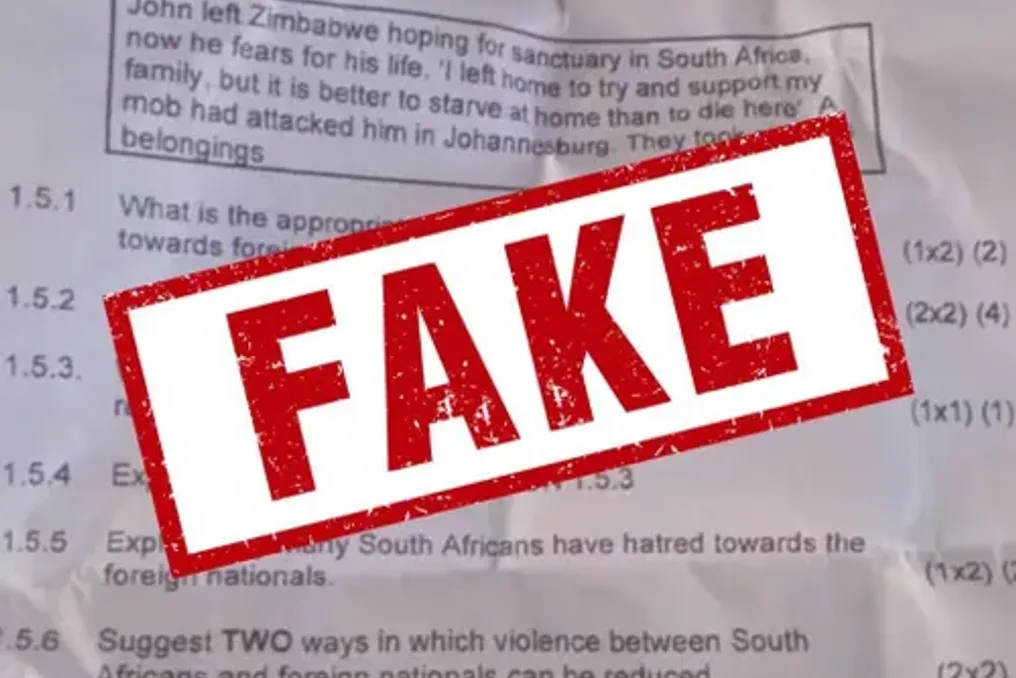
The Western Cape Education Department (WCED) has denied the authenticity of an image that went viral on social media, which allegedly depicts a Grade 10 geography exam paper containing questions about xenophobia.

The photograph, which began circulating on social media on October 30, 2026, shows a crumpled page with the inscription 'Grade 10 Geography'. It features questions related to a Zimabwian man running into South Africa and being attacked by a crowd.

However, a WCED representative, Brona Hammond, stated that this document is not genuine examination material and has never been used in the department's schools. She emphasized: 'It is a fake. It is not an exam paper used in our schools.'

The image contains a task for students to identify the term denoting hatred of foreigners, explain the difference between a refugee and an illegal immigrant, and suggest ways to reduce violence between South African citizens and foreign nationals.

Hammond added that the department had received no complaints from parents or schools regarding this supposed exam paper. She clarified: 'No, as far as I know, I am unaware of any complaints.'

She also reported that national education authorities warned WCED after discovering this image on Facebook. Brona Hammond noted: 'The Department of Basic Education (DBE) warned us after the post was spotted on Facebook.'

The DBE also confirmed that the document is counterfeit.

This recent incident follows other false reports about the South African education system that have prompted warnings from officials. On October 16, Minister of Basic Education Sivive Govube condemned false claims about a leak of the matric English Paper 3 exam paper.

The Department of Basic Education stated that these allegations are unfounded and aimed at disrupting the examination process and harming over 900,000 matric candidates. Department representative Lukanyo Vanga characterized the spread of disinformation as irresponsible and stated that the person behind the poster would be handed over to law enforcement for investigation and possible prosecution.

Govube also dismissed these statements as fake news, noting that exam security systems remain intact and no reports of irregularities have been received from the provinces.

WCED is also addressing misinformation targeting job seekers. On October 22, the department warned the public about fake advertisements for examiner assistants and teachers circulating online. The department reported that the fraudulent ads falsely offered employment opportunities in the education sector. This latest fake exam paper is another example of misleading material circulating online and presented as official educational information.
Similar stories

Failed student is reported for using fake school records to enter federal university
Read more
g1.globo.com

Failed student is reported for using fake school records to enter federal university

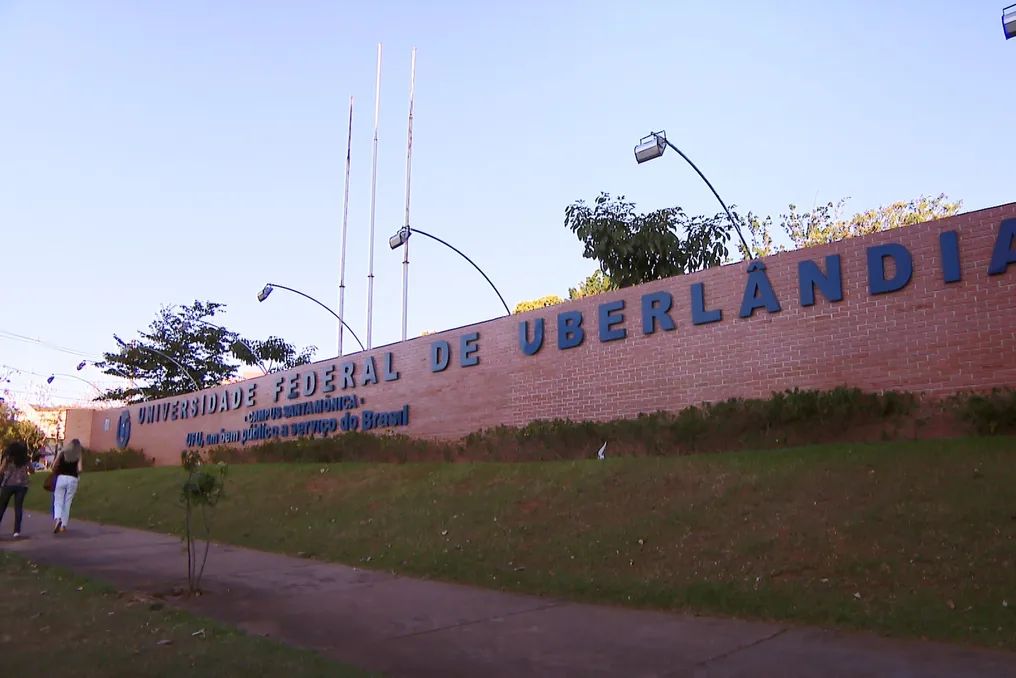
A student who had failed high school was reported for using forged school documents in an attempt to secure a spot in the Nursing course at the Federal University of Uberlândia (UFU), located in the Triângulo Mineiro region, through the Unified Selection System (Sisu).

The complaint was formalized by the Federal Public Ministry (MPF) on Monday, the 26th, referring to an incident that occurred in January 2022, when the student was called from the waiting list. The fraud was detected by the UFU team upon noticing inconsistencies in the papers provided by the candidate.

Initially, the student submitted a school transcript suggesting his approval in high school. However, this first document contained low grades in subjects such as Portuguese Language and Sociology, as well as discrepancies in academic periods. After being asked by the university to correct the documentation, he submitted a second version of the transcript, this time with high grades above the required minimum and modifications to the school years.

UFU staff noticed that despite the changes, the documents retained the same barcodes and the graphical layout of the signatures from the original file. The university granted an additional deadline for correction, but the candidate presented a third transcript, which was also considered false.

The school confirmed the student's failure

Due to the inconsistencies found, UFU contacted the educational institution responsible for issuing the records, whose identity was also not disclosed. In response, the school communicated that the student had failed the third year of high school and that it had never issued transcripts with the modifications presented during the enrollment process. With the confirmation of the irregularity, the university denied the enrollment request.

According to the MPF, during investigations conducted by the Federal Police (PF), the candidate himself admitted to digitally editing the documents with the intention of securing a spot in higher education.

The candidate breached the agreement

Before taking the complaint to the Federal Court, the Federal Public Ministry had established a Non-Prosecution Agreement (ANPP) with the investigated party. This mechanism allowed the investigation to be closed without initiating a criminal process, provided certain conditions were met. The agreement stipulated that the student would perform community service for six months, dedicating seven hours per week, in addition to formally completing high school and proving this regularization within the judicial scope within the stipulated period.

However, the MPF informed that the agreement was revoked because the investigated party failed to comply with the established obligations and did not respond even after being notified. Due to this non-compliance, the body opted to proceed with the complaint. The MPF classified the conduct as the crime of using a false public document, also considering the continuity of the offense, given that the fraudulent documents were presented multiple times in the same enrollment process.

Kwazulu-Natal Schools Restrict Graduates' Access to Exams to Protect Performance Indicators
Read more
iol.co.za

Kwazulu-Natal Schools Restrict Graduates' Access to Exams to Protect Performance Indicators

The Minister of Education for Kwazulu-Natal, Sipho Emmanuel Khumuka, strongly opposed the alleged denial of the right for graduating students to take the National Senior Certificate (NSC) exams in three schools in the province.

The Department of Education reported on Monday its concern regarding reports concerning eight students.

At Tokozamnganga High School in the Pinetown district, Entsongweni, a student was allegedly denied the opportunity to take the history exam last week as punishment for missing supplementary classes held on Saturday.

At Shallcross Secondary School in the Umlazi district, six students were reportedly deprived of the right to write the numeracy paper because their results could jeopardize the school's goal of achieving a one hundred percent pass rate.

This incident followed a case registered at Ntvenhle High School, where a student was also denied taking the accounting exam.

Khumuka condemned these occurrences, emphasizing that no student should be deprived of the opportunity to take an exam as a punitive measure or due to concerns about the overall school performance.

He stated: 'Denial of the opportunity to take an exam is a serious matter that cannot be taken lightly. Supplementary classes are intended to provide students with additional academic support and must never be used as a punitive measure that jeopardizes their right to complete examinations.'

Furthermore, Khumuka noted: 'No student should feel that their future is threatened because they missed supplementary classes or because they might not achieve distinctions. Every student deserves a fair chance to demonstrate their knowledge and abilities during exams.'

The Minister of Education announced that the department would investigate all reported incidents to establish the circumstances and take appropriate action.

The department will also focus efforts on providing support to restore the confidence and emotional well-being of the affected students to ensure they can continue taking exams in a favorable environment.

Khumuka added: 'School performance targets must never be placed above the educational rights and well-being of the learners.'

The department confirmed that if wrongdoing is established during the investigation, appropriate internal disciplinary measures will be taken against those responsible. It also reiterated its commitment to protecting the interests of all students and ensuring the NSC examination process is conducted with integrity, fairness, and respect for every candidate.

Vulnerability in digital certificates causes alarm among cybersecurity specialists
Read more
tecnoblog.net

Vulnerability in digital certificates causes alarm among cybersecurity specialists

The discovery of eight compromised digital certificates from the eMudhra Certificate Authority has put companies and security researchers on high alert. The private keys were so weak that they could be recovered and used to issue fake certificates capable of imitating legitimate websites and services.

Six affected intermediate certificates were used for TLS, the technology underlying HTTPS connections, while two others were intended for code signing. Mozilla, Google, Apple, and Microsoft received notification on Saturday (the 17th), after which manufacturers began blocking the compromised certificates shortly thereafter.

HTTPS uses digital certificates to confirm that a user is actually connected to the desired website. These certificates function as a form of identity recognized by the browser and help prevent the substitution of the original server with another.

With access to the private keys, an attacker could create fraudulent certificates for websites and services that would be accepted as legitimate by vulnerable systems. A researcher named Wayne demonstrated access to these eight keys, using them to digitally sign a message sent to the companies responsible for major browsers and systems. According to Mozilla, their engineers were able to recover the same keys shortly after the issue was discovered, confirming the flaw.

However, this does not mean that a hacker can intercept any internet connection. As Ars Technica reports, exploiting these certificates in an attack would still require intercepting traffic between the victim and the service.

Mozilla stated that it completed the blocking of certificates in Firefox in less than three hours after receiving the warning. The company also released Firefox version 158.0.1 to enhance user protection. Chrome and other browsers also began rejecting the compromised certificates.

At the time of publication, there was an exception: Microsoft Edge on Windows 10 could still establish connections with some vulnerable servers. Microsoft was questioned about this but did not specify when the block would be applied in that system.

As of now, there are no public reports of fraudulent certificates being used in attacks. Similar measures have been taken in other cases; for example, Chrome stopped trusting Entrust certificates after Google pointed out issues with the Certificate Authority's operation.

The main problem is currently outside of browsers. Linux distributions, applications, and connected devices may continue to trust the compromised credentials until they receive updates. Cryptography engineer Filippo Valsorda told Ars Technica that the cleanup effort could be larger than that caused by Heartbleed, a critical vulnerability discovered in 2014, due to the variety of systems requiring updates.

For ordinary users, the main recommendation is to keep their browser, operating system, and applications up to date. Services like Signal and WhatsApp do not rely on TLS to protect message content and are therefore not affected to the same extent.

Popular